

When I left my old life, just as my daughter was starting college far away from home, I began my year of travel with a week in Paris. Then I made my way down to Provence for a writer’s residency. For years I had yearned for a whole month to sit and read and write in some beautiful place. But when I got my wish, I could hardly write at all.
I was supposed to be writing a biography of the writer Kay Boyle, as I wrote about two weeks ago. Instead, I found myself reading everything I could find about the woman who had owned the house where I was staying: Dora Maar.
She was another larger-than-life figure from the 1930s and 40s, a woman who had lived. She been a surrealist photographer, exhibiting alongside Man Ray and Salvadore Dali, friend of Andre Breton and his wife Jacquline Lambda, and mistress of Picasso for ten years, through the Spanish Civil War, Guernica, and the German Occupation of Paris.
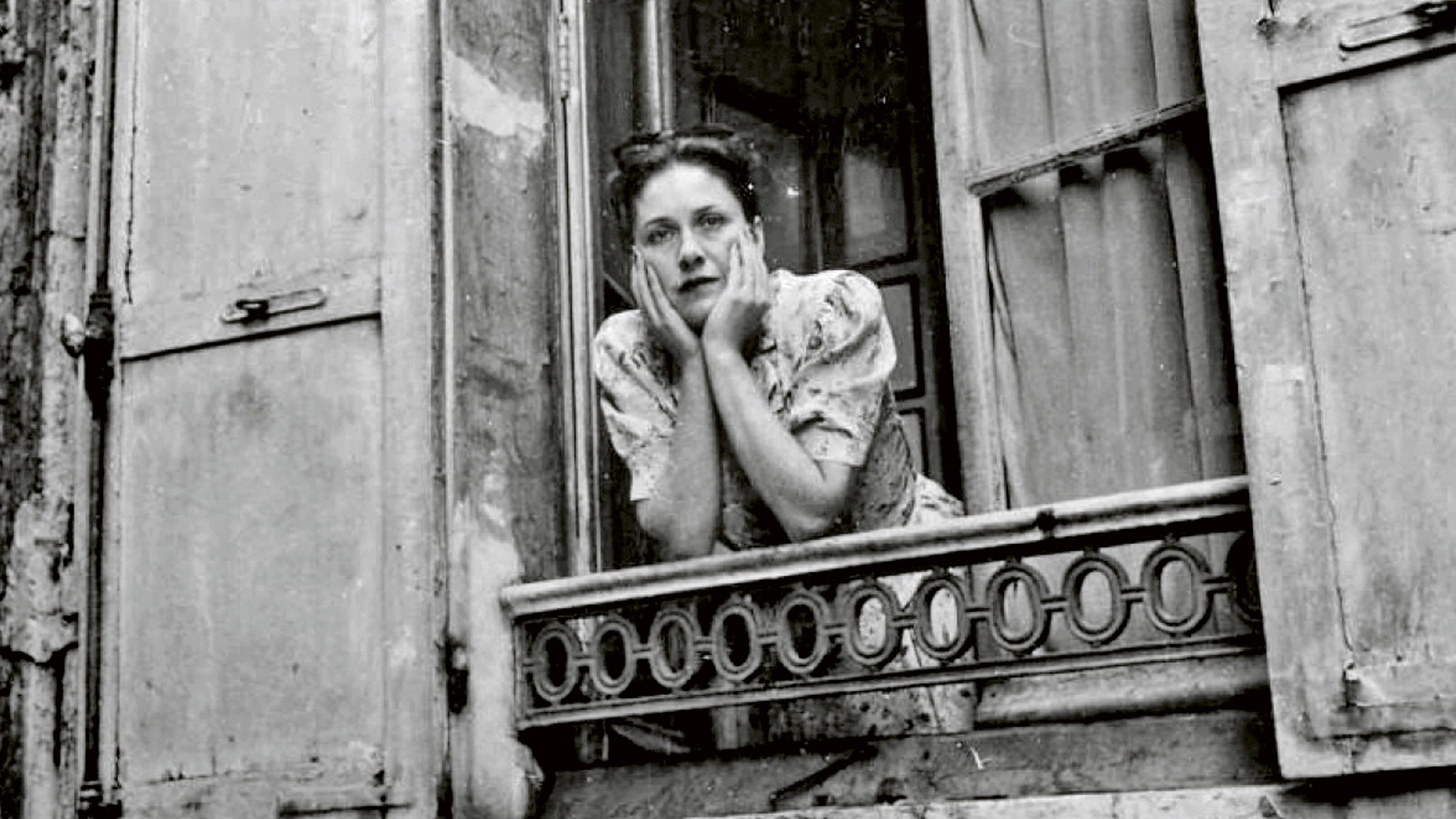
Yet, I had no desire to follow in her footsteps, as I had Kay Boyle, because after Picasso, who ran off with a younger woman and destroyed Dora’s sense of self, she lived in the house he had given her as a parting gift—alone, for fifty long years.
Nonetheless, I realized, I was, in a sense, living her life, simply by living in her house, a place where I also was alone the vast majority of the time.
The books I found in the library painted a bleak picture of her post-Picasso years: a nervous breakdown, religious fanaticism, celibacy and solitude, eccentricity, pushing people away, and, if all that wasn’t enough, a bunch of cats running around!
If Kay Boyle had set me off on my journey in the first place, in search of a passionate life (as the subtitle of my memoir says), then Dora Maar stopped me in my tracks. I sat with the weight of her FIFTY YEARS on my shoulders as I looked out at the stunning views and wondered what kind of life I could make for myself now that I had let go of everything.
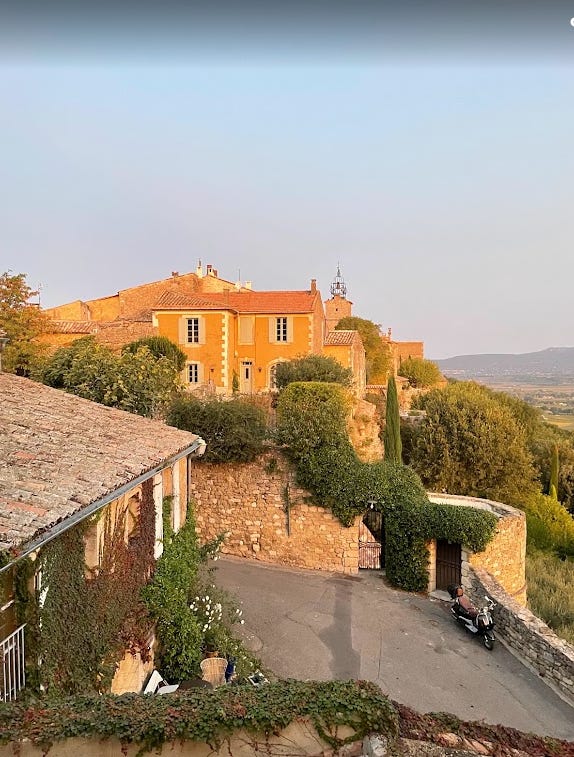
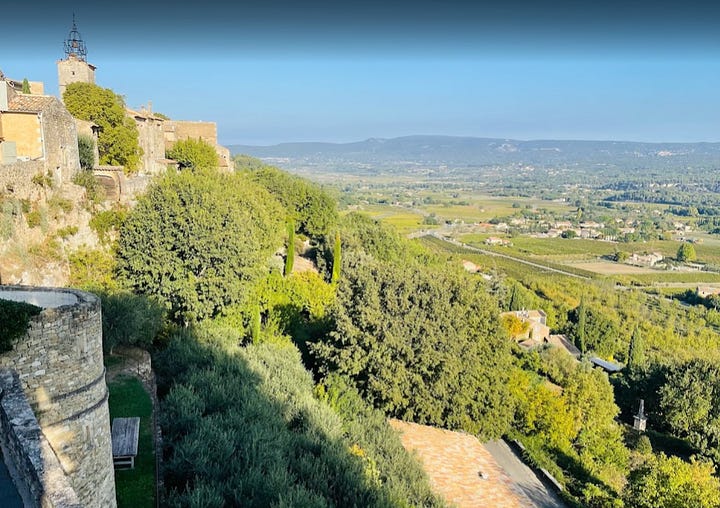
Her home is gorgeous. And it is in one of the most beautiful places I’ve ever been, a medieval hilltop village with a town bell that rings out over the valley below. I was surrounded by olive trees, stone houses and walls that ooze history, and that warm, honey-gold Provence light that makes you feel like you’re in a movie. I could throw open any window and imagine myself flying out over the vineyards and fields towards the mountains in the distance.
Yet, I couldn’t fully enjoy it, because the questions that I wrote about last week—questions about home and who I might share it with and whether I could be happy alone—were looming over me. I had put off answering them by taking a year to travel around Europe, but Dora Maar was making me confront them in a big way while I lived in her house.
It’s interesting now to revisit that time in my life as I publish that portion of my memoir—Flight: A Year in Search of a Passionate Life. (The memoir is fully available for my paid subscribers. You can read the preview here and see if you’d like to upgrade to read more.)
Haunted by Dora Maar
·
Jul 16
Welcome to another chapter of Flight, my memoir about my first year of traveling around Europe in search of a new life, after leaving my old one as a professor, wife, and mother in New Orleans in 2022.
I will go on to find so much passion during that year of travel and explore so many possibilities for the life I want to live now. Yet, the questions were still there, waiting for me.
I wasn’t content to accept this view of Dora Maar’s pitifully solitary life. I decided that there had to be more to Dora Maar’s story. What had her life in this house really been like? How she had survived Picasso, her big love? As I ask in the final sentence of the last chapter, published this week: ‘ How do you recover after loving like a dog loves?’
Dora had apparently once told Picasso that she wanted to love him as a dog loves its master. Like most of the people around her, she worshipped him as godlike. But his betrayal of her wasn’t the end of the story. She would see through him and turn instead to God for the more perfect love she sought. This intrigued me as well. What had she found in her relationship to God that gave her the strength to stand on her own? I wanted to know.
Next week’s chapter will tell the story of those last fifty years, which were much less pitiful than is commonly thought. I had to crack open the Spanish biography of her to go deeper into the archive she left behind. She gave me so much to think about, and she turned out to be one of the most important women of the past I discovered on my trip. (There are many more still to come!)
Below I’ll share with my paid subscribers more about Menerbes (a town made famous by Peter Mayle’s memoir, A Year in Provence), which is where the Dora Maar House is located. I’ll also share some of my favorite places in and around Menerbes and Provence, including my absolute favorite place on Earth, the most beautiful place I’ve ever been (1.5 hours from Menerbes), which is saying a lot since I’ve been to some really gorgeous places all over France, Scotland, Sicily, Spain, etc.
Comments
Nothing yet. Say the first thing.
Sign in to join the conversation.