

Yesterday I read an interview in The Sunday TImes with the actress Gillian Anderson. In it, she revealed that in the last fifteen years she’s been having therapy with her mother.
Anderson is 58 now, which means the therapy must have started in her mid-forties. Her mother, by my estimates, must be somewhere between 80 and 90 as in a 1990s interview she described herself as in her fifties.
I love this idea that it is never too late to transform your relationship with your mother, that is certainly what I have found.
Of having this mother-daughter therapy, Anderson said that she ‘highly recommends it. Just to say things that I felt needed to be said.’
The Sex Education actress has previously spoken about being a bit of a rebel teen, that her parents didn’t understand her. She said Davina McCall’s podcast Begin Again that she first had therapy when she was 14, but admitted that she was still holding back, not saying the things that she wanted to, or needed to, for fear of her teenage secrets getting back to her parents, I guess.
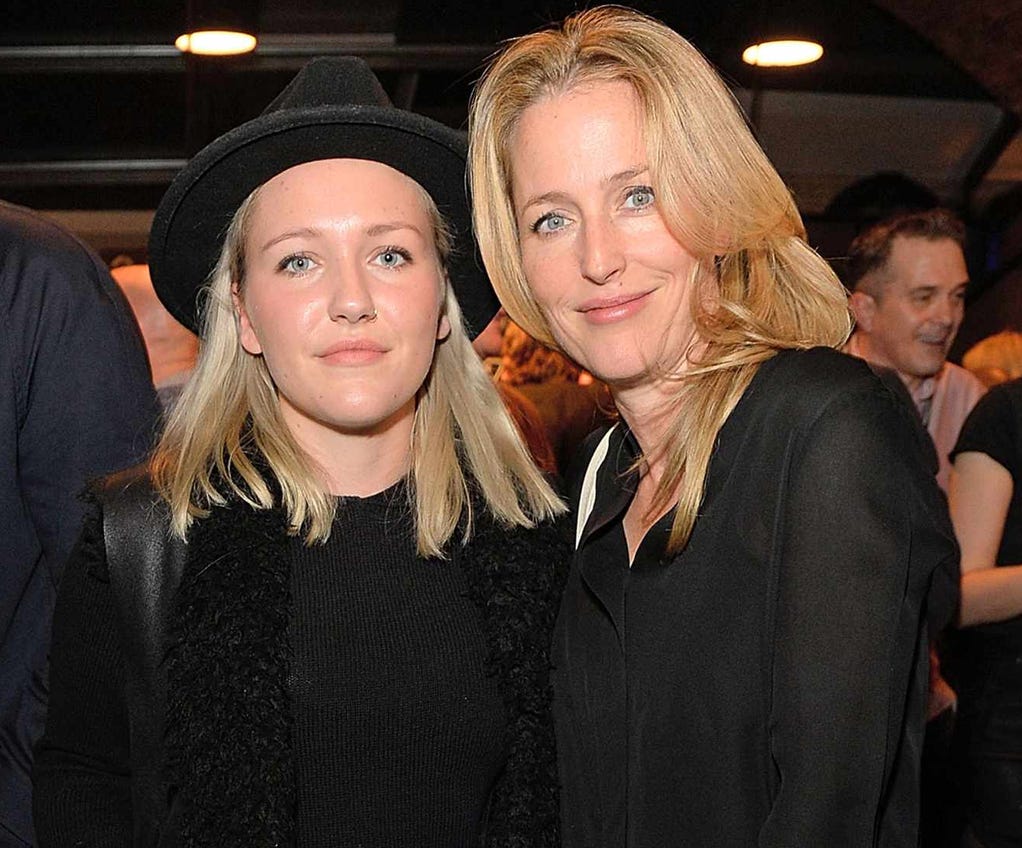
It’s fascinating to me that Anderson feels that she wants to say these things to her mother at the ages that both of them are at now. I think as our parents age, there can be a sense of reaching a cross-roads with them, that those things that have remained unsaid might as well stay that way now. We may think that although we have evolved with age, our parents and our past with them remains the same, static. We may think there is no point in going back over old ground, of upsetting people. I guess often that can be true, but I’m not so sure. Why shouldn’t we keep evolving, even in our eighties and nineties?
Apparently mother-daughter therapy is on the rise. One Harley Street clinic say that they are seeing more and more women seeking a safe space to explore this relationship.
‘Our mothers are often our first emotional mirrors,’ so it says on their website. ‘They model how we express love, set boundaries, handle anger, or offer care. But when that mirror is cracked through criticism, emotional neglect, unmet expectations, or their own unresolved trauma, the effects run deep.
‘Daughters may grow up feeling unseen, overly responsible, or never quite good enough. Mothers may feel rejected, misunderstood, or stuck in outdated roles. These patterns don’t just fade. They echo into adulthood, shaping how we relate to ourselves and others.’
Me and my mother could definitely have benefitted from therapy over the years. But then who has time to invest in that most complex of relationships, the one that is enduring, that follows us for not just the rest of our lives with that person, but afterwards too. We can find ourselves haunted by those things that remained unsaid between us, by conversations that might have revealed more about where certain thoughts and feelings came from.
We think nothing of going to therapy with a partner we have known – and might only know – for a few years, and yet would we, like Gillian Anderson, think to devote our time (and let’s face it, money) to understanding the relationship we have with our mothers?
Like many people, I’ve witnessed in my own family thoughts and feelings that have remained unsaid, relationships that are built on remaining silent, of not speaking out, but I’ve also seen how this just breeds a petri dish filled with resentment.
I’ve always felt that I have had a reputation in my family over the years as the difficult one, but now that I am older I wonder whether that has just made me the honest one.
I have spoken out to my own mum about things that she has said and done that have hurt me over the course of our relationship. But for all the things that I have told her, many I haven’t, and she would undoubtedly say the same about me. Might therapy have offered us a safe space to have those conversations? So often these days I feel that we just discard that other person’s point of view, perhaps even pathologising them, describing them as things best left to a therapist, or a psychiatrist. And I wonder if that really is serving us, perhaps Anderson is right and more of us should be in therapy with our mothers?
Comments
Nothing yet. Say the first thing.
Sign in to join the conversation.