
Research for my next book is taking me to a part of London that’s drawn me back time after time. Soho, a tight cluster of streets in central London, has some of the most illustrious ghosts in London.
For the next book I’m exploring Soho in the early 1960s, when the boutiques of Carnaby Street clothed swinging Londoners, and artists whiled away boozy afternoons in the Colony Room. A couple of years ago, I wrote about the night clubs and jazz musicians of 1920s, in The Soho Jazz Murders. But my first foray into Soho fiction, The Peacock Room, took me to the eighteenth century, to the London of William Blake.
In the book, London tour guide (and literary sleuth) Helen Oddfellow takes a group of students on a walk around London to see the places associated with my favourite poet, self-published author, artist and all-round mystic, William Blake. I’d like to take you on that same tour. Photos, except where noted, are my own.
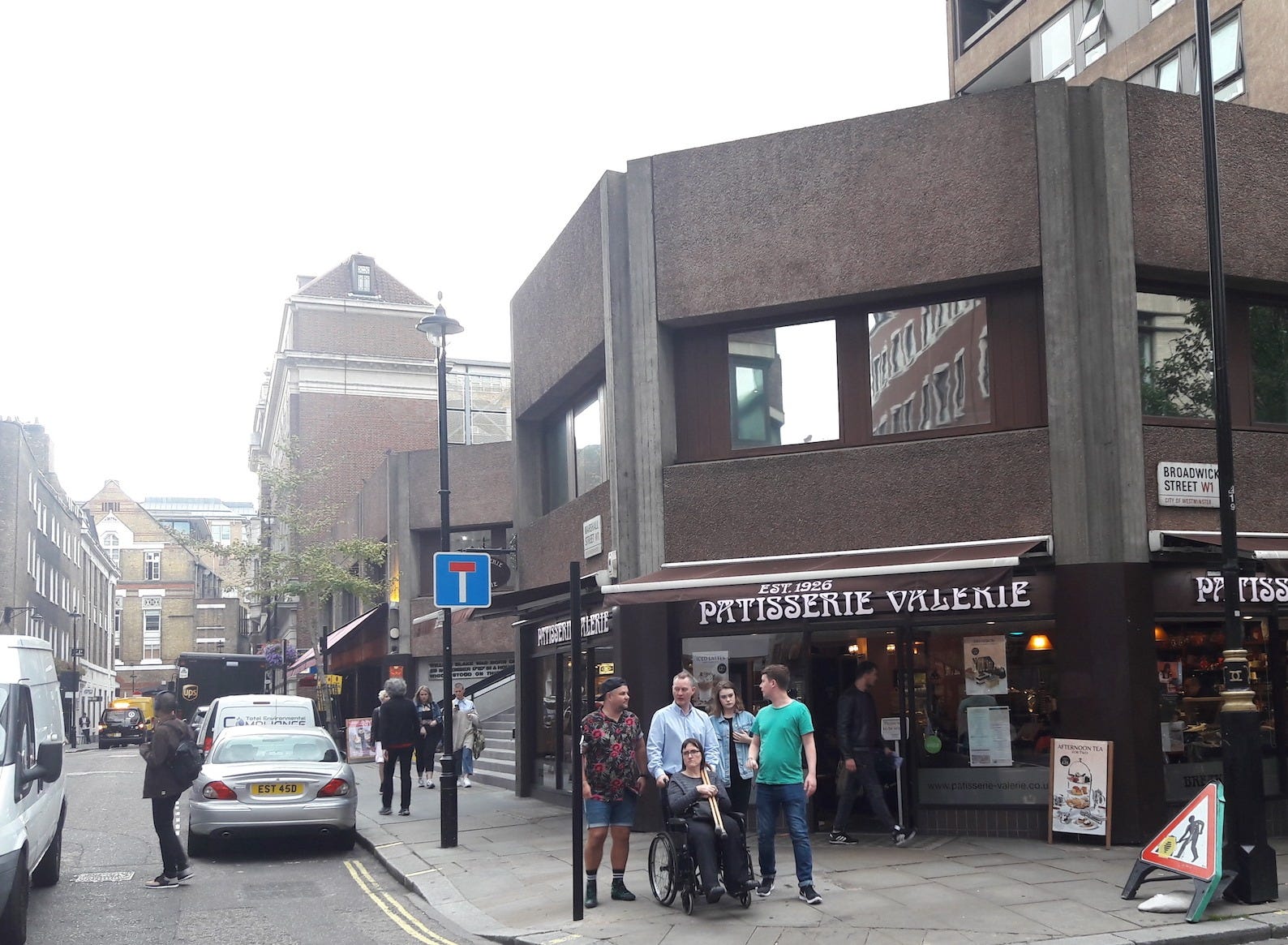
In 1757, William Blake was born upstairs in 28 Broad Street (now Broadwick Street), above the shop that housed the family’s hosiery business. The Blakes, Catherine and James, were respectable tradespeople of the type then common in Soho. The house they lived in has long gone, replaced by a brutalist high rise housing estate (William Blake House) and shops. But the smaller streets around – Marshall Street, Ingestre Place, Berwick Street, Soho Square – still have traces of those old Georgian houses and the trades they represented.
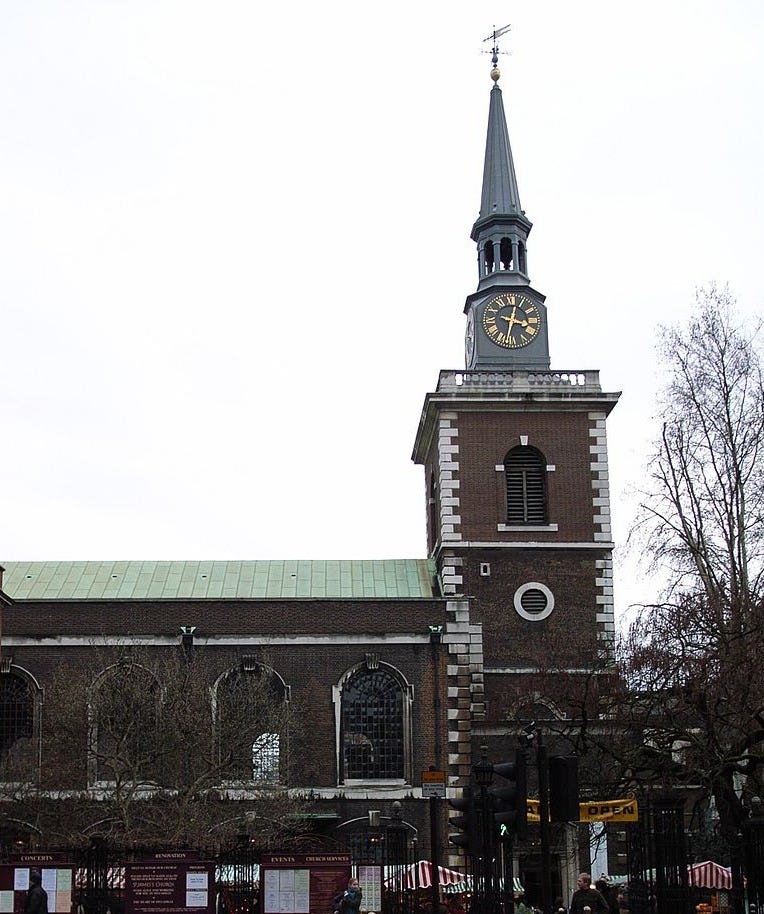
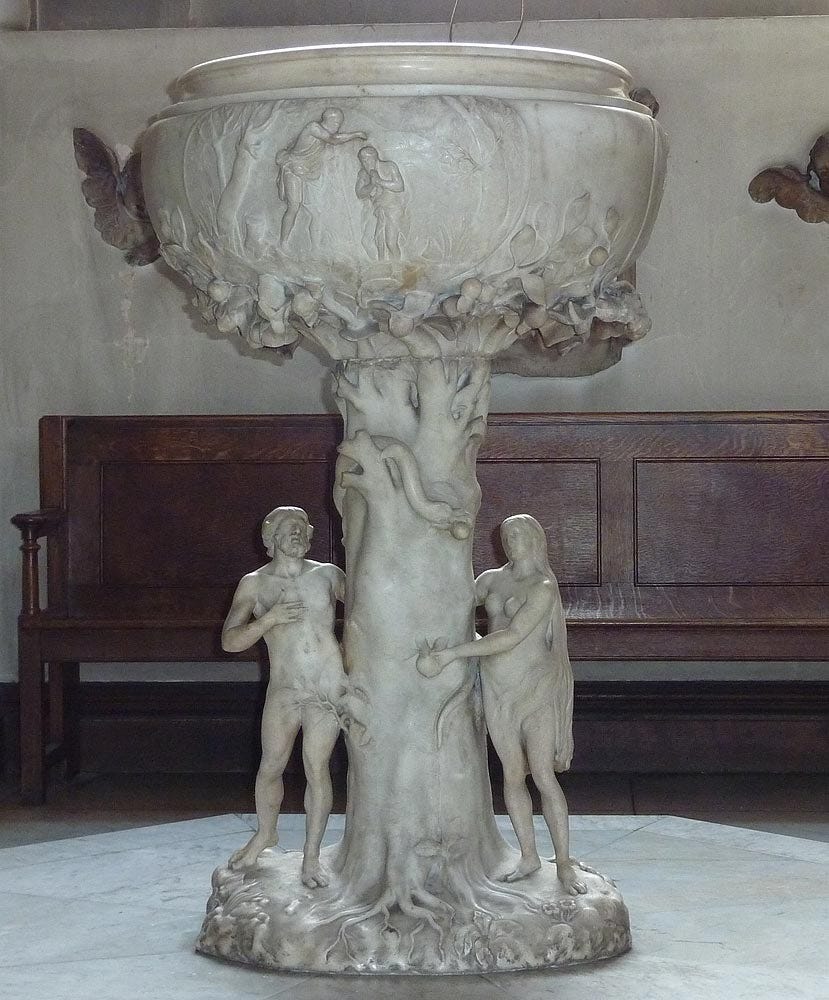
Blake enters the record in St James’ Church on Piccadilly, where he was christened in the Grinling Gibbons font still standing in Wren’s elegant Palladian church.
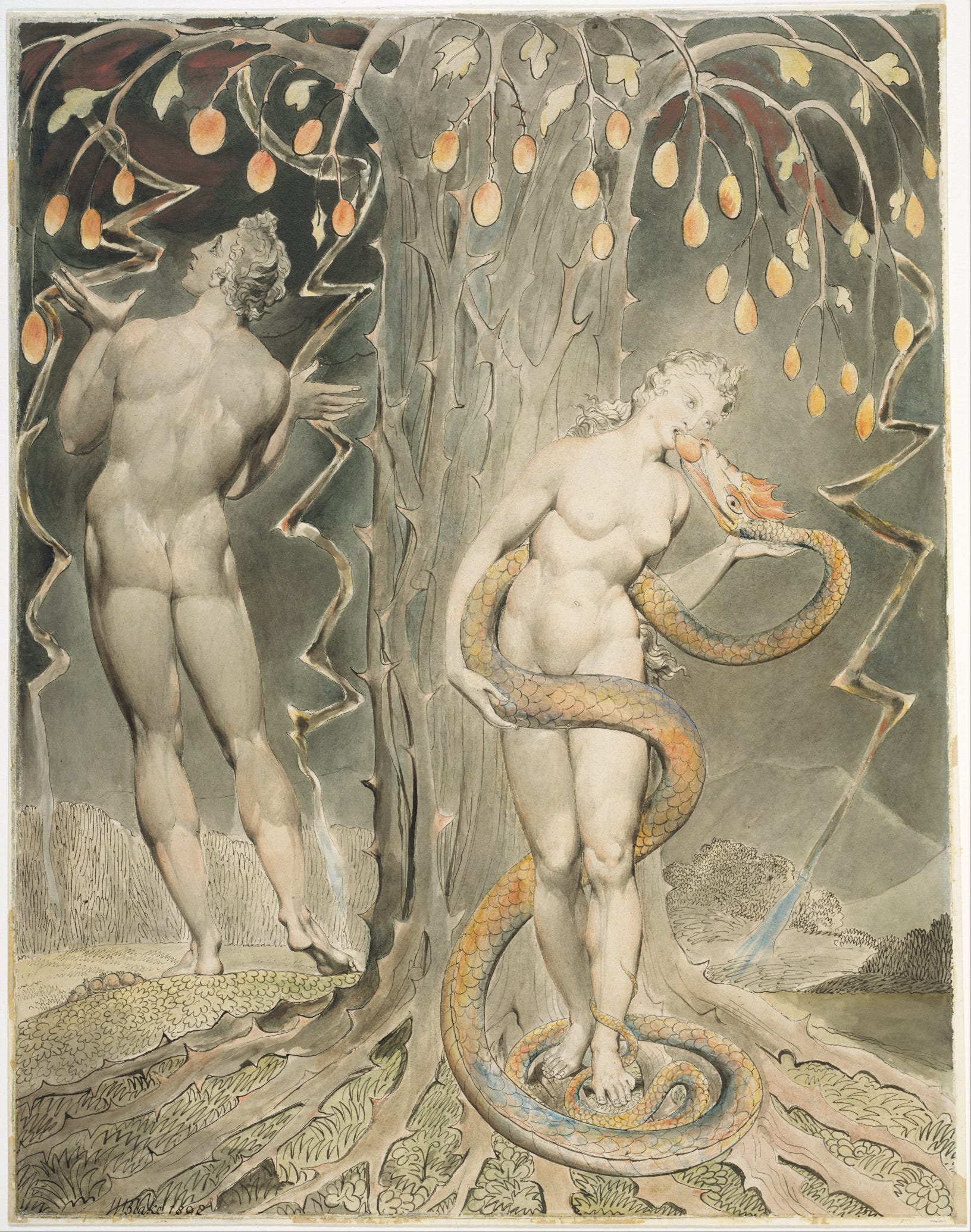
I’m guessing that was not Blake’s only visit to the font – as soon as I saw it, it reminded me of Blake’s 1808 watercolour The Temptation And Fall of Man.
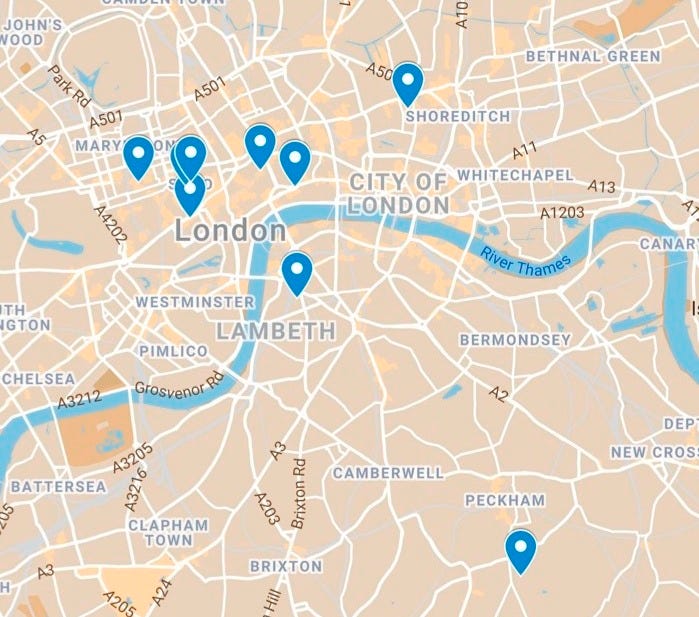
Although he was an urban child, and lived in London for almost all of his life, the young Blake roamed widely south of the city into the countryside, to Dulwich, Croydon, Bromley and other rural retreats.
During one of these walks, his first biographer Alexander Gilchrist reports: “On Peckham Rye (by Dulwich Hill) it is, as he will in after years relate, that while quite a child, of eight or ten perhaps, he has his “first vision.” Sauntering along, the boy looks up and sees a tree filled with angels, bright angelic wings bespangling every bough like stars.”
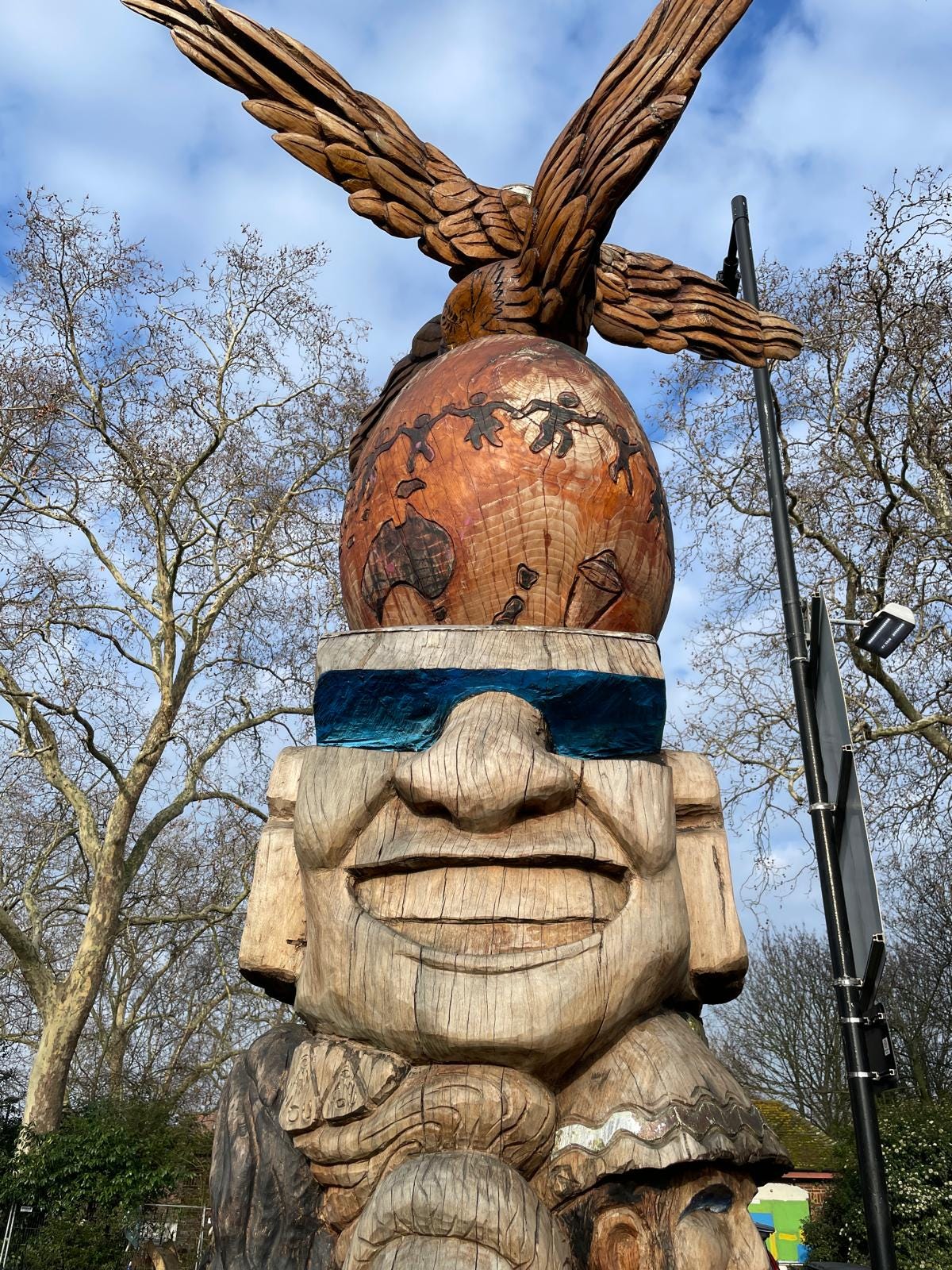
Although there were no signs of angels in the trees when I last visited, Peckham Rye is still a popular green space and commemorates Blake’s vision with a totem pole topped with carved angels – incongruous but probably quite Blakean.
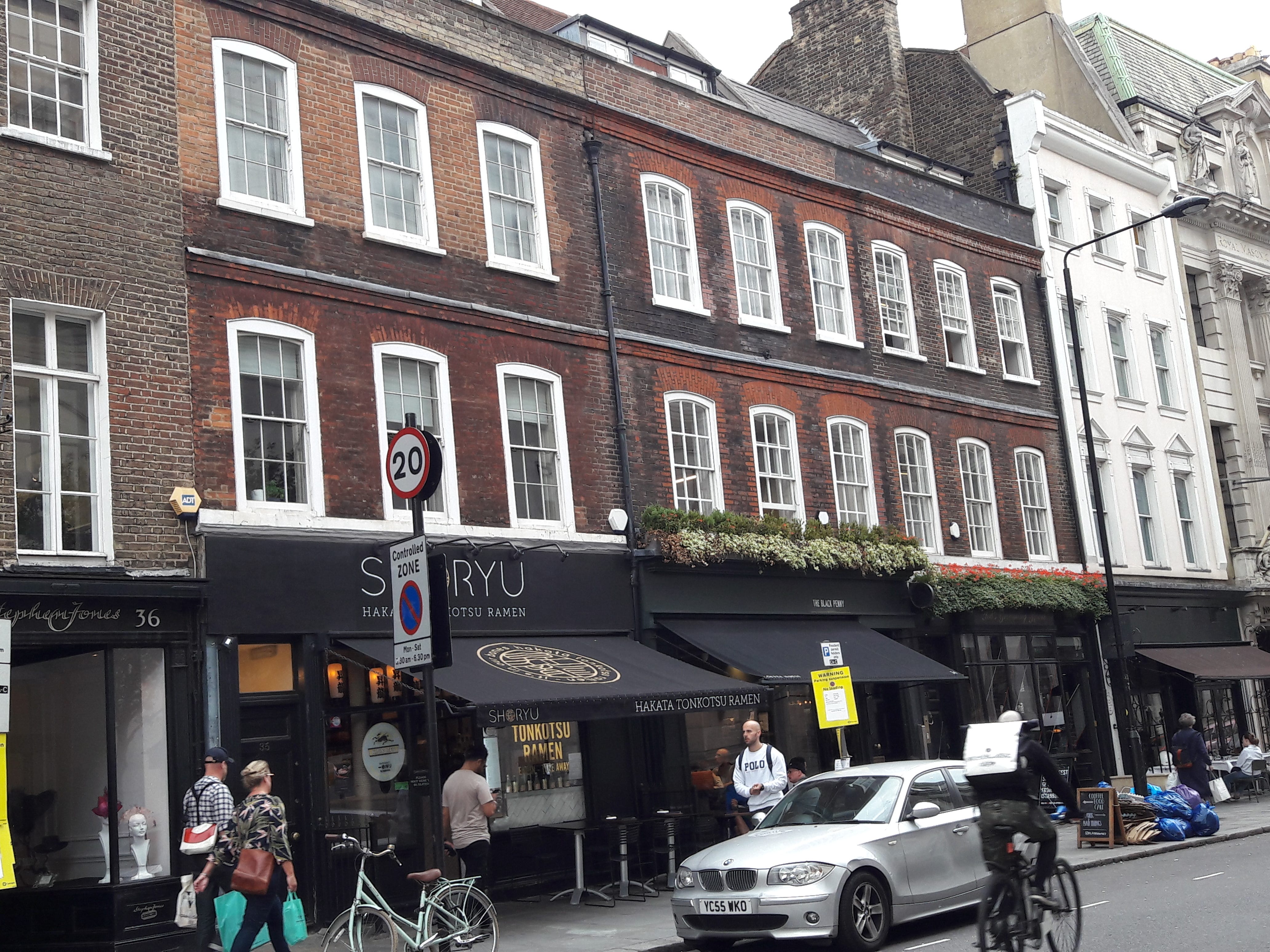
But his days of freedom were numbered. In 1772, Blake was apprenticed to an engraver, James Basire, in Great Queen Street. This is where he learned his trade, and how he supported himself and his family.
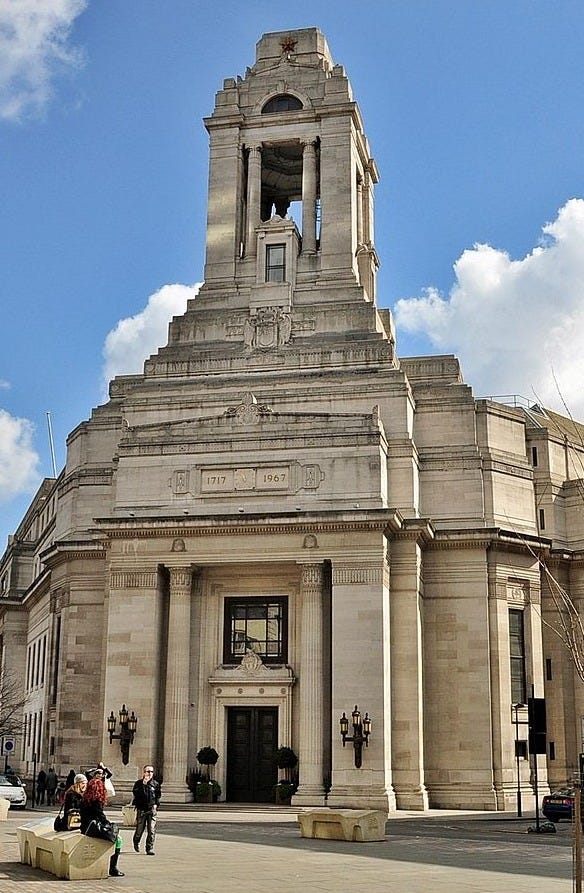
Right opposite is the Freemason’s Hall, the United Grand Lodge of England. Although the current building is 20th century, Blake would have seen its predecessor being built while he was an apprentice. Could this be where he got his interest in masonic iconography? A more definite influence was that Basire sent his young apprentice to copy monuments in Westminster Abbey. The elongated, Gothic style stayed with him.
Ten years later, Blake met and married his wife Catherine, the daughter of a market gardener from Battersea. The Blakes moved firstly to Leicester Fields (now Leicester Square) then on his father’s death back to 27 Broad Street, next to the family home, where Blake set up a print shop with James Parker, who had been a fellow apprentice at Basire’s engraving business in Great Queen Street.
Shortly afterwards, in 1785, the Blakes moved to bigger accommodation just around the corner in 28 Poland Street. They lived in a narrow house of four storeys plus basement, with a front and back room on each floor. Neighbours included dress-makers, artists, lodging houses and coffee houses, not to mention the local workhouse. Satirist Thomas Rowlandson lived at number 50.
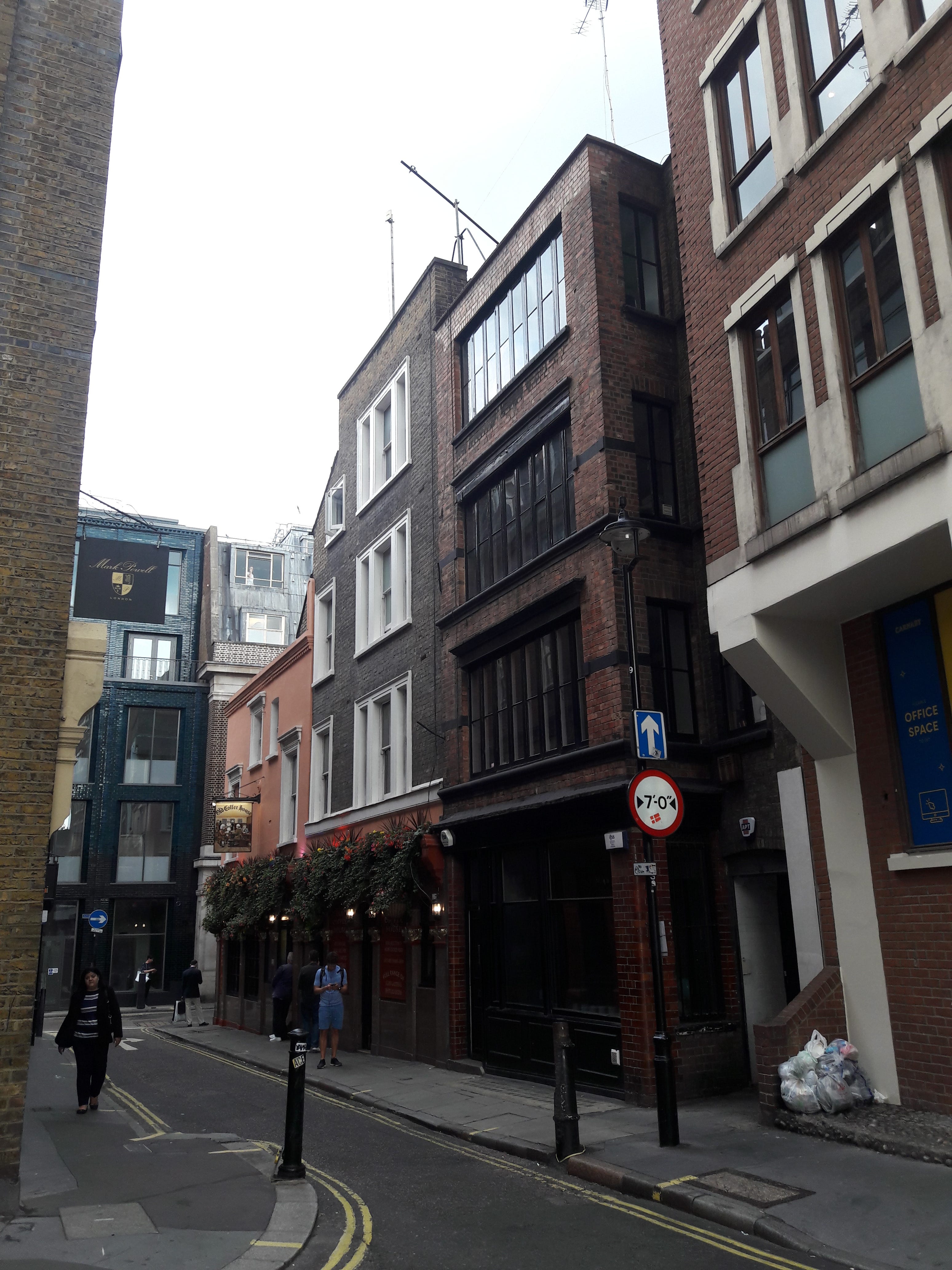
Blake worked as a printer, studied as an artist and had his own print shop. He published prints from, among others, his friend and fellow-artist Henry Fusili. Here Blake wrote the manuscript that became known as An Island in the Moon, which satirized literary society. At the time he had been attending a literary salon in nearby Fitzroy Place, which is thought to be a target for the satire. He also completed his illustrated Songs of Innocence poems, as well as his longer poem sequence, Tiriel. Blake’s beloved younger brother Robert lived in Poland Street with them for a time, and died in 1787, nursed to the end by his brother.
In 1790, Catherine and William moved south of the river to 13, Hercules Buildings in Lambeth, and stayed for 10 years. Hercules Road is close to the river, between Lambeth and Westminster bridges. The area is now dominated by criss-crossing railways, but in the late 18th century it was a mixture of marshland, rapidly-growing industries, market gardens, pleasure gardens and a circus run by Philip Astley, who also built Hercules Buildings, supposedly naming it after the circus strongman.
Blake set up his printing press in the spacious three-storey house. For the first time he had a garden, with a grapevine and a summer house. He wrote some of his greatest works here, including Songs of Experience and The Marriage of Heaven and Hell. He was also working successfully as an engraver, with a decent income.
There are traces of Lambeth in many of his poems, not least of the great Albion Mill on Blackfriars Road, the first great factory in London. It burned down the year after the Blakes arrives in Lambeth, and its blackened hulk seems to have inspired the ‘dark Satanic mills’ of the poem we now know as Jerusalem.
Hercules Buildings have been demolished and replaced with flats, but under the railway bridges nearby is a delightful surprise – a gallery of mosaic renderings of Blake’s poems and artworks, created by local artists.
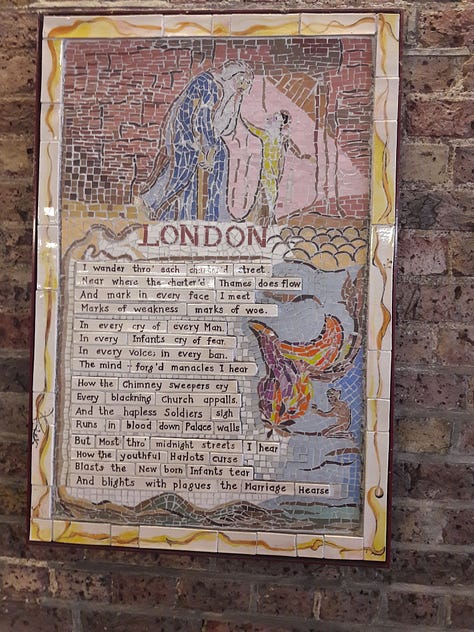

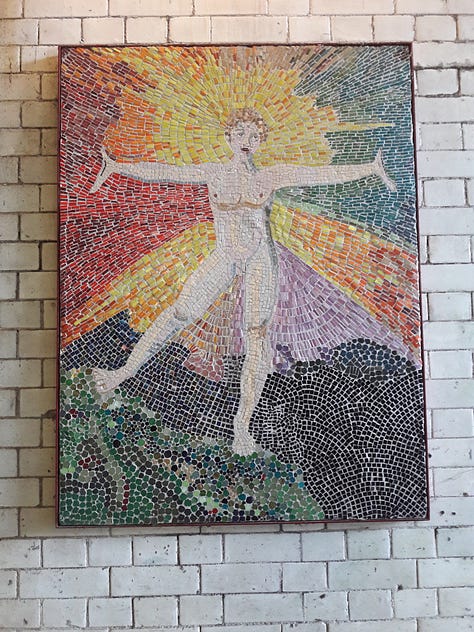
In 1800, Blake lived outside of London for the only time, in a cottage by the sea in Felpham, Sussex. He had a patron, poet Thomas Hayley, and worked on engravings for him. Although at first all went well and he enjoyed his first encounter with the sea, the relationship became too restrictive and the Blakes moved back to London in 1803, to lodgings in South Molton Street.
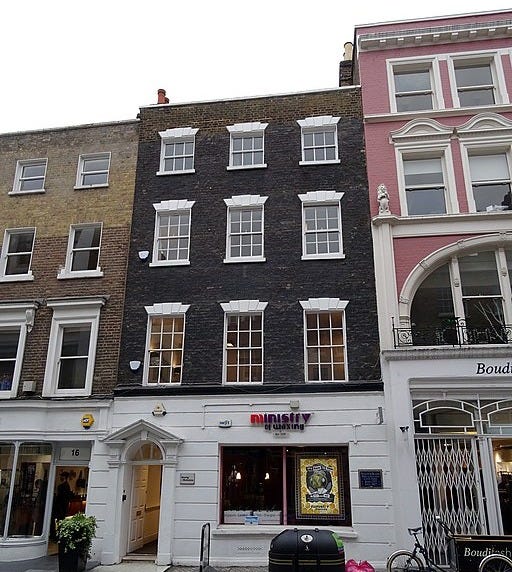
During this time Blake’s fortunes declined, although some of his most startling work was done here – such as his visionary portrait of The Ghost of a Flea, which his friend, mystic John Varley, said was painted after Blake saw it in a vision during a seance. This is the only one of his London homes still standing, although the Ministry of Waxing was probably not there in his day.
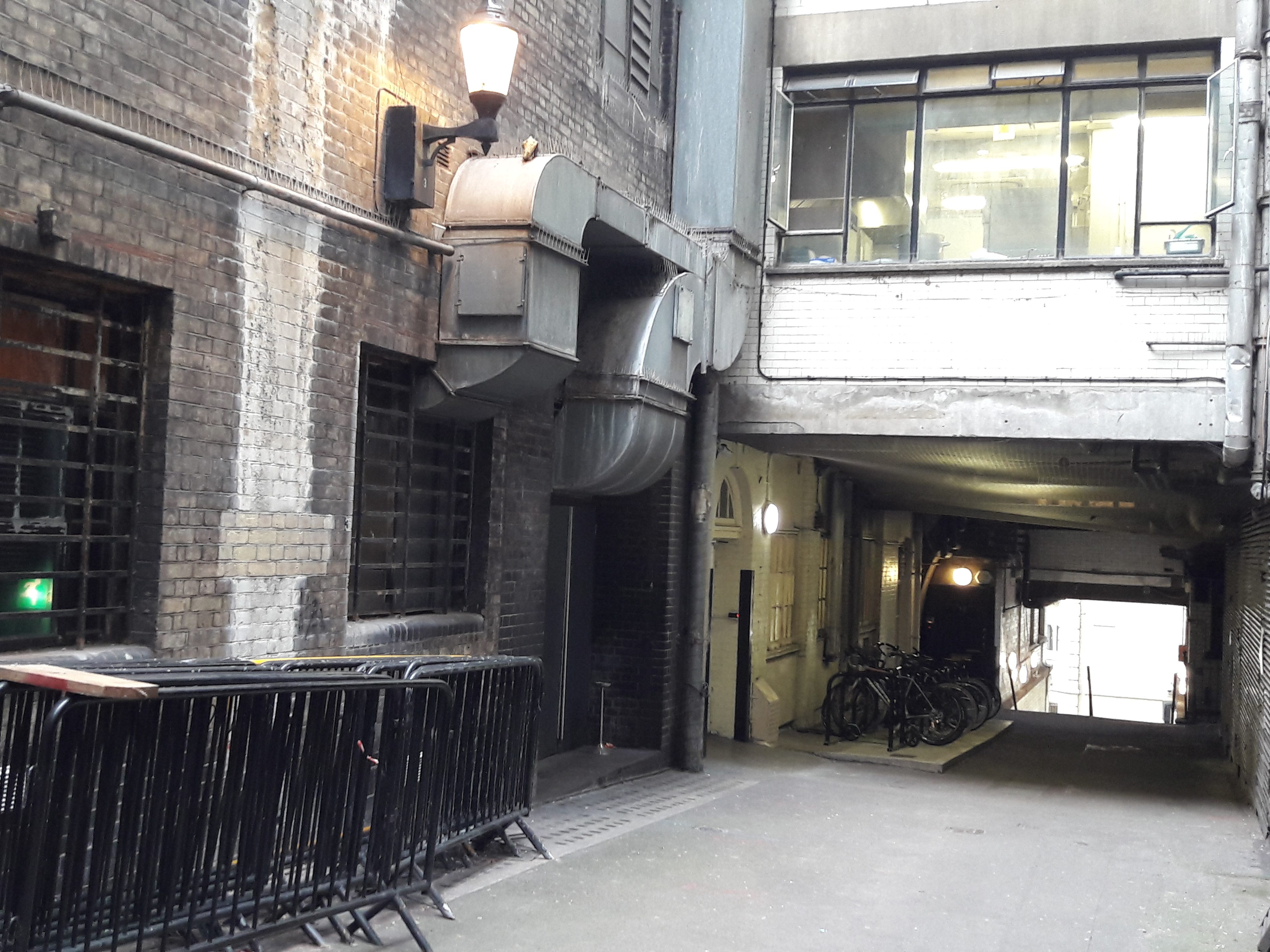
Finally, we come to Fountain Court, the last stop on our tour, and the place where Blake died. Nowadays its a rather sinister cut-through from Strand down to the Thames. Blake and his wife lived in two rooms here, and he died sitting up in bed, singing hymns.
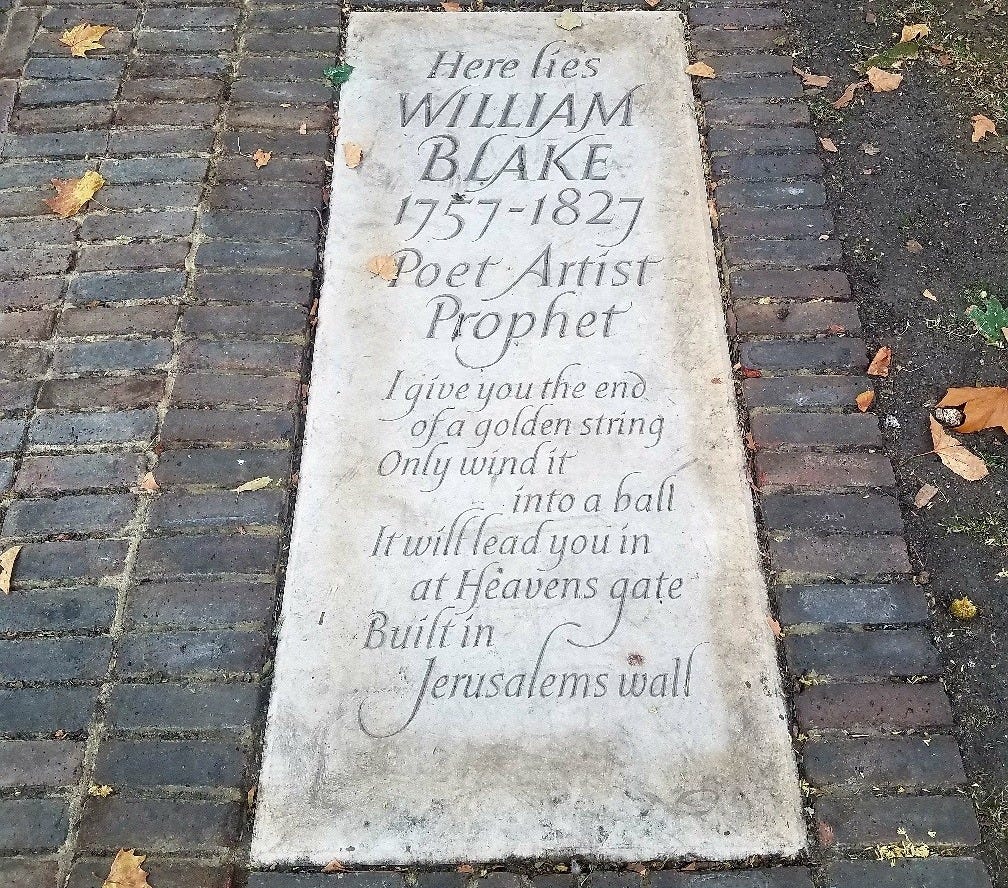
As religious dissenters, Blake and Catherine were buried in Bunhill Fields. Their exact burial sites were unclear and they had a joint headstone. Detective work has found the sites and in 2018, a new grave marker was unveiled, after fundraising by the Blake Society. Other inhabitants of Bunhill Fields include Daniel Defoe and John Bunyan, whose Pilgrim’s Progress Blake illustrated. Work is underway to create a memorial to Catherine.
My research on Blake’s life and works informed my 2020 thriller The Peacock Room, set in the fictional Russell University, where Helen Oddfellow tracks down the author of disturbing Blakean poison-pen letters and unravels a mystery about a Blake poem. Find out more about it here.
Thank you for reading The Stories Behind The Story. If you enjoyed the post, please do the nice thing and like and share.

Comments
Nothing yet. Say the first thing.
Sign in to join the conversation.