
I have an admission to make: I’ve been avoiding the aristocracy. If you wondered why my 1920s detective duo consist of a wealthy American lady and a lower-middle-class draper’s daughter, rather than the daughter of a duke and her posh friends, this is my guilty secret.
I had no idea how to address the upper crust of nobility, aristocracy and gentry. I’d never needed to find out. The one titled person of my acquaintance was my next door neighbour in London, Sir William Utting, a lovely chap knighted for services to social work. He was known to his neighbours as Bill (and to the bin-men as Sibyl, a contraction of Sir Bill). But of course that was a conferred knighthood, not an inherited one.
From everything I’d heard, the correct forms of address were designed specifically to trip up the lower classes, in case we got ideas above our stations. When I wrote my first novel, Unlawful Things, I puzzled over the rules for a bit and decided to call my solitary aristocratic character Lady Joan Cobham. Someone wrote to me in agitation: was she the daughter of a lord? Because if not, she would be addressed as Lady Cobham not Lady Joan. Having pored over the rules a bit more, I decided she was the daughter of a lord, although I’d neglected to specify which variety.
Most of my 1920s mysteries continued to avoid the upper crust. The only Lord I dealt with as a main character was literally a press baron, the first Baron Ravensbourne and proprietor of the Daily Post. His wife was Lady Ravensbourne (I remembered the rule from last time) but she wasn’t in it much.
But the book I’m working on at present lands me squarely in the aristocracy. It’s a classic country house mystery, set in a castle in Northumberland, and the Earl of Ashwick lies dead in his study, the victim of that stalwart of murder investigations, a blunt instrument.
Before I could write another word, I needed to know what to call his wife, his children, and what everyone called him (not Earl, presumably).
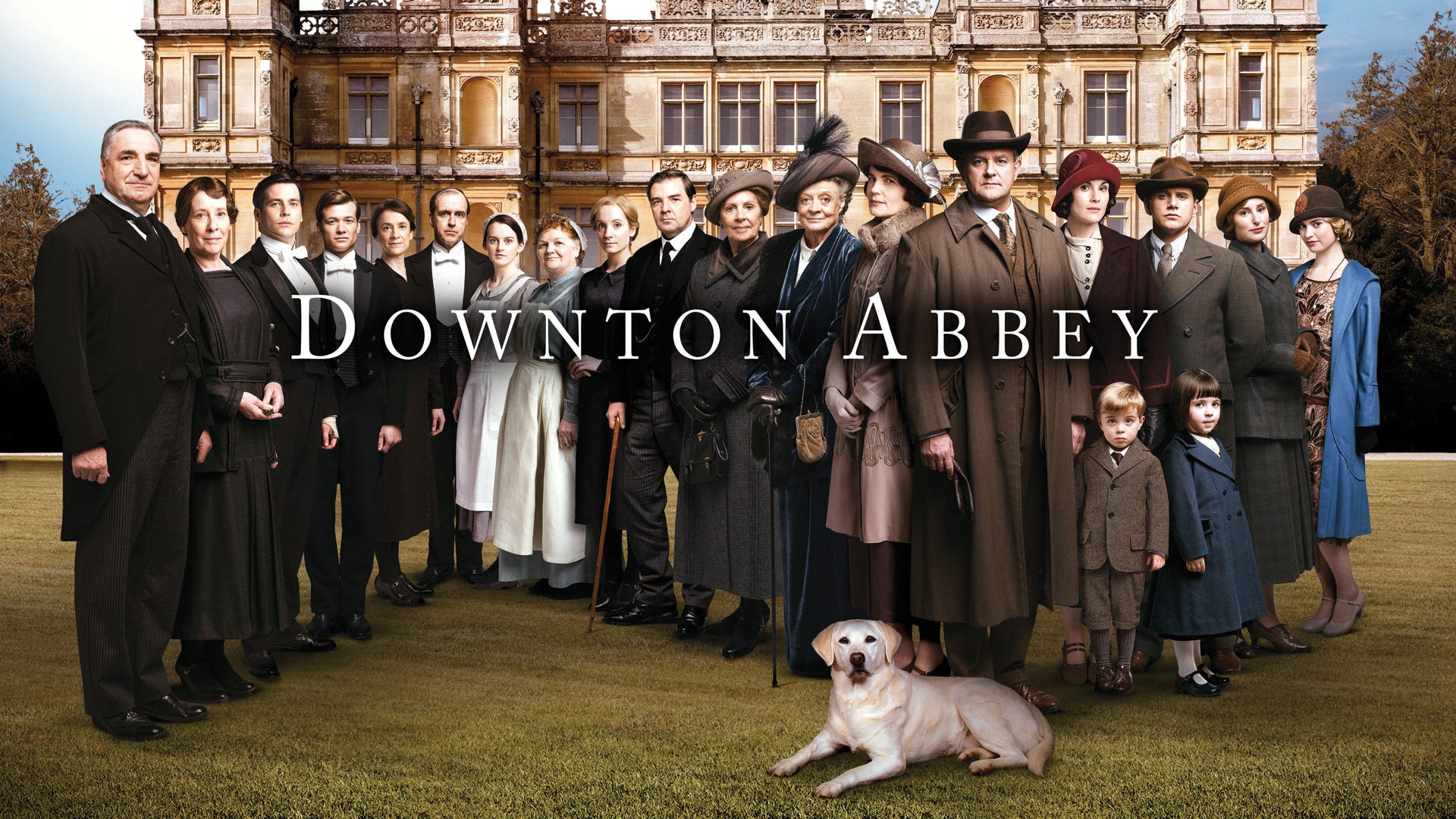
I have three cultural references when it comes to the aristocracy: Downton Abbey, Wolf Hall and the Lord Peter Wimsey novels of Dorothy L Sayers. I don’t actually use these fictional resources to check my facts, although I suspect they are all pretty reliable on titles, but it’s helpful to remember things without looking them up (thank you Lady Mary, Lady Peter, and Thomas Howard, Duke of Norfolk).
I remembered seeing a post on Substack that gave dire warnings about how people ruined their historical fiction by getting titles wrong. However, it didn’t get much past the warnings and into the practical stuff, so I purchased the recommended reference book: Titles And Forms of Address: A guide to correct use. It’s so old-school that you can’t buy a proper e-book, only a PDF.
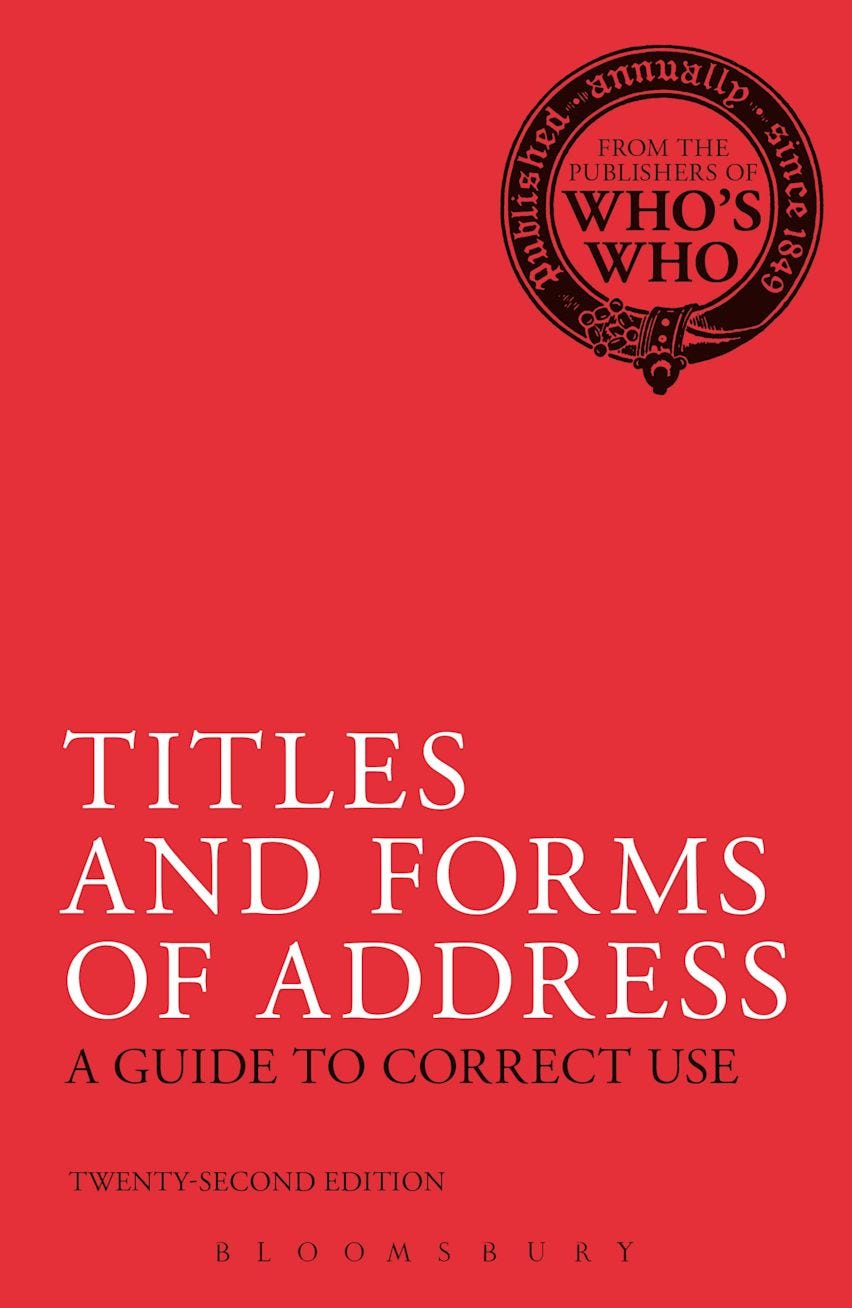
The foreword begins with a reassuring note that correct forms are a matter of convention, not unshakable natural law: “The correct use of titles,” it observes “has generally become established over a long period through the usage followed by the title-holders themselves”.
However, I know this is something people feel strongly about, and in the 1920s it would certainly have been important to get it right, so that’s what I endeavour to do.
The book is divided into sections, beginning (of course) at the top with Royalty. These start with the monarch, then the monarch’s consort, the ‘Prince and Princesses of the Blood Royal and Dukes and Duchesses of the Blood Royal’ which sounds very Harry Potter. There’s no royalty in my book, so I skipped on.
The hereditary peerage, in order of precedence, proceeds to Dukes, Marquesses, Earls, Viscounts and Barons. The titles descends (or devolves) in the oldest direct line, usually from father to eldest surviving son.
I decided on an Earl because a Duke sounded a bit too grand and there aren’t many of them; I wasn’t sure any of my US readers would know what a Marquess was; Viscount reminds me of mint-flavoured chocolate biscuits; and Barons of pantomime. Also, Downton Abbey had an Earl, so I felt we were on familiar territory.
Earls, I learned, may take their earldom from the surrounding territory, or from their family name. In my fictional case, the Earl of Ashwick took his title from the (fictional) surrounding area, while his family name was Embleton (which is also a small village in Northumberland).
How to address him? All peers and peeresses below the rank of Duke are addressed as Lord and Lady in speech, so the Earl of Ashwick would be addressed as Lord Ashwick, unless you were a close chum and could call him Ashwick. The wife of an Earl is a Countess (another trap: Britain has Countesses and Viscounts, but no Counts) so the Earl of Ashwick’s wife is the Countess of Ashwick, addressed as Lady Ashwick.
I was making progress. But what about the children? Once Lord Ashwick was dead, would his son be called Lord Ashwick, too? This was going to get confusing.
I learned with relief (under ‘Addressing the Heir on Succession’) that ‘It is customary to address the heir of a peerage or baronetcy by the courtesy title or other style by which he was formerly known,’ until after the funeral. Thank heavens, the novel is set between the murder and the funeral, so I wouldn’t have to keep referring to the late Lord Ashwick and the living Lord Ashwick.
So what was a ‘courtesy title or other style’? What should I call Lord Ashwick’s eldest son? A ‘courtesy title’, I learned, is one of the lesser titles acquired by the family, which the senior peer would lend his eldest son until his succession. The rank would be from further down the aristocratic tree, so I decided to ignore the biscuits and make him a Viscount. The title of Viscount could be the family name, so I called him Viscount Embleton (no ‘of’), addressed as Lord Embleton. His wife would be Viscountess Embleton, Lady Embleton.
But Lord Ashwick had four children: two sons and two daughters. The second son, I learned with some surprise, had no title at all, but was plain Mr Embleton. The daughters, however, were ‘Lady Rhoda’ and ‘Lady Phyllis’ from birth, and would keep their title even if they married a commoner (think of Lady Mary in Downton Abbey).
And what of the Earl of Ashwick’s widow, after his death? She’d get the title ‘dowager’ lumped in front of her name, becoming the Dowager Countess of Ashwick, but remaining Lady Ashwick. Which must be confusing as there would at some point be two Lady Ashwicks. No wonder the Dowager Countess of Downton in Downton Abbey (deliciously played by Maggie Smith) and her daughter-in-law were so often at daggers drawn. The elder countess must resent sharing her status, and the younger must be determined to claim her own.
There was one question that the book didn’t clearly answer: what was the title of an Earl’s brother? I can answer for a Duke, thanks to Dorothy L Sayers’ fictional Lord Peter Wimsey, brother of Gerald, 16th Duke of Denver. And I know from the last of her Wimsey novels, Busman’s Holiday, that Harriet Vane, on marrying Lord Peter, became the rather ridiculous Lady Peter, not Lady Harriet. (I forgot this when writing about DLS and Bloomsbury last year. Inevitably, someone corrected me in the comments.)
However, if I’m reading Titles and Forms of Address correctly, the earl’s brother, as second son, would not have a title even after his brother acceded to the Earldom. So Mr Embleton remains Mr Embleton, even though he’s now brother of the Earl of Ashwick. Somehow, the persistence of a ‘mister’ in the pack is rather reassuring.
I’d love to know from other authors: what are your guilty secrets? What do you avoid writing about at all costs, because you’re worried about getting it wrong? And if you’ve spotted an error in this post, please please tell me – before the book’s published, ideally!
Thank you for reading. If you enjoyed the post, do give it a heart. I write about writing, books, research and being an indie author every couple of weeks. The Stories Behind The Story is free to read. Why not subscribe now?

Comments
Nothing yet. Say the first thing.
Sign in to join the conversation.