
It started with an email. Did I want to appear at the Walmer Castle Book Fair, and if so would I do a talk? Of course I would. Weeks went by. Friends told me they’d booked to come along. Hmm. Better write that talk.
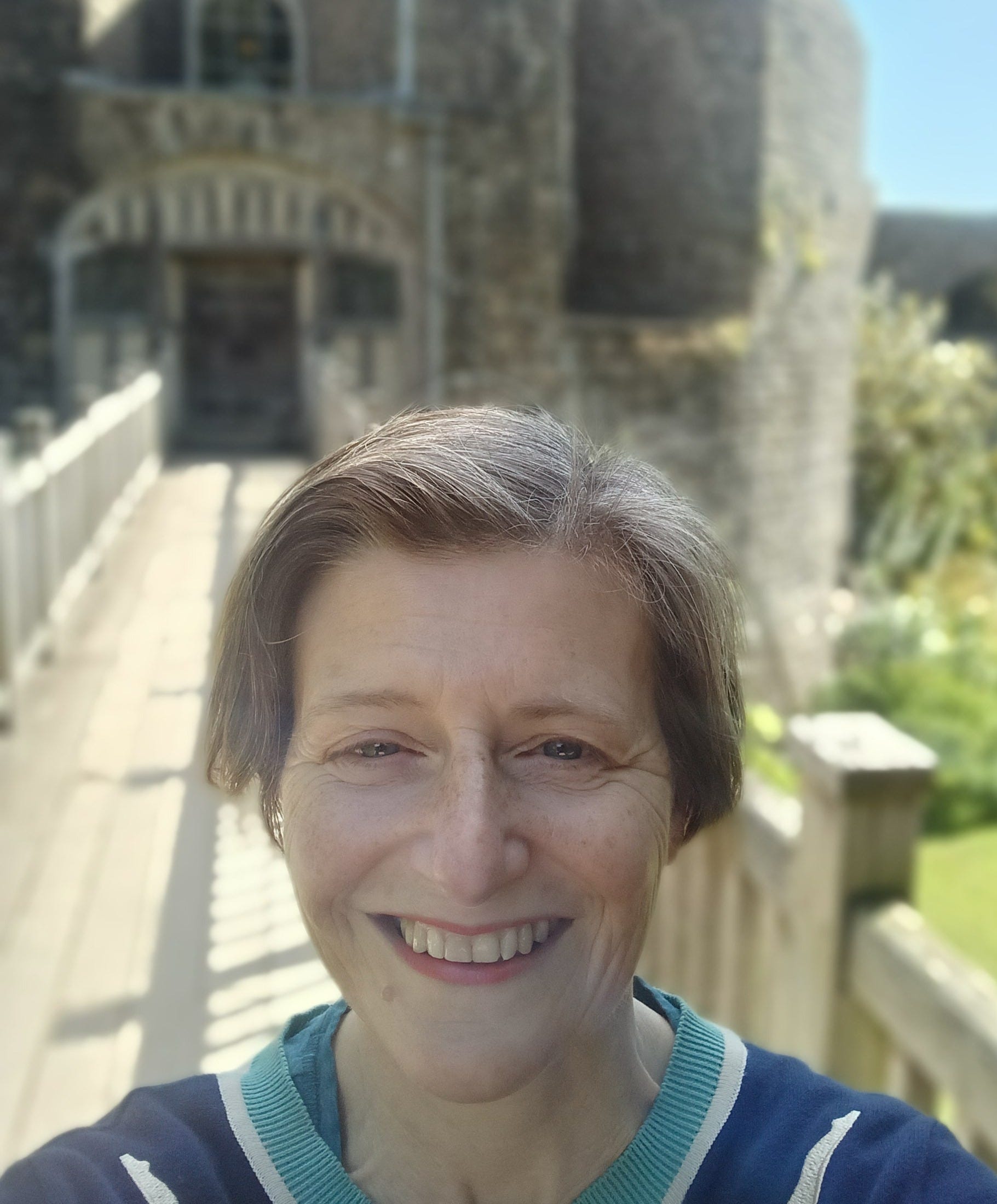
I’d promised to talk about how to write a historical mystery. I’ve written six of them, so I ought to know. When I sat down to think about it, I realised there are five distinct phases.
My inspiration comes primarily from times and places. The 1920s in England are a time of enduring fascination. I’m drawn to periods of intense social change, and in particular changes in the role of women in society. The shadow of the First World War loomed large over the 1920s, making lasting changes that upended society. Men in their tens of thousands disappeared to fight - and those that returned were often damaged physically or mentally, haunted by what they’d experienced. While the men were away, women stepped up to do ‘men’s work’ in the factories, on the land, in transport systems and beyond.
Of course working class women had always worked, as my heroine Marjorie Swallow, a shop-keeper’s daughter, occasionally reminds her wealthy employer. But middle class women were stepping out of the domestic sphere, finding independence, discovering that they too had the skills and abilities to take their place in the wider world. And then, when the damaged men came home looking for comfort and familiarity, they found that the women had changed too. It was a recipe for fireworks - and the upheavals of the Roaring Twenties were just one response to it.
Places have always been a big inspiration. Generally, I write about the places I like to hang out - the garden squares of Bloomsbury, where I lived and worked for a time; the beaches and boulevards of Nice in the south of France, where I had many happy holidays.
I’m also attracted to certain worlds, like the lost golden age of newspapers in Fleet Street, or the super-competitive gardeners of the Chelsea Flower Show. Sometimes I simply wander a neighbourhood I like, looking for anything that sparks my interest, like a blue plaque indicating a famous author who lived there, or a narrow alleyway that looks like you wouldn’t want to go down there on a dark and foggy night.
Research is both a necessity and joy, and a trap. Like many writers, I’ve been known to dive down rabbit holes after one fact, emerging hours later with a hatful of entirely different ones that have no bearing at all on my narrative. However, it’s possibly the bit I enjoy the most.
Visiting places in real life is the best bit but I also dive into history books, and find memoir and autobiography particularly fascinating. I loved reading memoirs by retired journalists for Death on Fleet Street, for example - anything that exposes the language and customs of a world unto itself.
And if I’m looking for nuance, language and social concerns of the time, contemporary fiction written in the period I’m researching is both fun to read and great for picking up things like idiom and expressions. A favourite source is the British Newspaper Archive, which has online facsimiles of local newspapers going back centuries. A browse through the BNA for the time and place I’m writing about can be inspiring.
After the research, it’s time to sit down and write the story. One of the reasons I indulge my love of research is that it can often provide sparks of story ideas. When I wrote Death At Chelsea, the story wasn’t coming together in a way that excited me, until I learned about the role of the plant hunter in early 20th century plant design. These intrepid explorers hunting India and China for new plant species to bring back to Britain were a big part of the garden scene at the time. I read memoirs of one plant hunter, then created my own, whose travels in the mountains of the Himalayas on the hunt for the Himalayan Sapphire Lily became a crucial part of the plot.
Research can also give texture - like the newspaper report of a punch-up over a game of bridge in the posh Kingsgate Castle Hotel, which gave me an idea for one of the characters in Murder On The White Cliffs.
This all feeds into the motivations of the characters, which should be the drivers of the plot. Whenever a scene isn’t working, it’s inevitably because I haven’t properly thought through who wants what in the scene, and I’m trying to push the characters around like chess pieces. They tend not to like that. But writing historical fiction means understanding motives of the time, and that ties into the social code.
For example, someone might be desperate enough to murder if they are terrified that what they see as a shameful secret is about to be exposed. But that secret is only shameful because of those social codes. Homosexual relationships, children out of wedlock and so on are only secrets worth protecting if they’re condemned by society. And the difficulty of divorce, especially for women, may have led some to see murder as the only escape from an intolerable marriage.
Finally, while writing, I have to remember the crime writer’s unofficial code: the clues have to be there, and you have to hide them in plain sight. It’s a lot like stage magic. I’ll quietly drop in a clue, then make something dramatic or funny happen, so the reader forgets about it or doesn’t notice.
There’s an army of readers out there determined to pick up on historical anachronism! Writing historical fiction means constantly asking myself whether something is right for the time, and checking (Wikipedia followed by primary sources, where possible). Did people use the expression ‘don’t get your knickers in a twist’ in the 1920s? Could you place an urgent telephone call from London to Washington in 1923? (No, and no. Nobody got their knickers in a twist until the 1960s, and you’d have to send a telegram then follow up with a letter).
Writing about real places has its own challenges. I spent half a day trying to find out whether the statue of Eros was in Piccadilly Circus in 1922. (It was, but it was removed a couple of years later for the redevelopment of the underground station.)
I check what the weather was doing. Death At Chelsea was a different book once I’d discovered that May 1923 was one of the wettest so far that century, and visitors waded knee-deep in mud.
None of my research, story-construction or fact-checking matters unless it works for the reader. I have an army of 1920s mystery fans who read the first draft of every mystery, to let me know if it worked. Did they ‘buy’ the story? Did they guess the killer in chapter 1? Did anything strike them as off, or drag them out of the story?
If so, I’ll try to fix it. I’ll also ask them to check I haven’t succumbed to historical writer syndrome and included a whole lot of research they don’t need to know about. That can go in the historical note at the back, or in this newsletter. The fascinating facts, the surprising tid-bits… that’s what The Stories Behind The Story is here for.
Thank you kindly for reading, and please do hit ‘heart’ if you enjoyed it. It really helps.

Comments
Nothing yet. Say the first thing.
Sign in to join the conversation.