
One thing about me is I love a short, pithy adage that gets at something clutch in life. Bonus points if it’s a little funny and self -aware. Don’t should all over yourself has been a long-time fav, one I pull out when there’s a need to put down the great clipboard of life and remember that no one actually cares enough to keep score. Another helpful mantra has been I’m having a should-less day, courtesy of Ellen Burstyn from our first conversation in 2014.
I recently learned a new one from my friend Mary, and I keep repeating it like a cheerleader.
If it’s hysterical, it’s historical.
This one comes up when you notice in your body that you’re having an outsize reaction to a slight or moment of confusion. The feelings come in hot, and only after a few deep breaths do you notice the scale of your upset doesn’t match the current facts. Maybe you’re mid-gripe about your co-worker, and then you realize, ‘Oh. This is about feeling excluded in 4th grade.’ Or maybe you’re feeling particularly rebellious in a marital conflict, and your husband helpfully reminds you that no, he is not your father and no one is telling you what to do.
I love hysterical/historical because it doesn't tell you your feelings are wrong. It’s guiding you to the source of why they’re so intense. They help you see that the person who’s making you feel so pissed or mad or indignant is a messenger of sorts, instead of a villain responsible for all of your concentrated upset.
I found myself thinking about this last week when I was in New York City, because my visits there can feel like transporting through the space-time continuum. I was there without my family, a free-wheeling lady with no parenting or puppy duties. I caught up with friends from college and radio lives past, people who know the contours of the histories that can make me hysterical.
Our latest two episodes from Death, Sex & Money also took me back.
I talked to Theo Baker about the culture at Stanford University, where I was an undergrad 25 years ago and was disoriented and turned off by the tech gold rush culture. It’s gotten much, much more extreme in the years since, and it still raises an urgent question for me: how do I prepare for a future shaped by new technologies when I’m not sure whether I accept the underlying values or the culture driving the change?
And this week’s new episode features my conversation with spouses Peter Dinklage and Erica Schmidt at Tribeca Festival about art, personal creativity, and ambition, and how they can collide with the duties and pleasures of family-building.
They described the trade-offs, collaborations, and need for their own creative space that have been part of their parallel lives as artists. It can be hard to make room for it all, and they made me think about how misalignment around a lot of this is what ultimately ended my first marriage. But that was fifteen years ago now, and as I thought back on that time, I noticed the spikiness of many of those memories has faded.
So, it’s important to note, the inverse of my new favorite adage isn’t always true. It may be historical, but it won’t always stay hysterical.
Actor Peter Dinklage and playwright Erica Schmidt have been married for two decades, and even though they’ve collaborated on projects, it’s rare for them to do an interview together. That’s why we were so excited when they agreed to join us on stage at the Tribeca Festival to discuss how they balance privacy and family, why they wish interviewers would stop fixating on Game of Thrones, and how they met on a romantic evening when elephants walked through Manhattan.
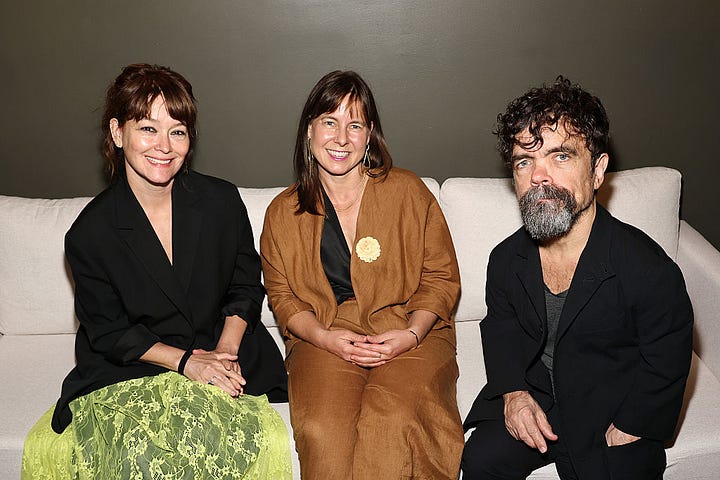
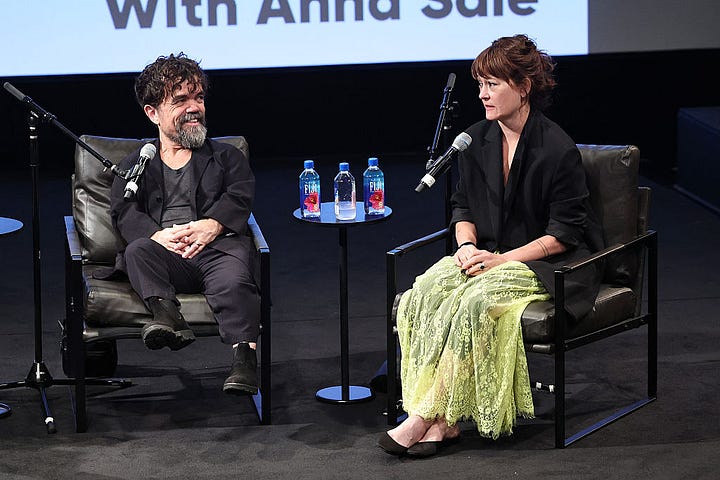
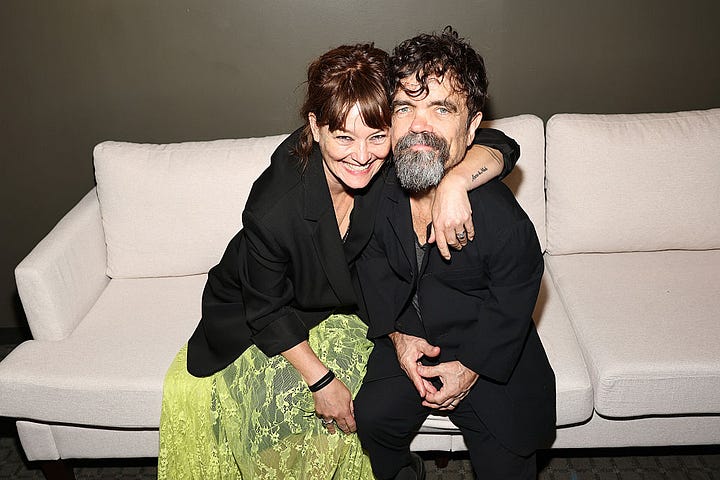

Theo Baker was seventeen when he enrolled at Stanford and stumbled into one of the biggest stories on campus: academic misconduct allegations against the university’s president. His reporting eventually forced the president out, as he recounts in his new book, How to Rule the World: An Education in Power at Stanford University.
In our conversation, Theo talked about breaking that story, navigating backlash from classmates and faculty, privately coping with the pressure of it all with dangerous drugs, and questioning where Silicon Valley’s culture of ambition and greed is leading us.

I showed up and very quickly I realized that there was this sort of Stanford inside Stanford. There is this sort of exclusive world that was only afforded to, like, a select few of the people who, you know, if you identify the next trillion dollar founder early, you’ve made your career. If you get in on the ground floor of the next Google or Instagram while the founder is 17 or 18 years old like that, as a VC, as an investor, as someone who’s associated with this system, those are all of your future riches too. And so these adults are constantly hunting for a meal ticket. They’re treating this very inside cohort of kids as a sort of commodity….On the one hand, it is this sort of absurd reality in which the context for your average teenage exploration, you know, is this bizarre, you know, tech excess world. And on the other hand, it’s also this sort of system that lacks real safeguards and really doesn’t call bad behavior when it starts to manifest.
Tara Brach has a new book, The Courageous Heart Workbook, and we at Death, Sex & Money get to share an excerpt with Death, Sex & Money Plus listeners. Hear me lead you through a guided meditation on opening up vulnerable conversations. It’s designed to listen to over and over again, so download it and listen as needed.
The Station Agent. As part of my prep for interviewing Peter and Erica, I rewatched this perfect 2003 movie about hurt and friendship, starring Peter along with Patricia Clarkson, Bobby Cannavale, and Michelle Williams.
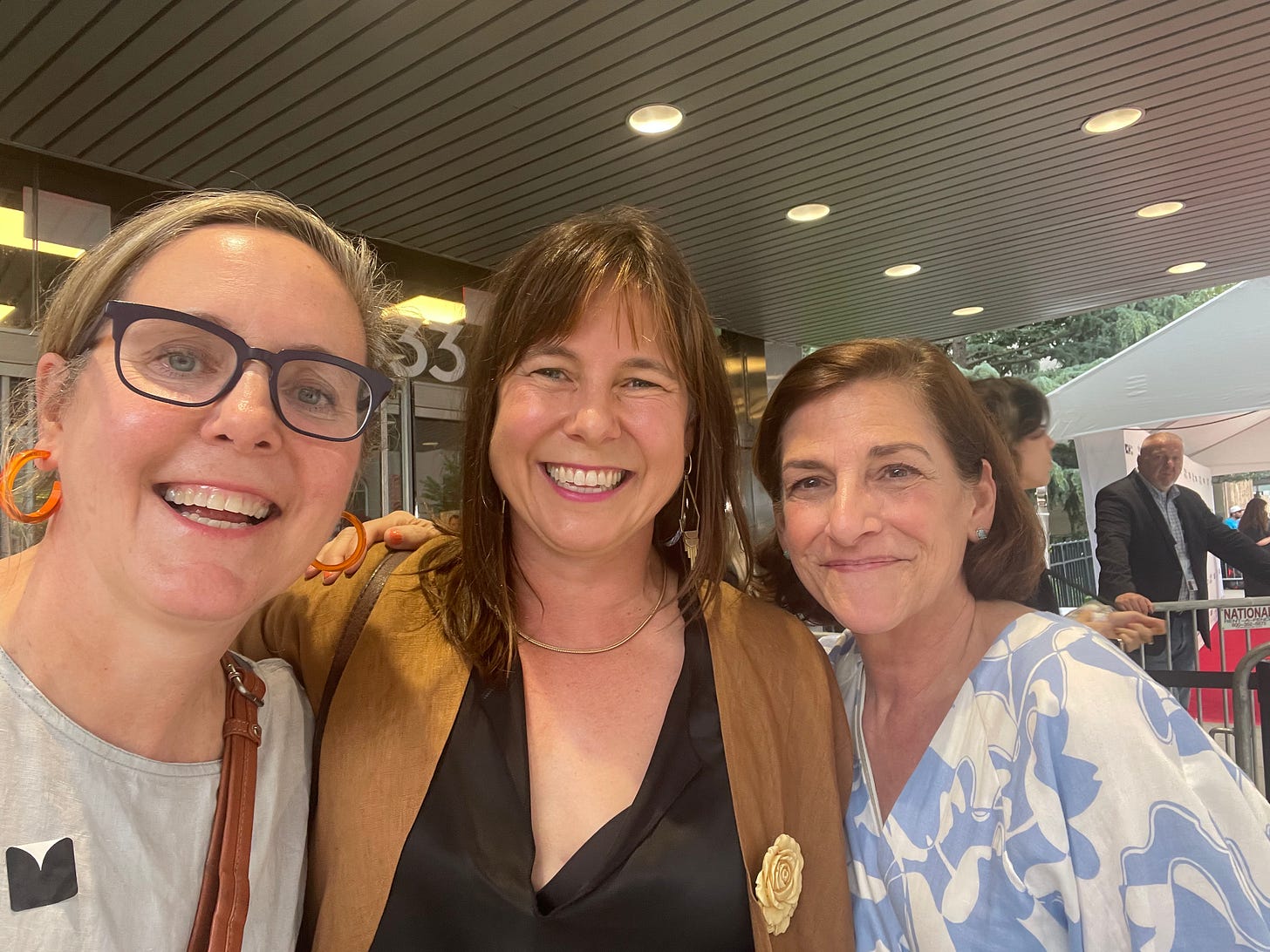
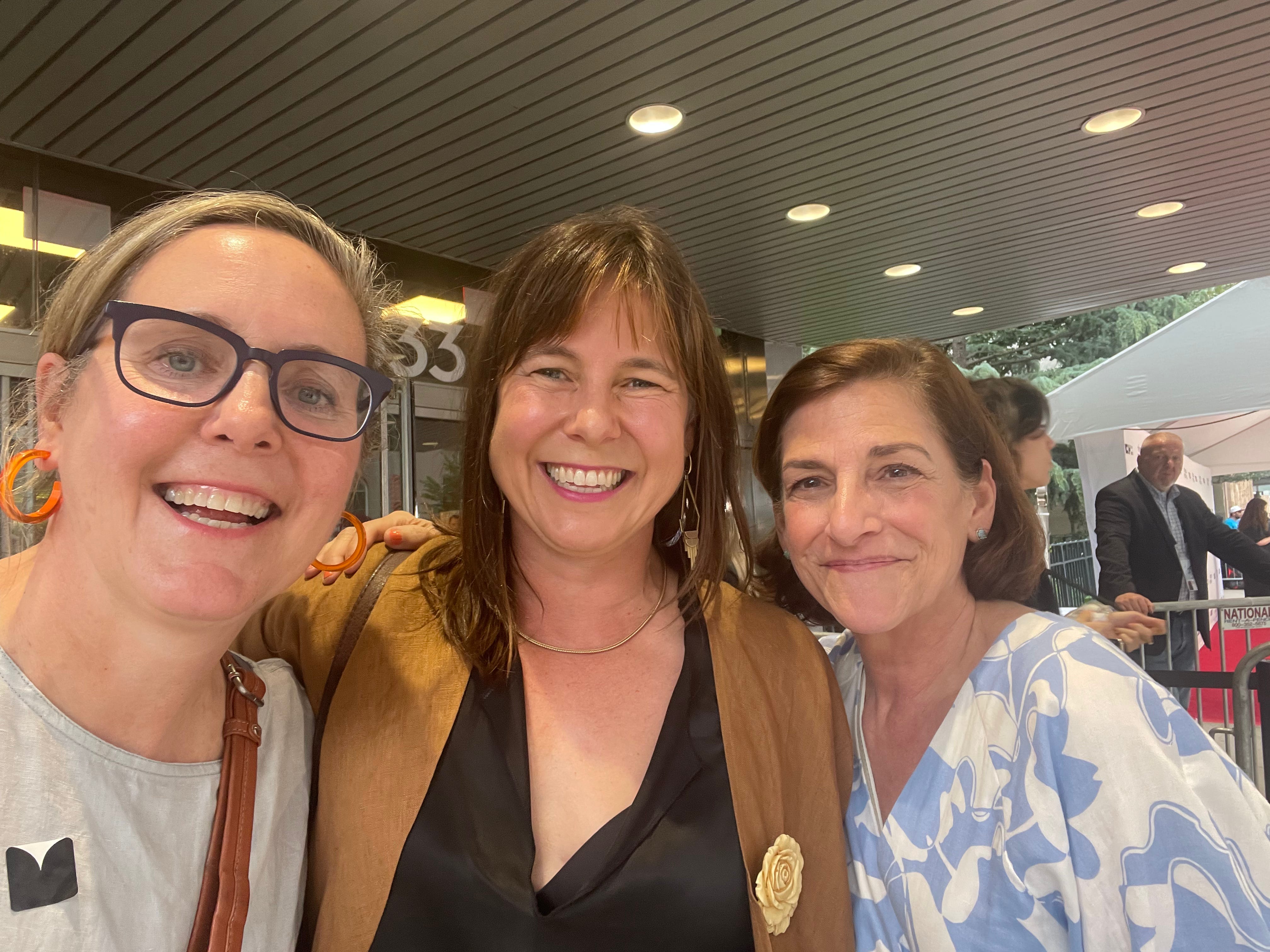
I loved Cynthia D’Aprix Sweeney’s new novel Lake Effect, a family saga about changing social mores, marital ruptures, and clumsily blended families in 1970s Rochester, New York. And Cynthia came to our Tribeca show, too! Here she is (right) with me and my sister, comic Elizabeth Sale.
Amy Gamerman on SpaceX’s company town in Texas. Growing up in West Virginia, we learned about coal mining towns with company housing and wages paid in company script. This is a wild 2026 version of that. “In this town, almost every communal space is private property,” Gamerman writes of Starbase, Texas.
Paul McCartney telling Hrishikesh Hirway about making a new song on Song Exploder. Their conversation felt very stripped down, intimate, and unfussy for an episode about Paul McCartney describing his songwriting process. I loved it.
“I think we’ve succeeded in making everyone unhappy, and maybe making everyone mad.” The latest in The New York Times on the failed talks among states reliant on water from the Colorado River basin, which is in drought this summer after the flow’s “gradually diminished over the past two decades.”
Until next week,
Anna
This newsletter is free to you, but let me urge you to support the Death, Sex & Money team by becoming a member of Death, Sex & Money Plus. What do you get? Ad-free listening and special member-exclusive podcast drops. Please join us at slate.com/dsmplus or through Apple Podcasts or Spotify.
6/16 Spouses Peter Dinklage and Erica Schmidt on Bad Interviews, Fame, and Parenting
6/16: DSM Plus: This Meditation Will Help You Find the Courage to Open Up
6/9 Something Rotten at Stanford
6/2 DSM Plus: A Hands-On Retreat Where Men Learn to Flirt (and More)
5/26 The Parent-Child Anxiety Trap
5/19 A Brat Pack Star Remembers How to Have Friends
5/5 Kara Swisher on the Rich Guys Trying to Live Forever
5/5 DSM Plus: 93 Applications, 14 Interviews, No Job
4/28 The Thrills and Heartbreaks of Being a Funk Rock Pioneer
No posts
Comments
Nothing yet. Say the first thing.
Sign in to join the conversation.