
Hello, everyone! I write to you with a brain full of ideas and a slightly frazzled mind from working on kids books deadlines through the summer. But no bad vibes here!
I’m really enjoying writing my newsletter and being on Substack, is one of the reasons for the good people on it! Over the last couple months, like many people in the world, I’ve seriously evaluated what big tech is doing for us as humans, and I ended up finding them lacking in every aspect. Privacy wise, ethics wise, psychology wise, it’s just not great to say the least. As an artist, this puts me in a tough spot. I’ve been conditioned over the years to think that posting on any Meta related app would get me sales, views, fans… whatever. But it’s really not true, and shifting my online prescence over to Substack has been a joy! So, thank you for being here, and let’s dive in to the actual topic of my newsletter!
As a major history nerd, I’ve been reading a lot about salons lately: places in history where people would gather and geek out about things they liked, like politics, science, poetry and literature, but they would also drink and gamble and party. While not all of those things are my bag (hello, gambling, bye gambling) I was thinking that I would like my newsletter to be a monthly salon of sorts. A place to geek out and share something that I’ve been interested in! Sometimes, it’s illustrated recipes, but this month, I wanted to mix in my usual cooking and food related art with my other big love: HISTORY.
In this months illustrated salon, I wanted to talk to you about the Roman Empire. It feels odd for someone who loves everything history related so much to never have written a newsletter about it, or to not have illustrated anything vaguely roman. There is so much written about this part of history! But something that bothers me about it (and history in general) is how historians, then and now, have treated the Roman Empire as a time in which women as well as many other groups did not exist and did not have any interesting stories to tell. So I have been reading a lot about people from Ancient Rome who may have been misunderstood because of Roman misogyny. (And, ahem, modern misogyny. )
Sooo. this month, I’m sharing my favourite facts about the Roman Empire that you wish you knew already! They will not all be about cool women from Rome, though: some I just liked because they were goofy, or said something about how the Romans really lived, or debunks something that is commonly believed.
This newsletter is for everyone who wants to have a good tidbit to share over a glass of wine, smashing the patriarchy one snide fun fact at a time. Oh, and if you love to look at some illustrations and videos you haven’t seen on anywhere!
A little teaser on what they don't teach you about the Roman Empire:
The forgotten princess who witnessed Rome's darkest hour... and then became a powerful ruler
How Rome achieved something that wouldn't happen again for 1,500 years… and it’s not a machine or concrete!
The massive artificial hill hiding in plain sight in modern Rome (made from millions of something Romans wouldn’t reuse)
Why your favorite "salary comes from salt" fact is probably wrong (and what Roman soldiers were actually paid with)
The surprising gender behind Roman love spells (hint: it's not who you think)
Ready for the full stories that'll make you question everything you thought you knew about ancient history?
This princess saw the end of the world (and history tried to delete her)
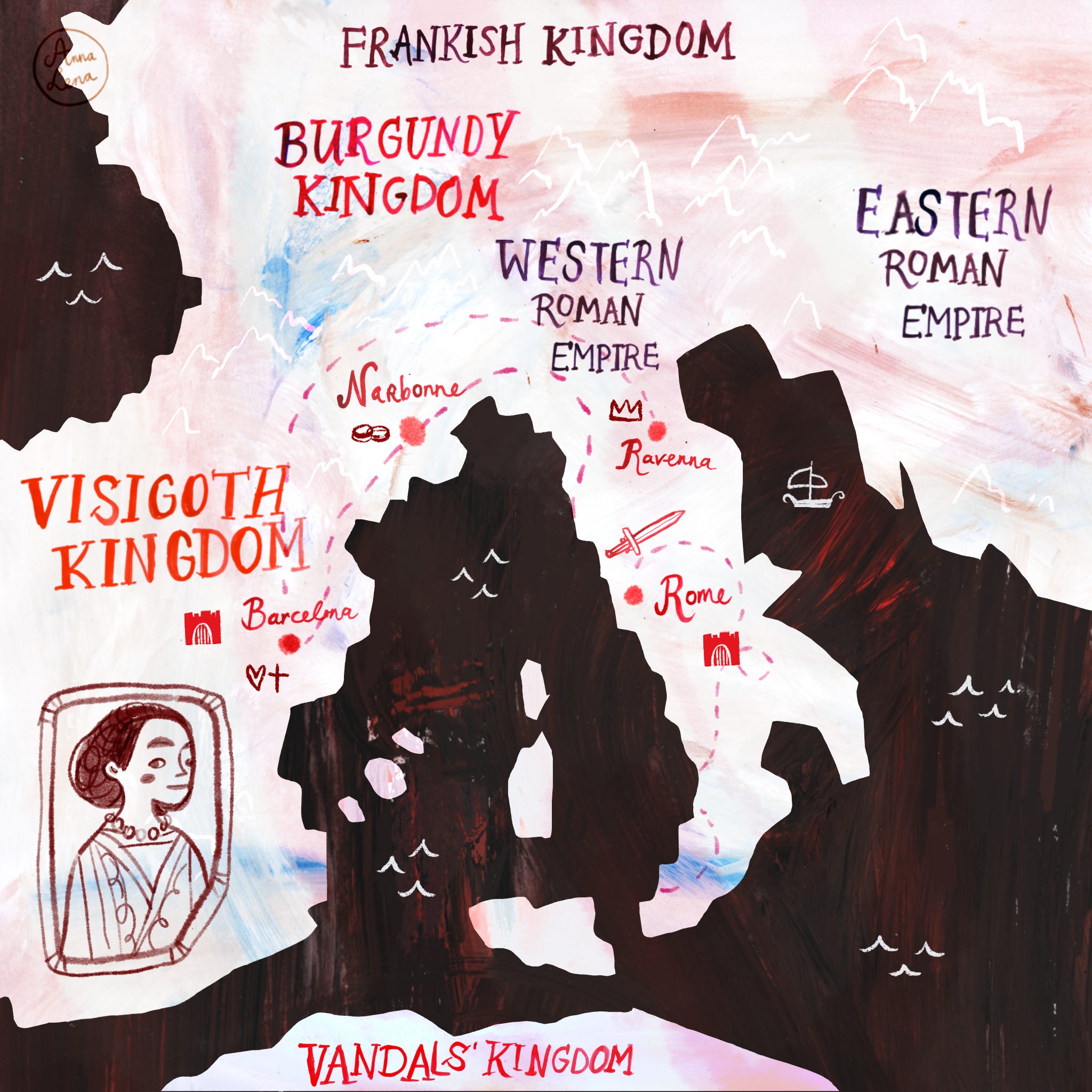
On the night of August 24, 410 AD, a 20-year-old Roman princess named Galla Placidia waited for the end of the world as Gothic horns echoed through Rome. Her half-brother Emperor Honorius had fled, but she stayed to support the Senate as the city starved and burned.
After three days of sacking, she was taken prisoner by the Visigoths. Four years later, she shocked Rome by willingly marrying her captor Athaulf, advocating for a radical vision: Goths and Romans working together to save the empire. When Athaulf was assassinated, she was humiliated and ransomed back to Rome.
But here's the kicker: after her brother died, she convinced the Eastern Emperor to restore her 6-year-old son to the throne, making herself the real power behind the Western Roman Empire for 25 years. She was, essentially, the last significant ruler of the Western Roman Empire, successfully managing politics, military threats, and even facing down Attila the Hun through diplomatic alliances.
So why don't you know her name? Because Roman historians like Cassiodorus immediately denounced her rule as the nadir of Rome's fortunes, and modern historians followed suit for centuries. Strong-willed women with radical ideas didn't fit the narrative of male military heroes, so her story was buried. Only recently have scholars realized that the final decades of the Western world's most enduring empire cannot be understood without her.
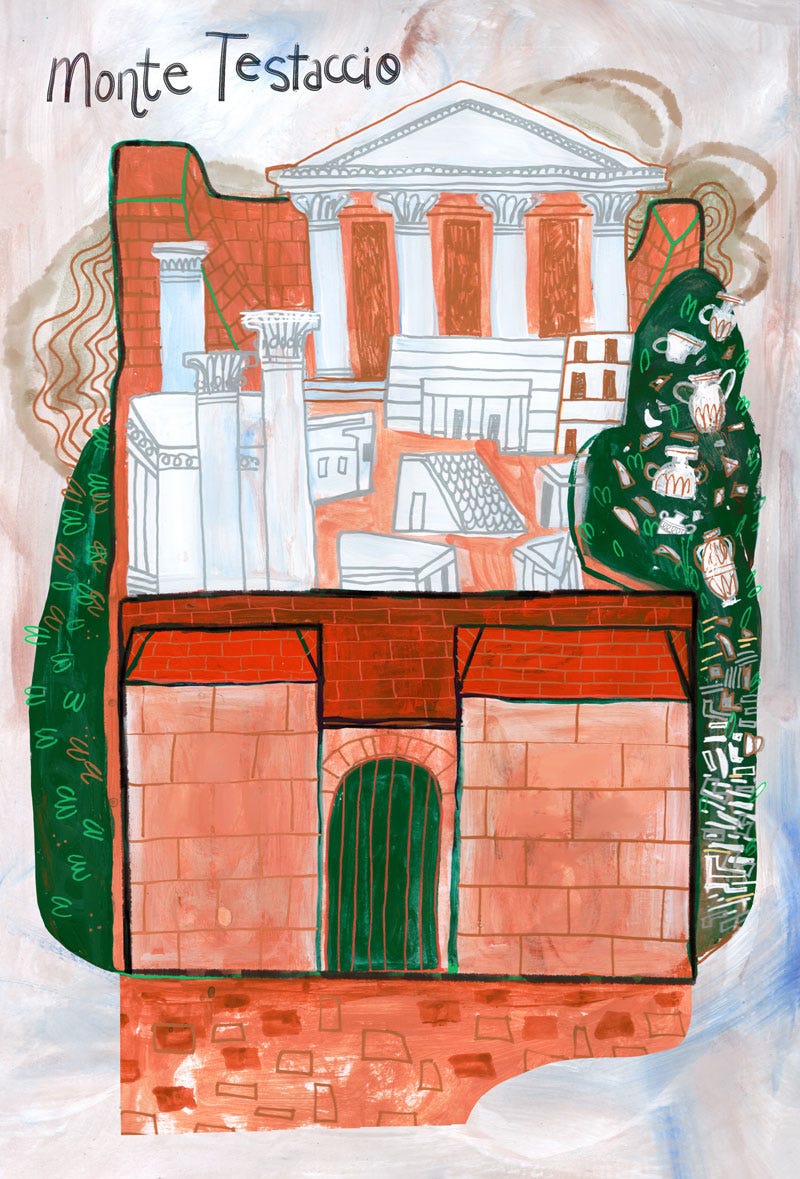
Rome had an industrial revolution before it was called that
The Romans achieved something remarkable that scientists can still detect today: industrial-scale pollution. Ice cap samples show pollution deposits that ebb and flow with the empire's fortunes, reaching levels that Europe wouldn't see again until the actual Industrial Revolution.
Perhaps the most striking evidence of Roman industrial capacity is Monte Testaccio, a massive artificial hill in Rome that you can still visit today. This 115-foot-tall mound consists entirely of discarded oil jars—millions of terracotta containers that Romans couldn't reuse due to oil residue. Over centuries, they simply dumped them in the same spot, creating thousands of layers of ancient pottery that form an entire hill.
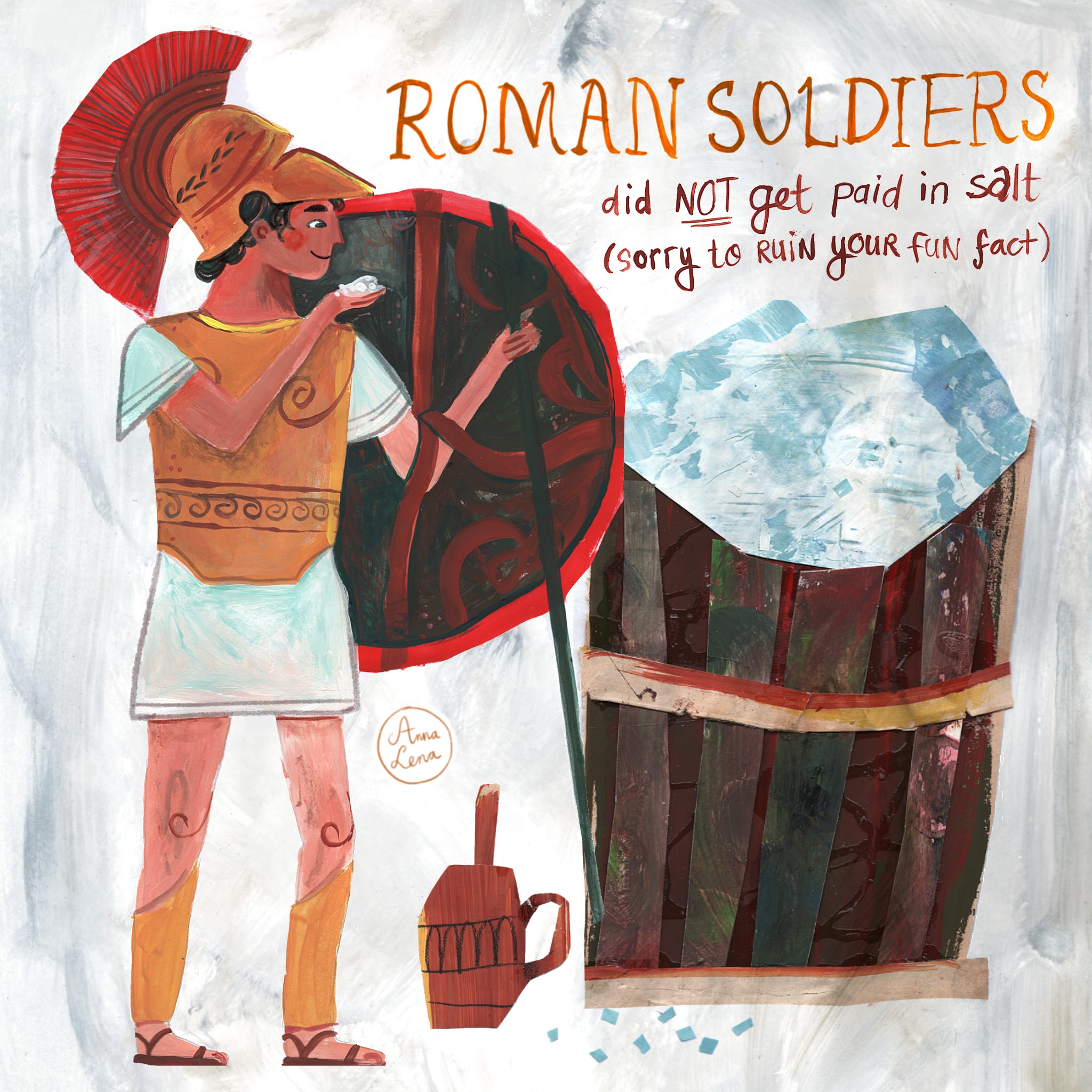
Roman soldiers weren't paid in salt (sorry to ruin your fun fact)
Despite what you may have heard, Roman soldiers probably weren't paid in salt. While our word "salary" does come from the Latin "salarium," this connection was speculation even in ancient times. Pliny the Elder suggested this etymology in the first century AD, referring to some hazy, distant past—but there's no hard evidence it ever actually happened.
During the late Republic and Imperial periods, soldiers were paid in coins, not salt. Earlier legionaries often weren't paid at all, instead receiving shares of plundered goods and sometimes land grants as part of their civic duty.
Turns out Roman men were the ones casting love spells (plot twist!)
Here's a surprising twist: if you were practicing love magic in the Roman world, you were statistically more likely to be a man than a woman. Despite literature and popular culture depicting love magic as primarily a female domain, archaeological evidence tells a different story.
Curse tablets with erotic themes are overwhelmingly in the "men seeking women" category. This challenges our assumptions about gender roles in ancient magical practices.
Pliny the Elder wrote around 100 AD, that to get a lovey vibe going, people should inbibe a mixture of wine, coriander and garlic. But love magic goes back way further in history: an ancient Grecian cup was inscribed with a spell to make the person drinking from it ‘struck by Aprodite’!
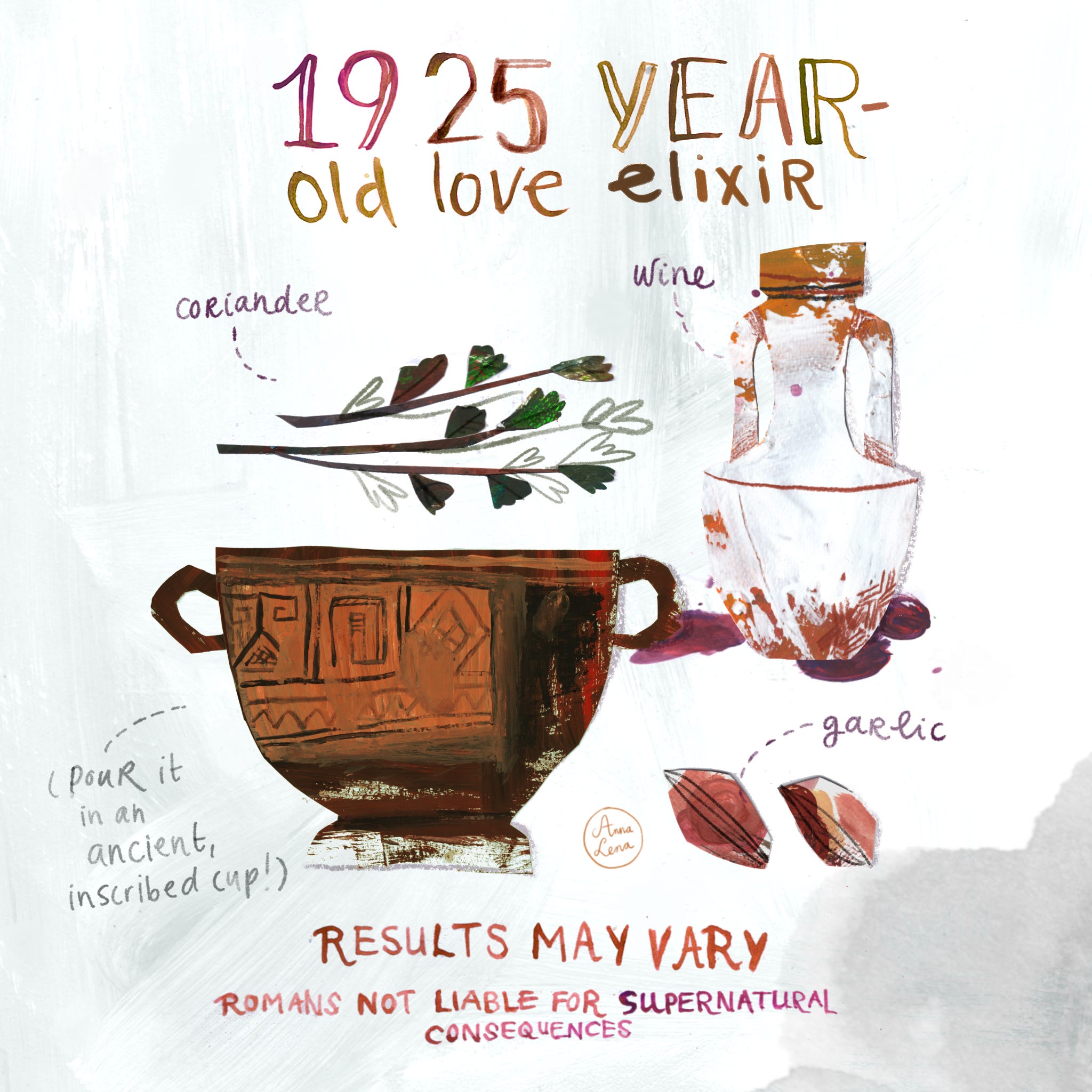
If you were a lovesick Roman, you had three main options:
Folk remedies: Maybe your aunt's friend's hairdresser swore by a particular perfume or amulet. This kind of informal knowledge circulated within communities, though much of it is lost to history.
Local wise women: Every community likely had someone—a midwife, healer, or "witch"—who could provide more specialized help. Think custom potions, lead tablets with magic words, or wax dolls for particular rituals.
Professional magicians: Especially in Egypt and the eastern Mediterranean, you could consult trained specialists who claimed connections to exotic places like Persia and relationships with gods or demons. These professionals created the Greek Magical Papyri—instruction manuals for magical rituals that still survive today.
The reality of Roman magical practice was incredibly varied across the empire. Interestingly, there's virtually no evidence for erotic magic in Roman Britain or most northwestern provinces. Whether people there handled heartbreak differently or simply left no archaeological trace remains a mystery.
I hope you enjoyed this art and these facts! I love illustrating facts from history, which makes sense as I write nonfiction books for kids, ha!
Thanks for reading Anna Lena Feunekes: Tales and Texture! This post is public so feel free to share it
Other things I’m doing…
I’m currently finishing the artwork for a book that is due to come out next year, which I can’t say too much about just yet. Just that it will be a very party-inspired, colourful, fun book! There will be some history in it too, of course. I’ve written and illustrated it, so it’s very fun.
Then I’m looking at some articles and books for a project I intend to pick up after I finish, which is centered on history as well as LGBTQ+ rights, and I’m very stoked about that! The Wikipedia rabbitholes have been excellent.
I am having a good time with work, listening to a lot of podcasts while painting, and I’ve been super into CAN (the band) lately, after listening to episodes of the music history podcast No Dogs in Space. I love them very much! Go check them out if you feel like it.
In my personal life, there have been some little trips here and there, and some planning of getaways to the UK and to Chile in the next year, for a longer trip! I’m stoked, but haven’t had a lot of time to make actual plans. Time passes quick, it seems, with a little toddler in your life, but it’s a good time altogether.
That’s it!
Hope you enjoyed this, please let me know if you learned anything new & what your favourite fact or artwork was!
Wishing you a month filled with fascinating facts - but may you not live in times too interesting, as they say,
Anna Lena
Comments
Nothing yet. Say the first thing.
Sign in to join the conversation.