
The easiest way is not with barrows of mulch, or weeding to ‘check competition’. It’s not feeding or watering heavily.
It’s really simple, sow green manures. And they are not just for fields and allotments, there are lots of ways to use them in the garden too.
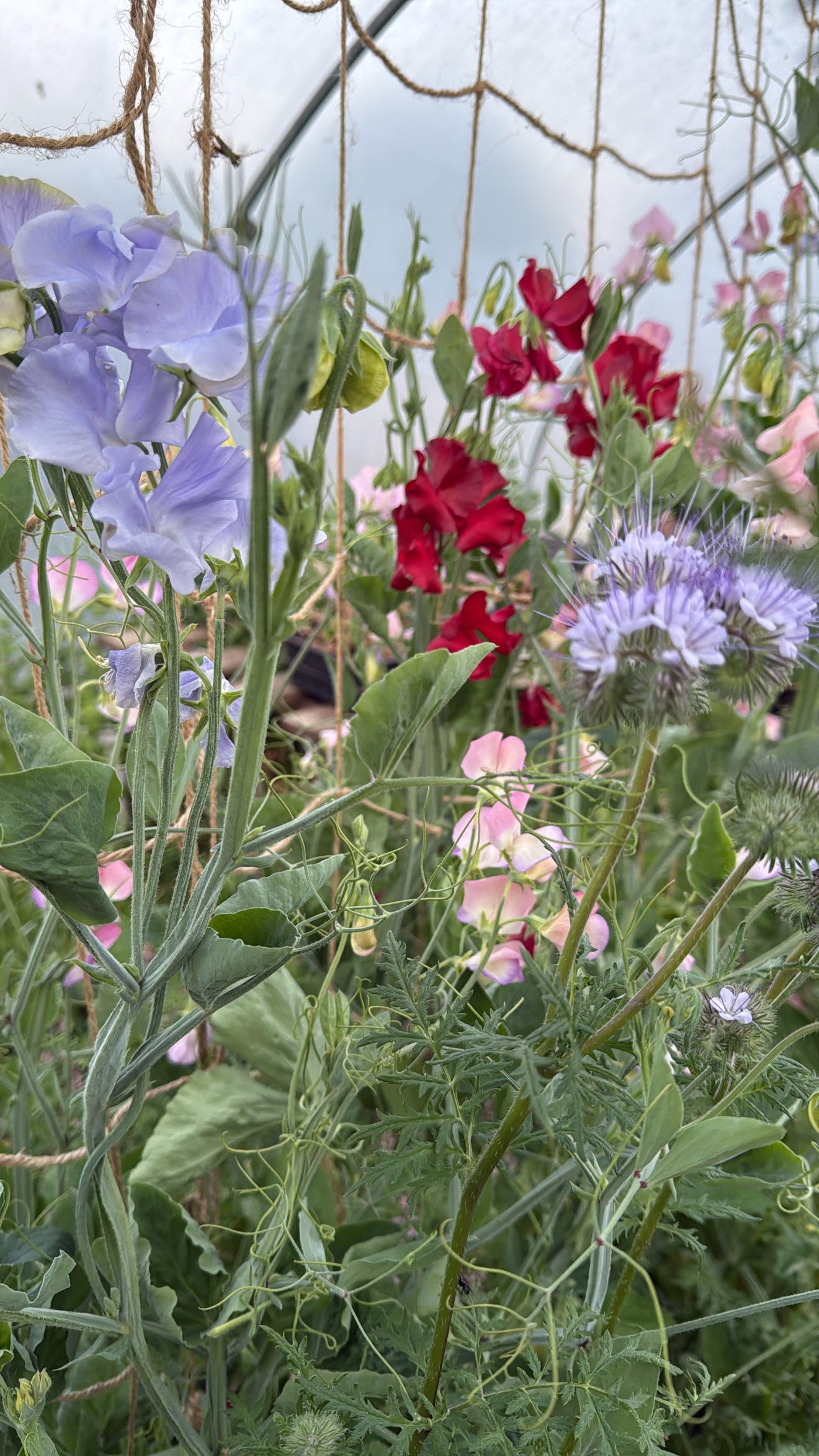
Well they are not green fresh poo as someone once guessed but plants that you grow, either in bare soil or as a companion crop beneath other plants, to enrich and improve soils.
I haven’t bought in any other material (mulches or composts) since late autumn 2021. For nearly four years, I have entirely made my own composts for seed sowing and potting on, and only used green manures to ‘mulch’. This has hugely reduced costs and labour, and I believe, better more resilient plants.
Green manures usually grow fast and are exceptional at driving roots down to find water and nutrients whilst either binding or loosening soil structures. Sounds great doesn’t it?
It’s worked for me.
They prevent weeds by smothering them.
Prevent soil erosion
Feeding the soil.
They also look pretty and some of them I cut for flowers.
I’ve noticed more diversity in pollinators and beneficial insects.
Some can be left in place for several years.
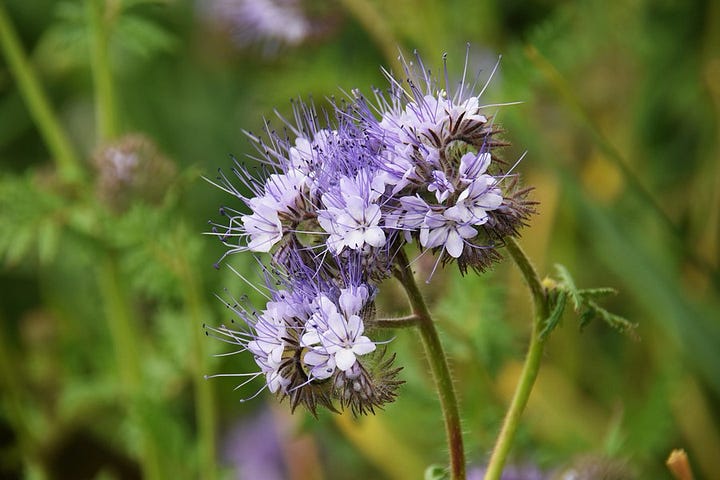


To underplant longer living perennials & dahlias
As a companion plant to annuals
To grow in soil between crops.
Traditionally green manures are ploughed or dug back into the soil. This is particularly good for clay soil but instead here, on dry soil, I ‘chop and drop’ the stems onto the soil as a green mulch.
There have been huge positives since using them. I have noticed significant reduction in weeds and the soil structure and water retention appears to be improved. The soil is darker and has more humus (we have a very dry sandy grey soil).
Having a plant grow in the soil over winter, rather than leaving it bare or mulched with compost, is hugely beneficial.
For the soil to be alive and active, it needs food. Microbes, fungi and all the other micro-organisms that make up the soil biome can’t make their own. This is where it gets really beautiful: a plant growing above ground makes that food through photosynthesis, and exchanges up to 50–70% of its carbohydrates back down into the soil in return for water, nutrients and minerals distributed by the fungi and bacterial networks. Without that exchange, those networks sit largely dormant. The soil is only fully active when there are plants growing.
So by having a green manure growing at all times, the soil bacteria, fungi et al is active, worms feeding on rotting vegetation and all sharing working together.
What I have noticed is that when I plant into ground with plants in already, be those weeds, green manures or an existing border, plants are quick to settle in and grow away. Far more than when beds were left ‘clean’ and mulched all winter. It takes time for the communities to build up again.
I use green manure as a crop to compost too - adding material for the compost heap to make microbial rich composts to propagate and grow plants on. When ready to plant out, each seedling has its own little pocket of fantastic soil that can populate the surrounding bed with microbes and fungi.
How to sow green manures & where
Which green manures you can cut
Where I buy them
A downloadable chart of all green manures - split into long & short term growing types, the conditions they like & the individual benefits of each one
This chart’s one of a growing library of downloadable guides I make for paid subscribers; handbooks, planting calendars, and reference charts like this one, all designed to actually get pinned up and used rather than read once and forgotten. It works out at less than a bag of compost a month, and it’s exactly the kind of thing I wish I’d had starting out.
Come and join us.
Comments
Nothing yet. Say the first thing.
Sign in to join the conversation.