
Last weekend I ran a class on my little field plot on the art and craft of growing flowers. One of the participants said they’d like to grow flowers on their allotment and had made a little area just for flowers. Which prompted me to show the little spots where I was growing edibles among my flowers, showing just how well both were doing growing together rather than apart.
I used to grow everything like this …
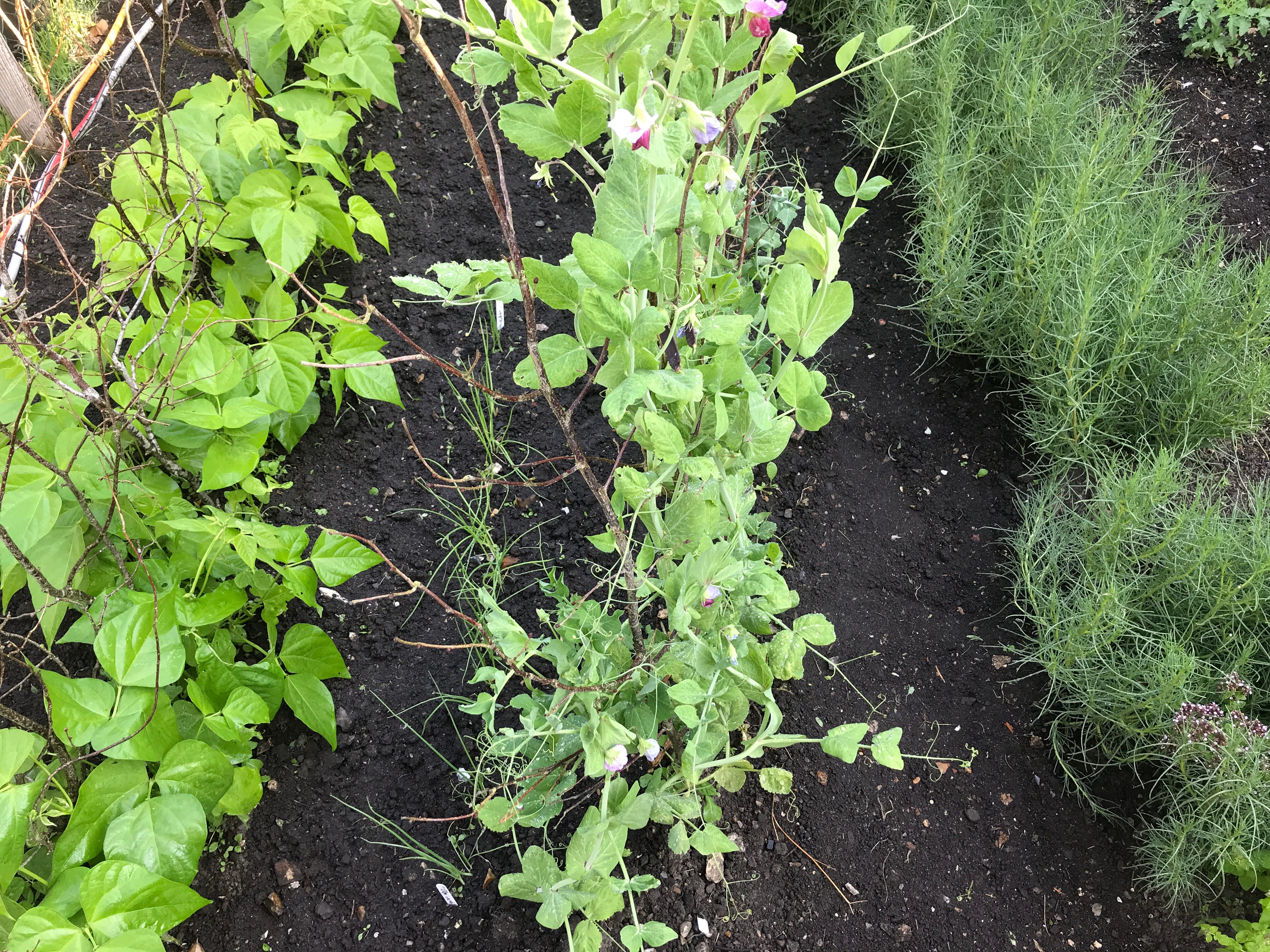
Which is very pretty but takes a lot more effort.
Instead I grow a bit more like this…
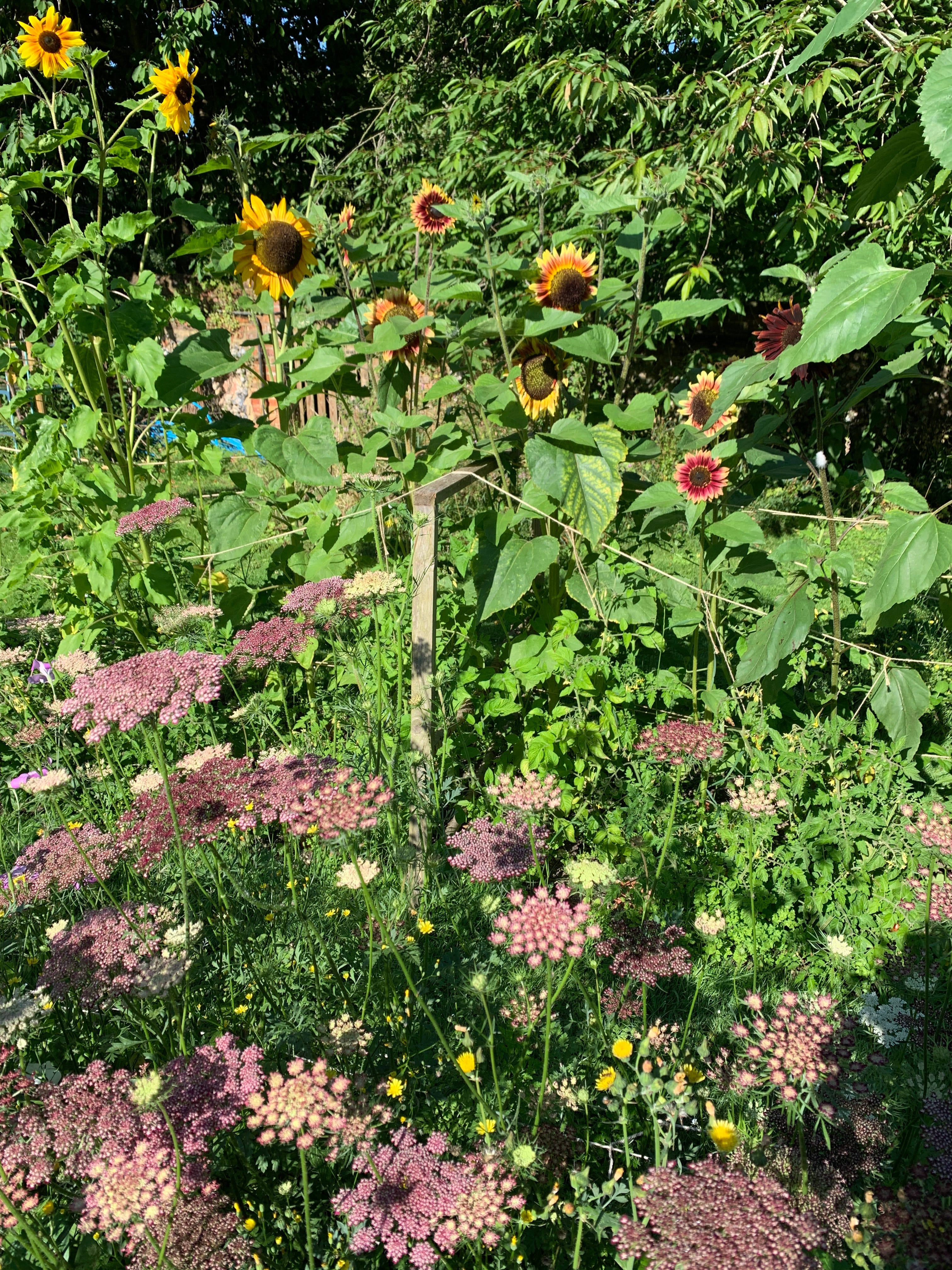
You might spot the tomatoes beneath the multi headed sunflowers (they are great bed fellows)
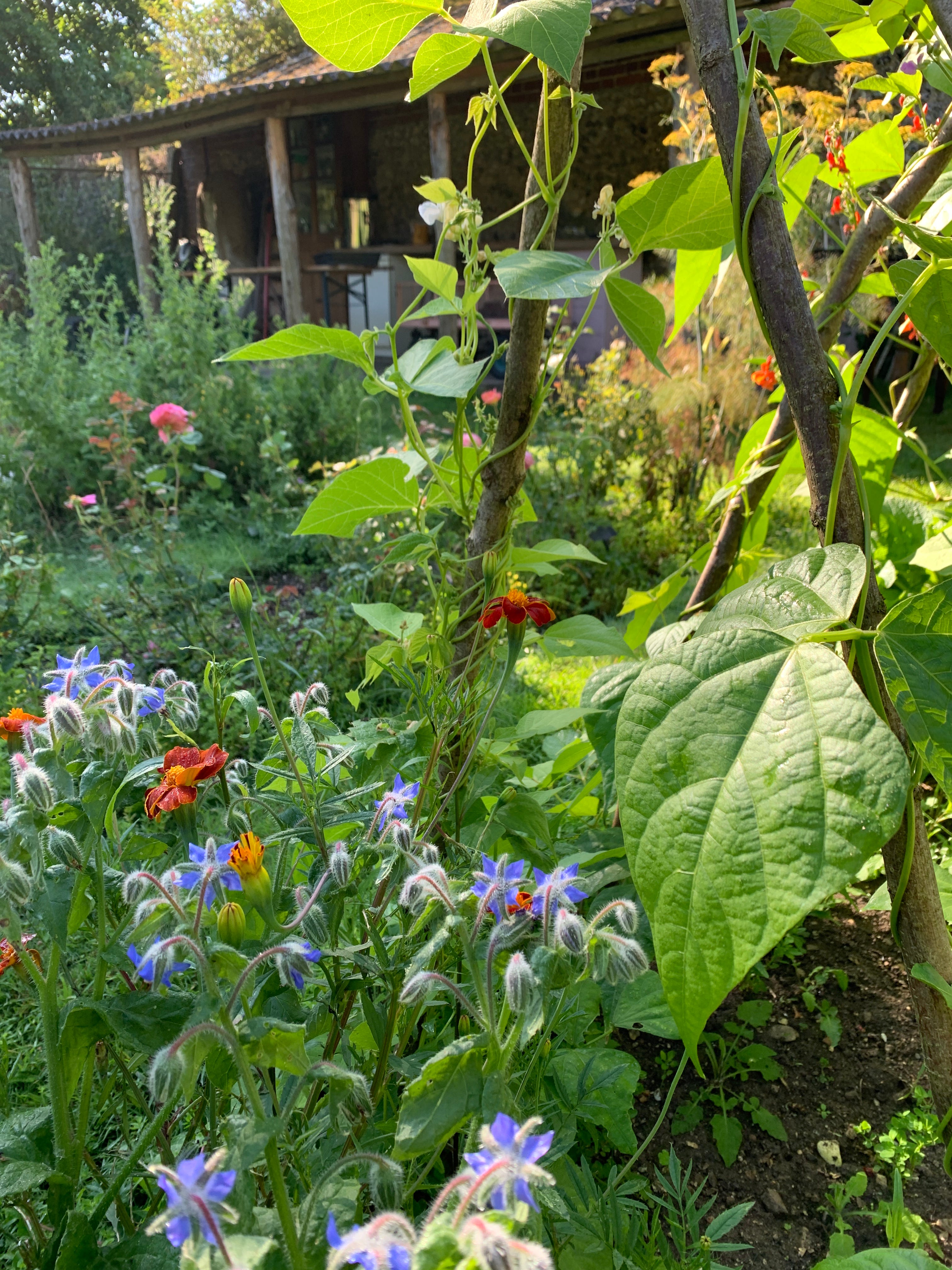
And runner beans with borage and marigolds.
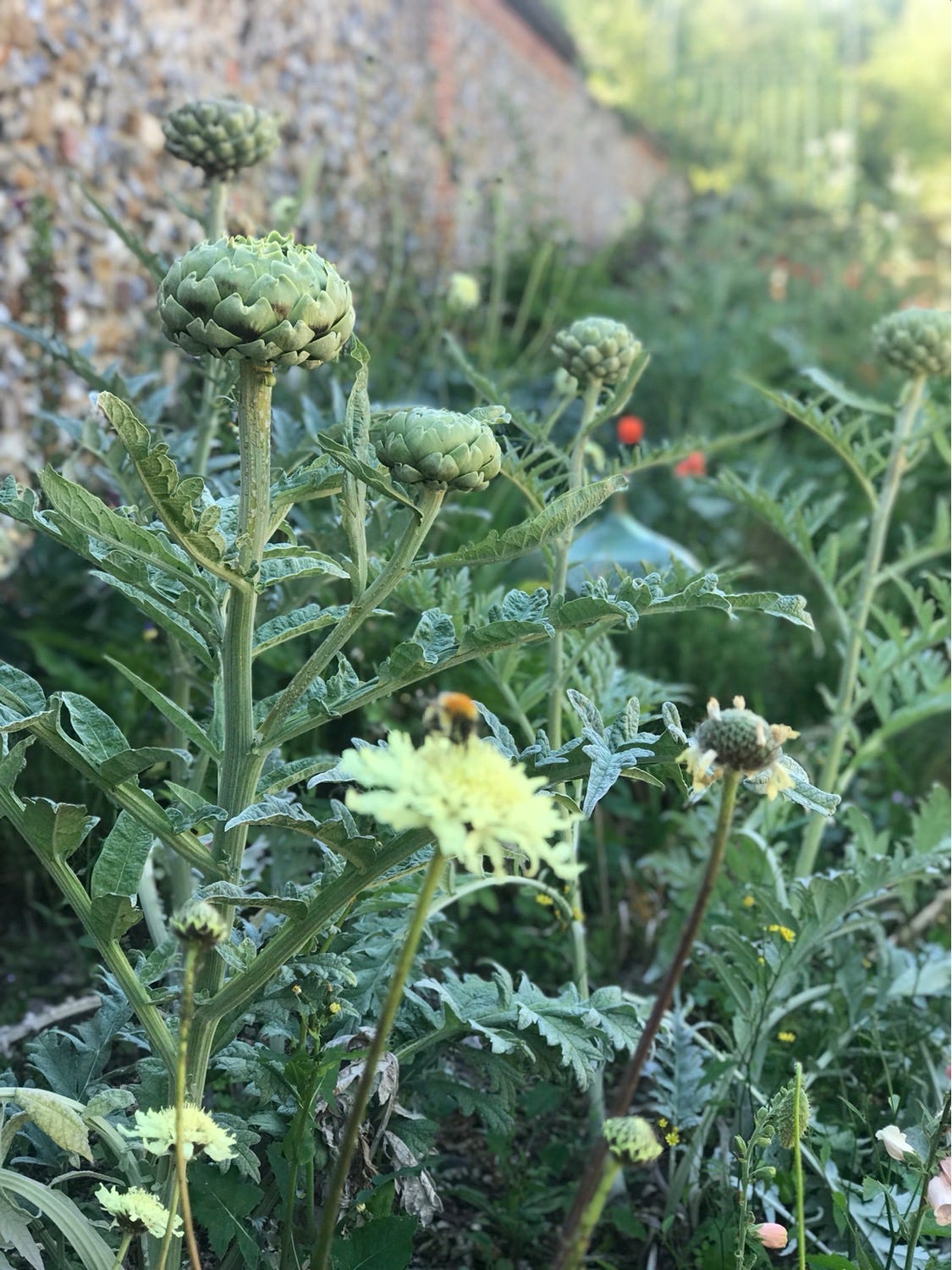
Everything grows better together. These artichokes below are great evergreen structure in the back of the long border, anchoring the rest of the plants. But they are also great for leaves in January through to March when there is little foliage, and of course delicious!
Growing a wide variety of different plants from seed is one of the keys to excellent soil health. We are beginning to understand how important this is but did you realise that actually growing food for yourself and flowers for the table actually improve the soil? And in turn improves our environment. The best part, it improves the taste (and no doubt your own gut health too!)
We’ve grown a lot of different fruit and vegetables here, mostly for meals for classes, workshops and farm days. Food comes a very close second to the flowers here. But I also used the decorative blue flowers of peas, herbs and tendrils of beans in arrangements.
Though, much more than feeding us and my creativity, these plants also contribute to a healthier soil and better plant health all over. A classic win win.
As all plants grow, they take in carbon dioxide, actively removing it from our atmosphere, converting it into carbohydrates for food for themselves and exchanging up to 75% of the carbon to the micro organisms to consume. In return, fungal networks respond to plants needs by giving water, minerals and nutrients. This mutual symbiotic relationship is essential to healthy soil and healthy plants.
One does not exist without the other.
And the more variety in the garden, allotment, and farm, the more variety of microbes and fungi feeding those plants and protecting them from pests and disease. It is utterly mind boggling and wonderful to know all this is going on beneath our feet. All we need to do is make sure we don’t do anything to kill the microbes in the soil. That includes not using any chemicals, keeping the soil covered with plants (even weeds will take in carbon and keep the soil alive) use your own feeds and occasionally add some homemade compost to stimulate microbial activity.
I heard during a talk, how flowers were used in historical kitchen gardens for ornamental purposes but they missed their real use. Of course flowers do look beautiful and they can be cut for the house but many flowers have well known beneficial properties for herbal medicines and can be used for teas or decoration (every plant you eat, even pansies or cornflowers as decoration are supporting your gut biome too) but crucially flowering plants are particularly good at attracting pollinators. Flowers would be dotted about to do just that and help plants like courgette for instance that can have a tough time enticing them.
I am experimenting with putting plants in and around existing perennials and shrubs, to feed the soil year round and increase the variety of plant life whilst feeding us.
Right now, this is playing out in real time.
Comments
Nothing yet. Say the first thing.
Sign in to join the conversation.