
For years I had a rat problem. Not a catastrophic one, but persistent, the kind where you find the heap has been excavated overnight, or the council food bin has been gnawed through at the base.
Then a gardening friend mentioned bokashi composting, and I’ll be honest, I half-listened. Fermented kitchen scraps in a sealed bucket? It sounded fussy, time consuming and expensive.
I was completely wrong. Three years in, it’s as routine as morning coffee and the rats haven’t been back.
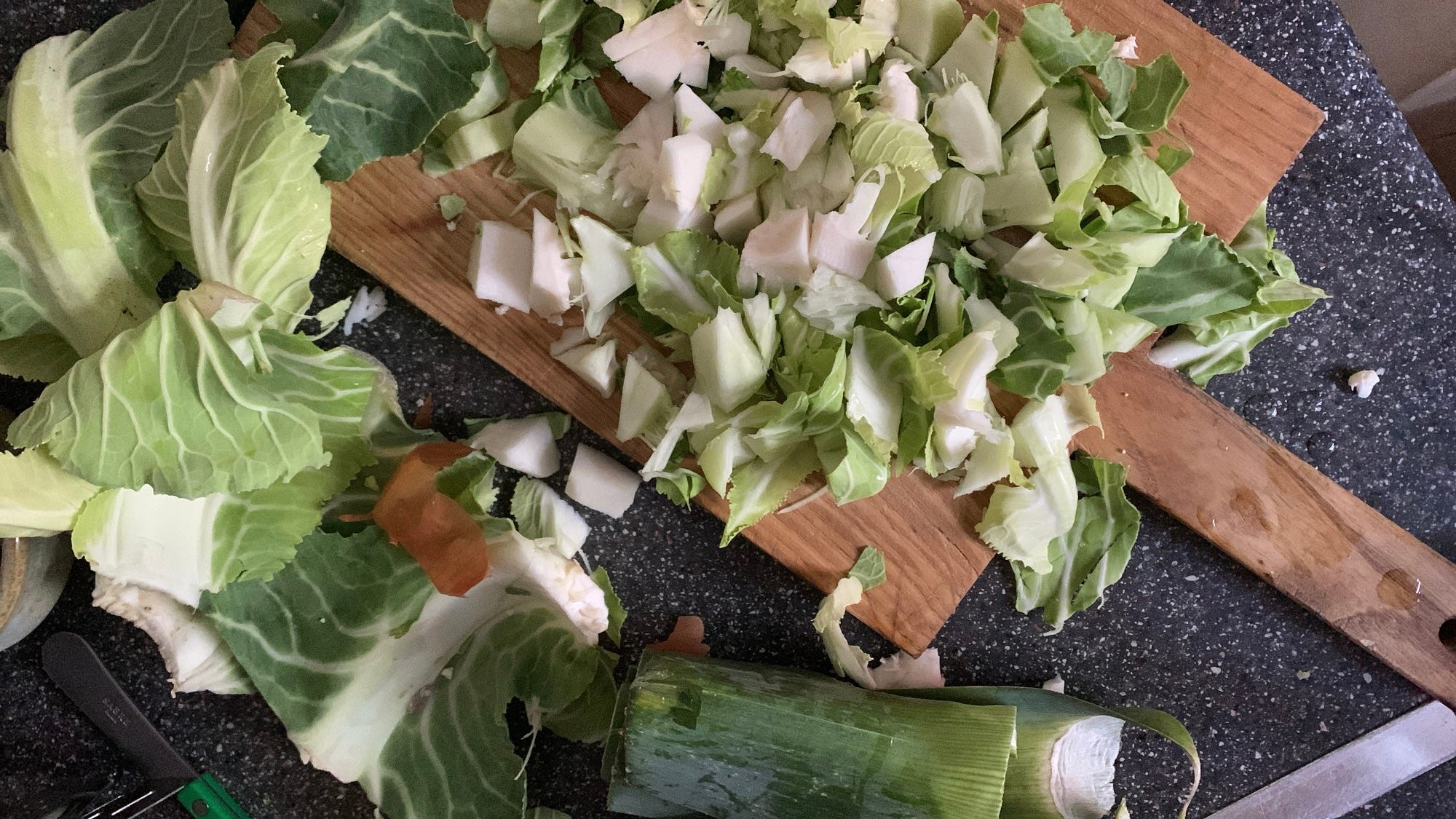
If you read last week’s piece on composting, think of this as the indoor counterpart. This is the third in a series in soil health and regenerative growing. Where the heap handles your garden waste, bokashi handles everything that comes out of your kitchen, including the things a compost heap really shouldn’t have: cooked food, citrus, meat, bones, dairy. It goes into a sealed bucket, ferments quietly by the back door, and comes out two weeks later smelling faintly sweet and ready to supercharge the heap you’ve already got.
For me, this closed loop is really important to my regenerative growing practice, kitchen scraps no longer being truly wasted, instead transforming into a microbe-rich addition to my composting process.
What is bokashi?
Bokashi means ‘fermented organic matter’ and unlike conventional composting, which relies on air and aerobic bacteria to break things down, bokashi is anaerobic. You exclude air entirely. The result is faster, more efficient, and almost no gas is released, which means all the nutrients are retained rather than lost to the atmosphere.
Your kitchen food bin, however faithfully emptied, will always smell at least a little grim. Bokashi doesn’t. The fermentation process produces something that smells faintly sweet, pleasantly sour, like a mild pickle, rather than the slow rot you’d expect. It’s a small thing, but it changes your relationship to the whole process. Chopping up vegetable peelings and the slops of a cereal bowl feels less like waste management and more like collecting ingredients to feed my soil.
How I make it
You don’t need specialist equipment.
Comments
Nothing yet. Say the first thing.
Sign in to join the conversation.