
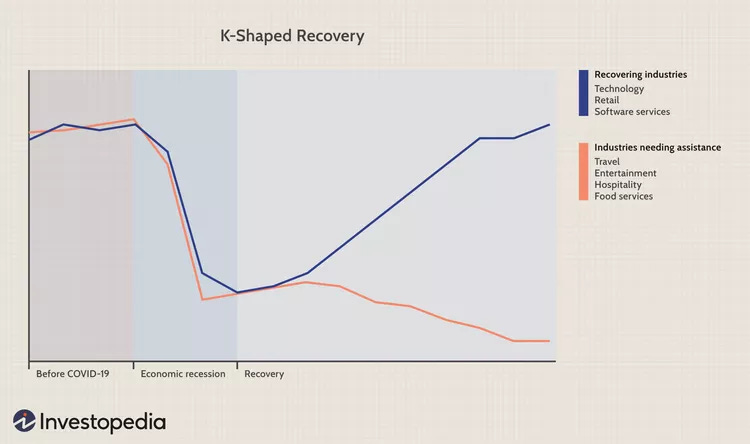
China’s economy is moving in a K shape, with one part pointing up, the other part veering down: Advanced manufacturing sectors including AI and green energy technologies like batteries and electric vehicles are booming, while the housing market remains mired in a prolonged slump, dragging down household consumption and consumer confidence.
Worse, economists say, it looks like it’s structural, not temporary.
“China’s economy has a shape problem,” Joe Peissel, senior macroeconomic analyst at Trivium China, wrote this week.
“For years now, we have highlighted the structural imbalances at the heart of China’s economy – weak consumption, over-reliance on exports, and a persistent supply-demand mismatch. In recent months, those imbalances have well and truly come to a head – welcome to the K-shaped economy.”
New Zealand exporters selling to Chinese consumers — hello dairy, meat, timber producers, also hi to tourism outfits and universities — should be taking notice.
Our biggest export market is undergoing enormous structural changes that could reshape our trading relationship.
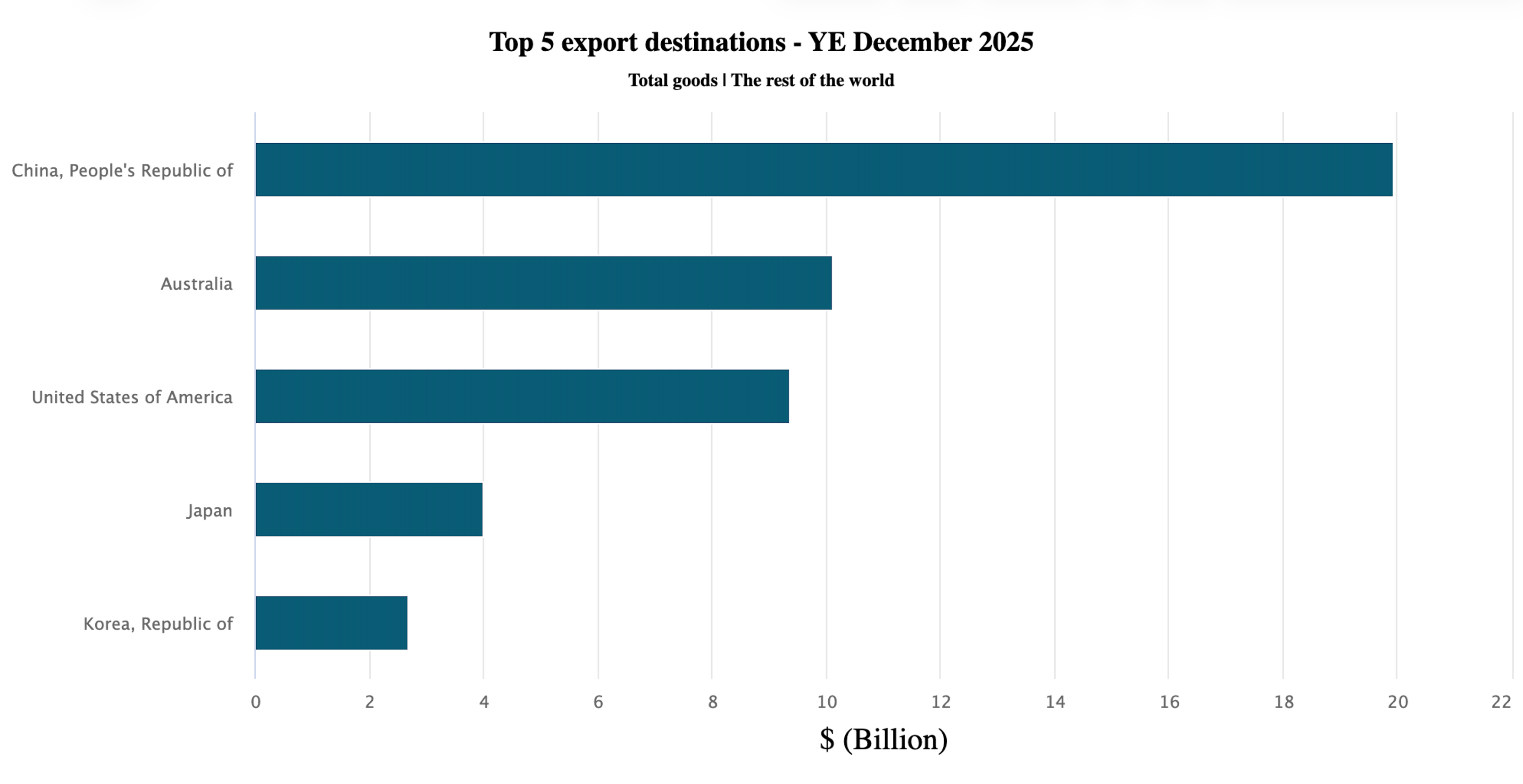
For almost 20 years, our economic growth has been underpinned by demand from China’s huge and growing middle class. New Zealand exported nearly $20 billion worth of goods to China last year – double the combined value of exports to our next two biggest markets, Australia ($10.1 billion) and the US ($9.4 billion).
But what if Chinese demand for our products flatlines, or even starts to fall?
The diverging fortunes in the world’s second largest economy were made clear with GDP numbers showing growth of just 4.3 percent in the second quarter as strong exports could no longer offset the domestic malaise — even though exports grew at an astonishing annual rate of 27 percent in June. Excluding the three years of zero-covid restrictions, this was the lowest reading since records began in the early 1990s.
At its July meeting, China’s central bank formally named “structural divergence” as a challenge facing the economy for the first time.
The overall effect: meant growth in the three months to June is tracking lower than the government’s growth target of 4.5–5 percent for the year — already the lowest in decades. (I’d bet money on it coming in bang on target though).
Here are five things that would worry me right now if I were a New Zealand company exporting to China.
The property market is in a stubborn slump
China has grown richer – almost 800 million people have moved out of poverty in the last few decades, and several hundreds of millions into the middle class. Along the way, home ownership has become the main vehicle for middle class investment.
Chinese ploughed their savings into property, buying apartments in the enormous complexes going up around the country – often on spec – considering this a safe way to build wealth.
If I had a paywall, I’d put it here. But I want to keep my work open for all, regardless of means.
But a property market crash led to the collapse of big real estate developers before they could finish the complexes, creating “zombie towns” across the country as apartment towers stand half-complete.
Chinese property prices have now been falling for five full years. In fact, Chinese property values have fallen almost twice as far in percentage terms as American house prices did in 2007-2008, causing the global financial crisis.
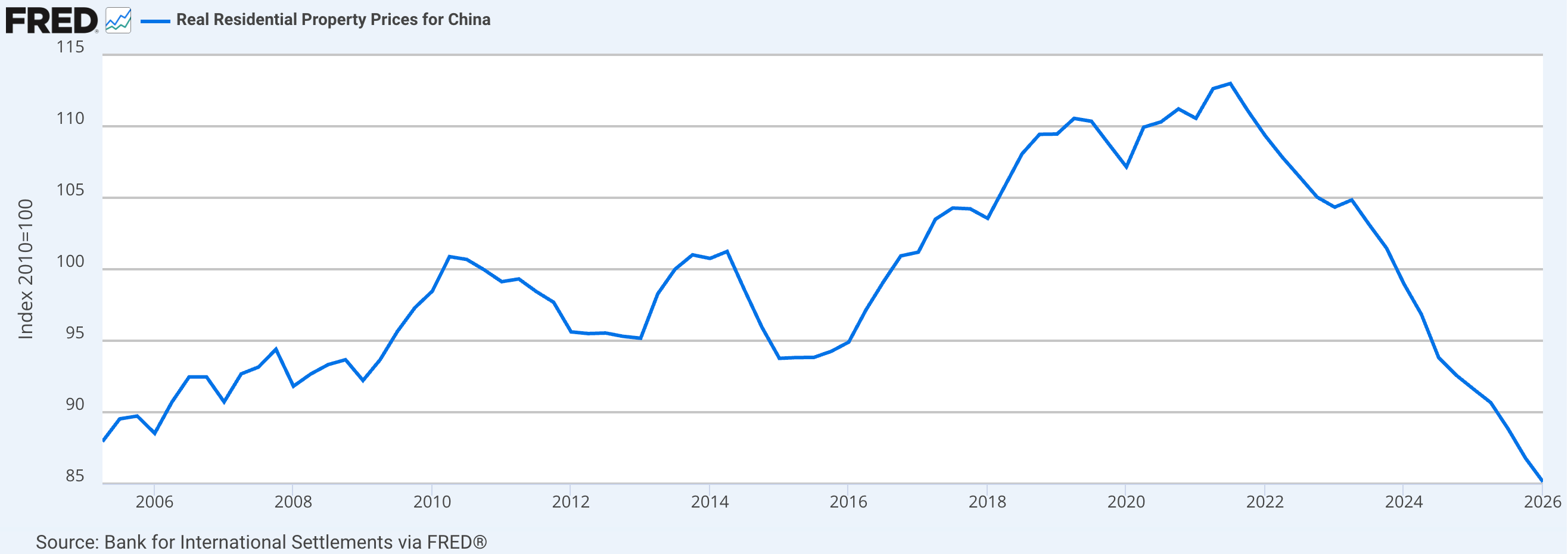
This has been the key driver of the internal slowdown and is the main reason the domestic economy inside China hasn’t bounced back from the zero-covid years. The flip side of such rapid wealth accumulation: People remember what it was like to be poor, and are saving their yuan as a result.
Beijing has proven it won’t unleash the kind of bazooka stimulus it provided after the global financial crisis.
“The lack of new measures to support the property sector so far this year suggests that the government is increasingly resigned to allowing supply and demand to come back in line gradually, rather than attempting to engineer a faster recovery,” Leah Fahy, senior China economist at Capital Economics, wrote in a recent note. “That’s a process that will take many more years.”
This is affecting consumer confidence.
Frugality reigns
For years, policymakers in Beijing have been trying to boost consumption at home to try to create more of an internal engine of economic growth. They have failed, as the latest official data underscores.
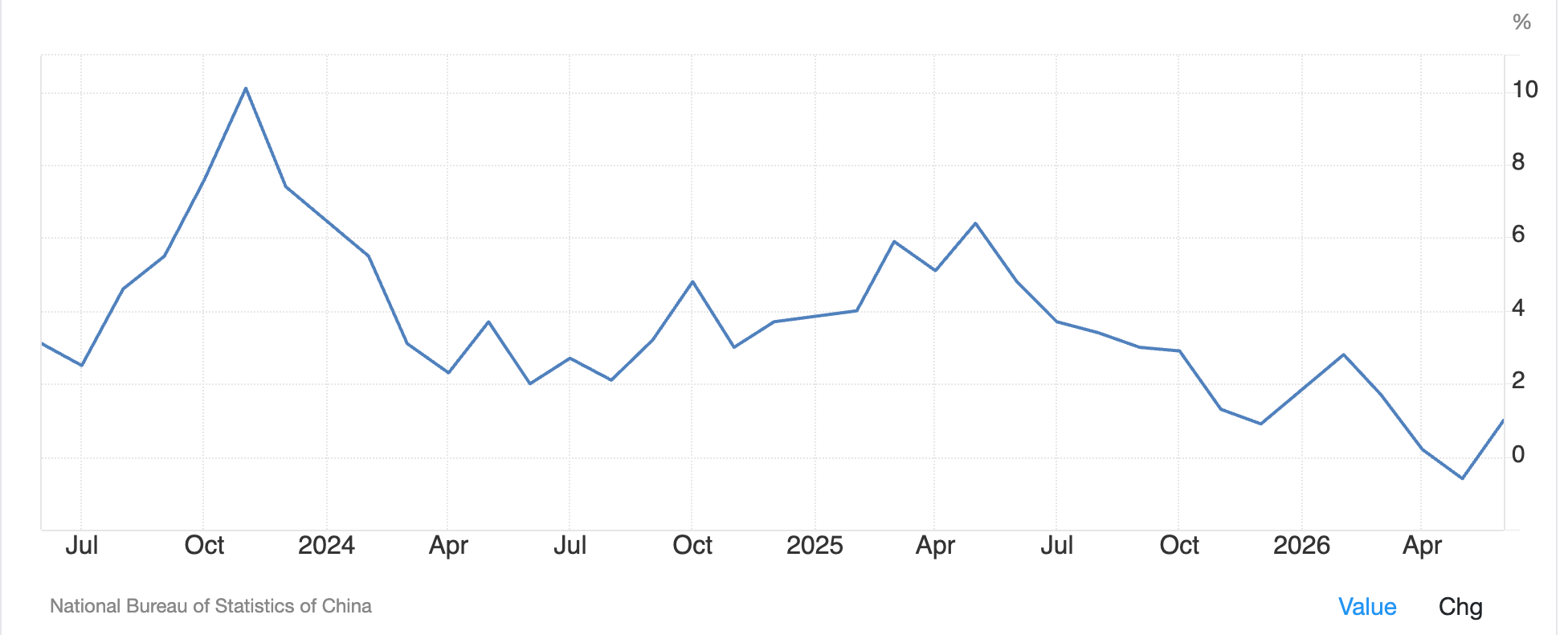
Retail sales of consumer goods fell 0.6 percent in May – the first outright contraction in over three years, since the end of the Covid era – although they recovered a little last month thanks to online shopping festivals.
This is partly because Beijing offered a generous subsidy program during 2024 and 2025 if people upgraded their washing machines, part of an effort to boost consumer demand. But even in China, there are only so many washing machines households can trade in.
The data has shown broad weakness, underlining the fragility of consumer confidence, squeezed by surging energy prices thanks to the closure of the Strait of Hormuz.
While China’s AI and renewable energy export boom has been underpinning export growth, Peissel points out that these industries “employ relatively few workers and channel less of their revenue into household incomes than the labour-intensive sectors that drove China’s earlier growth phases.”
The ‘involution’ problem
Involution (内卷) has become a buzzword in China, usually used to describe the feeling that young people have when they’re trying ever harder to get ahead -- but everyone else is too. That makes it feel like they’re going around in circles.
But economists increasingly talk about industrial involution, a form of hyper-competition where companies are producing goods but there are fewer domestic consumers for them: That leads them to cut prices to the point their margins are razor-thin and even expand production so they can maintain market share.
Banks keep these “zombie” companies alive by rolling over loans and and local governments want to protect local champions. All of which keeps overcapacity entrenched, according to Eurasia Group
This means companies turn to export markets to offset weak domestic demand, a contributing factor to the concerns across Europe and Asia that China is dumping goods in their markets at artificially low prices.
Overall, this persistent overcapacity puts downward pressure on prices, leading to deflation.
Deflationary spiral
Industrial overcapacity – combined with the property collapse and weak consumer demand – has depressed prices in China to the extent that some economists have warned that the world’s second-largest economy might be entering a Japan-style era of deflation.
Japan suffered several “lost decades” after a debt-fuelled property bubble burst and persistent deflation, combined with a rapidly aging population.
Last year China’s consumer price index was flat, missing the government’s official inflation target of “around 2 percent.” Producer prices chalked up 41 straight months of declines.
Consumer prices rose only 1 percent in June from a year ago, according to data released by the National Bureau of Statistics earlier this month. This was slower than in May and lower than economists estimated.
If companies are selling less in China, they might cut prices and consumers may hold off making big purchases in the hope of further price cuts. Company profits fall so they limit investment and hiring. Fewer jobs lead to weaker demand. This was the kind of deflationary spiral Japan entered in the 1990s — and stayed there for three decades.
China is not there yet, but it’s something that New Zealand exporters should be aware of — especially if it means squeezed Chinese consumers substitute cheaper products for premium New Zealand goods.
Demographic time bomb
Next: China is shrinking – fast. The country is experiencing population decline on a scale and at a speed the world has never seen, as couples opt to have only one baby – if they have any at all – a decade after the one-child policy officially came to an end.
Births last year totalled 7.9 million, less than half of the number a decade ago, while at the same time the population is aging rapidly. The total population started declining in 2022 for the first time in six decades.
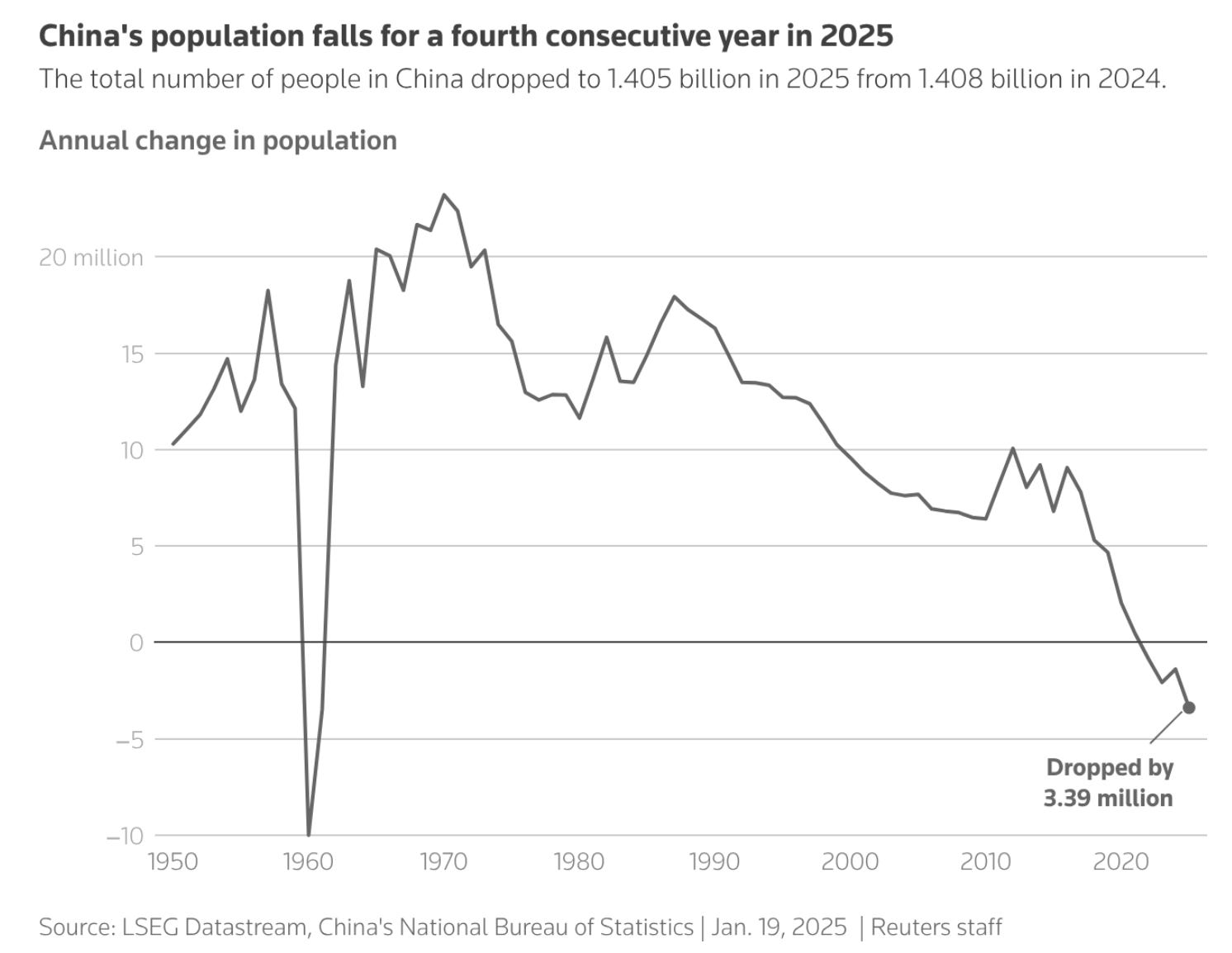
Over the next decade, China will lose nearly 60 million people – roughly equivalent to the population of France.
By 2100, China’s population could halve from 1.4 billion now to 767 million, and a staggering 52 percent will be aged over 60.
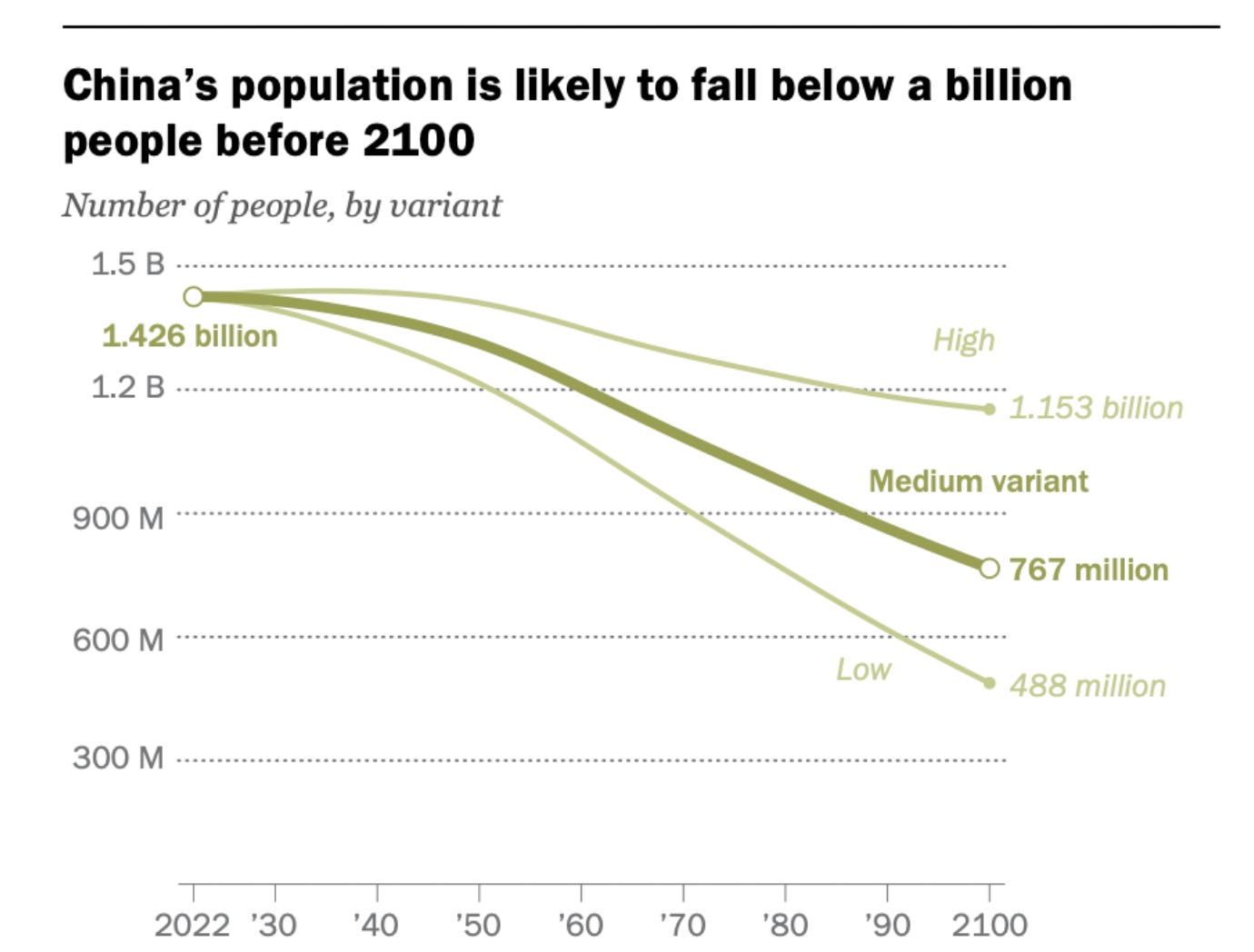
This will have an obvious impact on household consumption. China may say it can rely on robots to make up the shortfall when it comes to workers, but robots won’t be eating New Zealand cheese or lying in apartments made by pouring concrete into New Zealand wooden casings.
None of this is going to happen overnight. China will remain an essential market for New Zealand, but it is becoming a fundamentally different economy. The opportunities of the next two decades are unlikely to look like those of the past two.
Comments
Nothing yet. Say the first thing.
Sign in to join the conversation.