
I’ll be writing from time to time about events in New Zealand for the Lowy Institute’s Interpreter. Here’s my first missive, about the latest Winston Peters sideshow. It won’t tell you anything new if you’re in Aotearoa and following the news, but I hope it will give context for people abroad on this latest racist tirade.
You can read the original here.
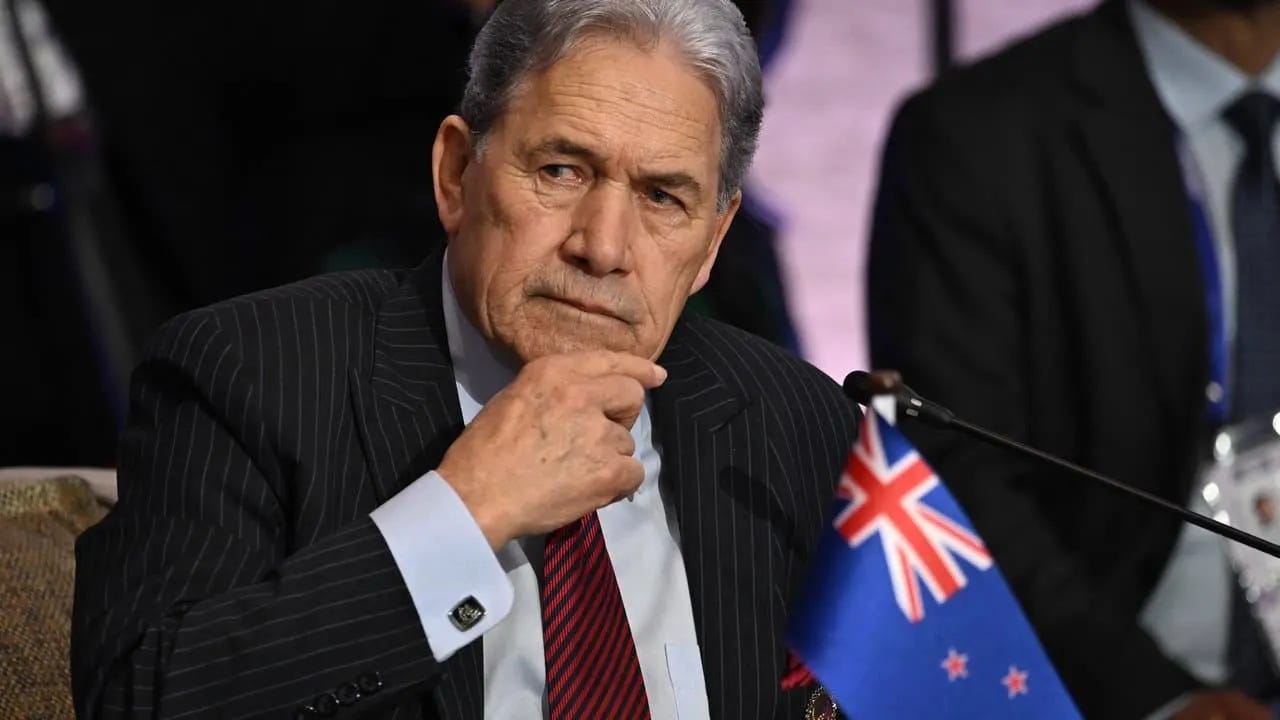
New Zealand Foreign Minister Winston Peters, a wily politician whose populist NZ First party gained traction 30 years ago when he stoked fears of an “Asian invasion”, has unleashed perhaps his most controversial racist attack yet.
It happened during a debate last week in the House of Representatives about New Zealand’s Covid-19 response. Chinese-born, Green Party MP Lawrence Xu-Nan called out “Are you vaccinated?” to Peters, who has expressed concerns about Covid vaccine safety and called for inquiries into vaccine injuries.
Peters responded with a tirade that was noteworthy even by his standards.
He told Xu-Nan, who came to New Zealand in 1994 as a child, to “go back to your own country”.
“I noticed you came here five minutes ago,” Peters shouted across the House. “Go back to your own country – that’s where they lie like a flatfish, but they don’t lie like that here, all right? This is called a democracy.”
The outburst has ignited a diplomatic firestorm with China at a time when relations between Beijing and Wellington were already growing more tense, and is threatening the very foundations of the right-wing government.
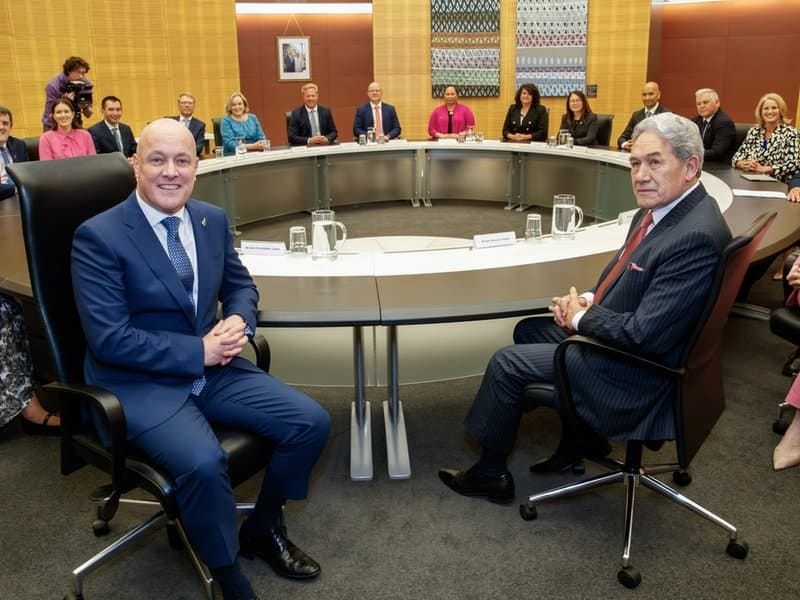
Prime Minister Christopher Luxon has faced mounting calls – including from his predecessor, Helen Clark, who also led a coalition in which Peters was foreign minister – to fire Peters. Clark told RNZ that Peters’ actions “invite a sacking and the consequences that flow from that”.
But to do so would almost certainly precipitate the collapse of the National-led government, which is in coalition with NZ First and the libertarian Act Party, at a time when National’s support is declining.
The government is hoping for a boost before the general election, scheduled for 7 November – although with inflation and unemployment rising, it’s not clear where that boost is going to come from – and certainly doesn’t want to call an early election that could go either way.
“I don’t think anyone would thank us for breaking up the coalition,” Finance Minister Nicola Willis, and the politician most likely to succeed Luxon as National Party leader, said on Tuesday.
After Luxon had a “conversation” with him about the “racist” comments, Peters doubled down and refused to apologise. The Labour, Green and insurgent centrist Opportunity parties have all said they would not have Peters as foreign minister if they form a government in November.
It’s the damage to New Zealand’s international reputation that is ringing the most alarm bells.
Relations had already been growing more tense amid a foreign policy reset to more closely align New Zealand with traditional security partners, namely Australia and the United States, and sharper condemnation of China’s actions in the South Pacific. In June, Beijing put a travel ban(Opens in new window) on four backbench MPs for visiting Taiwan – visits that are a long-established practice.
The Chinese Embassy in Wellington said last week it had lodged “solemn representations” with the Ministry of Foreign Affairs and Trade over the “negative China-related remarks made by a certain politician in the New Zealand Parliament”.
This opens up another source of tension in the relationship with Beijing, which successive New Zealand governments have been careful to handle with kid gloves for fear of upsetting the economic relationship. China is by far New Zealand’s largest trading partner – at NZ$22.8 billion last year, exports to China exceed those to Australia and the United States combined – and is particularly important for primary industries including dairy, meat and timber.
Peters’ outburst follows another racist tirade from his party about another key economic partner. As the government was negotiating a free trade agreement with India – partly to reduce New Zealand’s economic dependence on China – NZ First deputy leader Shane Jones warned that increased Indian immigration would cause a “butter chicken tsunami”.
Peters has long acted as a populist at home while projecting the image of statesman abroad, and governments have become accustomed to seeing his two sides over his many decades in politics. The increasing bite in his rhetoric in the lead-up to a tough election will be expected by many.
But Peters, who is now 81, is inviting scrutiny at a time when New Zealand is trying to navigate an increasingly fragmented global order.
The government in which he serves has tilted towards a United States led by an unreliable and unpredictable president who has shown little interest in continuing to guarantee the security of the Indo-Pacific. Meanwhile, the government has – rightly – been more willing to criticise China’s encroachments in the South Pacific, including efforts to forge a security alliance with the Cook Islands, a New Zealand realm country, and the recent launch of a missile into the South Pacific.
New Zealand, like many other countries around the world, and in particular in Southeast Asia, is now figuring out how to manage these two tricky relationships and hedge its bets. That’s tough when both the US and Chinese leaders have shown a proclivity for retaliating economically against political decisions they dislike.
Peters’ outburst hasn’t caused the friction in the relationship – but it sure hasn’t helped keep tensions either.
No posts
Comments
Nothing yet. Say the first thing.
Sign in to join the conversation.