
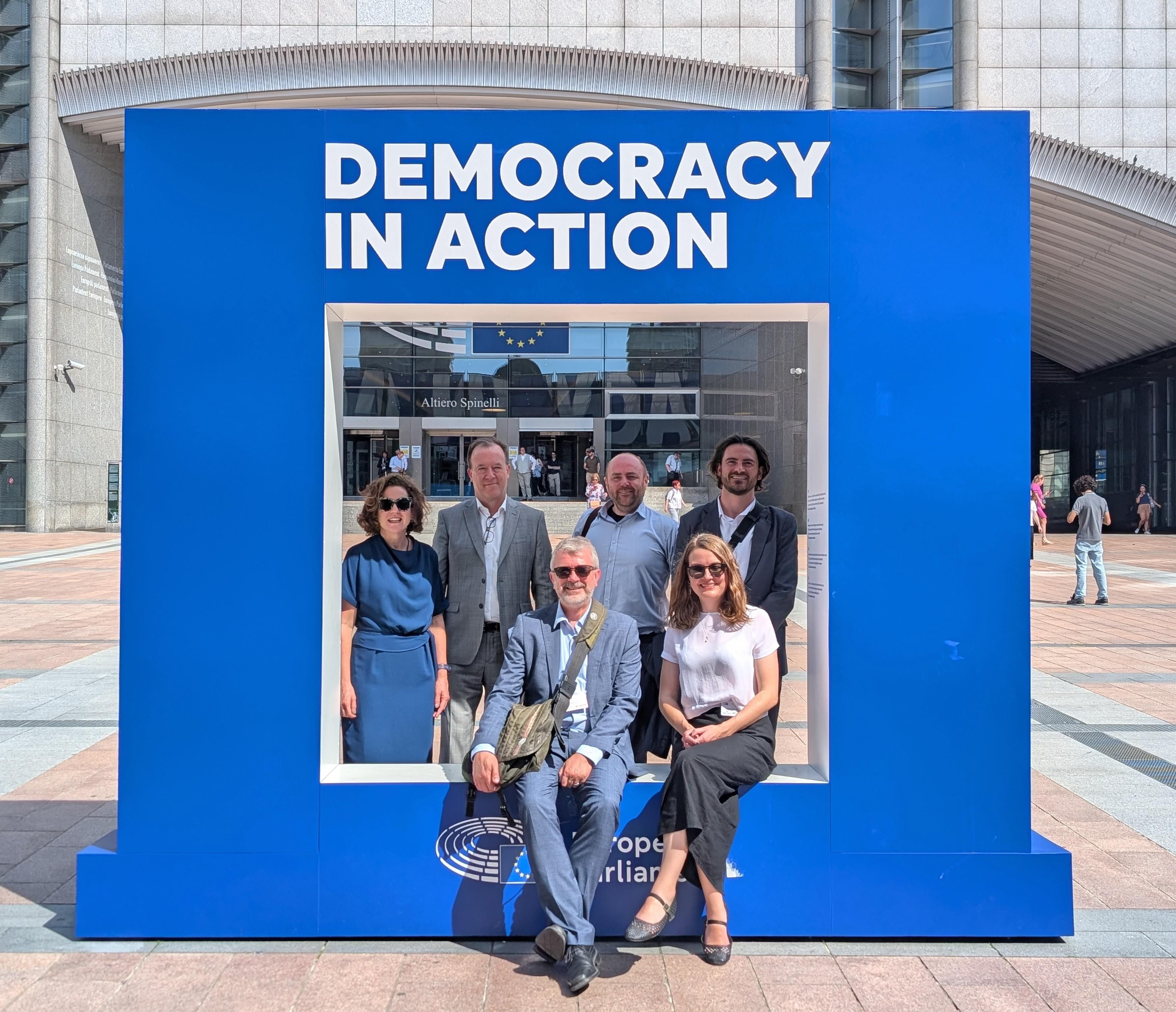
This past week I’ve been in Brussels and Berlin (in the heatwave!) talking to officials, experts, parliamentarians, and business and union leaders about the rapidly changing geopolitical environment, with a particular focus on China. My trip was organised by the Friedrich Ebert Stiftung, one of Germany’s foundations (this one affiliated with the Social Democratic Party), but – as always – my views and conclusions are my own.
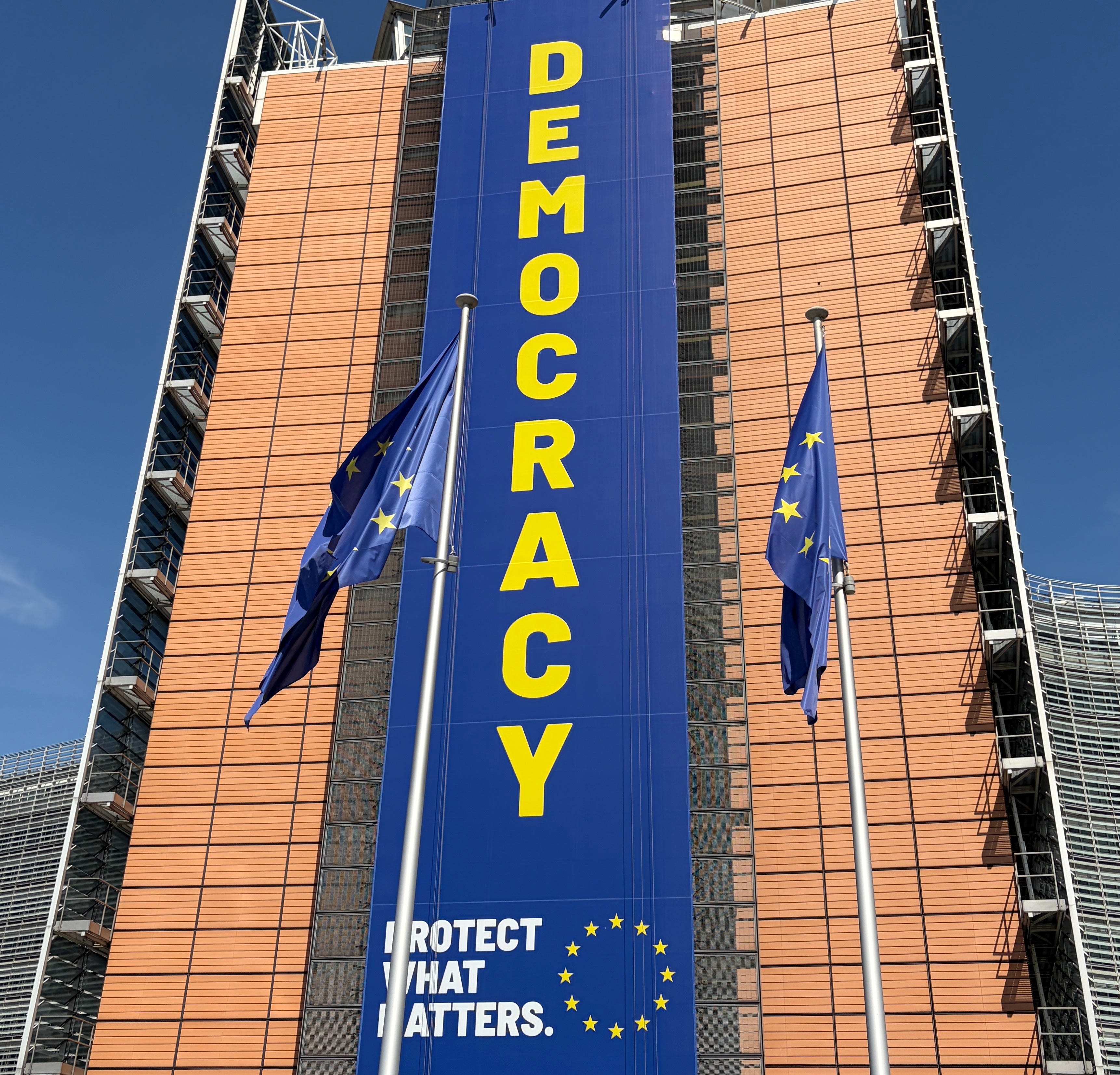
BERLIN — China’s support for Russia – both material and ideological – has been prominent in every conversation I’ve had last week in the centre of the European Union and the capital of its biggest economy.
In its fifth year, the Russian war against Ukraine and the challenge it poses to Europe permeates political and economic life. The fact that China is supporting Russia – not just with drone parts and other hardware, but also by training troops, according to the EU’s top diplomat – adds to the sense of existential threat.
There is broad consensus here – voiced by both the German foreign minister and the head of NATO – that Russia could attack NATO territory before the end of the decade. Europe is now trying to make sure Moscow doesn’t miscalculate – again.
It has been sobering to hear these messages and to be in Brussels on the 10th anniversary of Brexit, when the economic decline brought about by that decision was made evident with the resignation last week of the UK’s sixth prime minister in the intervening decade.
My trip also coincided with two political conferences in New Zealand, as National and Labour both kicked their election year pitches into gear.
Watching these speeches from Brussels and Berlin, I didn’t hear a compelling vision for New Zealand’s future, a future anchored in the new world order rather than in the past.
So many democracies – New Zealand, Australia, the UK, Germany, to name a few – are now in a defensive crouch, where there is so much pessimism about the economic future, both our individual and our shared futures as nations committed to free speech and free trade and pluralism.
People everywhere feel that their lives are not getting better, and that is resulting in widespread anti-system sentiment. Populist and far-right forces are capitalising on fear by sowing division.
In Germany, the shock to energy supplies caused by Russia’s war against Ukraine has coincided with China’s industrial rise, contributing to economic stagnation. This has led to economic stagnation, the far-right Alternative for Deutschland party is in the ascendancy.
More than a third of voters (35 percent) say they could imagine backing the AfD and a strong majority (60 percent) expect at least one state to have an AfD premier in elections in September, according to a poll published by INSA last month. This would totally change Germany.
The far-right National Rally’s Jordan Bardella is the frontrunner, according to polls, for the French presidential election next year. This would totally change France.
Reform UK is leading the polls there and One Nation is surging in Australia.
Many of these parties have built support by emphasising cultural grievances – especially on immigration and national identity.
Other nationalists – including in Slovakia, India and Turkey – are doing the same. Then there’s Donald Trump and his “Make America Great Again” slogan.
Fortunately, New Zealand doesn’t have a far-right force in mainstream politics. But New Zealand First and ACT have both won support for their populist messages centred on immigration, stoking culture wars and taking anti-Tiriti positions.
Complacency would be a mistake. Aotearoa has more insulation than many democracies, but it shouldn’t assume it is immune.
One lesson I’ve heard in Europe is that democracy cannot simply be defended on the basis of history or principle: It also has to deliver a convincing vision of the future. But there is a feeling here that democracies have lost the capacity to write that positive narrative and to deliver that compelling narrative.
It would be naive to think that a far-right party could not take hold in New Zealand. The protests at Parliament in 2022 made abundantly clear that disinformation from abroad could resonate in Aotearoa.
As New Zealand heads into its general election, the challenge for our mainstream parties is not simply to criticise their opponents but to proactively offer a convincing picture of the country’s future.
Because if there’s one thing I’ve heard repeatedly this past week, it’s that social cohesion is a security issue. Protecting ourselves doesn’t just require tanks or drones, but common interests.
That’s a lesson Europe is learning the hard way. New Zealand still has the opportunity to strengthen its resilience before those pressures become acute.
No posts
Comments
Nothing yet. Say the first thing.
Sign in to join the conversation.