
In early March I met and interviewed Dima and Ksenia of Kramatorsk-based Druzi Space about their support for the military and work evacuating people and animals in Donetsk oblast. At the time, I focused on their practical operations, but it was clear they were at the sharp end of a problem that readers will remember me talking about (many times) before: the failure of aid to make it beyond relatively peaceful west Ukraine to the front lines where it is really needed. When I returned to Kramatorsk for a couple of weeks at the start of March, I asked Dima for his thoughts on this problem, which, in a world of larger impossibilities, feels like something that could be tackled by individuals.
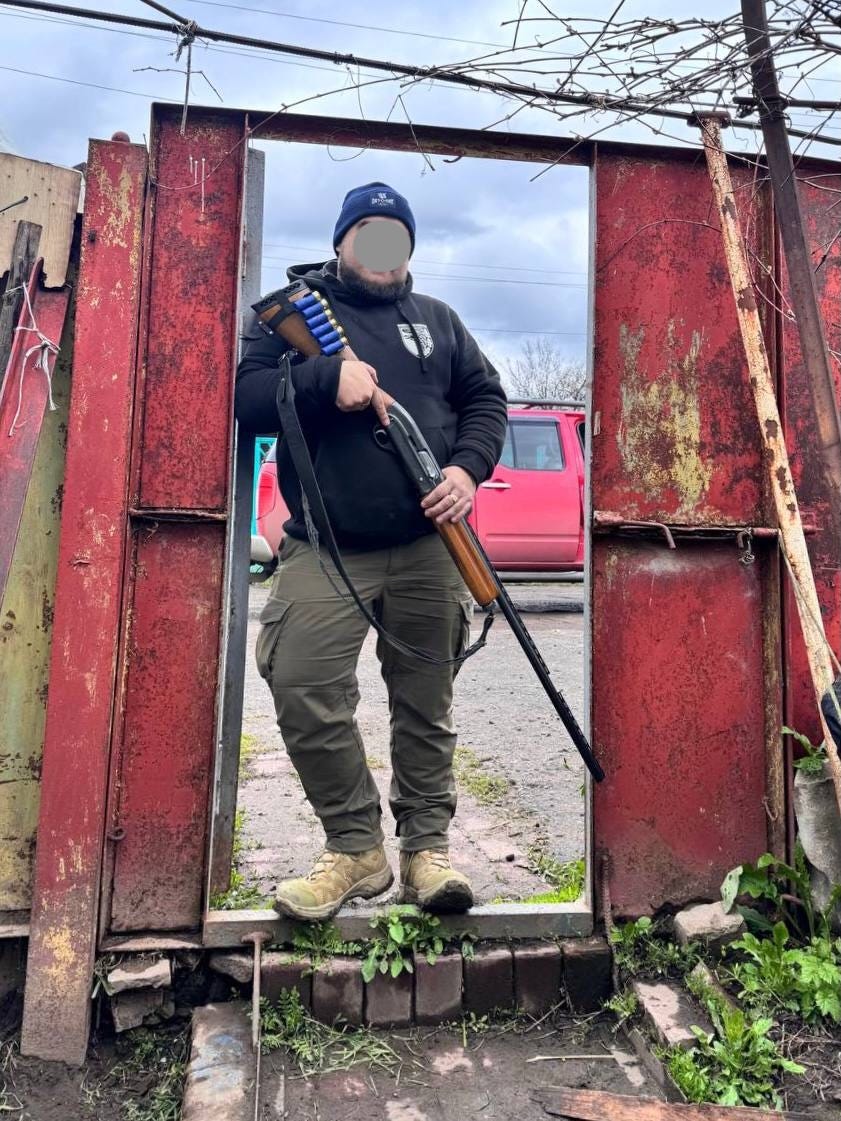
Why is it so difficult to get aid to Donbas?
Dima: First of all, the information war. A lot of foreign organisations and volunteers who have never been in Ukraine think Donbas is already occupied, because they read news which copies Russian propaganda. We’ve had a lot of situations where an NGO contacted us and said, ‘We can send help to you via Nova Poshta [the post office], if you can pick it up at Dnipro?” When we tell them to send it to Kramatorsk directly, they answer, ‘What? Nova Poshta closed in Donbas years ago because Kramatorsk is occupied.’ Sometimes the NGOs then tell us that they spoke to Ukrainian volunteers in Lviv, and they said Donbas is occupied! So the NGOs decide to send their aid to ‘reliable and trusted volunteers’ in Lviv.
Secondly, we invite all foreign volunteers and NGOs to visit Donbas, but they’re afraid. That’s normal, but you won’t learn anything in Lviv. The amount of shelling Lviv has endured over more than four years of war can’t be compared to even one day in Donbas. The war here is in the east.
Many foreigners do visit Donbas, but often they are small volunteers or representatives of small charities and come at their own expense, and the amount of aid they bring fits in a car or a small van. They come one to four times a year, which isn’t very often, and the aid is scattered across the front lines within a couple of hours. The flow of volunteers needs to be endless and continuous, then together we will be able to win victory for the entire free world and democracy.
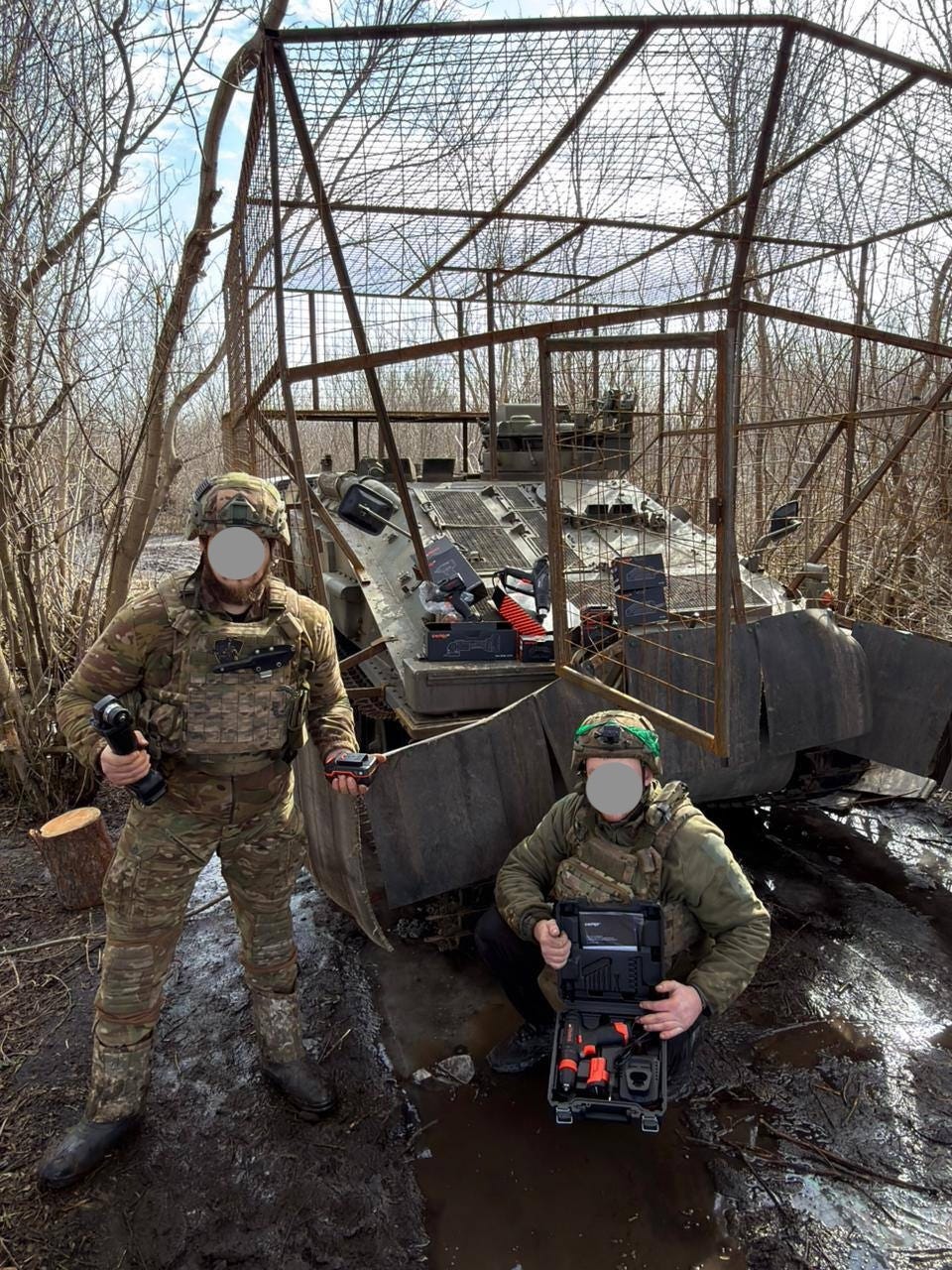
The third problem is logistics. People are afraid to lose their way because thanks to E(lectronic) W(arfare), satnav doesn’t work well, or at all, here, and if they miss the correct turn they will end up in the kill zone.
Yes, Donbas is a very dangerous place, and some areas are real kill zones. But we’ve learned how to survive. We know what time of day there will be glide bombs – for example, from 9 a.m. to midday there can be four or five glide bombs, so it’s better to be in safer areas of the city at that time. The same in the evening. It’s better not to use the main logistics roads after 11 p.m. because the Russians hunt vehicles. If there’s wind or rain, you can drive a lot of places without worrying about FPV drones. We know the safe detours, the dangerous places where it’s better not to stay for a long time.
When we invite people here we take them on the safest road – we can meet you in Kharkiv oblast and you can follow us. We will take you on an excursion and show you the real situation and conditions here. It’s dangerous, but your visit will be a very useful one, delivering aid and cars for soldiers, hospitals and civilians.
What happens to vehicles/humanitarian aid delivered to Lviv?
Aid and cars delivered to Lviv stay there or in other western regions more often than we would like. Of course, there are a lot of great volunteers there, who deliver aid and cars to the frontlines to the east, south and north. But big charity foundations and NGOs in particular have situations where humanitarian aid remains in the west of the country.
Some of that is unquestionably aid for displaced persons, and I don’t mean that large funds and organisations are all worse than small ones, but there are dishonest people everywhere. It’s just that such situations are better known in large funds. It’s necessary to check the organisation and their work.
I don’t understand foreigners who send their aid to who knows who, who knows where. I have friends in Scotland who told me about one of the charities that sends vehicles to Lviv. When asked, who are they handing over these vehicles to, which brigades, they say, ‘We don’t know. We handed them to people in uniform and that’s it.’ But not every soldier in uniform has been to the front, and not every soldier from the front can come to Lviv to meet foreigners and pick up the vehicle they want to give him.
Why not?
Real frontline fighters are in their positions for an average of three weeks, and it’s rare to be able to deliver a vehicle just in time for them to leave. They mostly only leave their positions for permanent redeployment and recovery sites, often frontline cities. If a soldier is stopped at a checkpoint in the rear without special permission or notification from command, he can be summoned to an internal investigation. Every army has deserters – everyone understands this. So a soldier can’t just come to Lviv to pick up a vehicle.
Regarding the transfer of vehicles to military units or unit commanders, we need to be careful here too. There are situations where vehicles remain in the hands of superiors. It’s rare but there are even cases where truly good and capable vehicles for the front have been given to commanders’ wives in peaceful territories.
We make sure vehicles are given to the fighters in Donbas, and we see them in operation. They only travel to the rear to take the fighters home to their families on well-deserved leave, then return to the front.
What other problems don’t Westerners understand?
There’s a great line from my favourite film trilogy, The Lord of the Rings: ‘They do not come to destroy Rohan’s crops or villages. They come to destroy its people – down to the last child.’ Sometimes it seems to me that 95% of foreigners don’t understand that there’s a real war going on. They’ll say ‘it’s inhuman’ but ‘humanity’ doesn’t apply here. Russians don’t know what compassion is and don’t play by the rules of war, so as not to bomb peaceful cities and kill civilians.
Europe doesn’t understand what it’s like to hear rockets and shaheds, to leave your home or lose it, to lose loved ones to war, have cities wiped off the face of the earth. What it’s like to rally together in the face of a real threat, to volunteer to go to the military recruitment office, and defend your home and your country. They think the war won’t affect them, but they’re wrong.
Even those who help Ukraine, who raise funds and send aid here, are often very slow and don’t know how to prioritise. We don’t have weekends or holidays – we’re bombed and killed on New Year, Christmas, Easter, St. Patrick’s Day, Halloween, and all your other holidays. The Russians don’t wait.
So when I hear from Europeans in December that they’ll open a fundraiser to buy tools to repair armoured vehicles and two Starlinks with generators, and that it will be a quick fundraiser, then they say, ‘We’ll start in March and have it all together in a couple of months’, I want to slap them and shake them up. March? It’s December now, you’re spending more money in bars, restaurants, and so on than these two miserable Starlinks and their instruments are worth. But they say with the holidays coming up people don’t pay attention to collections.
Meanwhile, shit, we’re collecting hundreds of millions of hryvnias in a couple of days to buy all the necessary equipment or weapons, the whole country chipping in, even though we’re being bombed, killed, the economy is in complete disarray because the Russians are bombing the infrastructure.
There are also organisations that, after visiting us, say, ‘We’ll come again and help.’ Great. Same story. They go back to their lives, and a couple of months later I ask them how the fundraiser is going. They say, ‘We’re actively working on it – we’ve already started devising a strategy for how to launch it..’” Four months later they’re still figuring that out. The icing on the cake is that the strategy is to hold a charity marathon in over a year’s time. They were here in 2025 and the marathon is planned for 2027. This is fucking nuts.
How can donors be sure that Druzi Space are using their money properly?
Everything is very simple here – normal volunteers and organizations make reports, take photos and videos, and keep receipts for all purchases whether for fuel, consumables or whatever. And we invite all volunteers to personally deliver aid to the fighters. We prefer not to be intermediaries, and would rather introduce fighters and volunteers to each other so they know who they are helping and where their donations are going.
When I ask someone to help a brigade with a vehicle, I invite them to personally hand it over on the eastern front. We take photos and do video reports on every vehicle we donate, and every donor sees where the aid went.
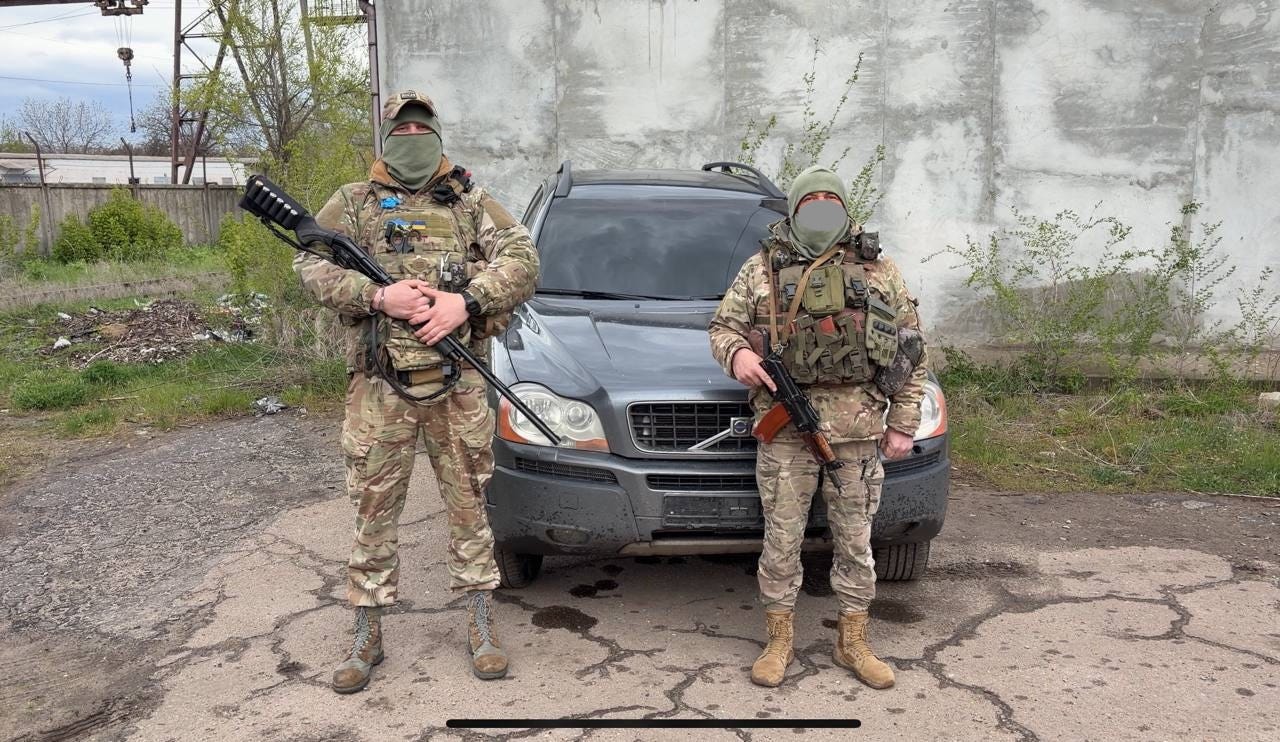
If vehicles are sent to the eastern front, aren’t they immediately destroyed in battle?
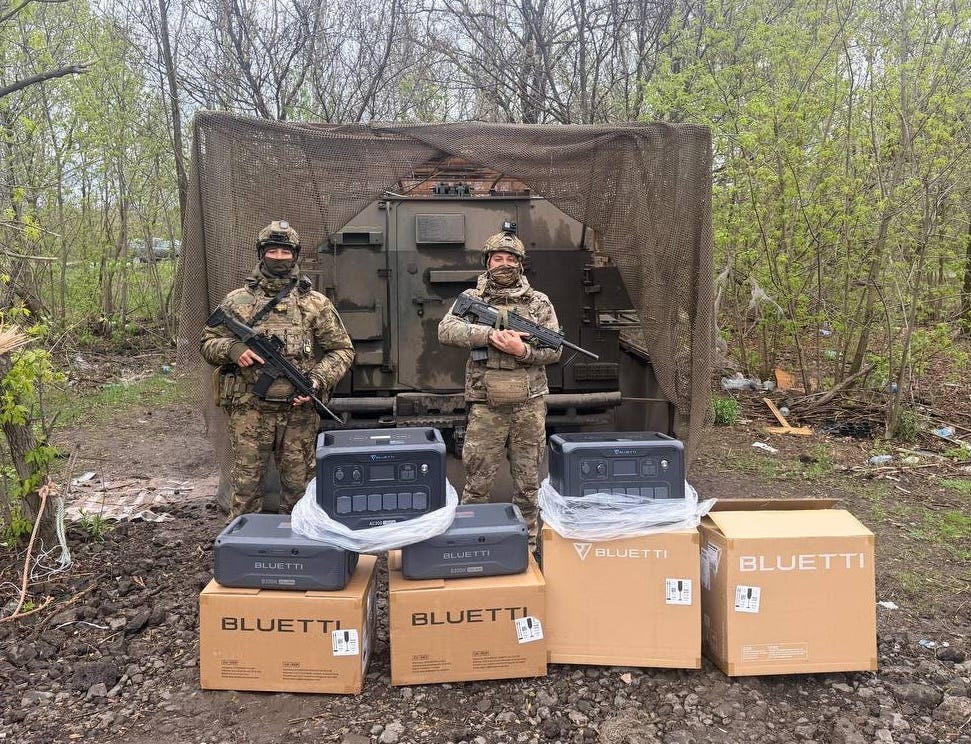
Of course they’re destroyed, but not immediately. In any case, vehicles at the front – like generators, Starlinks and all aid – are consumables. The most valuable asset here is human life. If a vehicle can rescue even one wounded soldier, or deliver vital supplies, food and water to the front lines, and complete at least one successful mission or evacuation, it will save lives and preserve the front. If it’s destroyed, it doesn’t matter.
Europe doesn’t give us new Range Rovers, Lexuses, BMWs or Mercedes. The average age of cars at the front is 20-25 years, and they cost just a few thousand dollars, euros, pounds in these countries. Most of these cars, according to European laws, should have already been scrapped.
We repair and restore this old scrap metal, love the cars and give them nicknames, maintain them as they perform missions and combat tasks. That’s the price the West pays instead of blood, so I think it’s better to send cars so more of our soldiers can live and resist Russian aggression than send your own husbands and brothers here.
Regarding the lifespan of vehicles, it depends on their body style, role, off-road capability, etc. Pickup trucks are destroyed more often than four-wheel drive SUVs. There are vehicles that have been in service for years and are still running.
Why do you need so much expensive tech?
It’s a matter of life and death, literally. Everyone admires our ground drones, and footage of civilians and soldiers being evacuated from the front lines by ground drones is already being broadcast around the world. Such a drone needs to be controlled, which requires a Starlink – on both the drone and the operator – for continuous data and signal transmission. It needs powerful motors and batteries. To see where you’re going, the drone is equipped with a camera, and the camera must have a night mode.
Evacuating wounded soldiers is crucial, and every second counts. You can’t wait until it gets light to evacuate a soldier who’s bleeding to death. The camera also needs to have good resolution so you can clearly see the road. Sure, you could install a prehistoric webcam from 2013 for two bucks, but if there’s a pothole or a change in elevation in the road and you can’t see it and the drone flips over, no one on the front lines will run to turn it over like a radio-controlled toy. Plus, the drone is also transporting a wounded soldier who maybe can’t move, and he won’t be able to get back onto it.
To operate a drone, you need a good computer or laptop, with a good screen and screen resolution, with good specifications, so it doesn’t lag or slow down. You don’t want to miss a turn during a drone extraction because the computer is slow or freezes while speeding down the road, and crash into a pole or bushes at best, or a ditch or bomb crater or river at worst.
So yes, expensive equipment is used for good, important work. Just like with tourniquets and things that life depends on, no one will buy no-name brands or things that are unreliable, cheap, and likely to fail. We have a saying: ‘A miser pays twice’ – only here the price of this stinginess is your life or someone else’s.
How many donors do you have?
The word ‘donor’ is a bit of a stretch. For well-known and prestigious volunteer organisations, a ‘donor’ means sponsorship, including salaries and operating expenses. We don’t have that at all. From the very beginning of the war, our donors, those who could be called donors, have been Aid Ukraine UK and Nowzad. However, Aid Ukraine UK and Kaz, the head of the organisation, are our friends and we work with them not as donors but as part of a team, a single entity solving joint problems. We’ve never received much money or donations; it’s mostly been assistance from various organisations such as finding contacts, making trips and so on. Nowzad is a donor in the sense that they consistently send several pallets of food every month to Kramatorsk, which we distribute to those in need, shelters and animal foster homes, and help us with sterilisations and vaccinations of animals at frontline areas. Alongside our volunteer work, we try to earn a living and we’ve always paid for operating expenses, evacuations, fuel, etc. ourselves or through general collections, which are long and difficult.
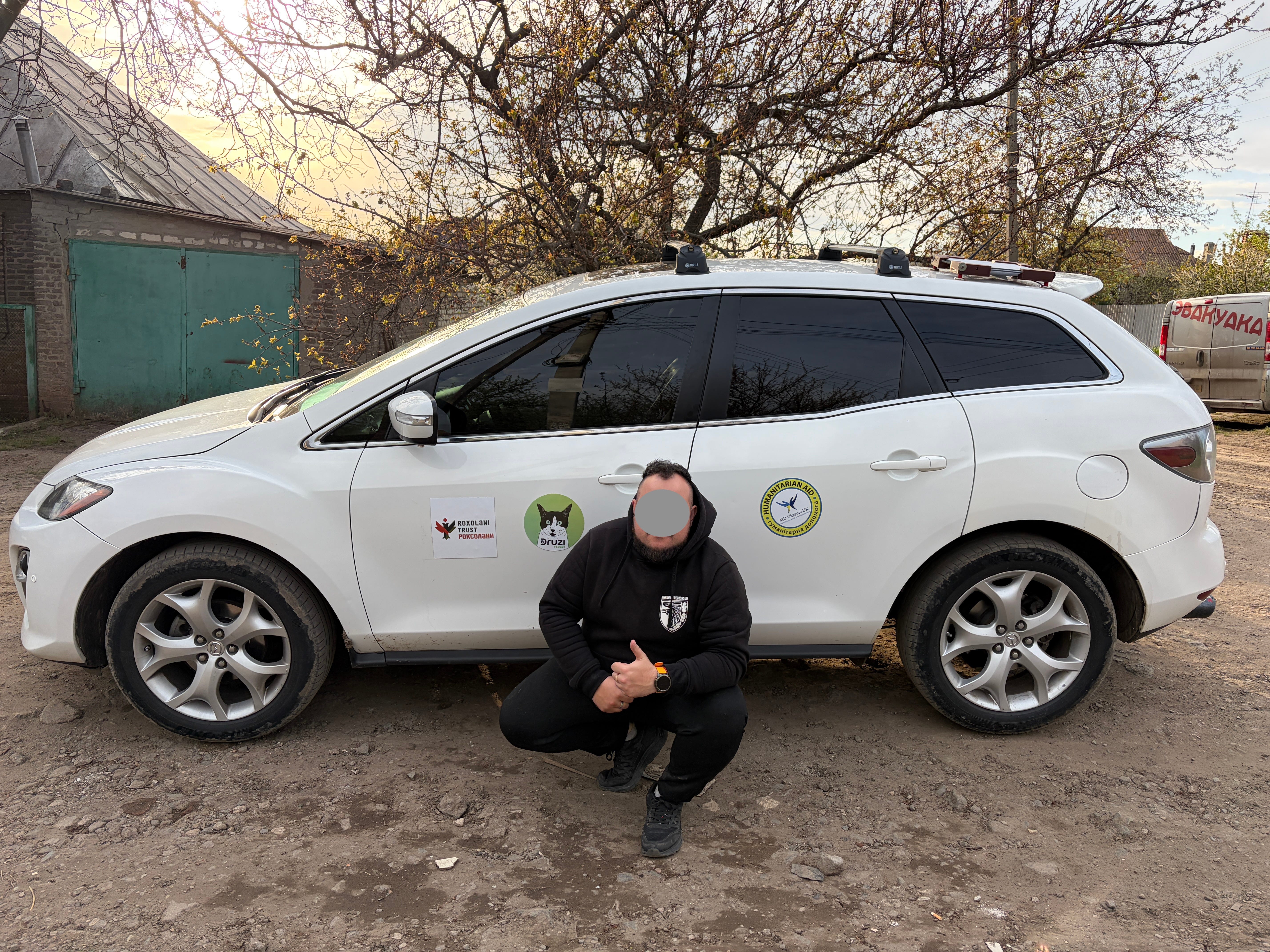
In the last month and a half, thanks to you, Anna, we met Ryan Little and the Roxolani Trust Foundation. Thanks to them, in the past month we’ve been able to carry out more than ten evacuations, pay for fuel for all of them, and service and repair some of the evacuation vehicles, which drive more than 10,000 km a month; and treat some rescued animals at vetinary clinics.
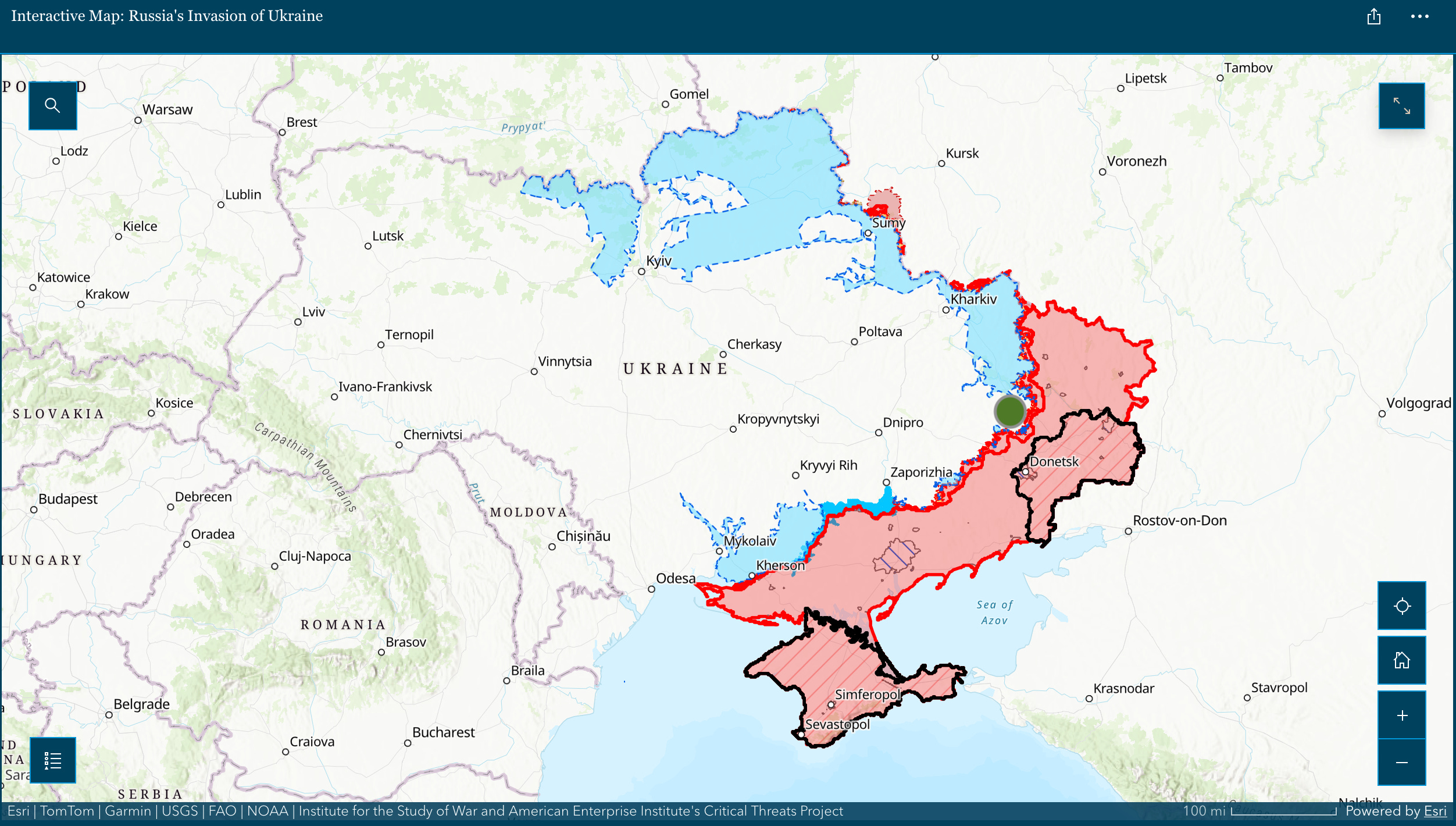
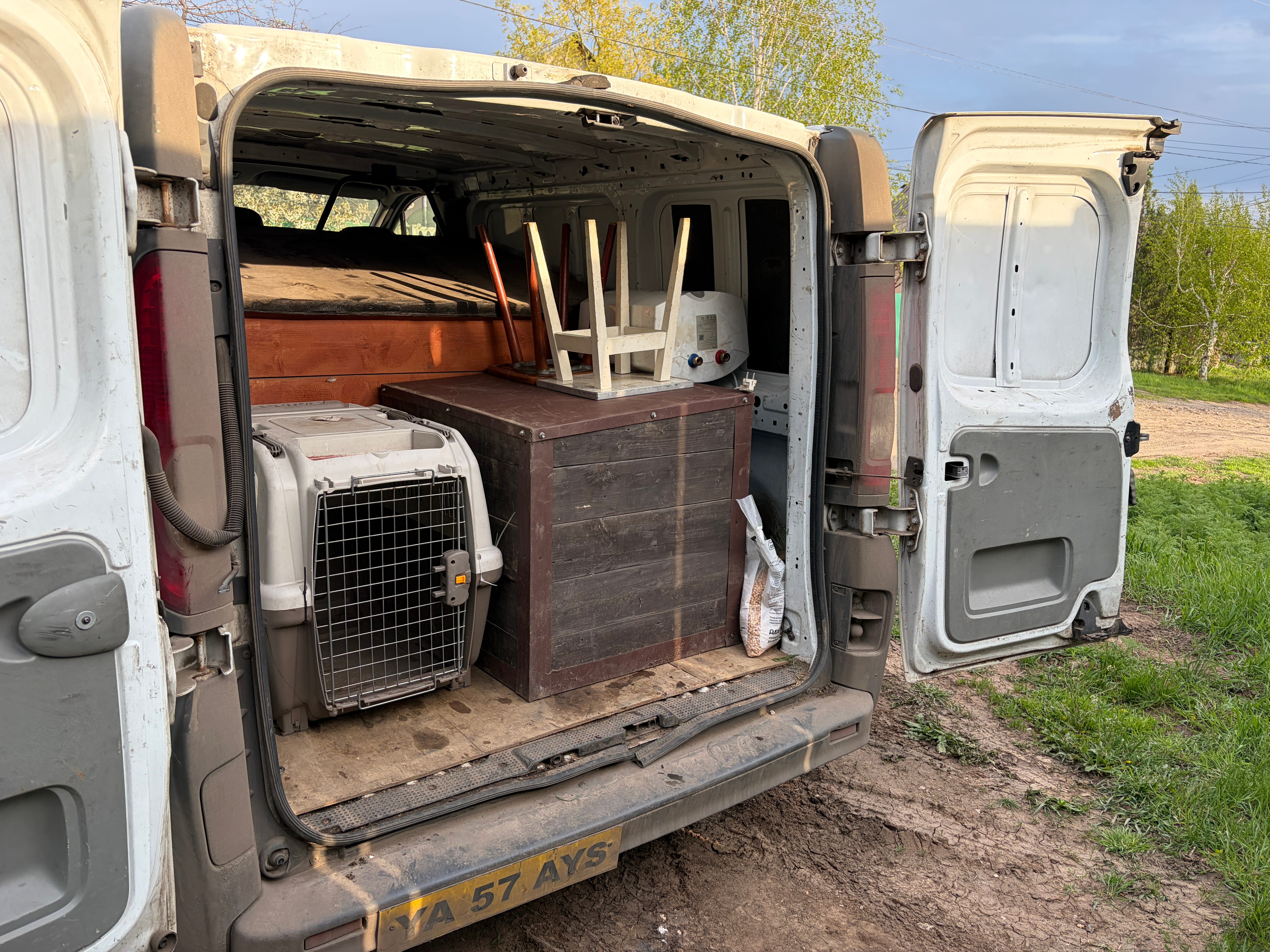
The last evacuation transported 26 animals across Ukraine, to seven different locations – from Donbas to Konotop, Kyiv, the Kirovohrad region, Khmelnytskyi, and three locations in the Volyn region. The total round-trip distance was over 3,600 km – this is with an average fuel consumption of 10 litres of diesel per 100 km, so 360 litres of diesel – which is almost US$900 at the current exchange rate and fuel prices. To pay for the fuel alone, we ourselves would have had to fundraise for three or four months. And this is not an isolated example.
The Big Idea behind this blog is to link grassroots Ukrainian organisations with donors. And sometimes it works out well…
Is the shelter still overflowing with animals with nowhere to go?
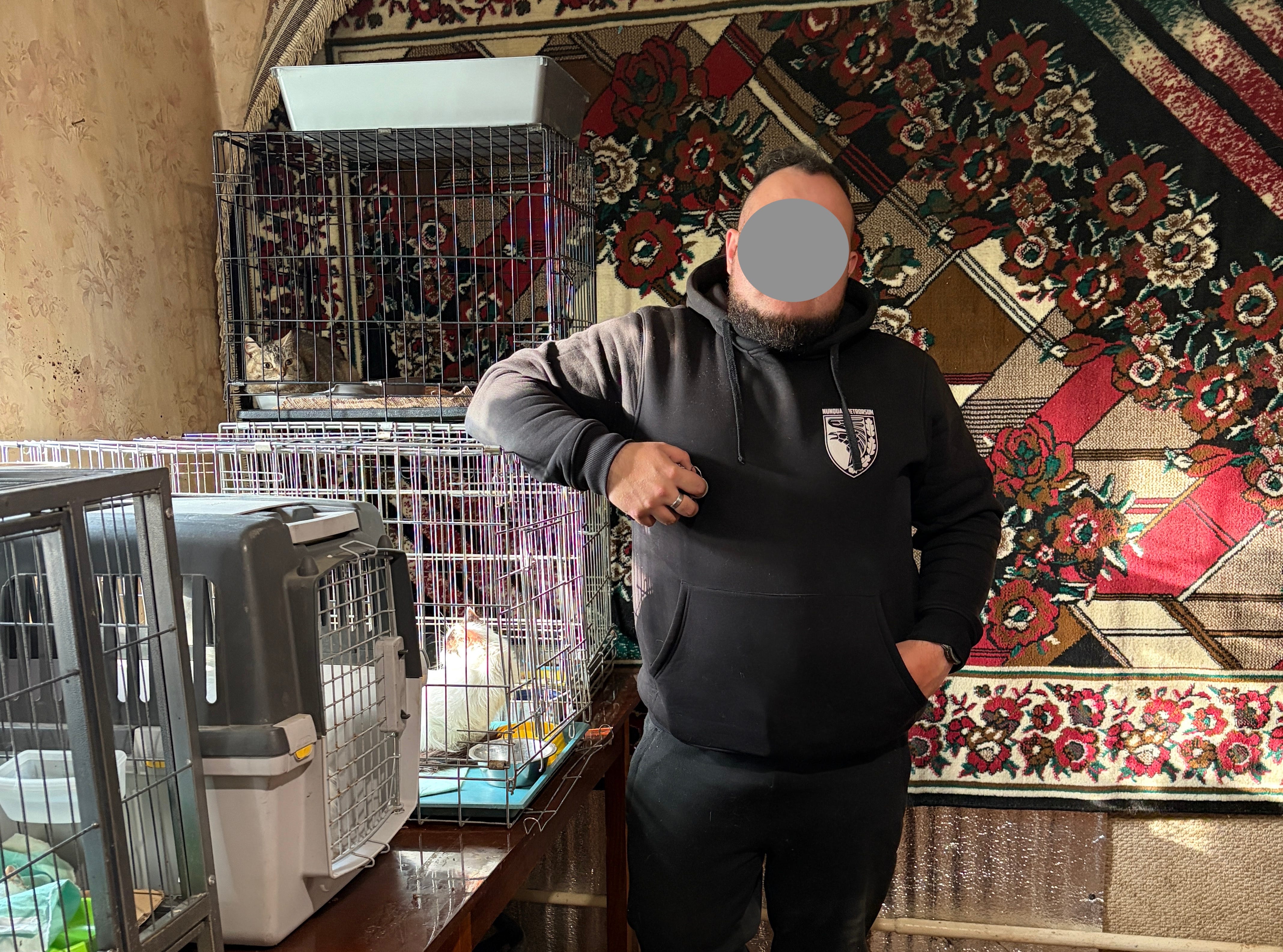
A few days ago we evacuated eight animals from the Lyman area. We do this almost every day. For example, we had two calls today from people who want to leave Kramatorsk. They’ve found a place to go in Kirovohrad, but they [the landlords] will take only two big dogs and two cats, and they have an extra cat they cannot take. So we will take photos, feed them and try to find a place for them.
Yesterday we had a call from a guy who found a cat with a broken leg. He needs treatment and we need to find a place for him. Again and again and again, it’s nonstop.
Tell me about your plans for a mobile vet clinic.
Well, it’s more of an idea, as there aren’t enough funds or resources for it yet. There are almost no veterinary clinics left in the Donbas, or even any animal X-ray machines, and only two clinics have ultrasound diagnostics. This makes treating animals practically impossible. The nearest clinics with animal X-ray machines are in Kharkiv or Dnipro, about 300 km from Kramatorsk.
We’d like to create a mobile veterinary clinic, a large van with equipment, so we could travel to towns and villages treating and diagnosing animals, carrying out vaccinations and sterilisations. This would be convenient for everyone, especially pensioners who don’t have a car and who can’t get to the city.
You also have a long-term plan for creating a new town?
This is a joint idea with the Futurama organisation. Since we evacuate not only animals, but also people, entire families with animals, we thought it would be cool to find some village, restore it, and settle our refugees and displaced people from Donbas there for free.
We could create New Kramatorsk not far from Donbas, say in the Dnipropetrovsk region or in the Kharkiv region closer to Poltava. Create all the conditions for people to live: open stores, hospitals, schools, playgrounds and kindergartens; repair roads and install street lighting; create jobs, comfort, so that people are engaged and love this land.
New Kramatorsk sounds like a great idea. The old one is still standing at time of writing, but the imbalance of aid distribution, especially vehicles, in favour of the places that need it least, is one of the thousand factors working against its chances of survival.
There’s no easy fix. As Dima says, there are good reasons why people don’t want to drive to Donetsk oblast. On the other hand, all of us who work for Ukraine want our support to be as meaningful as possible, and so many people have now told me, on and off the record, horror stories about mounds of wasted, stranded or just stolen aid. Yet, at the same time, unreasonable demands for proof of how aid is being used are also a problem, as soldiers have other things to do than record a ‘thank you’ video for every pair of socks.
I don’t know who 95% of readers are, but I’m guessing a lot of you are involved in sending aid to Ukraine from abroad. Is there anything your group could do better? A checklist:
Is this aid the kind of thing Ukraine really needs?
If it’s the right kind of item, is it in good enough condition to be worthwhile?
Is it going to the right part of the country?
Is it going to the most suitable recipient?
Is there evidence that it’s being used for the intended purpose, by the intended beneficiaries?
Is it going direct, or are there intermediaries (especially non-Ukrainian ones) who are taking a cut? If the latter, is there any way to remove them?
Those are pretty obvious questions, and I imagine many of you spend a lot of time working on them. Getting reliable information on situations and who to trust can be extremely difficult, inside Ukraine let alone abroad (if I can ever help in that respect, contact me). But when it can make the difference between aid saving lives or being effectively wasted, we need to put the effort in.
As Dima says, Druzi Space work with Aid Ukraine UK, and the best way to donate is via their PayPal. They can also take international bank transfers. If you would like your donation to be used for a specific purpose, email kasia@aidukraine.org.uk with details first.
Comments
Nothing yet. Say the first thing.
Sign in to join the conversation.