
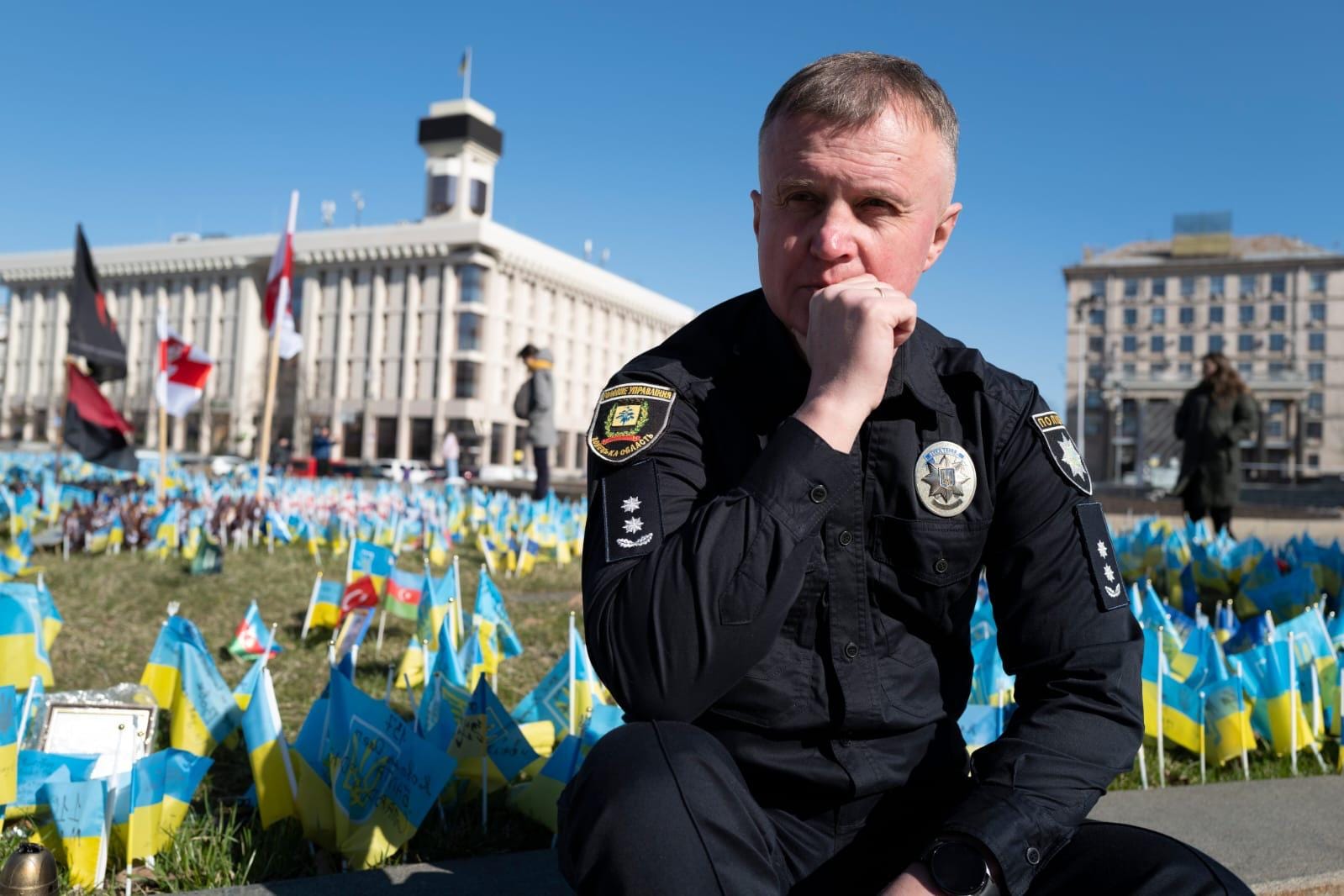
If you’ve read my previous interviews with him from April 2025 and September 2025, you’ll know that Volodymyr Nikulin is a reluctant hero.
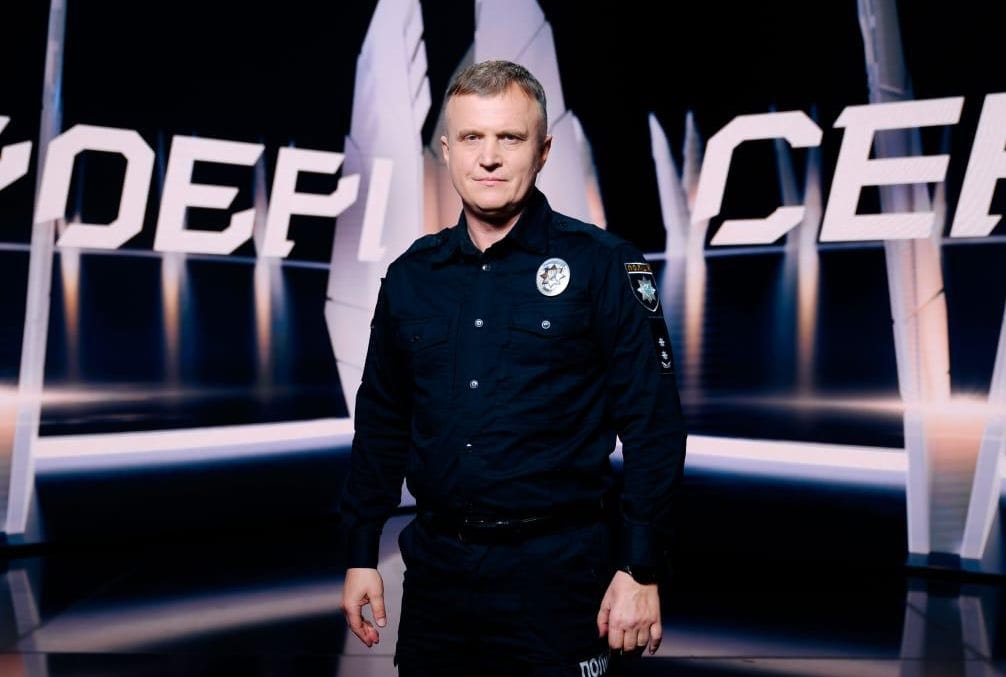
However, as he managed to smuggle the footage that became the Oscar-winning 20 Days in Mariupol, and the journalists who took it, through fifteen Russian checkpoints to freedom back in March 2022, he’s pretty much stuck with the designation. ‘Reluctant hero’ is itself a stereotype, of course, and it comes with nuances: Volodymyr is, specifically, the ‘pragmatic and slightly bewildered’ hero type. He got up in the morning and did his job, then and now. He just goes on national TV in the capital sometimes as well
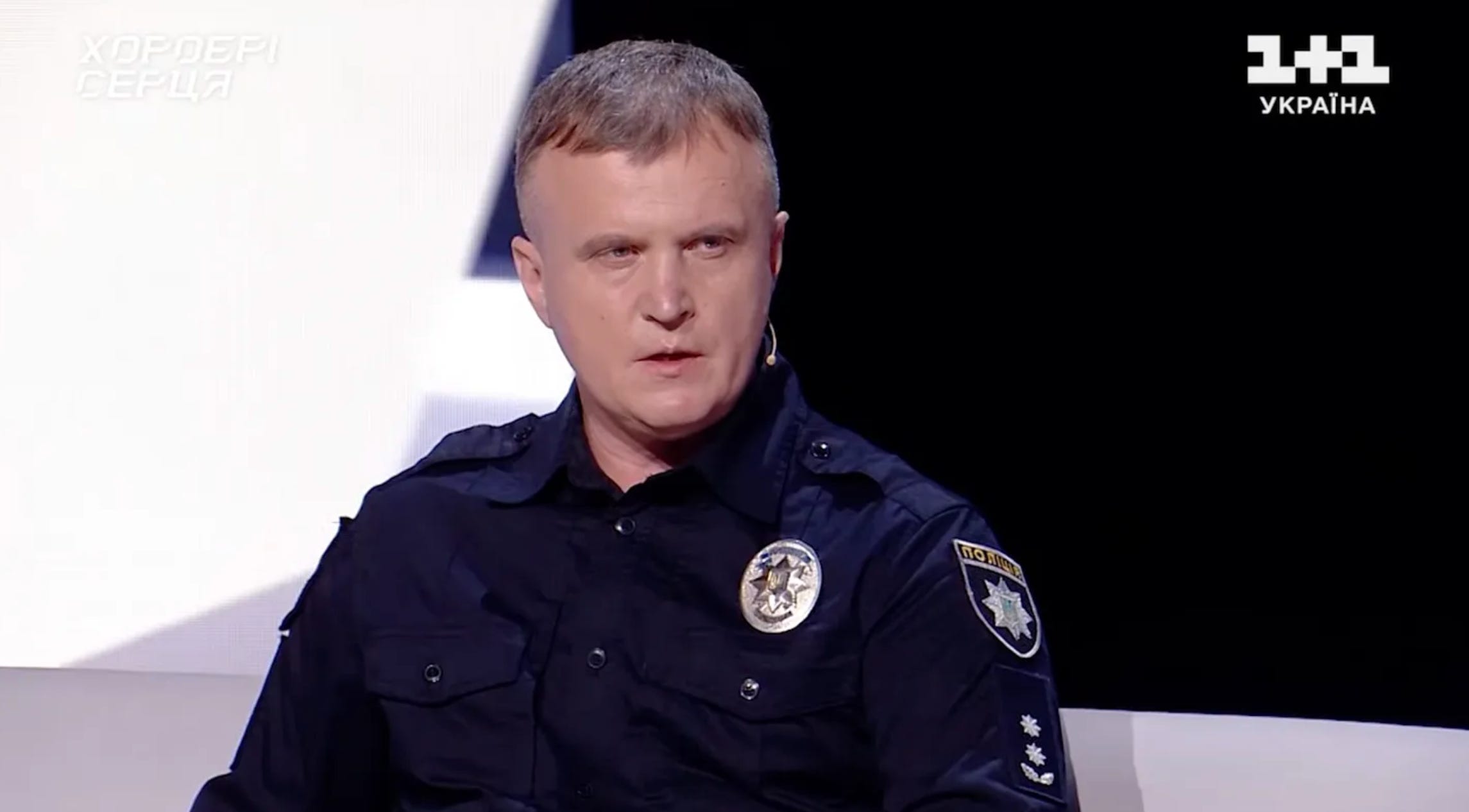
A few days ago, in the less exalted but unfortunately more even more war-torn environs of the Kramatorsk branch of Lviv Croissants…
Me: Do y—
Volodymyr: How have things changed in Kramatorsk?
Me: [Hey, wait, I’m supposed to be asking the questions…] Well… it hasn’t changed that much. There are more ruins – more ruins gradually every time.
VN: What about atmosphere? Your feelings?
Me: There are fewer people. And more people are saying, ‘We have to leave. We don’t know when, but we’ve accepted we have to leave.’
V: Of course, of course. It’s normal for people who’ve suffered a lot of bombing. The Russians dropped a huge bomb in Sloviansk. More than 1.5 tons, in the city centre [on 15 April: it didn’t make the foreign news but is briefly covered in English here]. It was terrible.
I live in Sloviansk. I didn’t expect a bomb like that. This kind of bomb is supposed to be used to destroy big military facilities. It’s a war crime, without any doubt. So it’s very understandable [that people want to leave.
Me, back on the job: How do you feel things have changed since the autumn?
VN: The humanitarian situation has changed somewhat for the worse. Civilians don’t feel safe after such huge strikes, such destructive war crimes. Locals are finding it hard to hope for something better – but that’s a mistake. Matters are decided on the battlefield, not in the city where people can’t do anything.
There are a lot of drone nets in Kramatorsk and Sloviansk because the Russians have begun to strike with FPV drones. Even at a distance of 20 kilometres it’s dangerous. The nets are like the trenches, the barriers engineers build in the battlefield or near the city. They’re military installations.
As for the situation on the front line, it’s not worsened so much that there’s panic. We’re holding our positions. The Russians aren’t able to advance significantly, and there’s confidence that we can maintain our defence. I won’t say, ‘rah-rah, everything’s great’. In humanitarian terms… the number of people has decreased. You see there’s less public transport in the city than there was, but the city is alive, you can feel it.
This is the impression I’ve had as well, though it feels at cross-purposes with what some other interviewees have said. The trolleybuses have been replaced by regular buses, which can pass under anti-drone nets and the local pensioners are not happy – because bus fares are slighty more expensive. Meanwhile, crossing the park square near the cafe, I heard an FPV drone far overhead and paused ready to take refuge under a tree if necessary, or rather amid it – they can’t get into tangles of branches – but the drone proceeded on its way and the elderly couple who were unconcernedly sunning themselves on a nearby bench remained. So far there have been few attacks on pedestrians, which doesn’t sound like much of a boast, but is much better than the situation in Kherson.
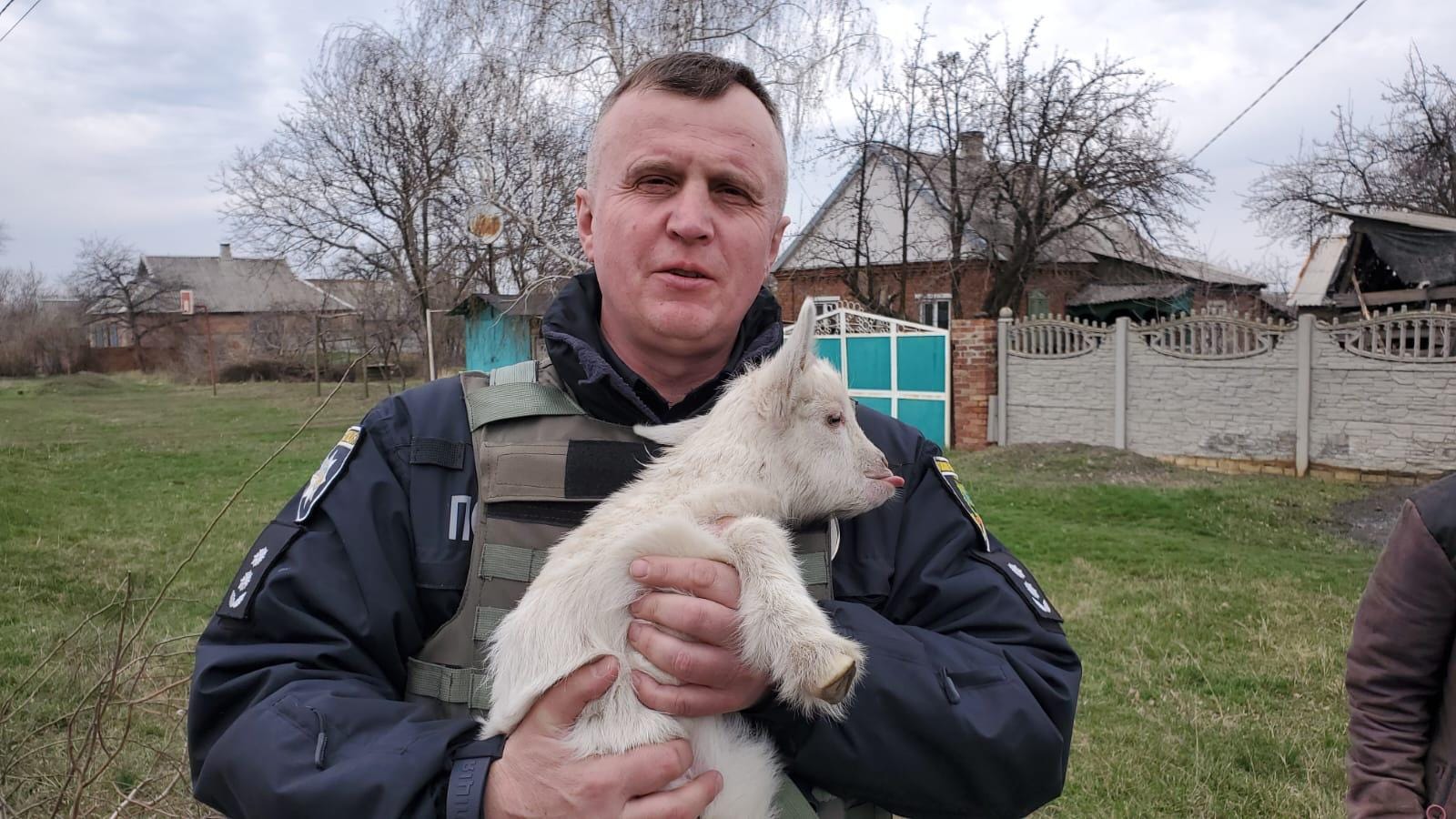
Kramatorsk city centre has been badly affected by bombing. But I also notice that, for example, Dvirtseva Street is completely bombed out and boarded up, but Parkova Street is not much affected. They’re both ordinary streets with flats and shops. Is there any reason why the Russians have chosen to target one and not the other?
Interesting question! It’s hard to understand their motivation in targeting. They use heavy weaponry and aviation to indiscriminately terrorise. Their efforts against the city partly show their incompetehnce and partly their desire to target civilian infrastructure to terrorise people. They keep hitting the same small areas.
I remember the Soviet military system. I remember studying the Russian military. They want to report back to their commanders that they’ve done something, hence these strikes. That’s my explanation.
Do you think people should evacuate from Kramatorsk?
That’s a very, very complicated question. It would be better if those who are able to leave do so, because it can be very unsafe at certain times. It’s certainly safer to be further from the front line.
But a lot of cities are located near the front line. Not just Kramatorsk and Sloviansk but places like Kherson and Sumy. There are a lot of such places and there are people there too, and this is our reality now, and we have to deal with it.
There was compulsory evacuation of children from some streets in Sloviansk a few weeks ago—
The most dangerous streets.
--is there going to be further compulsory evacuation from Sloviansk and Kramatorsk soon?
That depends on the situation. We’ll see what decisions the authorities make.
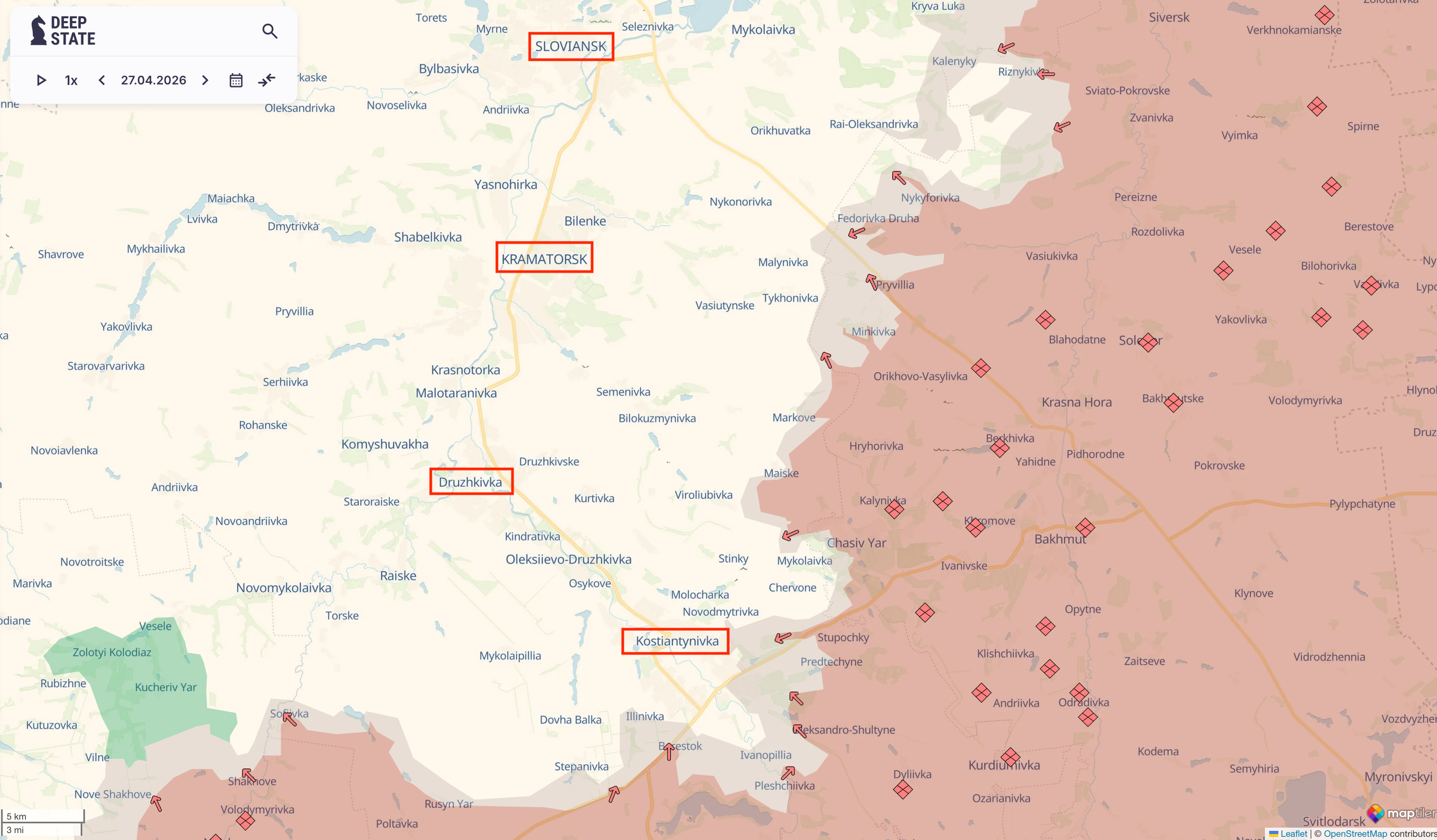
Druzhkivka [a few kilometres to the south] is now being completely destroyed. Is there still support from the police and local authorities there?
Of course. It’s our duty, unquestionably. As in Mariupol and other places, since the start of the war the police have been doing very important work. Although Kostiantynivka has become a battlefield now. The whole city is frontline now.
The police are limited in what they can do. But we pick up people who leave Kostiantynivka. We evacuate people from Druzhkivka. We help wounded people who remain there. Medical help, maintaining order. It’s very important that the city not be left without any authorities, that the police are still operating.
Do you think there will be more and more drones in cities? To the point where it’s dangerous to go outside in Kramatorsk?
It depends what anti-drone defences our military come up with. If the front line stabilises, the situation in the cities could be OK. If we put a lot of effort into drone warfare, if we destroy the means of communication [i.e. sever the operators’ connections to their drones], destroy the supply lines, destroy the Russian drone units, the situation could improve significantly. That’s the reality – it all depends on the battlefield. But without facts, it’s hard to predict.
As you can see yourself, the situation has changed completely. We are more able to use drones too. The number of Russian drones might reduce if we manage to target their logistics, their drone operating units. Those units have significant capability. Morally, there can be no comparison with ours, because the Russians commit war crimes, they strike civilians and civilian infrastructure.
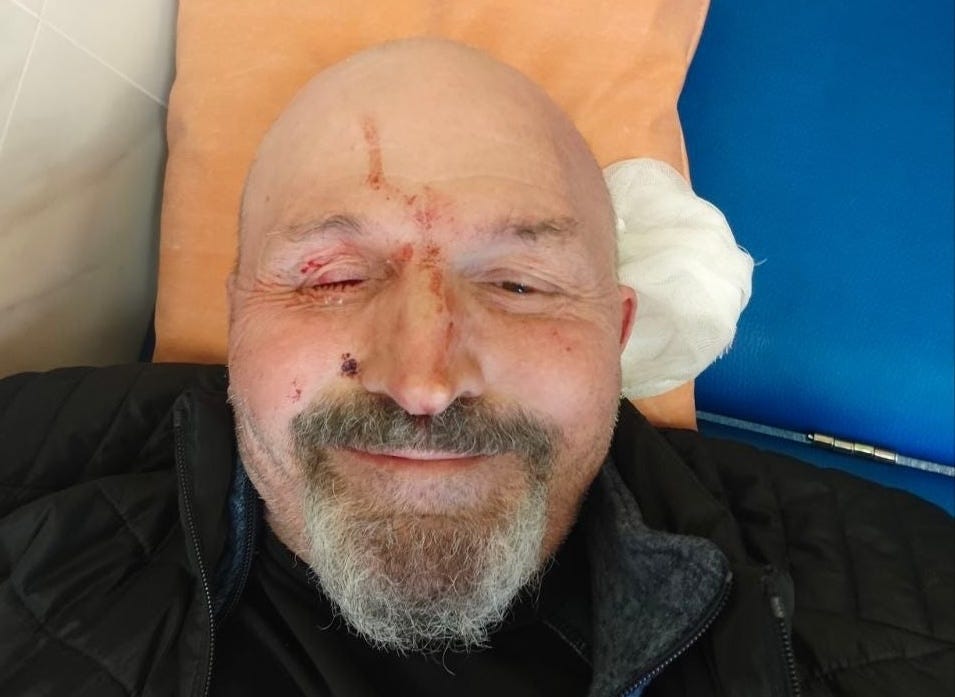
War crimes… You might remember the Druzhkivka chaplain who was targeted by a Russian drone operator and lost an eye while collecting boxes of food for hungry people from his local post office. He is now receiving treatment in Germany, and some friends/readers of this blog are helping him financially.
Civil society is changing, too. More young men with guns, for one thing. Has ordinary police work changed as well?
It hasn’t changed much since 2022. In Donetsk oblast it hasn’t changed much since 2014, we’ve been working the same way since the war started then.
But nobody can deny police work was completely different before 2014. And it did scale up in 2022. This is the largest war on the European continent since World War II. No country in Europe, or pretty much the whole world, has experience like ours. I mean the experience of a police force operating during a war. I think we’re doing a good job maintaining order. You see a living city, where law and order are maintained.
People are living a normal life as far as is possible. And we respond to every phone call, like in peaceful cities. We work like an ordinary police force. But we also have war duties.
There hasn’t been an increase in domestic violence?
I don’t think so. I don’t think you need a war to increase domestic violence! People are always people everywhere.
Everything is getting more expensive because fuel is more expensive. Does this mean some people can’t afford to buy food any more?
It’s hard for them to afford but it’s not crucial, I think. There is the same situation in other countries where elderly people can’t afford some kinds of food. But now, during this war, it’s a hard situation but not critical for them. The main food for them is available. But it would be better to increase their pensions. That’s very important for our country. Inflation is a problem for every country, I think.
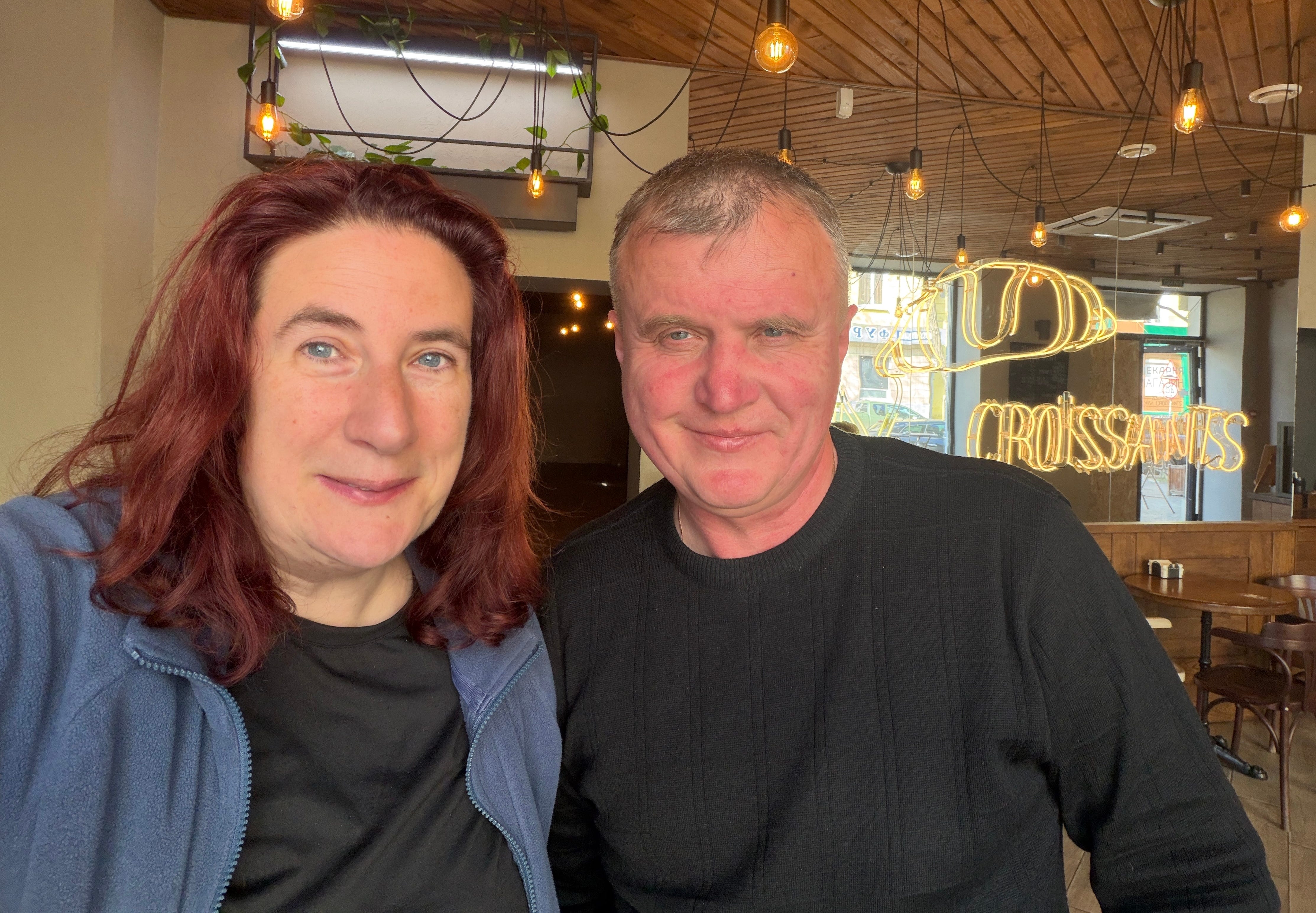
Meeting up for a chat in Kramatorsk requires a special kind of planning. On the first occasion, Volodymyr and I met in Aroma Kava (Ukrainian Starbucks). The second time, we tried to meet there, but it was randomly closed. Since then it’s been hit by a blastwave so most of the windows are boarded up and it’s a bit dismal. Lviv Croissants (Pret a Manger with croissants) was also recently hit by a blastwave, resulting in boarded-up windows, but only on one side, so it’s still nice and light.
Yes, Lviv Croissants does exclusively serve croissants. Options include Caesar, tuna and cheesburger. Obviously I have the utmost respeect for Ukrainian culture, but sometimes… what?? But once you’re over your initial suspicion, it somehow works.
Anyway…
When I’ve spoken to you before, you’ve mentioned that you are grateful for support from the West, but we need to do more. What kind of support should the West supply now?
First of all we need military support, without a doubt. It’s crucial for us because our industrial and human capacity is smaller than the Russians’. We couldn’t do anything without support.
Unfortunately our industry has been partially destroyed. You might have heard how much industrial capability Donetsk oblast had before the start of the war in 2014, and still until 2022. And almost all our industry has come to a halt because the Russians deliberately destroy it. So we need material support.
Is humanitarian aid still arriving in Kramatorsk?
People who have stayed in Kramatorsk receive some humanitarian aid. But you mentioned the situation with inflation… It would be better if humanitarian aid were increased, but there is some.
Me: In seven months, the situation has changed for the worse. Dozens of FPVs over Kramatorsk daily, most commonly swooping down to destroy vehicles. Not to mention the fact that the US seems to be practically in league with Russia at this point.
This video by Ben Kochenburger shows a burning tractor, hit by a drone in Kramatorsk. Ben is brandishing a wodge of fibreoptic cable he found nearby.
The situation has also remained stable: the front line is barely moving.
Either way, the narrative of the Inevitable Doom of Kramatorsk is up and running. Everyone has to prepare for the worst: I know people who are starting to plan partisan warfare in case of occupation, for example. But there are multiple possible futures. One of which is, Kramatorsk becomes Mariupol. Another: Kramatorsk becomes Kostiantynivka. A third: one of these years I can have coffee with Volodymyr in a cafe without boarded-up windows and killer drones buzzing the streets outside. Because Ukraine got enough support to outlast Russia.
Kramatorsk is still alive. We can keep it that way.
Comments
Nothing yet. Say the first thing.
Sign in to join the conversation.