
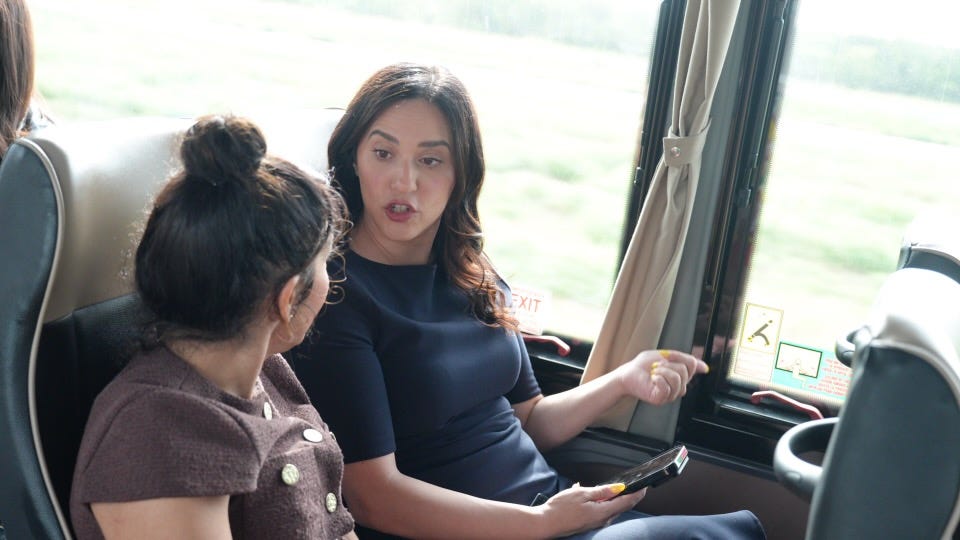
I feel like I am living a quintuple life these days, wearing five hats: 1) Mother to my 3- and 6-year-olds, who have my heart and soul at all times, 2) Wife to the best man I know — Brian J. Tronic (Human Rights Lawyer Extraordinaire, cute, kind and brilliant), 3) Practicing Pediatric Critical Care doctor at one of the largest children’s hospitals in the country, 4) Grant-funded researcher whose work is now close enough to help patients in my own hospital, 5) Protector and defender of the children in Dilley, who are deteriorating right now as I write this.
I’ve had so many calls for help, from representatives’ offices, friends of friends, my advocacy network, that all my focus has gone to the children in the Dilley trailer prison and a handful of other abusive detention facilities. The stream of horror takes a toll. But the toll on these families, on the people imprisoned inside, is far worse than anything I will ever experience. So the work carries on.
I know how insane this all sounds. It is. Every day I feel close to bursting; a hard night in the PICU, a child in Dilley in an immediate life-threatening situation, crying over the scraps of time I get with my own kids between all of this, a deterioration model that suddenly stops working, a rejected paper, a sick family member. But in the last 48 hours, the volume of requests for deteriorating children and sick adults has gotten alarming, exponentially worse. Now is not the time to look away.
The State of Pediatrics is a reader-supported publication. To receive new posts and support my work, consider becoming a free or paid subscriber.
Families are fighting to get children and elderly prisoners seen by medical professionals during true emergencies. Many of these requests are met with ridicule and ignorance. Let me walk you through a case our “team” is helping right now: a 6-year-old boy with epilepsy and autism, deteriorating inside the walls of the Dilley trailer prison.
We first heard about this family through ’s team (sincere thanks to Representative Crockett for continuing to champion these families and children, in public and behind the scenes). Ranshes is 6 years old. He’s currently in Dilley with his mother, father, and younger sister.
Sidenote: separating children when multiple family members are detained is common. Juan Nicholas, a 2-month-old baby we helped in February, was kept with his mother while his toddler sister was held with their father in a different part of the facility. Why do they do this? No one will ever really know. But “cruelty is the point” fits.
Ranshes was diagnosed with autism and epilepsy two years ago. His seizures were well controlled, roughly one every six months. That changed the moment he watched his father detained in front of their home by armed men and driven away. Ranshes didn’t just witness the taking; it hit him fully when his father didn’t come home the next day. Children with autism often need routine to thrive, and disruption to that routine and home environment can carry serious health and behavioral consequences. Ranshes’s body answered with a seizure so severe he was hospitalized.
I wish the story ended there. It doesn’t. Two days after watching his father taken, Ranshes, his mother, and his younger sister were flown across the country to be imprisoned in Dilley, Texas. The same day they arrived, Ranshes seized again, and his parents weren’t allowed to keep his life-saving rescue medication with them. His father ran through the facility looking for help and was eventually pointed to the healthcare “area.” By the time they got there, the seizure had stopped on its own (yes, that happens), and the nurse dismissed them because it was over.
Ranshes has never had seizures this close together. So the family requested (begged, in their words) for a doctor’s appointment. In true Dilley form, the request was ignored, which is sadly a step up from the ridicule and bullying that usually greets requests like this. To make it worse: this family told us Ranshes had finally been getting the care and support he needed, at home and at school. His behavior was improving.
Today, Ranshes keeps asking his parents when they’ll go home.
As a parent, I feel the weight of that question. As a parent, not having an answer would break me. And as a human being, I don’t know how to live in a world where our tax dollars fund the imprisonment and abuse of innocent children and their families.
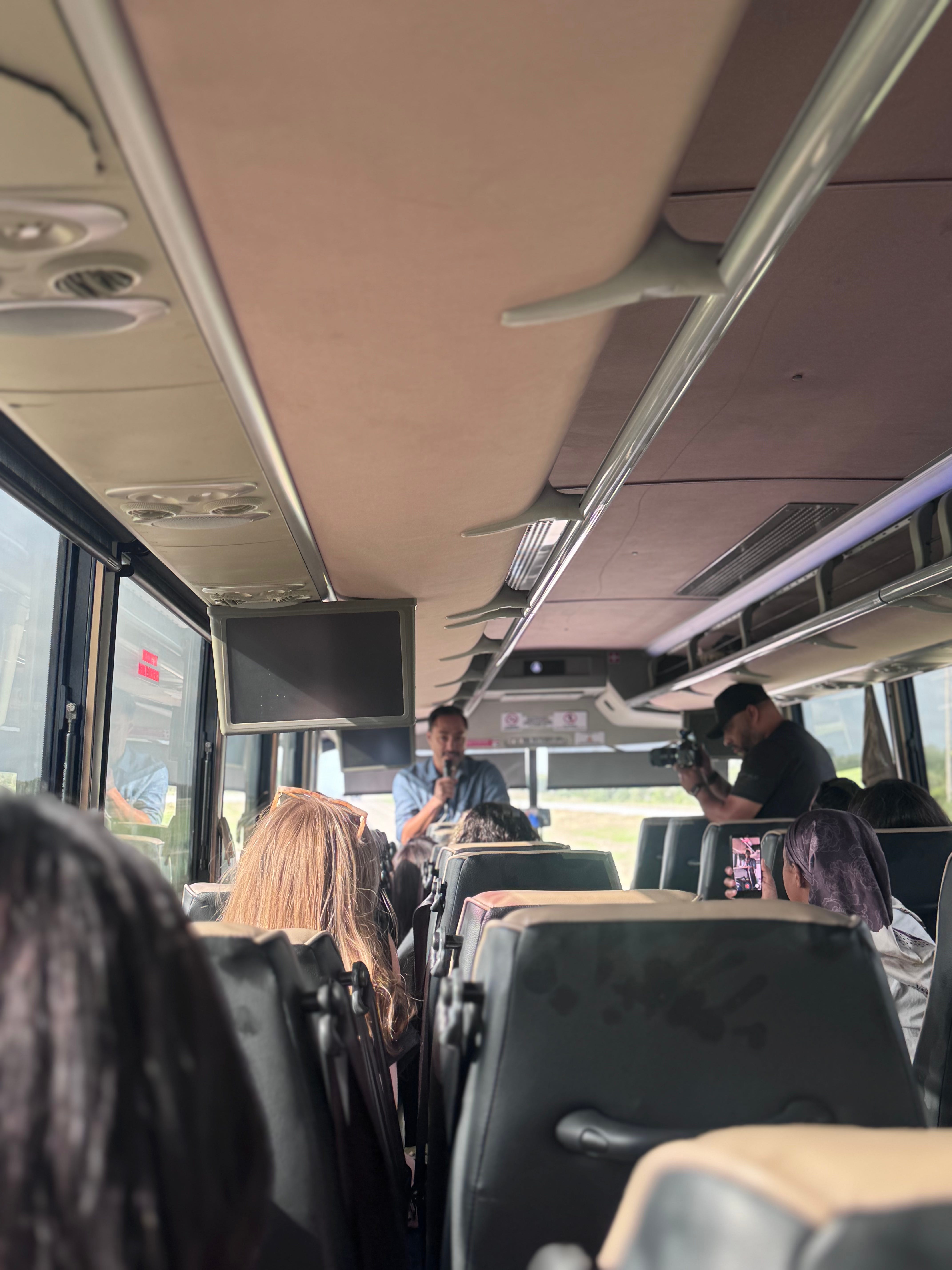
I want to tell you about the “team,” because it might change what you think you’re capable of. The “team” isn’t an organization — we have no staff. We’re two Pediatric Critical Care doctors (me and Dr. Lara Jones), a neonatologist (Dr. Ashley Cozzo), a reporter (Lidia Terrazas, @Univision), the executive director of a charity for immigrant children (Casey Revkin of Each Step Home), and a pro bono lawyer who takes on far too many cases (Corey Sullivan Martin of the Held Truths Project). Outside of Casey, who’s made this her career, the rest of us do this in our “free time” — a misnomer, since four of the five of us are also raising young kids alongside demanding full-time jobs.
I’m not telling you this to suggest we’re superhuman. I’m telling you because it’s a reminder that you have a place in this fight too, experience or not. I had zero experience in this kind of advocacy. I just kept putting one foot in front of the other, kept coming back to “just do the next right thing” because looking at the whole of what we’re up against would cripple anyone.
Don’t let these headlines make you feel powerless. Do what I did: get mad, and do something. Donate. Make a call. Follow an advocate and share their account. Each of these micro-actions adds up to change, and they already are. What you’re reading right now is proof of that change, coming from a classic academic physician-scientist. If you’d asked me two years ago whether I’d take on another full-time job that put my “normal” one at risk, I’d have told you that you were out of your mind. I’ve wanted to be a doctor since I was 3 and a scientist since I was 6. I volunteered in hospitals at 13, worked at the NIH at 16 and for years after, and did everything a first-generation immigrant kid with no legacy could do to get here. I did it. And now I know it isn’t enough. Nothing is enough while kids are being harmed. I hope you feel that too.
Actions for today:
Subscribe, and tell your friends to do the same. I have big plans to mobilize people to help these kids through this Substack, and that starts with subscribers. This idea came to me over the weekend after hundreds of DMs asking, “How can I help?”
Donate to the Dilley Commissary Fund through Each Step Home. We post receipts periodically so you know it’s really reaching prisoners in Dilley — this fund focuses on children, families, and parents.
Donate to the legal aid organizations fighting for the 20,000+ unaccompanied minors who need legal representation right now. HHS handed this work to a 25-lawyer firm with Trump ties — more on that in my next installment.
Immigrant Defenders Law Center (ImmDef)
Comments
Nothing yet. Say the first thing.
Sign in to join the conversation.