
Welcome! This is another Thursday edition of the Animation Obsessive newsletter — about The Wind in the Willows (1983), a stop-motion classic from Britain.
This story is a little unusual for us. It comes from an outside writer, Andrew Osmond, who pitched us the subject back in June. He’s done great pieces for the newsletter before (see his Dianne Jackson profile or his on-site interview with dwarf studios), and this idea intrigued us. We had to go for it.
Willows is well known, but studying it isn’t a straightforward thing. For today’s issue, Andrew pulled from ultra-obscure materials and conducted a new interview with animator Barry Purves, a Willows veteran who’s been called one of “the finest puppet animators on this planet.”1
As a result, what follows is a fresh view into the making and context of Willows. Going through Andrew’s work, we learned a lot ourselves. Hope you’ll enjoy!
Stop motion’s enjoying a bit of a surge. Wildwood opens in October, soon after the new Shaun the Sheep escapade in September. Japan’s dwarf studios is building excitement for Hidari, now starring Keanu Reeves, while Mexico’s I Am Frankelda recently dropped on Netflix to acclaim.
Back at the start of the 1980s, stop motion wasn’t quite so mainstream. But an important stepping stone to the present was Britain’s Wind in the Willows, created by Cosgrove Hall in Manchester. The film and the series that followed it relied on new puppet technology and a stop-motion animator who’d go far: Barry Purves (Next).
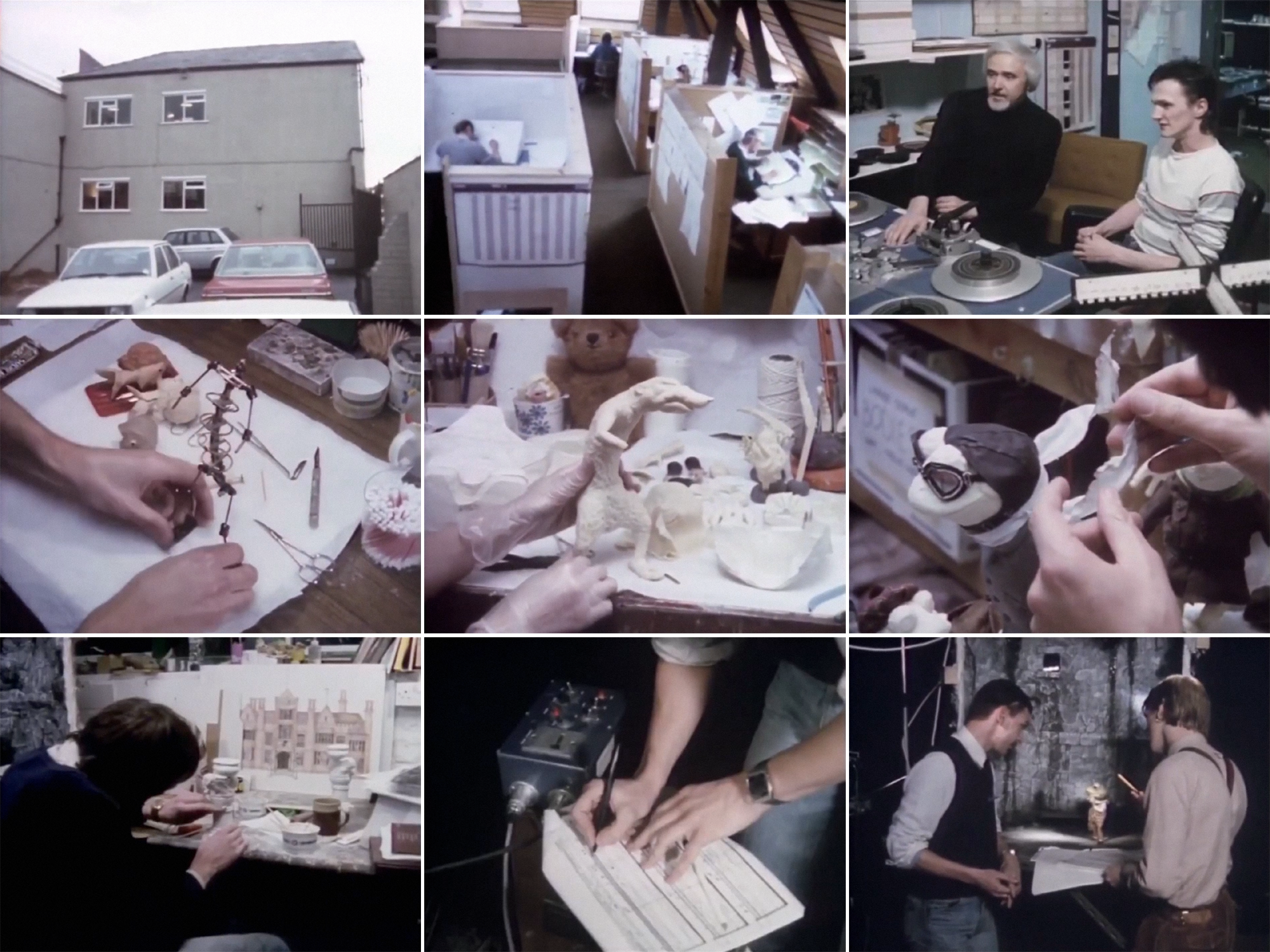
The rare book The Cosgrove Hall Story, a major source for this article, highlights the journey of trial and error to Willows.2 Brian Cosgrove and Mark Hall were art-college graduates who found themselves in the graphics department of a regional TV company, Granada. The pair shared an interest in animation and, early in their experiments, Cosgrove noted an advantage of stop motion. Once a character was created in puppet form, they could use that puppet all through a series.
Hall threw himself into stop-motion tests: wired figures with bodies of clipped foam, then plastic armatured characters whose feet bore ski-like sliders. None were good enough. Cosgrove had collected articles on stop-motion masters George Pal and Jiří Trnka, and, partly inspired by the latter, they settled on metal rods, joints and drilled ball bearings to build a skeleton. They added metal feet and metal set boxes and fixed the characters to the sets by magnets.
“The first tests using this method brought smiles of relief,” Hall remembered. “If not up and running, we were at least up and moving jerkily, down the right path.”3
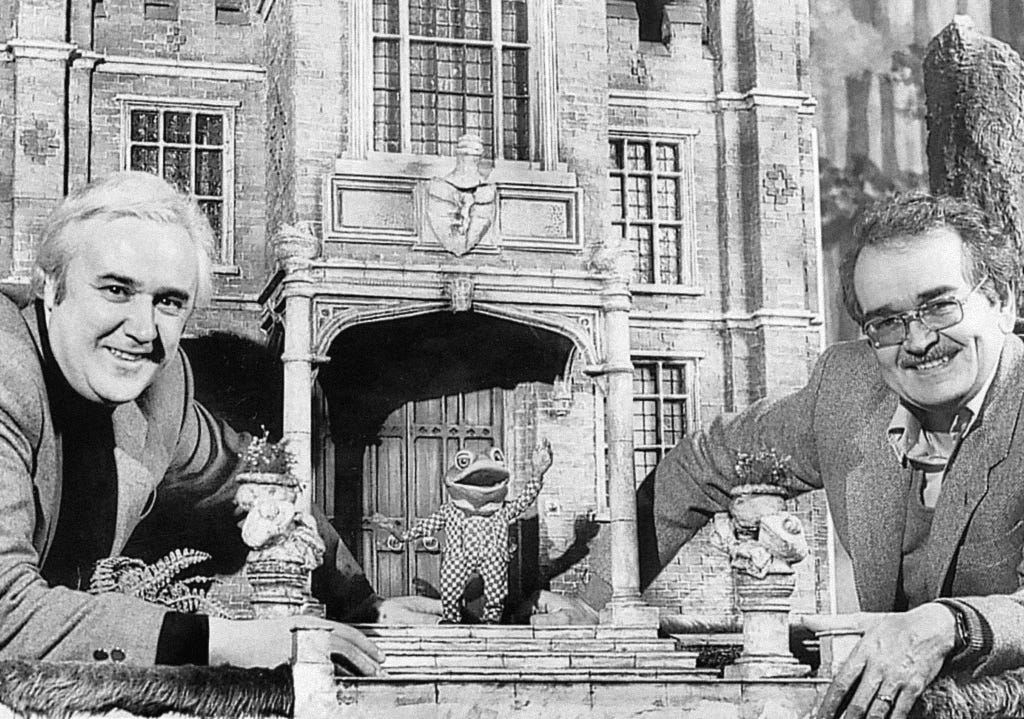
In 1971, Cosgrove and Hall established Stop Frame Productions.4 They made their first stop-motion series Sally and Jake for Thames Television — which would eventually produce The Wind in the Willows. While Sally and Jake was simple, with rough foam-rubber dolls, a tour of children through the studio showed animation’s power even in this rudimentary form. As Cosgrove recalled:
[A child] looked at us disbelievingly and no matter how hard we tried he just couldn’t accept these were the grown-up people whose adventures he watched every week.5
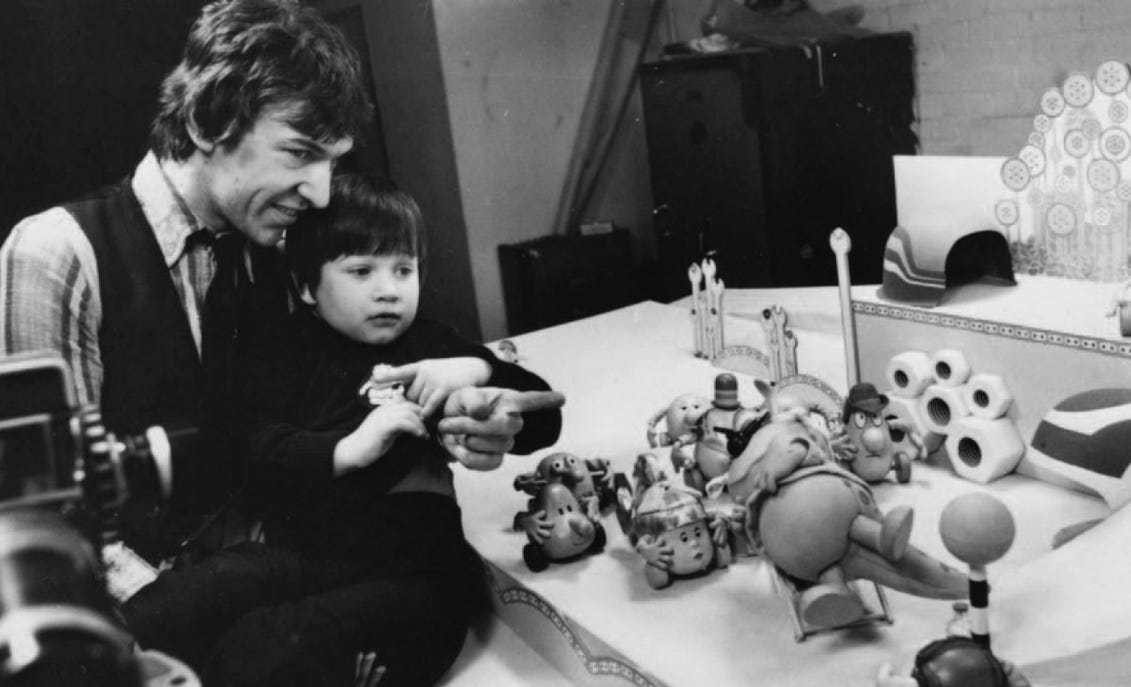
More lessons were learned on successive series. For Noddy (watch), character heads were carved from wood to better resemble the illustrations in the source books by Enid Blyton. On the bizarre Chorlton and the Wheelies (watch), expressions changed by way of removable face masks, attached with magnets. By then, in 1976, Cosgrove and Hall had formed the studio bearing their names.
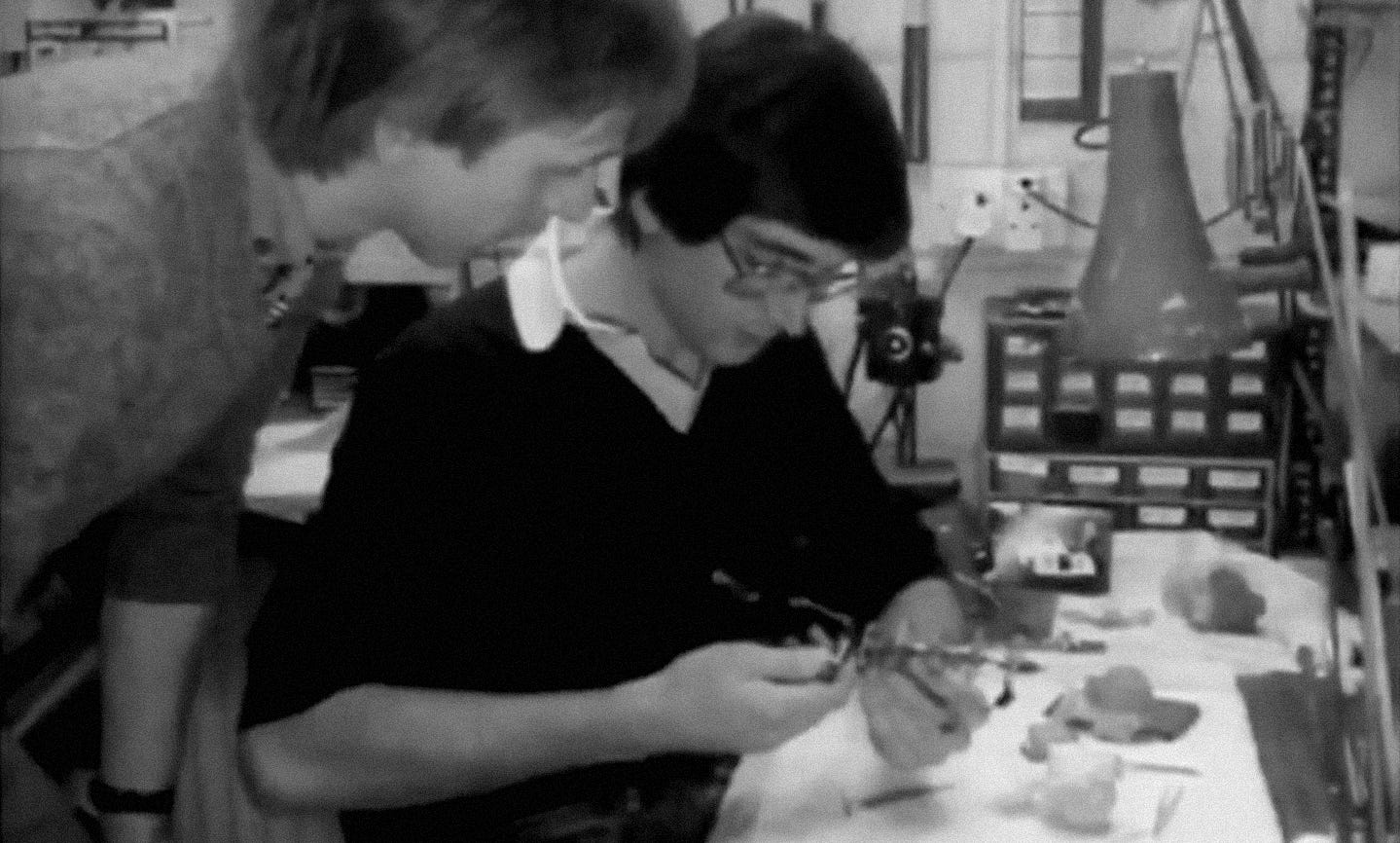
One Chorlton viewer was a teenager interested in both animation and theater. That was Barry Purves. He penned a long letter to Mark Hall in “absolute arrogance” (as Purves put it) to argue that Chorlton’s characters weren’t performing, and that he could improve upon this. “What I didn’t say was that I had never touched a puppet in my life at that point!” Purves later confessed.6
His chutzpah paid off. Hall auditioned him, then accepted him. Soon Cosgrove Hall embarked on 1981’s Pied Piper of Hamelin (watch), for which Purves was one of two credited animators.
The Pied Piper wasn’t as grim (or Grimm) as Jiří Barta’s stop-motion version of the story, but Cosgrove Hall still eschewed cuteness in favor of a tide of violent rats and an enigmatic, beak-nosed Piper who might be an angel or a demon. And the film contained a breakthrough for the studio: its first attempt at puppet lip sync, as a rat turns to the camera to tell his tale.
“Although it was only a small, hinged jaw it looked terrific,” Hall said (watch the moment here). “With added observation by the animator of the way a rat moves, and the shaky feel he gave to the body movement, the lip sync worked. And as soon as we saw it on the big screen, Brian and I realized we were ready as a studio to take the next step forward.”7
That next step was The Wind in the Willows.
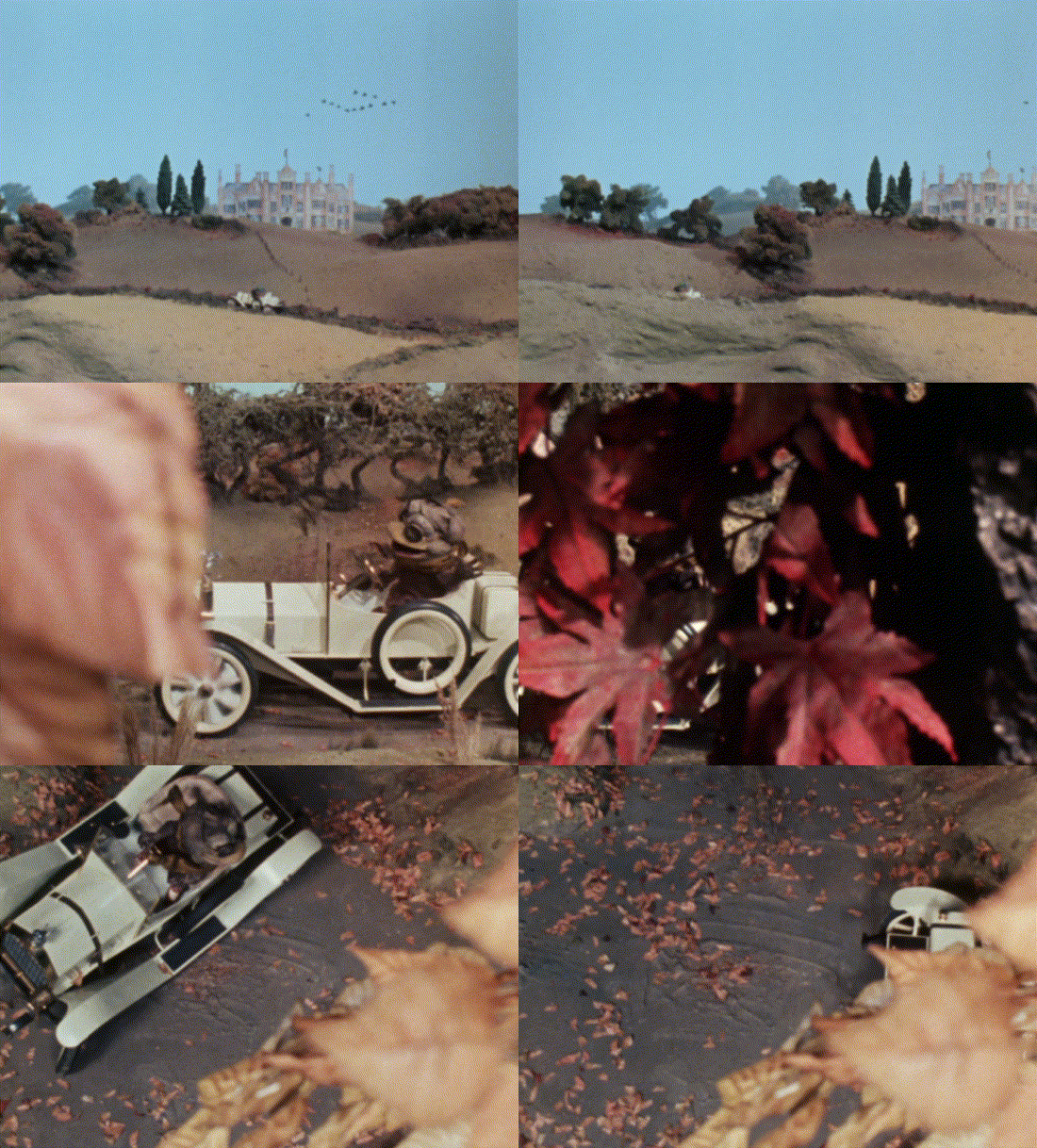
Cosgrove and Hall had loved Kenneth Grahame’s novel since childhood. “We had our own ideas of what each character was like,” Hall said. “We were both determined that when we did it, we would be as faithful to the book as possible.”8
But how to bring the characters to the screen? Here, Cosgrove acknowledged a debt to employee Peter Saunders, later of the Mackinnon & Saunders model-making company. “I was taken on [at Cosgrove Hall] for six weeks and paid by petty cash and ended up staying there for 14 years!” Saunders once remarked.9
Cosgrove described Saunders’s achievements:
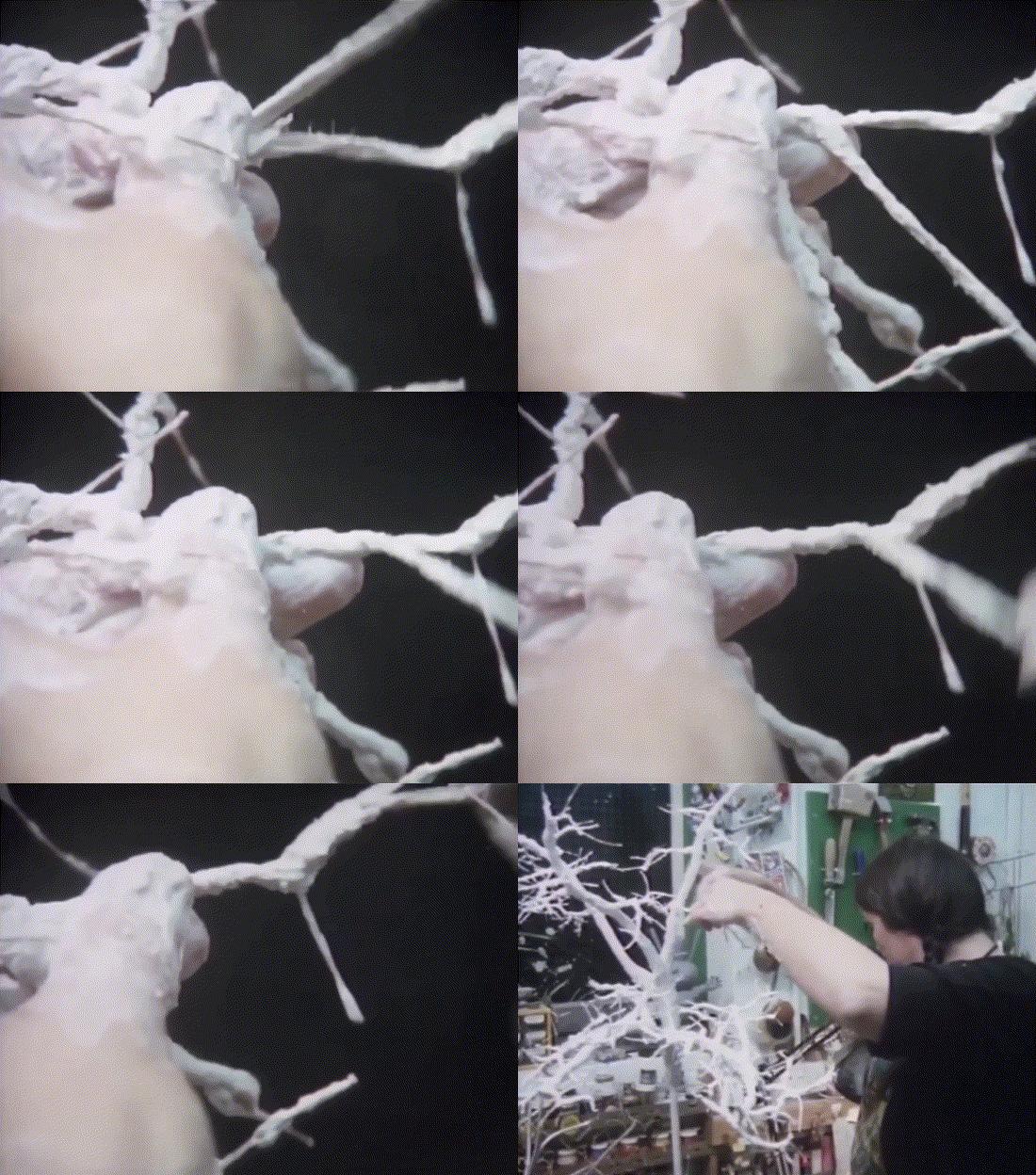
The foam rubber that was available [at the time of Chorlton and the Wheelies] was hard and inflexible … From reading film literature, [Saunders] discovered there was a foam compound used in live-action filming to create prosthetics for actors … This material was as soft as real skin. It would be ideal for our needs. … He arranged to meet [a make-up expert from one of the American film studios] and got from him the source of the new foam. The sculptors could now model fur or hair on their clay originals, knowing that, when cast, the subtler form would retain the finest details.10
In Willows, characters’ heads were fitted with animatronic parts.11 Hall went further into Saunders’s work on that front:
Saunders showed me … a completed engineered head of Mole. It had a skull made of shaped fiberglass and inside the “head” were tiny metal devices that attached to both the top and bottom of the mouth. There were devices to make the eyes blink and others to make the cheeks swell out. It was wonderfully complex and it was patently obvious that with a thin, foam rubber skin … we would be able to deliver much subtler performances with our figures.12
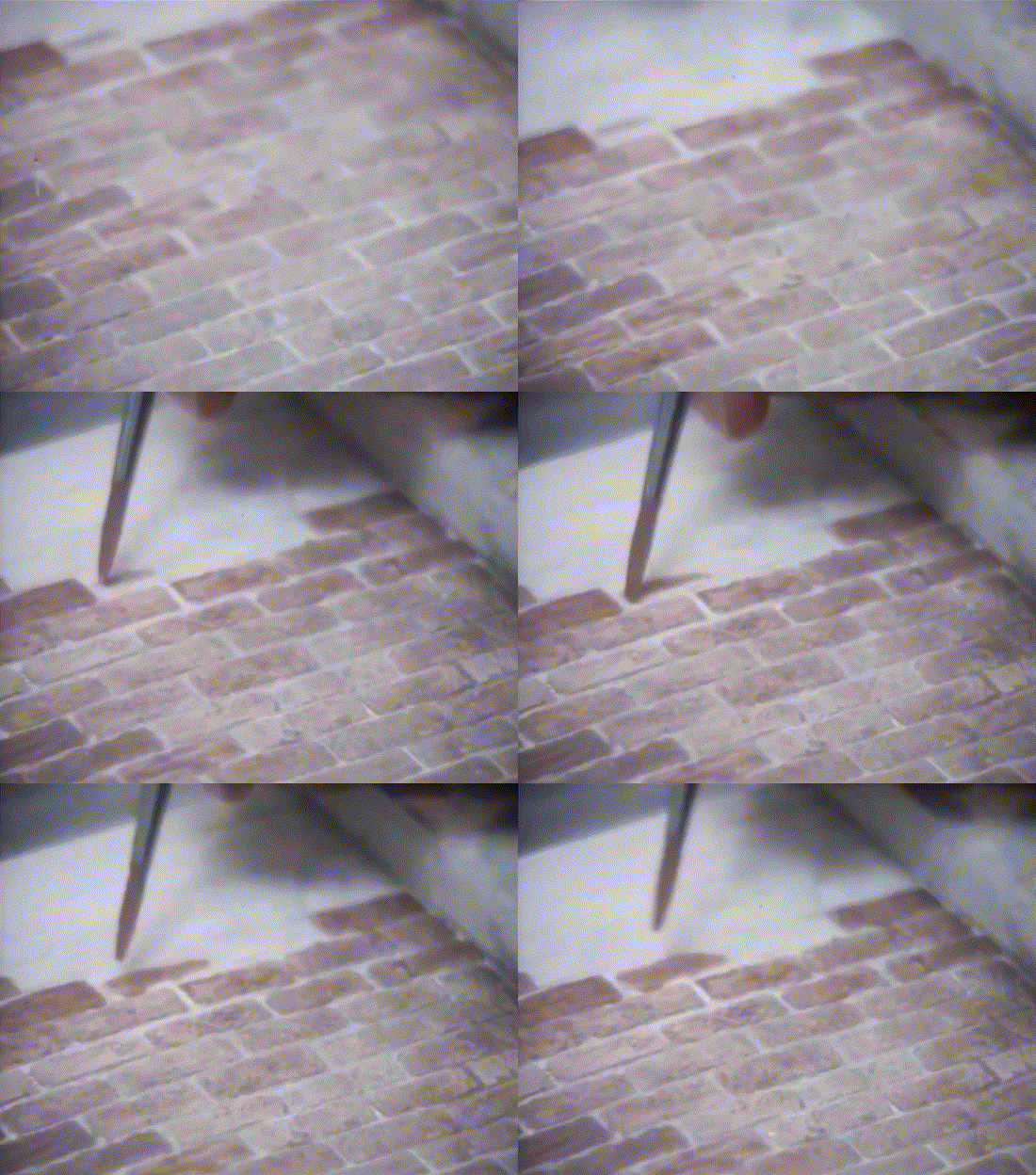
Meanwhile, the attention given to Willows’s world was breathtaking. Costumes, furniture and even bow ties were true to the 1900s. The score was inspired by Edwardian composers and music hall. Some of the portraits in the animal dwellings measured a half-inch by a half-inch. It was a spendy production, with a budget of £400,000.13
As anyone who’s encountered Willows knows, the pivotal character Toad is an airheaded, boastful, indefatigable aristocrat who’s caught up in one crazed enthusiasm after another. In the Cosgrove Hall production, actor David Jason thought to play Toad as an overgrown child, often maddening but still kind, gregarious and vulnerable.14
For Cosgrove, that was the key. Jason’s Toad was a child, which explained why the other animals never abandoned him. However, when the animation for Toad was assigned to Barry Purves, he couldn’t find the character from Jason’s voice alone. Hall had the actor sit opposite Purves and read the script. In Hall’s words:
[Jason put] in the visual eye movements he had brought to Toad’s character in the recording studio … There was a pause in delivery whenever Toad “telegraphed” to camera. Toad would look at camera, then his eyes would screw to whatever business he was about to embark on, then return to camera — pause — then his head would turn swiftly and, “Whey-hey,” he was off. What he had done was telegraph to the audience exactly what he was about to do, and they were complicitly in on the act.15
Purves himself called Toad “a very dear friend of mine, totally extrovert, exhausting to animate because he was never still for a minute.”16 In a past interview, he clarified that he was working before video assist became the standard. “You moved it and that move was gone; you couldn’t get it back … It led to a slightly different mindset to animators today,” Purves said. “You were immersed in that character and you really had to concentrate. This became your ‘video recorder.’ ”17
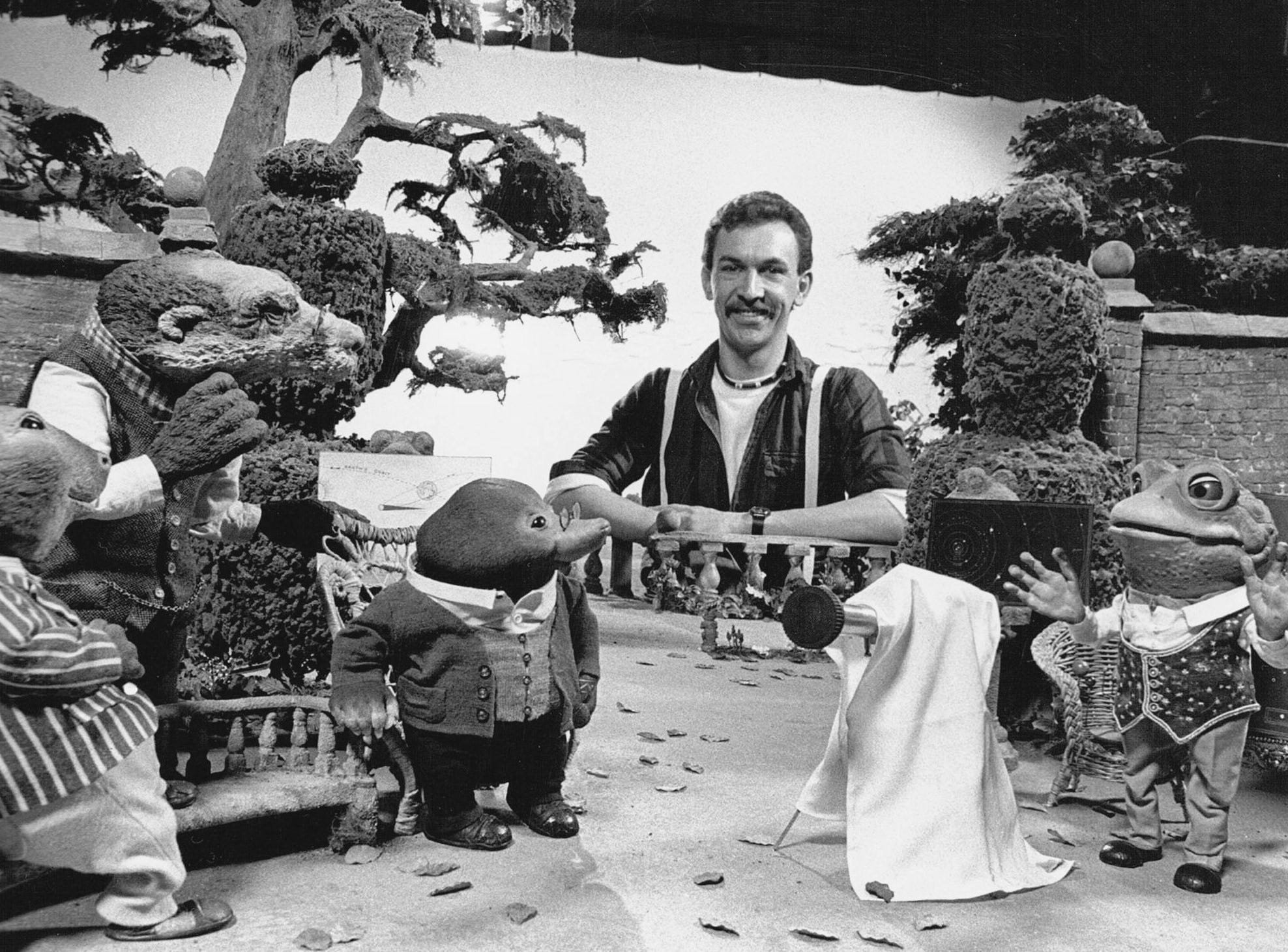
For this article, I spoke to Purves via Zoom. He kindly went further into his animating Toad, in addition to Rat, for the film and subsequent series:
We cast the animators as the characters, and there were two animators per episode, and two episodes were being shot at the same time. So I was cast as Toad and Rat, and the other animator was Badger and Mole … Hopefully your personality came out with the puppet.
But, if there was a closeup of Toad, the other animator was sat down doing nothing. And, if there was a group shot of Toad and Rat and Mole and Badger, you had to really talk to each other to say, “What’s Badger doing?” … [W]e had to really choreograph it.18
Purves favored animating “on ones,” or one movement per frame. “[It] allows you to put detail in and bounce a bit in a movement,” he says. (He compares shooting “on twos” to writing with a 12-letter alphabet.)
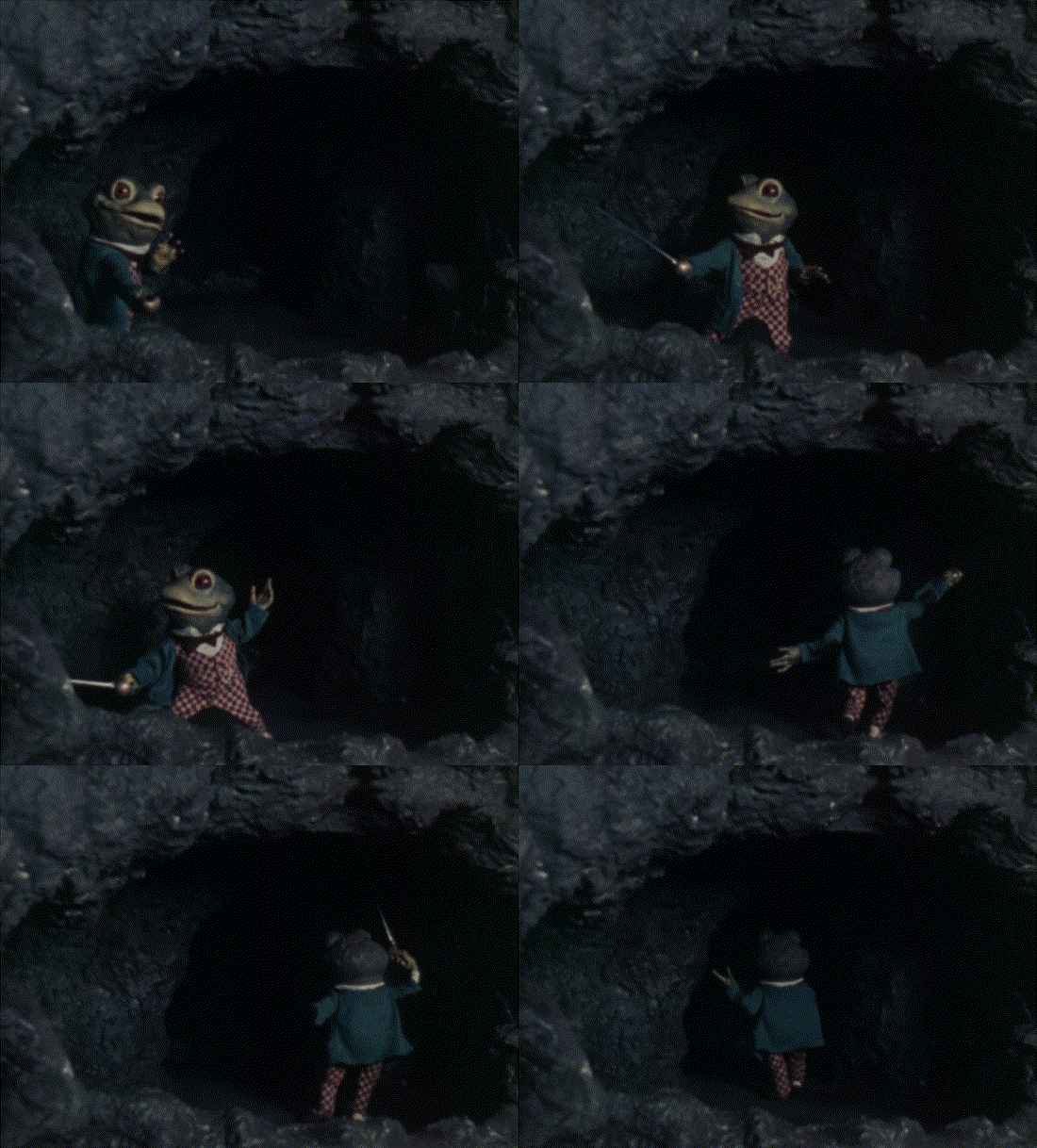
On Willows, the animators worked at a fast clip and with some spontaneity. Purves singles out a shot in the tunnel beneath Toad Hall, when Toad raises his sword and his sleeve slips down. “[T]hat’s an unexpected piece of detail you couldn’t have planned for. … I think when you’re animating, it’s about 70% planned and 30% the puppet will tell you what to do,” he says.
Purves meshed well with the “click, click, click, click” pace of Willows’s animation. He contrasts it again with current stop motion, whose video assist, he believes, slows the process. “Sometimes I watch animators today,” he says, “and they move it, and they look at the monitor, move it back, look at the monitor, and move it back again, and you think, ‘Oh, for heaven’s sake, just do it’ [laughs]. You lose connection if you keep looking at the monitor too much.”19
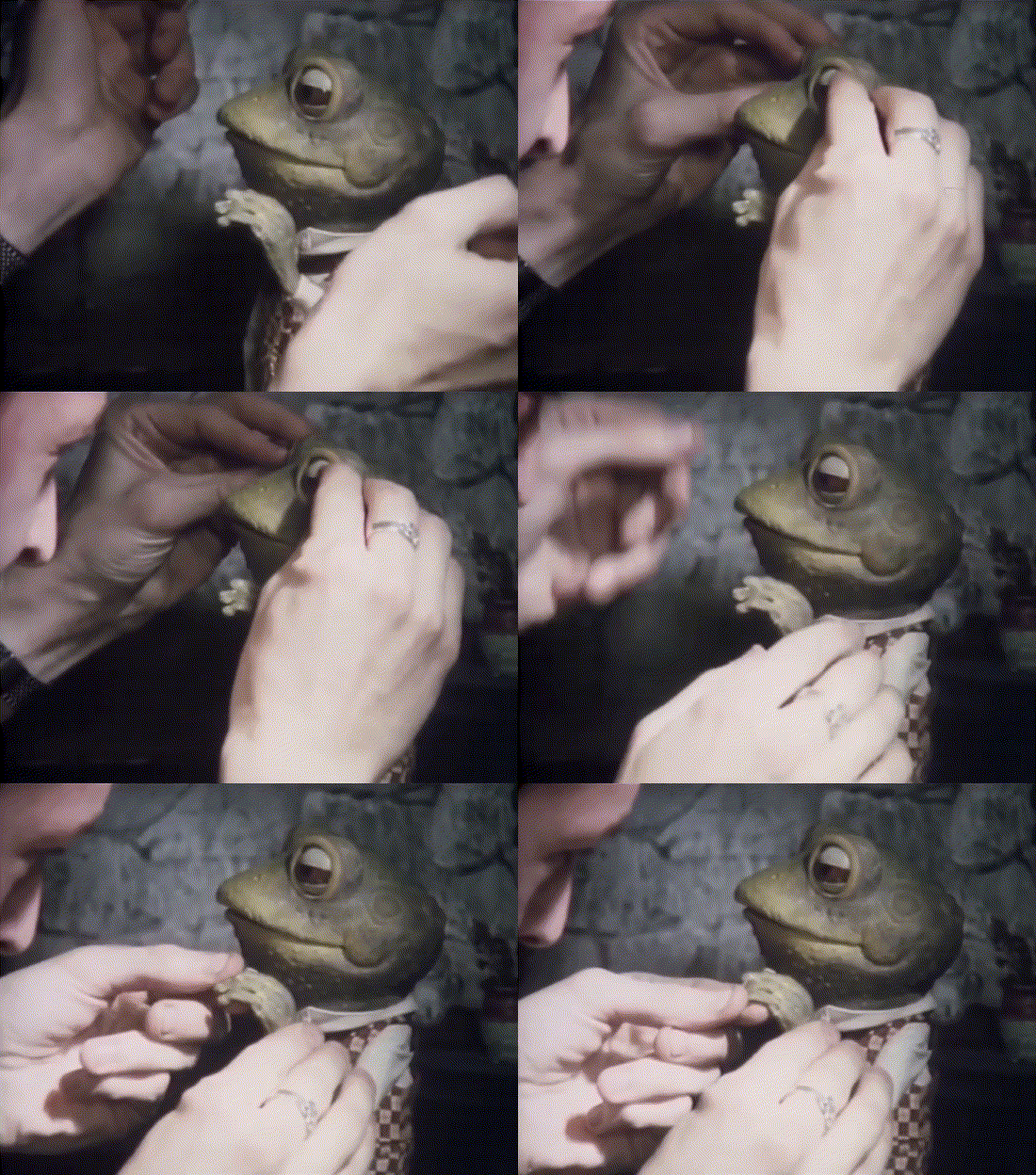
With his work on Toad, Purves feels that a lot of the acting was in the eyes:
His eyes were huge marbles, and he had blinks that could be slow or quick, and so that immediately gave him a lot of expression.
Badger would often talk to Toad and say, “Oh, your father wouldn’t have done that,” and it was very easy to get Toad to switch off from Badger by having the eyes focused or non-focused. Sometimes when Toad was bored of Badger, his eyes would just go… [lifts his eyes]. Whereas, if he was excited, he would look directly at you. Sometimes puppet-makers today give you 20 shapes of an eye and you replace them, but with Toad you could do a really slow blink and then wake him up.20
Also crucial were Toad’s legs. “We worked to get the legs longer, and he could turn his one foot up like a ballet dancer,” Purves says. The character’s huge mouth (a “chasm,” Purves notes with a laugh) was operated by paddles on a length of metal, so that, for instance, one side could be turned up and the other down.21
He has distinct memories of handling Toad’s puppet, holding it by the block of wood in its chest while moving the head or extremities. Regarding the project’s latex-skin figures, Purves notes that the silicone puppets common now are much heavier, and “cold and clammy” to the touch. But silicone is washable, whereas the painted skins in Willows collected dirt and dried out until they became “a bit crispy,” and so they had to be replaced every few months.
After 18 months of production, The Wind in the Willows debuted as a TV feature around Christmas 1983. The television editor of The Evening Standard dubbed it “an absolute delight.”
The film led to a series of 65 episodes — after all, the costly puppets had to earn their keep.22 An episode like Piper at the Gates of Dawn stretches the remit of children’s television into fearsome and wonderful places, as the animals encounter Pan, a shining horned figure who might be the real wind in the willows.23 Purves also points up some of the team’s original stories, such as Mercury of the Motorbicycle, Badger’s Remedy and Toad, Astronomer.
In America, both film and series ended up on the Disney Channel. The New York Times expressed surprise that the Mouse would screen a “rival” version of a property that it had previously travestied — ahem, animated — itself.24
Wind in the Willows set technical precedents, especially in its lip sync. In Britain, it showed what could be done with stop motion, even if later animators found different ways to get there. “I think basically Cosgrove kick-started the fact that it can be done and it can be treated seriously,” Purves says about the intricate puppets of Willows. He believes that it all informed the likes of The Nightmare Before Christmas (which absorbed a top Willows animator, Paul Berry) and Laika.
Peter Saunders’s model-making remains integral to the medium through Mackinnon & Saunders, which has worked with dwarf studios, Wes Anderson and Guillermo del Toro, among many others. And Purves himself has become one of the living greats of puppet animation, an Oscar nominee whose films like Tchaikovsky, An Elegy (2011) have gone far beyond children’s fare.
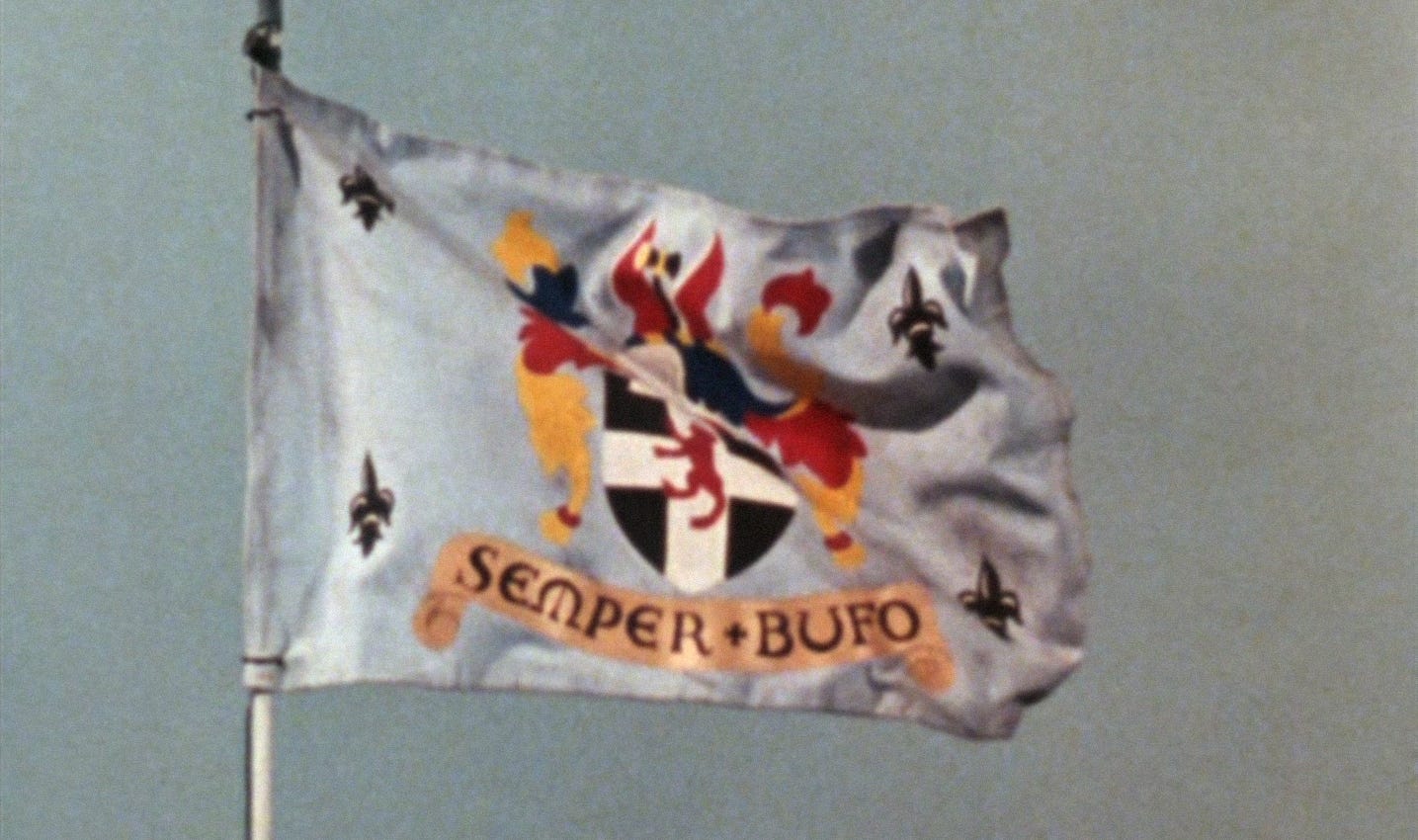
Before its closure in 2009, Cosgrove Hall made many more stop-motion films in the years after Willows.25 Yet Willows’s legacy goes on. Among the myriad little details in its stop-motion world is a motto displayed on the proud flag over Toad Hall: “Semper Bufo.” Forever Toad. AO
Andrew Osmond is a British-based author and journalist, specializing in fantasy media, animation and anime. His books include “100 Animated Feature Films,” “BFI Film Classics: Spirited Away” and “Satoshi Kon: The Illusionist.” He has written thousands of articles and reviews for websites and print magazines over more than twenty years. If you’d like him to write for you, please drop him a line at andrew_osmond53@hotmail.co.uk
Until next time!
Consulted at London’s BFI library, the book is a mysterious tome. It’s a hefty, extensively illustrated hardback, written by studio co-founder Brian Cosgrove (though with many quotes from Hall’s notes too). However, the book does not give any information on its publisher or publication date, and it seems to be unavailable online. According to the librarians, the BFI library’s copy was donated by Brian Cosgrove personally!
Information in these two paragraphs comes from The Cosgrove Hall Story, pages 31–32.
The 1971 date is shared in The Story of British Animation.
The Cosgrove Hall Story, page 35.
See Skwigly’s “Barry Purves — Respect the Puppets! Part Two.”
See Ken Clark’s interview with Mark Hall in Animator (Autumn 1986).
See the Daily Star (December 19, 1983), under the title, “The Men Who Made a Fairy Tale Come True.” Cosgrove Hall’s timing was fortuitous: Graham’s novel was just about to drop out of copyright. Previously, the most prominent screen version had been Disney’s, although a much more faithful adaptation had aired on British TV in 1969: here’s one episode. Cosgrove Hall’s Willows was one of multiple animated versions made around its time, including a Rankin-Bass musical (extract), a 1988 film by Burbank Films Australia (extract) and a sumptuous 1995 feature by Britain’s TVC (trailer).
Saunders made this comment at a BAFTA event, beginning here. As a note, it was Cosgrove who sculpted Toad and Mole, while Badger and Rat were the work of Bridget Appleby, a crucial member of Cosgrove Hall’s staff from the 1970s.
The Cosgrove Hall Story, page 246.
The Cosgrove Hall Story, page 113.
From The Evening Standard (December 16, 1983).
In the initial Wind in the Willows feature, the other main voices were Ian Carmichael as Rat, Richard Pearson as Mole and Michael Hordern as Badger. All three had distinguished acting careers, but British children would’ve known Hordern best for his stint narrating a fondly remembered BBC animated version of Paddington (sample episode) from 1976.
In the Wind in the Willows TV series, Carmichael instead narrated the picturesque introductions to each episode, while Rat was voiced by another veteran actor, Peter Sallis. A few years later, Sallis would start voicing Wallace of Wallace and Gromit fame.
The Cosgrove Hall Story, page 124.
This quote is from an invaluable collection of Willows-related video material, available on YouTube, assembled by the stop-motion animator Richard Haynes. His own book Cosgrove Hall Productions: Of Mice and Toads is due in December from Bloomsbury Academic.
Thanks to a Waterside Arts interview with Purves. He said more about video assist in a conversation with Mancunian Matters.
Purves further adds, “There was no video assist, we couldn’t see what we were doing, and we had to do 23 seconds a day.”
Purves continues:
For example, you’re walking the puppet and he walks into a shadow, and you can’t see his face. You will move him slightly so you can see his face. Which may take a bit longer in that shot, and then you may have only got time to do one gesture instead of two gestures. But you have to work with the puppet, and you have to love the puppet [laughs].
That’s the best recording device. Video and everything is fine, but your hand is the best recording device. I’ve often taught at universities and places, and we do workshops, and I blindfold the animators and tell them to feel it in their hand, and how big an increment is, or how small it is.
Purves argues, “[Y]ou can do without a nose, you can do without ears, you can do without a mouth, but you cannot do without eyes.”
Regarding the mouths, Purves tells me:
I found straight away doing lip sync, the trick is not to animate every syllable. Especially with Toad … So, on a word like Mississippi, you would go mi ih — you wouldn’t totally shut it — and sih ippy. You’d give the impression of the movement, but you wouldn’t do mi sih sih pee. There aren’t enough frames to animate a word like that. I think, really, the secret is to listen to the shape of the word and the shape of the sentence, and whether somebody is close [to you] or somebody is across the field.
There was also a 50-minute special in 1989, A Tale of Two Toads, wherein Toad contends with a lookalike imposter.
While Pan turns out to be a benign god who protects lost children, a friend of this writer recalls being scared out of their wits as a child by his intense depiction on screen!
See The New York Times (March 2, 1986).
Of Cosgrove Hall’s later stop-motion works, an outstanding title is its 1992 series Truckers. Based on a Terry Pratchett novel, it’s the story of miniature people in a perilous modern world. Michael Hordern, the former voice of Badger, plays the aged, cunning character Abbot.
Comments
Nothing yet. Say the first thing.
Sign in to join the conversation.