
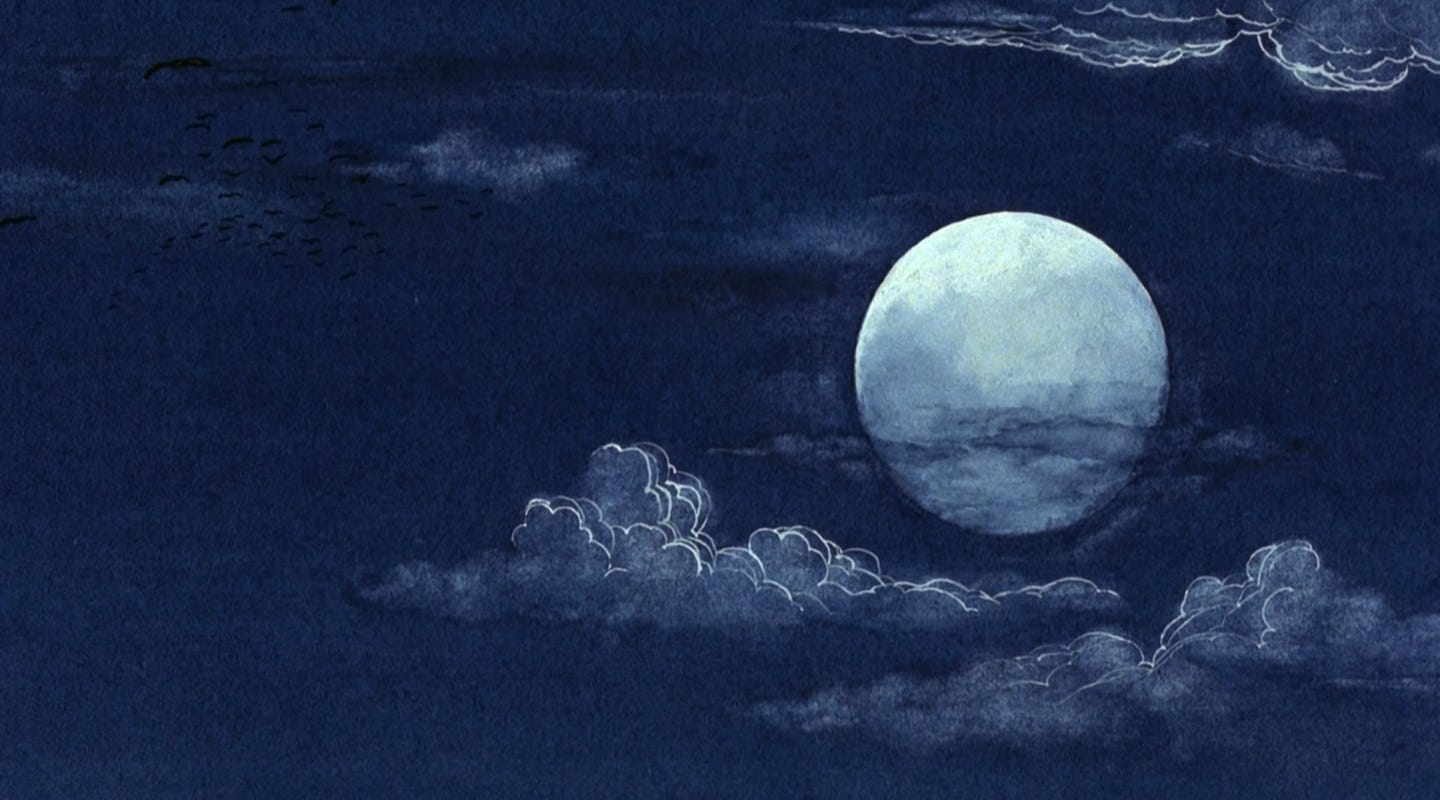
Welcome! This is a new Thursday edition of the Animation Obsessive newsletter, and our topic today is The Hobbit (1977).
The film has a shaky reputation. Long before Jackson’s series, Rankin-Bass put this thing together for NBC: a television movie, very much abridged from the book. According to Arthur Rankin, the aim was to “capture the essence” of Tolkien’s “very detailed and involved story.” Some believed that it failed.1
There was praise. The New York Times, to name one, basically liked the Hobbit movie. But there was also vitriol, especially from the hardcore. Dragon declared it “an inaccurate, poorly developed rehash of one of the finest fantasy novels”; another major sci-fi and fantasy magazine called it an “abomination.”2
Rankin-Bass’s people knew the pitfalls of adapting The Hobbit. Quite a few companies had already run away from it — including Disney, which feared angering the fans with a Disneyfied treatment. “You know, you can’t deviate from these books or somebody’ll wait on the street for you,” Rankin noted. Even so, his studio went through with The Hobbit: the very first large-scale Tolkien film.3
The bulk of the project was outsourced to Japan, to the Tokyo studio Topcraft. Later, in the ‘80s, the same outfit would make The Last Unicorn and Nausicaä. And The Hobbit was a step toward those films. Here was an “unforgettable moment” for the studio, in the words of animator Tsuguyuki Kubo.4
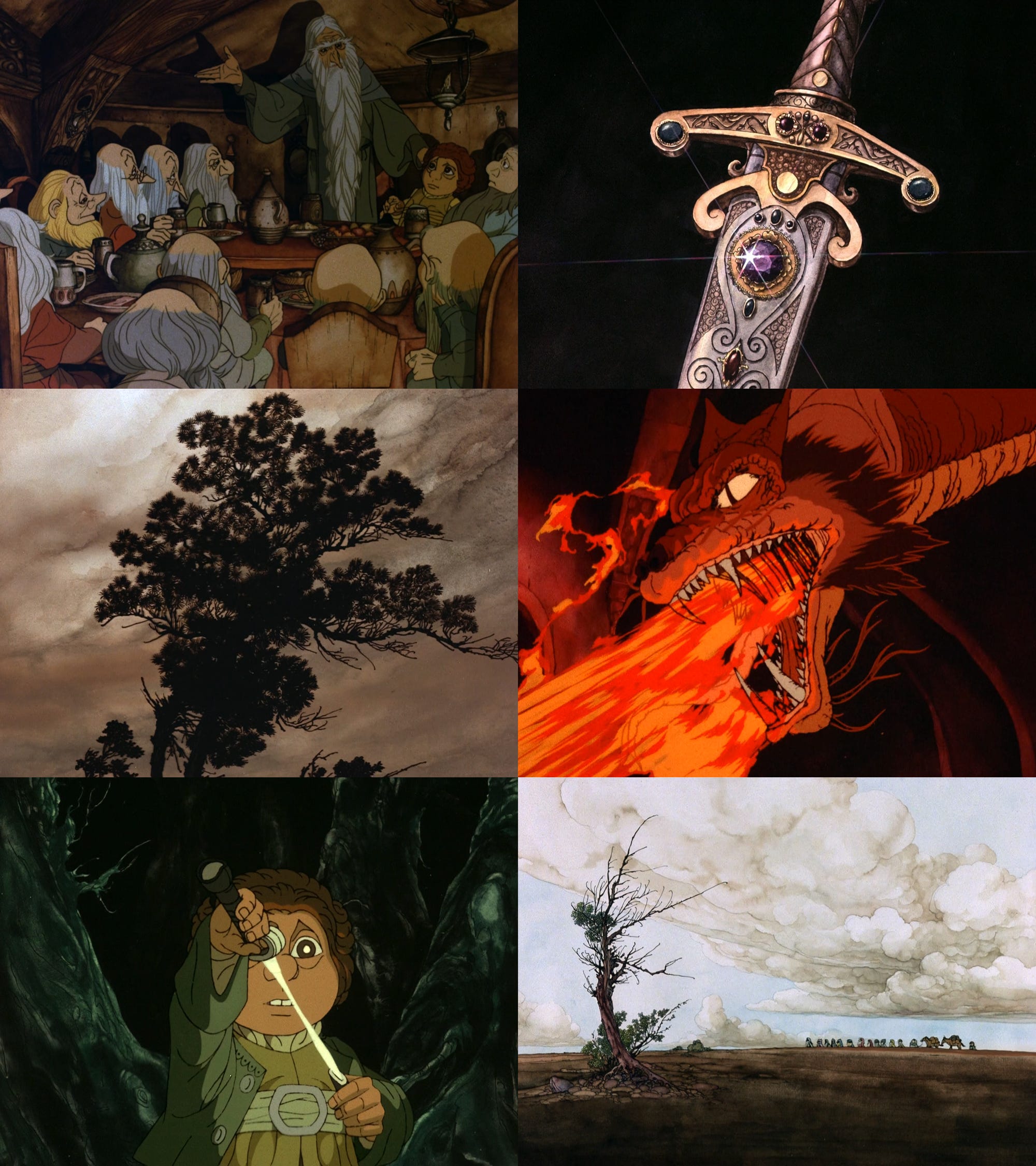
He and his peers put tremendous effort into this movie. In retrospect, it’s easier to see what they pulled off. The Hobbit isn’t perfect, but it’s a simple, unpretentious, earnest piece with a lot of gorgeous artwork. Today, too, the film’s “omissions and shortcomings ... seem mild when set beside Jackson’s forced inclusions and outright inventions,” argued Hogan’s Alley.5
All of which is to say that this unusual production warrants a closer look.
Comments
Nothing yet. Say the first thing.
Sign in to join the conversation.