
Hello, and welcome to Animated. Here is where I go backstage behind the animation. Over the next few weeks, I am looking at a few people, titans of the industry, and their big breaks. I have been looking at what happens behind the scenes that we don’t see in many walks of life before that big break happens.
This week I have started with Hayao Miyazaki, it seems a good place as any, so here you go, but before you enjoy, remember these are my opinions, so you may want to disagree. I am happy with that, feel free to comment.
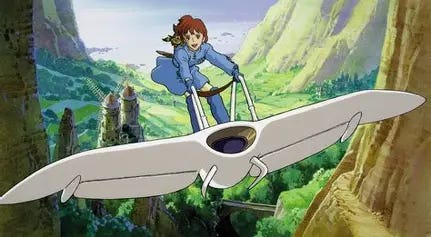
Every creative career has a defining moment when persistence finally stops being invisible and starts to have an influence. It’s not really about a debut, exactly, and not a sudden arrival, but a point where vision and opportunity come together and seem to refuse to let go. For Hayao Miyazaki, that moment I would argue came in 1984 with Nausicaä of the Valley of the Wind.
By the time Nausicaä reached Japanese cinemas, Miyazaki was already well into his forties and pretty well known within the animation industry. He had worked extensively in television, contributed as an animator on influential films, and directed Lupin III: The Castle of Cagliostro. He had not yet been given full trust and the freedom to shape a film however around his own ideas, themes, and pace, without flattening them to market comfort or external expectations.
Nausicaä changed that
The project itself began as a manga. Miyazaki was encouraged to serialise the story in Animage magazine, partly because producing an original animated feature without existing proof of a concept was far too risky. The success of the manga, however, really showed that audiences were willing to engage with Miyazaki’s worldview. A view that was based on a future shaped by ecological collapse, moral ambiguity, and a belief that empathy could exist with conflict. It was only at this point that funding was secured to adapt it for the big screen.
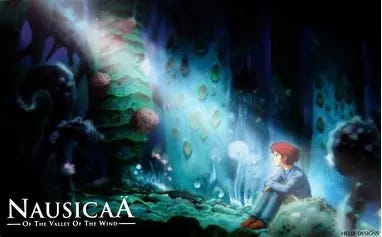
What makes Nausicaä such a clear first big break for me is not simply that it was well-received, but that it was actually allowed to be uncompromising. Miyazaki wrote and directed the film himself, and he resisted framing his story around a single villain, which is no easy feat. Violence does exist in Nausicaä, but it isn’t glorified. Heroism exists, too, but it feels gentle and patient, which, for a mid‑1980s animated feature, was an unusual proposition.
The film’s titular heroine is neither a conventional action lead nor a passive figurehead, which made a refreshing change. Nausicaä listens as much as she acts. Importantly for the theme of this, she is curious rather than dominant and empathetic rather than triumphant in her role. Her relationship with the world around her, especially the so‑called Toxic Jungle, reflects a deeper suspicion Miyazaki held toward narratives of control and conquest.
This perspective would definitely become a defining feature of Miyazaki’s later work, but here it appears in relatively unfiltered form. Nausicaä feels personal, like an artist is finally speaking without needing translation. Its tone is without apology, its imagery is incredible, and its politics are totally human rather than prescriptive.
Crucially, audiences responded, and the film performed well enough to demonstrate that Miyazaki was no longer merely a talented collaborator but a filmmaker capable of carrying a feature built around his own priorities.
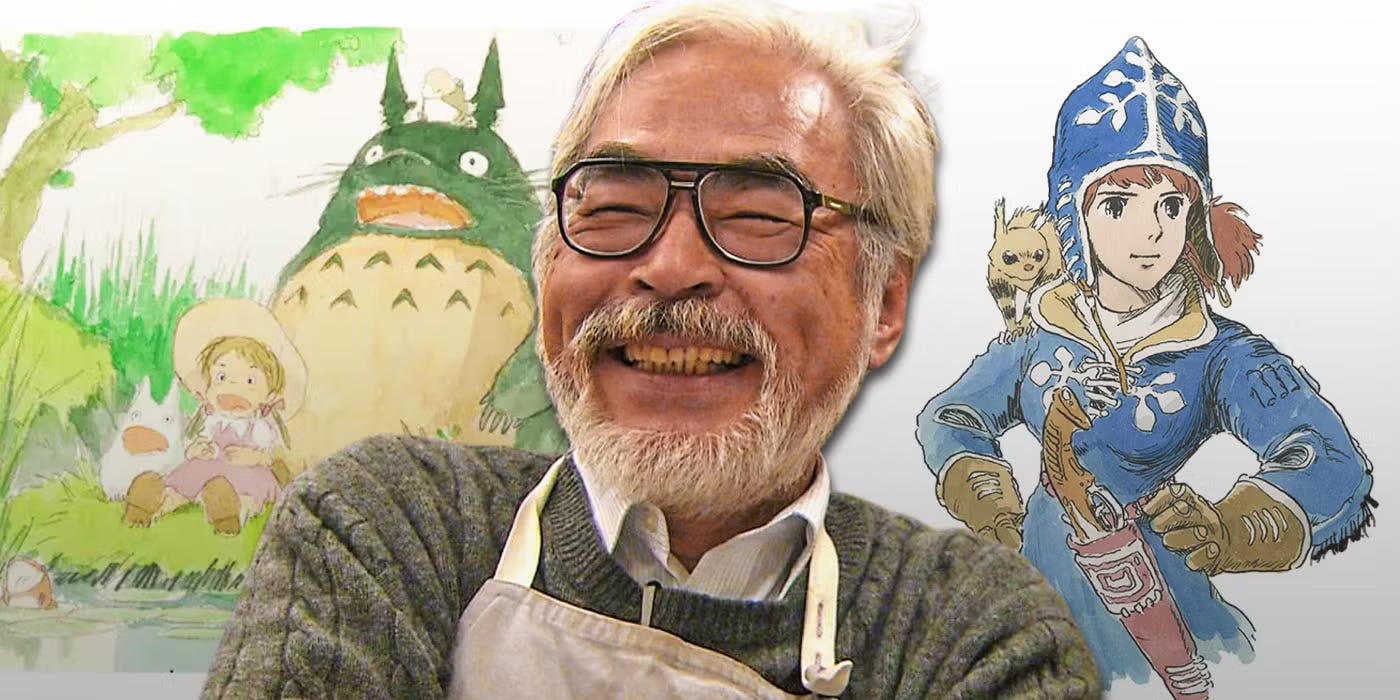
Within a year, Miyazaki, alongside Isao Takahata and producer Toshio Suzuki, founded Studio Ghibli. This formation almost ensured that films like Nausicaä could continue to exist without being reshaped beyond recognition.
The film is not important simply because it led to something else; it is important because it proved something specific: that animation could support moral complexity without patronising an audience.
It also taught its creator some difficult lessons. When Nausicaä was heavily edited for overseas release and retitled Warriors of the Wind, it was cut without Miyazaki’s consent. This reinforced his growing determination to defend creative control and would later inform Studio Ghibli’s famously strict approach to international distribution and its refusal to allow cuts or re‑edits, showing the studio’s decisiveness.
What makes this such a compelling first big break story is its patience. Miyazaki did not arrive fully formed in 1984. He had already absorbed years of compromise, collaboration, and frustration. Nausicaä worked because it arrived at the exact moment when Miyazaki had already decided what he would not compromise on.
Not every creative breakthrough looks like an explosion; sometimes it looks like a quiet refusal to simplify or a decision to trust the audience.
The Valley of the Wind is full of storms, conflict, and collapse, but at its centre is a calm figure moving carefully through uncertainty. In many ways, that feels like a mirror of Miyazaki himself at that point in his career as someone who had waited long enough to speak plainly and finally found a way to be heard.
I hope you liked my piece. Join me next week for another Big Break story.
Comments
Nothing yet. Say the first thing.
Sign in to join the conversation.