
Hello and welcome to Animated, where I explore all things animation and the stories, craft and fun that bring it to life.
If you enjoy it, please consider becoming a free subscriber or follower. And if you’re able, you can support my work with a small contribution by clicking the Support Animated button.
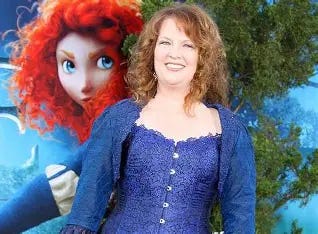
This week, I will be looking at the brilliant Brenda Chapman and what I consider to be her first big break- Brave. In her big break, like many people I have looked at, such as Miyazaki and Jones, she flies a little under the radar before becoming the first female director at Pixar. This really made history in the animation world, as this small nudge was the first in the industry to take more notice of lesser-known yet hard-working people.
I really think that this movement really matters and seems to reflect the Brave story, where the mother-daughter relationship is explored, which stands up to scrutiny a little more than earlier Pixar work. The film isn’t just about a clever adventure or constructed emotional twists; it just feels a little more intimate, which gives it a little more uncomfortable feel, and this makes the film a little different to what had come before it.
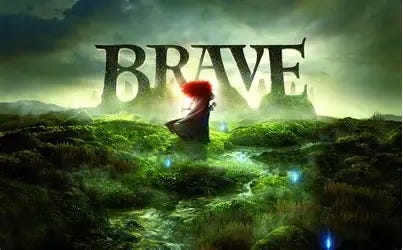
The journey Brenda Chapman took while directing Brave was challenging, as she was removed and later replaced. It isn’t fully known why, but we can all speculate as we weren’t there…unless you were, call me. With projects of this size, though, friction is evident, and changes, even at the top, occur. It would be easy to see this as a loss, but for me, it makes the story a little more compelling and honest when the big break happened.
Even in its final form, Brave has the Chapman imprint for sure. It has an emotional core with tension that isn’t softened into something neat, thankfully, but stays unresolved, a little like relationships with big studios sometimes.
I think what is interesting about Brave is that it never shows conflict as something that can be easily resolved by a character learning an overly simple lesson and changing; it is raw and real, as characters have to shift and compromise, almost like a mutual seeing of what is needed. I am not saying that the film reflects the relationship between the studio at that time and Chapman, but you can see some similarities.
Animation, especially at Pixar’s scale, is complicated and, of course, collaborative. It really is where a direct or calibre will shape films rather than owning it like smaller studios. Still, there are moments when you can see that those traces are visible.
In the film, Chapman sets something in motion that continues to shift, which brings a different kind of contribution that doesn’t always get recognised in the language we use when we talk about animated films.
Being the first to do anything needs to be acknowledged in the broader context, as it carries a weight that goes beyond the work itself; it always does. This happens not just in animation but everywhere when people break through expectations.

The story is not a fairy tale; it is more complicated than that and, at times, uncomfortable, but that is why I think it is important, as it reflects how change actually happens rather than in smooth arcs. Looking back at Brave now, it would be easy to focus on the finished film and where it sits in Pixar history, but more interesting are the story that shaped it, how Chapman is its foundation, and the ripples that follow.
In this sense, Brave becomes something different from the usual narrative and not simply a milestone but a reminder of the progress in creative fields, especially in complex industries like animation.
I do hope that you have enjoyed reading my piece, and, of course, I always welcome comments and suggestions. If you haven’t seen the film, then you know what to do! If you would like to read more about this incredible woman, I wrote this about her too some time ago.
No posts
Comments
Nothing yet. Say the first thing.
Sign in to join the conversation.