

Some things that happened last week ❤️🔥
📮 I can tell you what did not happen last week. Taylor Swift did not share any images from the wedding, so the two most important questions remain unanswered: What did her wedding dress look like? And do Taylor Swift and Travis Kelce have a dog? We still don’t know. What I do know is that mentioning Taylor Swift in the title of my last Substack seemed to affect the number of views. They were lower than usual. I do appreciate all the men who reached out to tell me she’s a very smart businesswoman, though. So, you thought I loved Taylor just for her music? Okay.
🍹 Speaking of appreciating fandom, I finally found the time to visit the new exhibition at Pace in Berlin, Goodbye Sadness, Hello Sadness. The exhibition includes a bar by Friedrich Kunath, installed on the ground floor of the gallery. I’d say it was one of the most joyful exhibition experiences I’ve had all year because you can simply go there, hang out with your friends, and look at Friedrich Kunath’s work. If anyone wants to meet me over the summer, I’ll be at the bar at Pace, holding a bottle of Cola (not Coca-Cola, sadly).
You can read my conversation with Friedrich Kunath about the bar and fandom for Monopol here.
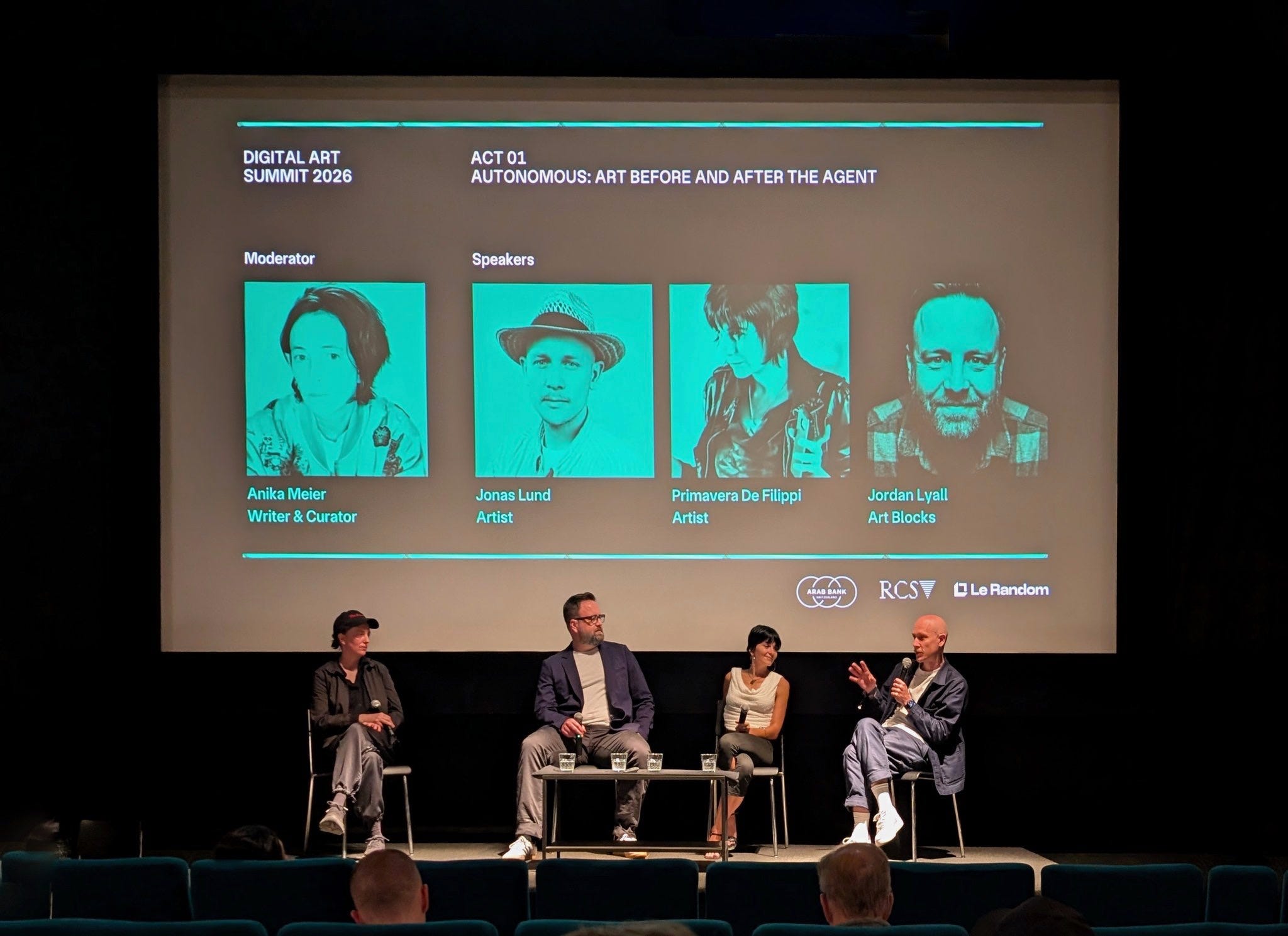
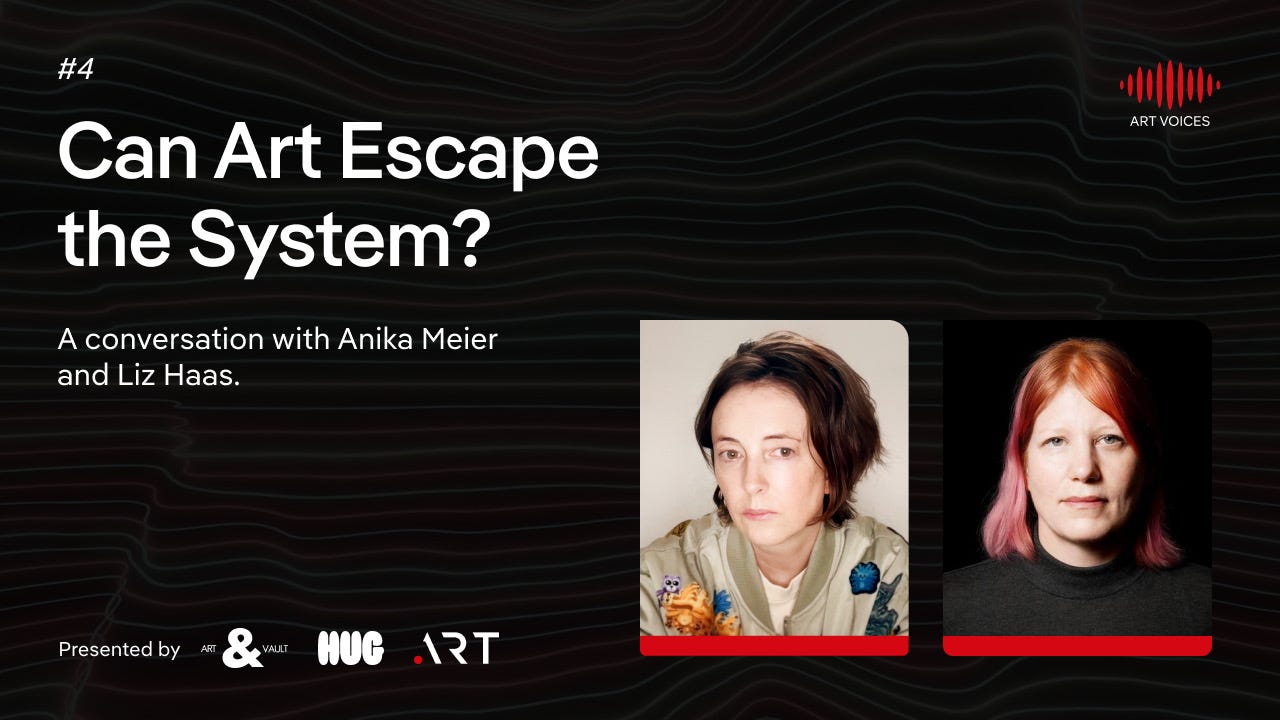
🗞️ A few things were published last week: my conversation with Ed Fornieles about growing up online for Right Click Save. My conversation with Trevor Paglen about digital art for SLEEK. The recording of the panel I moderated as part of the Digital Art Summit during Art Basel in June, Autonomous: Art Before and After the Agent, with Jonas Lund, Primavera de Filippi, and Jordan Lyall (Art Blocks). And I discussed the question, Can art escape the system?, with Liz Haas from UBERMORGEN as part of the conversation series by .ART, Hug, and Art & Vault. We weren’t even sure which system. In any case, you can listen to the conversation here. We disagreed on quite a few things.
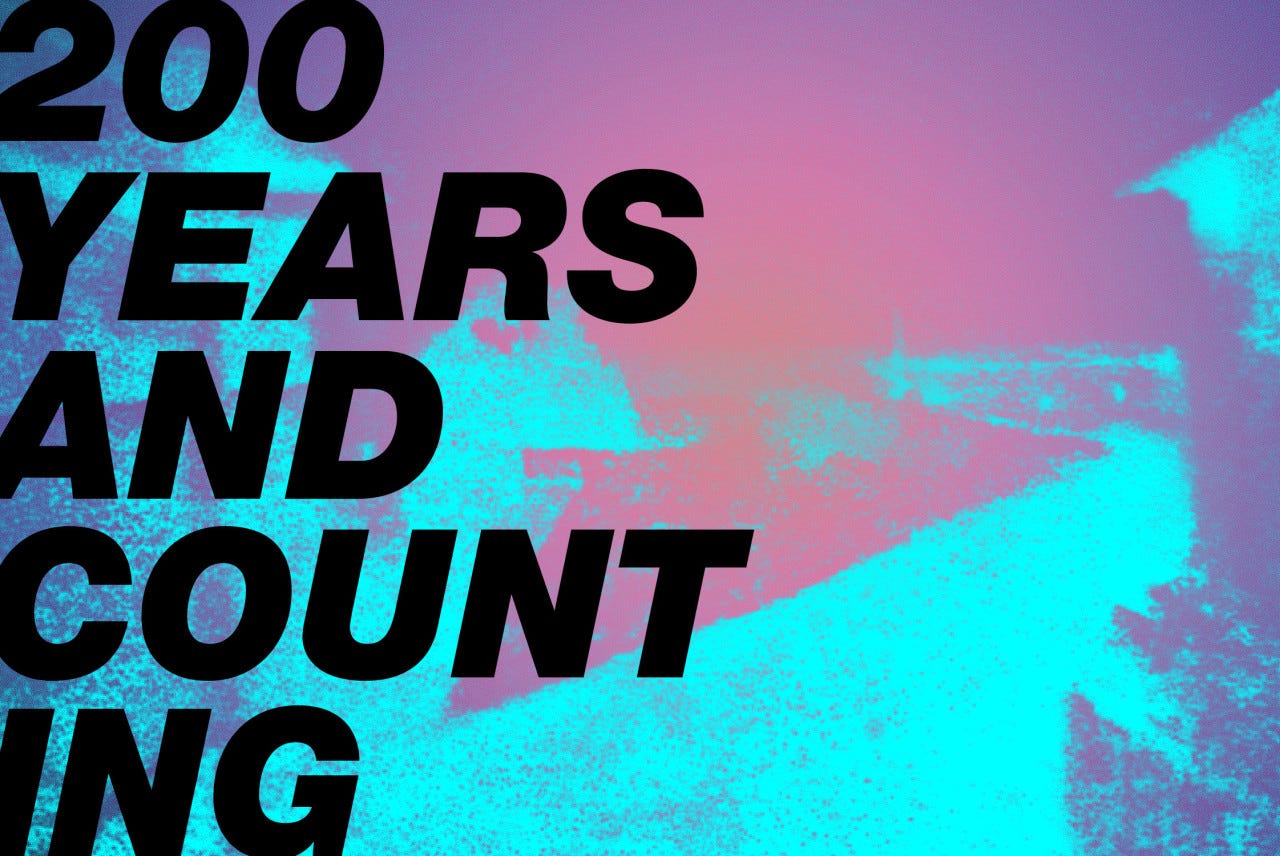
🗓️ Save the date: C/O Berlin invited me to moderate a panel on August 22 as part of the celebration of the bicentennial of photography, during the week of World Photography Day. The day-long program also includes a keynote by Kate Crawford. Find more information here.
For the past few days, I’ve been wondering why I thought it was a good idea to write a newsletter every week. I honestly don’t know. Probably because I thought it might be useful to keep track of what happens. Not just inside my head. Anyway, I have a feeling there’s no backing out now that I’ve committed to it. Even though I hate myself just a tiny bit every weekend because of it.
Meanwhile, two questions keep coming up. They also came up again during the .ART talk I mentioned above: Do artists still need institutions? What is the role of the artist? This is where things get complicated. Not because these questions are difficult to answer, but because everyone has to answer them for themselves. No, you don’t have to be represented by a gallery. Yes, for years now it has been possible to sell art for a lot of money almost entirely on your own. No gallery. No middleman. Think of physical editions released as 24-hour drops, for example. Cevin Parker and Marius Sperlich are good examples. Or NFTs. 0xDeafbeef is a good example. And these are questions that come up frequently in conversations with artists: What happens after selling art for more than a million and suddenly becoming a millionaire? Why aren't institutions knocking on the door? Why hasn't a serious gallery come along to discuss representation? Ideally Hauser & Wirth or Pace.
Here’s an excerpt from my conversation with Trevor Paglen for SLEEK about, among other things, the role of the artist:
AM If curating is a form of storytelling, where does that leave the role of the artist? Mat Dryhurst has argued that the creators of protocols increasingly shape culture, he calls himself a creator of protocols.
TP I still call myself an artist. Old school, I guess. (laughs) Mat Dryhurst is right to point out that protocols shape what becomes visible. Whatever the Instagram algorithm is doing will largely determine what kinds of work get seen and circulated. You could say museums are analogous in that sense. There are certain criteria a work has to meet in order to become legible within an institutional context. That said, I wouldn’t go as far as Mat Dryhurst does in arguing that the real artist is the person designing the attention algorithm. That’s certainly part of the story, and it’s an interesting thesis that’s worth taking seriously, but I don’t think it’s the whole story. Art is many things.
(...)
AM One of the promises of NFTs was that artists no longer needed so-called gatekeepers or curators. They could simply make their work available for sale online and connect directly with collectors.
TP Online spaces have, in some ways, taken over the role that basement galleries once had. They’ve made it much easier to share work, and I think that’s great. The downside is that they privilege the kinds of work that are easily shared online, which is only a small fraction of what’s possible in art. I value curation because it’s a form of storytelling.
What got lost over the past decade for artists who gained visibility through social media, and over the past five years for artists who found success through NFT sales, is this: if one thing happens, everything else will fall into place. Or: everything else suddenly has to happen, too.
On another note: What happened to post-internet art? Did it disappear with the hype around NFTs? Why do so many artists disappear after a label disappears? If we take post-internet art as an example, how many artists actually outlived the trend and the label attached to their work? A few come to mind, and in most cases they are artists who were picked up by major galleries: Sprüth Magers, Hauser & Wirth, Kraupa-Tuskany Zeidler, Esther Schipper, and Thaddaeus Ropac. In quite a few cases, those artists are represented by major galleries while still doing their own thing. Simon Denny, for example, released NFTs independently or with digital-native platforms. The same goes for Jon Rafman. These days, it seems possible to be both: independent and represented.
That brings me back to the somewhat false assumption: if this happens, then... The art world is an ecosystem made up of many different actors. Trevor Paglen’s comparison between basement galleries and online spaces works because online platforms do not replace galleries. They occupy a similar position early in an artist’s trajectory. The misconception isn’t that online platforms are bad substitutes. It’s the expectation that the first stage should automatically trigger the second.
Let’s continue with online platforms, or more precisely, with NFTs. “Unlike most art forms, you can’t make an NFT without the market,” Sarah Friend wrote in her 2022 essay Asset Logics (Texte zur Kunst). NFTs turned digital art into something that could be sold successfully on the market. That brought many newcomers into the art world. Former coders and graphic designers, for example, who were suddenly able to pursue their dream of becoming full-time artists. I recently spoke with 0xDeafbeef for SLEEK about his own path into the art world through NFTs.
AM It seems that NFTs didn’t just allow you to bring together your different interests. They also created a path into the art world that might not have existed otherwise. Do you see that moment as an opportunity that fundamentally changed who gets to participate?
0xDEAFBEEF One of the positive aspects of that period of speculative mania is that, for a brief moment, people from very different geographic, cultural, and professional backgrounds were suddenly able to participate in an art market that had often been difficult to access through traditional channels.
If you weren’t living in the right city, if you didn’t have the right institutional connections, or if you weren’t able to dedicate yourself fully to pursuing a career in the art world, there simply weren’t many opportunities available.
In my case, I was living in Canada, I had family responsibilities, and all of this was something I was doing on the side whenever I could find the time. Then suddenly there was this ability to connect directly with people around the world, to share work, to transact, and to participate in a global conversation. That was unprecedented. There are many artists with similar stories. People from diverse geographic backgrounds and unconventional career paths who would likely never have entered the traditional art market. For a brief period, that door opened.
AM You’ve spoken about the need for stronger critical discourse around digital art. What do you think the NFT space still lacks?
0xDEAFBEEF To connect this back to what Trevor Paglen was saying, I don’t think digital art can survive if it becomes completely detached from broader artistic conversations. It can’t simply be a space where anything goes, with no standards, no criticism, no historical awareness, and no connection to larger cultural contexts. If that’s all it is, I think it eventually fades away.
For the work to endure, there has to be some level of critical engagement. Not all work is equally strong. Not every project is meaningful. These things need to be discussed, evaluated, and situated within larger histories. That’s why I think the most interesting future lies in the cross-pollination between digital art and the broader art world rather than treating them as completely separate domains.
(…)
AM Looking ahead, you’ve gone from someone who knew very little about galleries, museums, and the traditional art world to exhibiting at Art Basel and participating in the Digital Art Summit. Has that changed your ambitions? Do you have new goals for where you’d like your work to go?
0xDEAFBEEF I’m still figuring that out. Since 2021, when all of this happened, I’ve had a lot of anxiety about what comes next. Suddenly opportunities appeared, and I felt this pressure—mostly self-imposed—that I was supposed to be doing something specific. I thought there must be certain goals I should be pursuing or milestones I should be trying to reach, but honestly, I didn’t know what those were.
At the time, I didn’t have much guidance. I was figuring everything out as I went along. I know a little more now, but not dramatically more. To be honest, my primary goal is still the same as it has always been: to continue making work around the themes we’ve discussed and to find ways to share it with people.
If that means exhibiting in a museum, great. If it means creating my own context for showing work, that’s fine too. If it means collaborating with people from the digital art or NFT space, that’s also great. I’m not trying to optimize for a particular institution or career path. I want to stay flexible, stay pragmatic, and remain open to whatever opportunities make sense.
Part of the reason is that everything feels like it’s changing very quickly. The role of galleries is changing. The role of museums is changing. Online spaces are changing. The relationship between digital culture and contemporary art is changing. It feels like we’re in a period of transition, and I don’t know exactly what those structures will look like in five or ten years.
So rather than aiming for a specific destination, I’d rather focus on making work that feels timely, relevant, and connected to the questions I’m interested in exploring. That’s really the goal.
I think I’ve said this before somewhere else: because NFTs turned digital art into a product for the art market for a new generation of artists, or let’s say a new cast of characters, a few things may have gotten mixed up. First, auction houses were supposed to be the saviors. Then it was art fairs that were supposed to bring recognition to digital art. By now, I think it has become clear that the market alone, or success in the market alone, doesn’t necessarily lead to broader recognition and visibility. In the end, and sorry for being a little polemical, it’s not enough to pat each other on the back on Twitter. And of course, the NFT space has built its own ecosystem around what it framed as digital art. There are publications like Right Click Save and Le Random. There are platforms like Verse, Raster, and objkt. There are galleries like Fellowship and SOLOS. And by now, there are even institutions like Dataland and NODE.
And now we’re back to the question of how to bridge the so-called gap between the NFT space and the established art world. It seems that something is actually coexisting here, with a few points of contact. Which brings me back to a question Seth Goldstein asked me this past week. Goldstein is the founder of Bright Moments. For the sake of simplicity, let’s call it an NFT gallery, which, for several years, has organized live minting experiences around the world. His question was about Kim Asendorf, whose exhibition PXL just opened at NODE in Palo Alto. Before that, NODE presented a solo exhibition by Beeple. I guess the easiest way to describe NODE is as a privately funded mini-ZKM. Seth asked me: “What about Kim Asendorf's work do you think institutions still misread?”
Before I continue, let me say this: I consider Kim Asendorf one of the most important artists of the 21st century. So what follows is not a critique of his work. It’s my answer to the question Seth Goldstein asked me. A question that keeps coming up in different contexts in relation to different artists. And yes, I am ready to die on this hill with my answer.
I don't think it's so much about “misread.” It's more that the work tends to be explained on its own terms, and on a very high and technically complex level, rather than being situated both within contemporary artistic discourse and within art history. And by contemporary discourse, I mean the broader conversation around art that engages with technology, beyond the NFT space.
When I read the exhibition text for PXL by Kim Asendorf, it’s about pixels, tokens, and participation. And then there’s the vocabulary it emphasizes: rule-based systems, algorithms, computer graphics, utility tokens, smart contracts, market activity, collector decisions, and open-source software. It opens quite a few doors but never really walks through them. It doesn’t even take a quick look inside.
What might those doors lead to? How does PXL relate, historically and within contemporary artistic discourse, to:
the history of early computer art, particularly computer graphics (think of Herbert W. Franke’s publications);
the history of Systems Art;
the history of generative art, from Vera Molnár to Casey Reas;
the blockchain as an artistic medium;
the current discourse around protocol art?
And perhaps one of the most important historical reference points: Herbert W. Franke made that argument more than forty years ago. Computer-generated and interactive works don't exist outside the history of painting. They expand it. That's probably also the easiest conversation to have with institutions that don't specialize in art and technology.
Here's an excerpt from an earlier text I wrote about Herbert W. Franke:
In a manuscript from 1984 for one of the earliest home computer magazines, Franke looked to the future: “Certainly not everything that is created with the help of computer programs has artistic value, but why shouldn’t these simple beginnings one day create something that is on a par with the great works of painting.” Franke understood these early computer programs as the beginning of a much broader development. He wasn’t interested in creating a separate category of art. He wanted to help shape the future of art itself.
Context doesn't make a work more important. It makes it easier to understand why it already is, and it helps others—including contemporary art institutions—read the work. The way we contextualize technically complex art determines whether it becomes part of the history of contemporary art. If you want to be part of the conversation around contemporary art, you have to actively participate in that conversation. Otherwise, it's like stepping outside during a conference and having your own discussion while everyone else is still in the room.
Thank you for your time.
Take care,
Anika
Comments
Nothing yet. Say the first thing.
Sign in to join the conversation.