
Post is where the magic of movies comes alive.
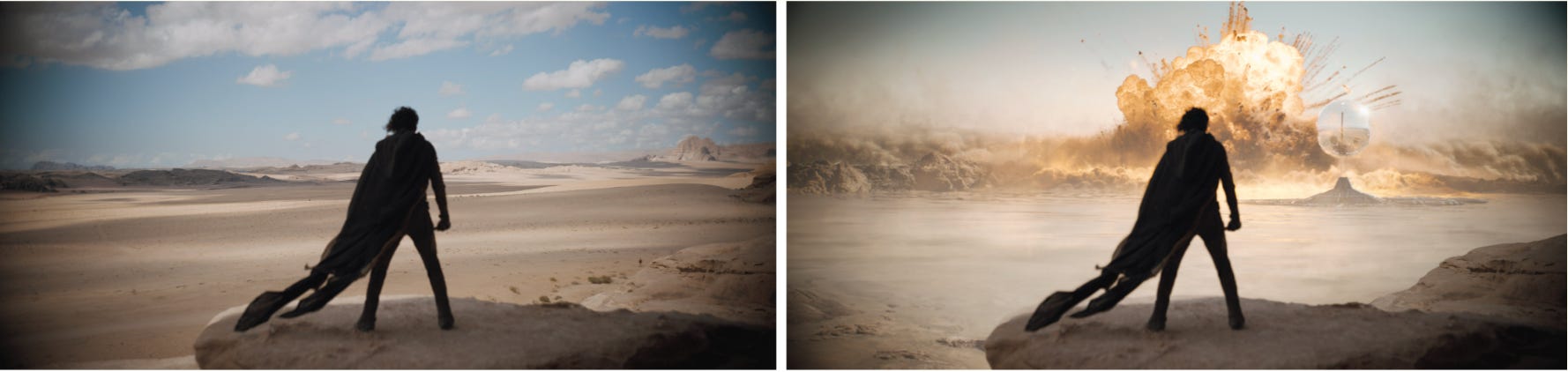
It’s where a rough cut becomes a story. Where silence becomes tension and music becomes memory. Where the color grade makes you feel something you can’t name and the sound mix pulls you so deep into a world you forget you’re sitting in a theater. It’s where a TV show gets its bells and whistles and a short film finally feels real. Anyone who has ever made a project with no money for a proper mix knows exactly what I mean. It doesn’t feel real yet.
Not until post.
And yet for years, despite being one of the most skilled, highest-paying sectors of the industry, one that California spent over a century building, post has been the blind spot in the state’s fight to keep production here.
A few weeks ago, I shared a quick overview of where things stand at the local, state, and federal level. Between 2021 and 2025, on-location production days in LA dropped from 18,560 to 6,582 for TV and from 3,406 to 1,999 for features. That is a 65% drop in four years.
Today I want to freeze frame on the part of the industry that doesn’t get enough credit.
Literally.
I recently sat down with Marielle Abaunza, President of the California Post Alliance (CAPA) and EVP of Business Development at Signature Post, to talk about AB 2319: a proposed standalone post-production tax incentive that could change the game for an industry that has quietly been bleeding out.

California is Leaving Money on the Table
California’s existing film and TV tax credit, now $750 million annually after Program 4.0 passed last year, is a real win. Hard-fought, important, and overdue. But it has a catch almost nobody talks about.
Post workers are only covered if 75% of the overall budget is spent in-state. If the production shot in Georgia, the UK, or anywhere else? Post doesn’t qualify. Which means the editors, sound designers, colorists, and VFX artists doing the finishing work in Los Angeles are left out entirely.
The state has lost over 1,800 post jobs since 2012. Our share of the national post workforce dropped from 53% to 42%. And that data is probably already outdated.
New York has had a standalone post incentive for 16 years. In a single quarter of 2024, New York issued $10 million in post credits, which generated $54 million in state spend. A net $47 million in revenue. From one quarter! We have been giving that away.
A new bill aims to change that.
What AB 2319 Actually Does
AB 2319, authored by Assemblymember Nick Schultz, proposes a standalone post-production tax incentive for editing, VFX, sound mixing, and related work, regardless of where principal photography happened.
So simple, right? Shoot anywhere and then be incentivized to finish in California. It means the people who live here, whose kids go to school here, who want to sleep in their own beds, could actually do that.
This isn’t a Hollywood bailout.
Let’s be clear here. The people who most benefit from this bill are not above-the-line. They’re editors and engineers and post producers and music supervisors. They’re in dark rooms trying to log enough hours to qualify for health care. They’re the ones who can’t afford their mortgages. The ones who’ve already left the state or the industry entirely because they couldn’t find work.
Georgia launched a 20% standalone post credit. The UK removed its VFX spending cap entirely. We are not competing on a level playing field, and we haven’t been for a long time.
The best time to fix that was years ago. The second best time is now.
Where the bill stands

The bill has already cleared two significant hurdles. It passed the Arts, Entertainment, Sports, and Tourism Committee 8-0, bipartisan and unanimous. Then on April 20th it cleared the Revenue and Taxation Committee, which was arguably the harder conversation given that the state just committed $750 million to the entertainment community.
Now it heads to Appropriations. This is where things get real.
Appropriations is not about whether the bill is a good idea. That debate is over. This committee looks at one thing: what does it cost the state? Bills with a significant price tag get placed on a “suspense file”, essentially a holding pen where the committee decides all at once which bills live and which ones quietly die. Sadly, no public explanation is required.
If it survives that, it goes to a full Assembly floor vote, then repeats the entire process in the Senate. Policy committee, appropriations, floor vote. If the Senate amends it, it goes back to the Assembly for concurrence. Then it lands on Newsom’s desk.
AB 2319 is roughly halfway there. The policy argument has been won. Now it is about money and political will. That is real momentum. And it means the window to make noise is open right now.
Newsom is term-limited and he has staked real political capital on keeping production in California. There is a genuine opportunity to get this signed before he leaves office. A new governor means new priorities, and there is no guarantee the next administration picks up where this one left off.
If we lose this window, I fear we won't get another one for a very long time.
Union Concerns
The Editors Guild supports AB 2319 but has raised concerns that the wage language isn't strong enough, specifically that it could reward employers who undercut union standards. It's a valid concern.
The bill is still being written and CAPA is in active conversations with Local 700 and AFM Local 47 to get the language right. Local 700 mobilized 1,300 letters of support in 48 hours ahead of the arts committee hearing! That’s incredible and proof that the sentiment from all sides is one of unity. The goal is a bill that protects union labor while keeping a door open for independent voices, too.
We Are Running Out of Time
By end of May we will know if the bill passes the Assembly. By fall we will know if it is law.
That is not a lot of time.
Go to californiapostalliance.org and join or donate. Sponsoring a bill requires resources. Look up AB 2319 in the assembly, track it, and submit a public comment with your personal story of how this impacts your livelihood. Legislators read those letters. Your story matters more than you think. Don’t underestimate the power of contacting your district representative directly. You are a constituent. Use that.
We are all storytellers and nobody is better positioned to make the case for why this is dire than us. Use your voice!
Tune in for the full episode below and subscribe on YouTube or wherever you get your podcasts.
Keep creating, keep hustling. And as always, thanks for doing this life thing with me!


Angle on Producers is a podcast demystifying the role of producers and spotlighting the magic makers in Hollywood. Subscribe wherever you listen to podcasts, and if you’re a producer (or aspiring to be one), join our community for exclusive resources, networking opportunities, and more insights like this!
Comments
Nothing yet. Say the first thing.
Sign in to join the conversation.