
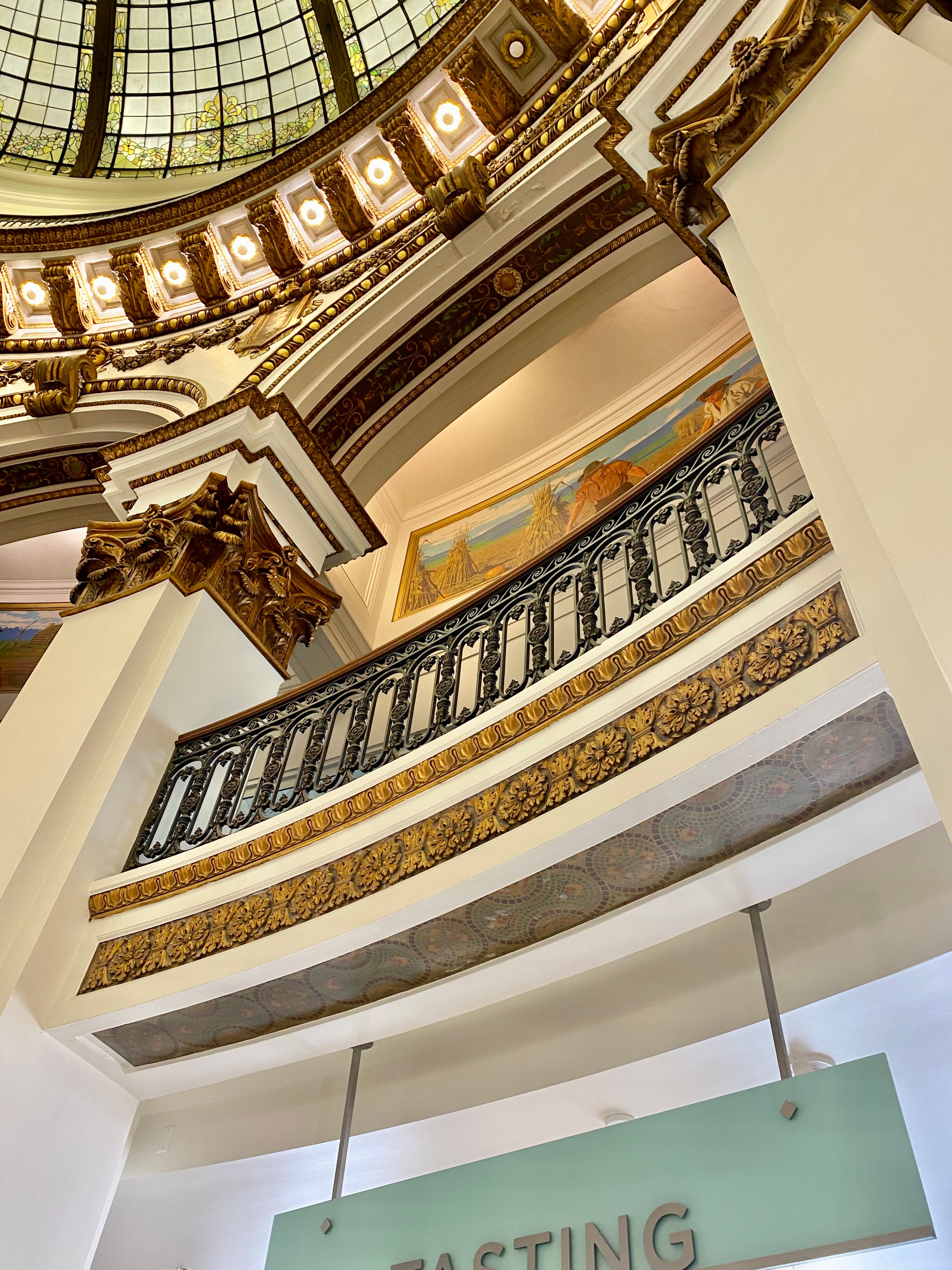
This is what Cleveland’s downtown grocery store looked like, I shit you not.
In a recent public hearing about grocery store availability in downtown Cleveland, City employees and some consultant they hired faced a firing squad of pissed off residents. Downtown residents, of which there are more than 10,000 now, are mad that Heinens, a high-end grocery store that had operated in a beautiful historic building, announced it was closing shop after 10 years last month. It was the only full service grocery store for miles.
Since I’m an urban planner, I was a little bit reflexively sympathetic to the city employees and consultants taking a beating over it. Groceries operate on like 2 percent margins! A lot of people saw this closure coming. But I can certainly relate to the downtown residents’ sense of loss and frustration.
Over a decade ago, when I was a local political reporter, I remember these same kinds of complaints in semi-rural areas. People would have to drive 10 miles to a grocery store. Why couldn’t they have one for their little town, they would ask?
At the time, the minimum size grocers were operating at was like 40,000 square feet. Pretty big! That is the current American retail model. Build a big store, with a toothpaste aisle that contains 65 different varieties, with a big parking lot, and make people drive to you, that is the current retail model.
That has always bummed me out because smaller stores are better, imo. Get in, get out. Who needs 19 kinds of peanut butter? We need small scale, walkable, close-to-home stores more imo.
For many years, I didn’t own my own car. It worked out pretty well actually, sharing a family car, because my neighborhood is very walkable and has decent transit too. My doctor’s office, for example, is two blocks away. My kids’ daycare was a half mile.
But accessing retail has always been an issue where I live. Often times, I don’t do any car trips in a day. I bike here and there and do some walking and that’s it. I love this and think it’s a superior and healthier way to live.
But it gets tricky sometimes, especially because I don’t live in a subway kind of city with too many actual rich people who ride transit.
Anyway, recently, I wanted to buy a tube of lipstick. I was trying to think of where around me I could get some lipstick. (Lipstick makes me look less hungover on Zoom meetings, so I consider it a necessity. I’m not actually hungover, fwiw I don’t really even drink, but I just think it’s an easy trick for really improving my appearance on camera, which kinda matters when you’re a 44 year old woman.)
Anyway, there are a few boutique like places by me. You know the type. That sell like jewelry and greeting cards. Not super practical stuff. So I stopped in one of those. From time to time, they have carried lipstick, but I struck out.
It used to be there was a Rite Aid pharmacy right on my block. But they closed every store in the state after they got hit with an enormous legal penalty for selling opioids in a shady way to addicts. So I think their overpriced cosmetics were never really profitable for them and the whole chain was kinda underwriting that kind of thing with drug dealing. 😬
Since then, I haven’t had a good nearby option for cosmetics and beauty stuff. I couldn’t think of a place to get lipstick and it was driving me nuts. (Later in the week I made a car trip to the suburbs to visit my MIL and stopped at a drug store and got it.)
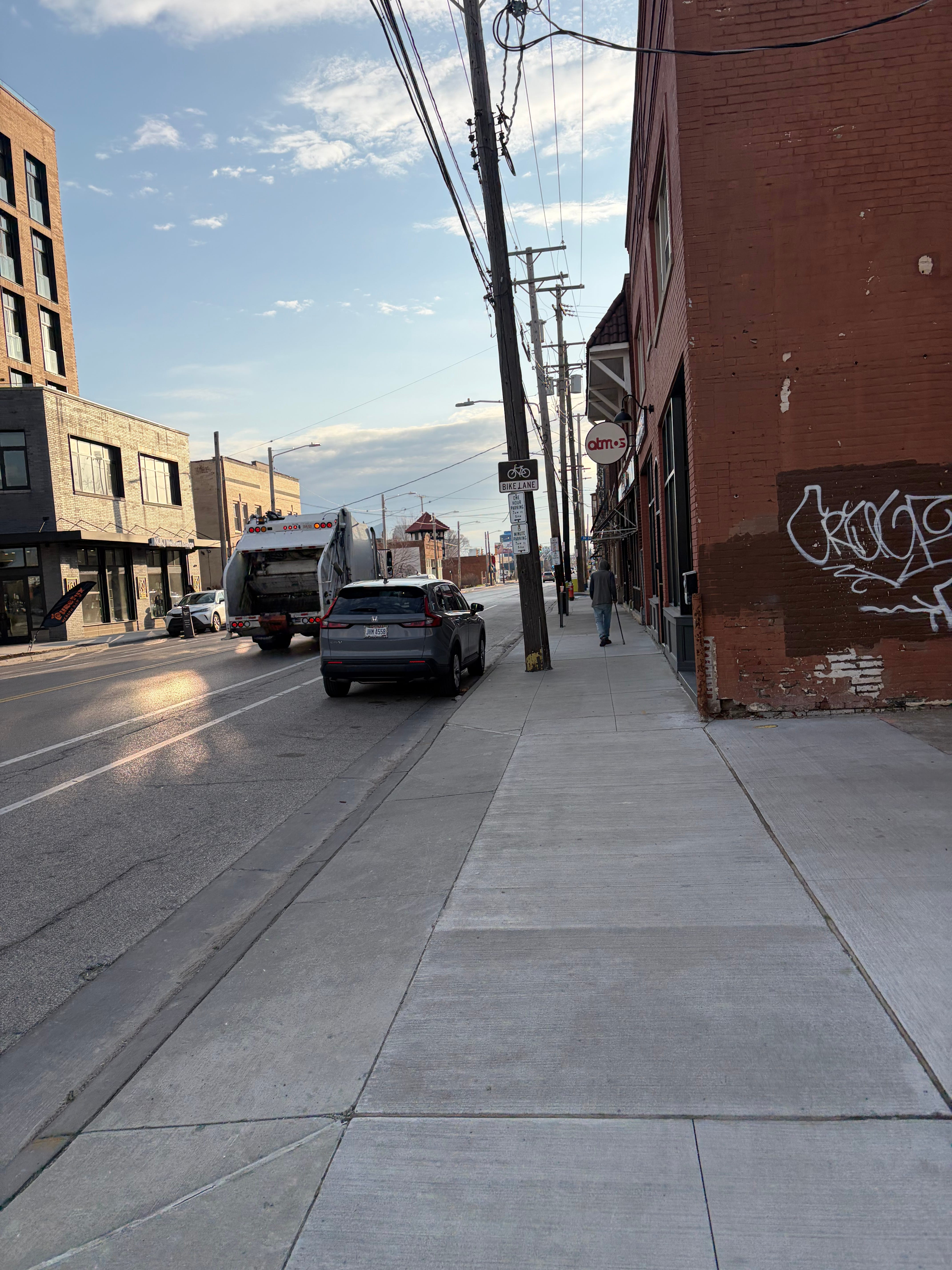
That’s the kind of thing that has always happened to me in Cleveland. Everyone has to drive out to the suburbs to access retail. We have all these underutilized retail sites. They’re walkable storefronts, built in the streetcar era. But that is not the model anymore. A lot of them are empty. (Not enough parking! Too small a footprint!)
My husband does the grocery shopping in our family and he drives to a big box store kinda shopping center at the outskirts of the city to do that. He has always HATED to buy anything at corner stores and that kind of thing. He feels like it’s a ripoff and will bankrupt him or something. But I have a different philosophy about this.
It’s worth it to me to spend an extra buck or two on a random item to save me a trip to some Costco 10 miles away. This whole routine where we all buy and finance these huge SUVs and go to these megastores and buy enormous quantities of food we store in expensive houses and second fridges, I feel like we overestimate the savings from this.
There are all kinds of weird downstream costs. Our built environment SUCKS because of this. No one can walk anywhere. Have you ever tried walking to like a Target? It’s humiliating and dangerous. Big box stores and drive through restaurants are reliable predictors of pedestrian crashes, according to research I have seen and cited in the first book I wrote.
Children can’t access them independently either, for this reason, which is something that I think has real costs for them and something I’m gonna talk about in my second book, which I’m finishing right now.
Anyway, in planning we’re very interested in physical infrastructure, when we talk about walkability. Sidewalk investment ect. Don’t get me wrong, I love all that. But without SMALLER STORES I really think that will only get us so far.
I don’t have the answer here but I try to put my money where my mouth is. When I walk around my community, I try to “be the change I wish to see” with where I spend my money.
It’s honestly, pretty gratifying to support local businesses and interact with the proprietors anyway. Generally it’s not much more expensive to shop small either I don’t think. Especially once you calculate how much you save on not driving a new car into the ground on multiple interstate highway trips at day, which is kinda the alternative.
No posts
Comments
Nothing yet. Say the first thing.
Sign in to join the conversation.