
Around 2006, I wrote an article titled Trees, Trails, and a Dollar a Day about the Civilian Conservation Corps for the children’s magazine, Highlight’s For Children. They paid me for the story, but they never published it, which still hurts a bit. But it didn’t diminish my passion for this part of our American history. After doing the research and interviewing men who had worked in the CCC for the article, I thought the topic would also make an interesting middle grade historical fiction novel. I started writing and got several chapters in, but I’m embarrassed to say, I never completed the manuscript. I say I’m still working on it, though not nearly enough. BUT recently, I spoke with a publisher and editor who are expressing interest in this story.
Now I have some serious motivation. Below is the article I’d written for Highlights (newly edited, of course). I plan to use this for the Prologue in my book. Please hold me accountable!
Trees, Trails, and a Dollar a Day
“I propose to create a Civilian Conservation Corps to be used for simple work … more important, however, than the material gains will be the moral and spiritual value of such work,” said President Franklin D. Roosevelt on March 19, 1933.
Americans struggled through the Depression Era. After financial institutions failed in 1929, many people lost their jobs. Without work, there wasn’t enough money for food, clothes, and rent. People were hungry and desperate. They needed change. Newly elected president Roosevelt made plans to get America back to work. As part of his “New Deal” program, he established the Civilian Conservation Corps (CCC) to give young men jobs.
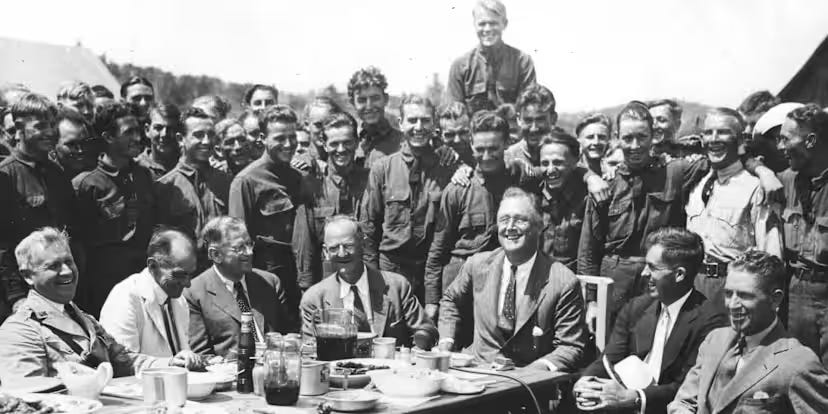
Getty image
The CCC gave men ages seventeen to twenty-five an opportunity to work, help their families, and learn new skills. Nicknamed “Roosevelt’s Tree Army,” these wilderness warriors marched into the woods and accomplished more than the president could have imagined. Working to conserve and protect our environment, they planted approximately three billion trees across the nation. They fought forest fires and helped clean up after floods. They cut brush for trails, built roads, bridges, and dams. Throughout the United States, CCC workers built national and state parks still enjoyed by visitors today. The work was difficult, but the men enjoyed laboring outdoors and strengthening their bodies. The unofficial motto of the CCC was “We Can Take It.”
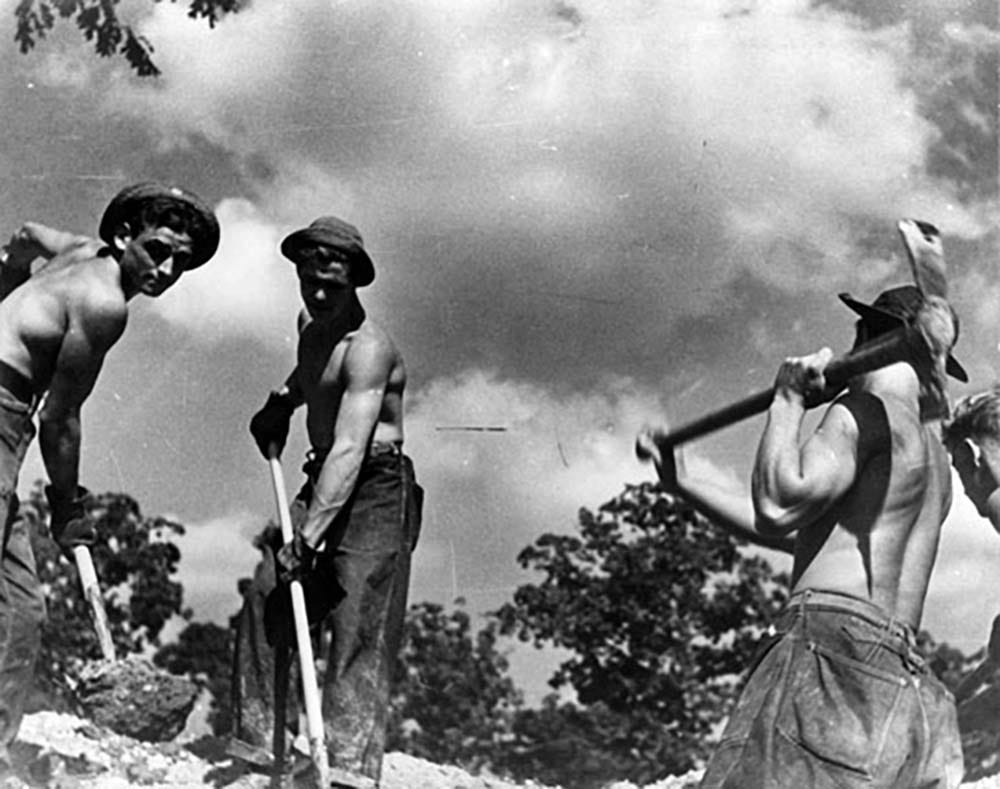
Barely out of high school, including many who never graduated, these young men joined the CCC because they needed work and there were few other jobs. For many enrollees, the Corps was their first time away from home. The men enlisted for a six-month period with the option of re-enlisting once for another six months. Each CCC worker earned one dollar a day. Of those thirty dollars each month, an enrollee was paid five dollars. His family received the remaining twenty-five dollars. Money motivated the men to join, but the CCC provided workers much more than a paycheck. Healthy food, medical care, education, and a sense of pride in the work accomplished were equally important benefits.
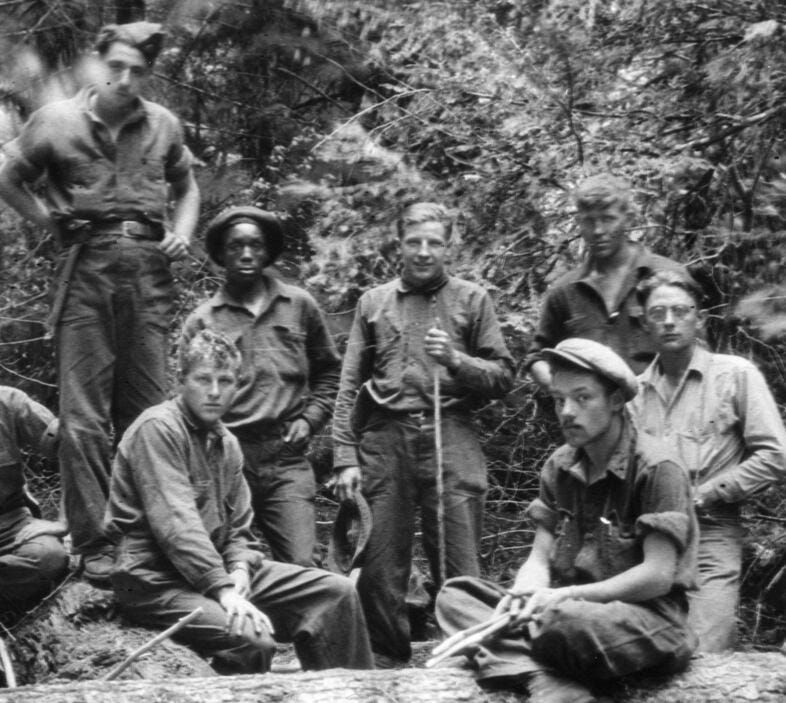
Although a “civilian” is not in the military, the CCC camps were managed by the Army. The enrollees slept in barracks, wore old Army uniforms, prepared for inspection, and lived by a strict schedule. A bugler sounded reveille at 6:00 a.m., the mess hall served breakfast at 6:30, and the men worked from 7:15 till 4:00 p.m. with thirty minutes for lunch. A flag-lowering ceremony and announcements signaled dinnertime at 5:00 p.m. Between mess hall clean-up and lights out at 10:00 p.m., the men could chat with friends, write letters, read, take a class, or play sports.
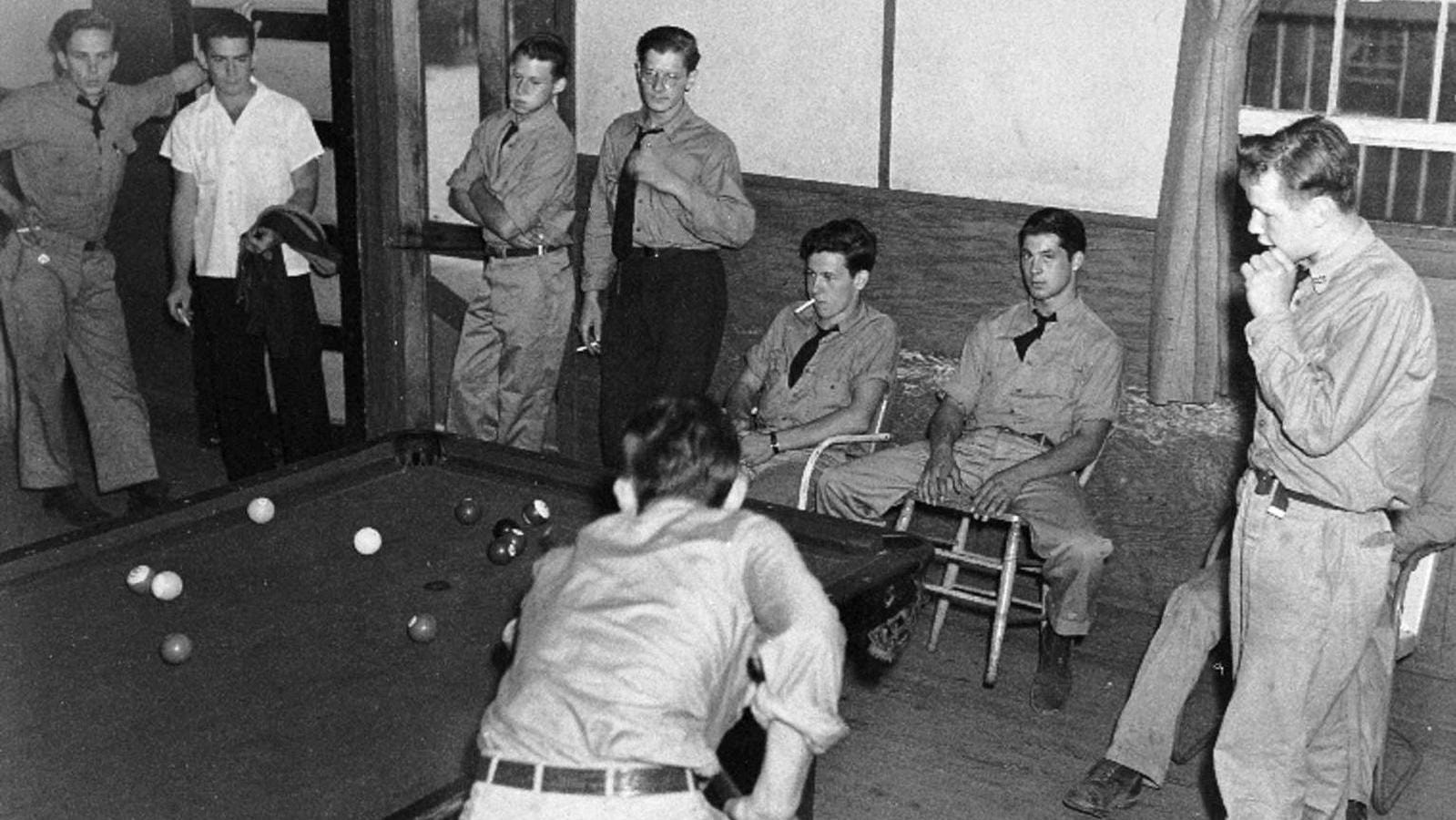
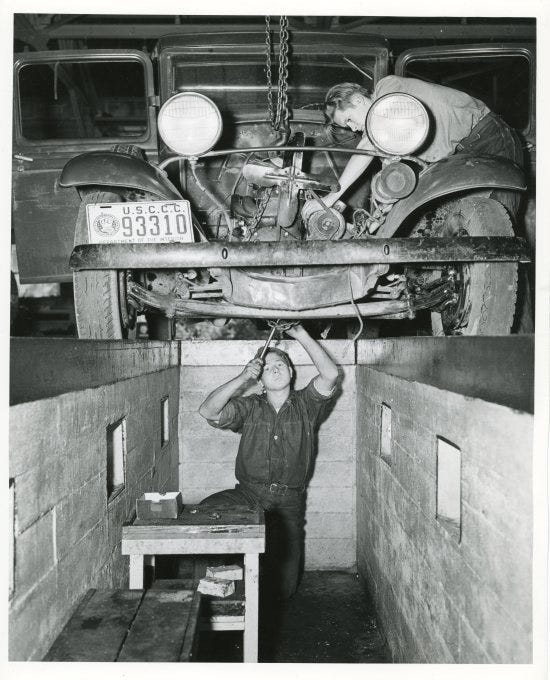
The government encouraged workers to take advantage of the many classes offered by the CCC. They could improve their reading and writing ability, learn to type, earn their high school diploma, or practice job skills such as carpentry, electrical work, or car repair. These skills often became life-long careers.
In 1941, America entered World War II. President Roosevelt ended the CCC in 1942 so young men would be free to join the military. In the CCC’s nine-year history, over four thousand camps provided three million men with jobs. Some enrolled in the CCC to help themselves. Most joined to help their families. But in the end, they all helped their country.
Comments
Nothing yet. Say the first thing.
Sign in to join the conversation.