
The year was 1976, our nation’s bicentennial. I was 15 years old and spent the summer working in the Youth Conservation Corps at Camp Cherry Tree YCC, near Sheffield, Pennsylvania in the Allegheny National Forest – a four-hour drive from my home near Pittsburgh. It was my first real job, my first time away from home, other than going to Grandma’s house and week-long summer church camps. It was a life-changing, coming-of-age period in my story. (Not my photos below, but you get the idea. From the YCC website.)
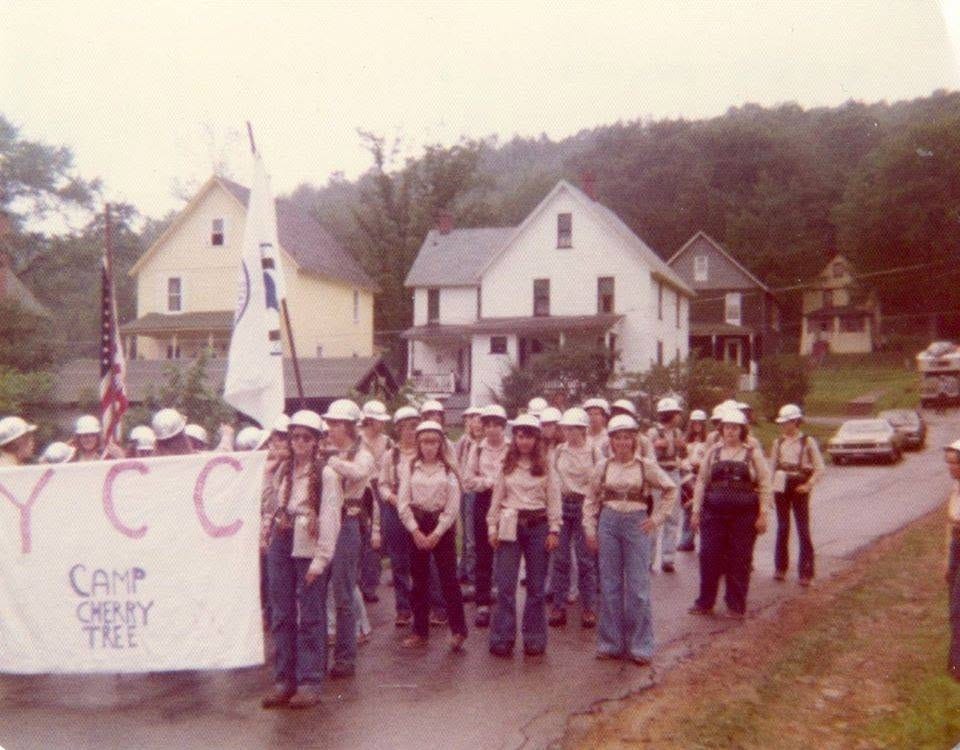
When our country celebrated 200 years of independence in 1976, Camp Cherry Tree marched in Sheffield’s July 4th parade. That’s me with the two long braids. I was honored to carry one end of our YCC banner.
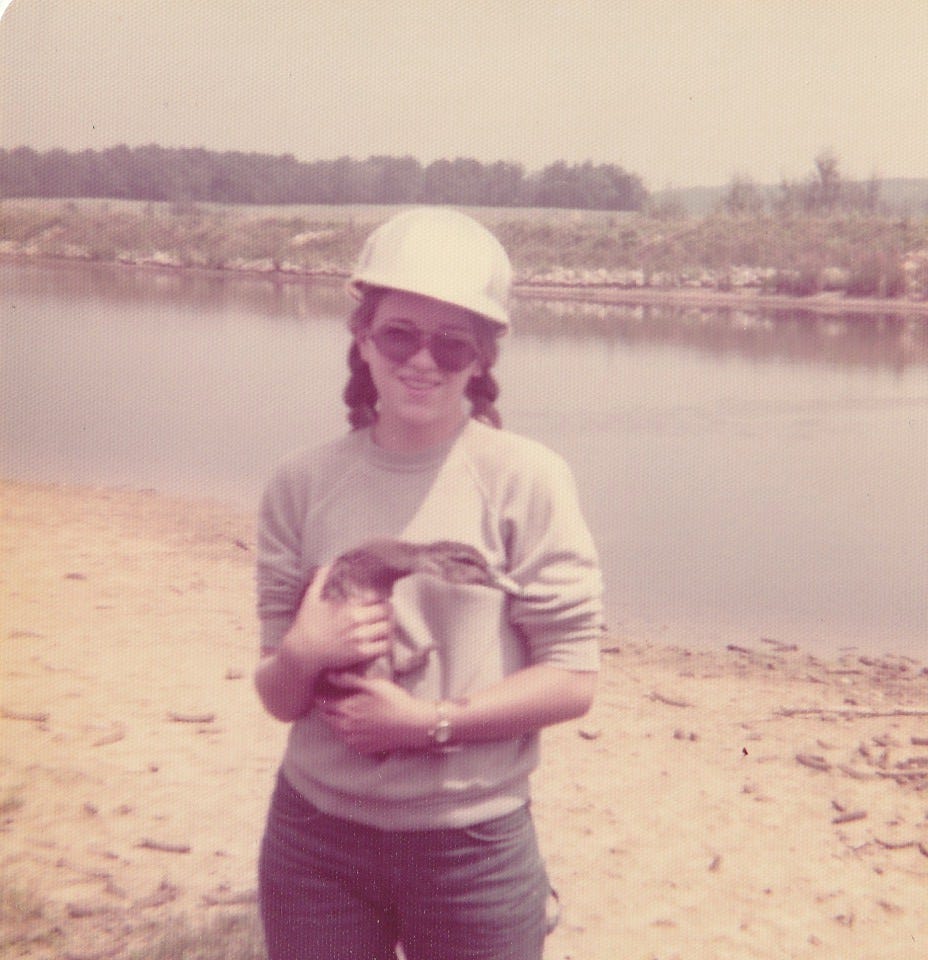
Now fifty years later, I still look back fondly on that summer. Working in the YCC, I was in my element. Outdoors. In the woods. In nature. We worked on projects like clearing trails, building a dam over a stream to encourage beaver habitation, putting bird houses in trees, and releasing a truckload of ducks into a pond. This is one of my all-time favorite photos of myself. Happy and having the time of my life.
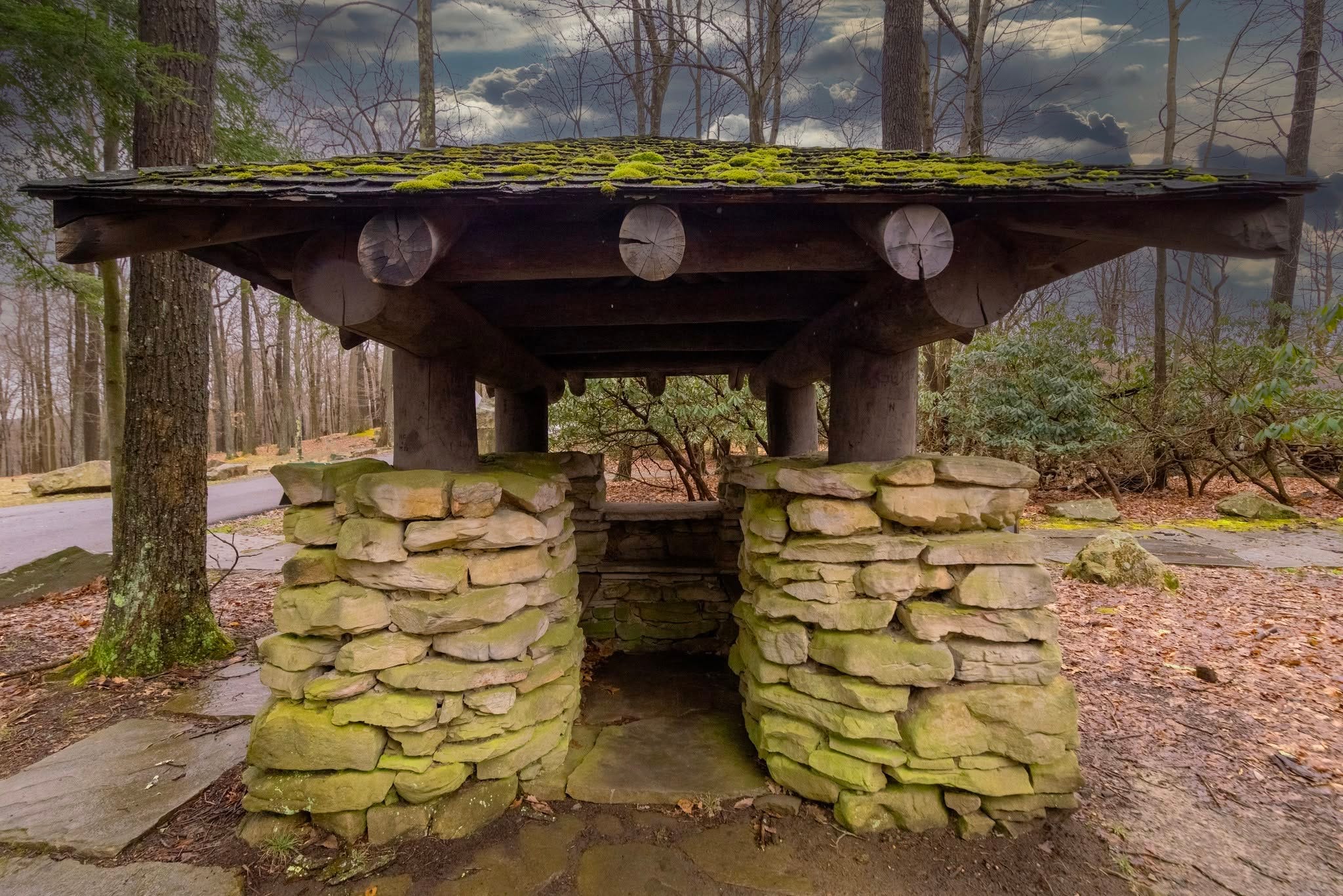
More than just the experience, working in the YCC made me keenly aware of the Civilian Conservation Corps. The CCC was part of President Roosevelt’s “New Deal” plan. It was started in 1933 to help the country get back on its feet during the Great Depression. Men ages 18-25 signed up and earned one dollar a day. The CCC ended in 1942, so men could join the military in the wake of WWII. But over the span of those nine years, the CCC provided three million men with jobs at over four thousand camps across the country. They built much of our country’s still-existing infrastructure – roads, bridges, telephone poles. They built our national and state park systems and planted over a billion trees. Anytime I visit a park and see an older log cabin, pavilion, or one of their trademark stone water fountains, I think of the CCC boys and feel grateful. The evidence of their hard work and dedication is still front and center, nearly 100 years later.
Decades before it was a YCC facility, Camp Cherry Tree was a CCC camp from 1933-1942. From ‘42-’46, it was a German POW camp.
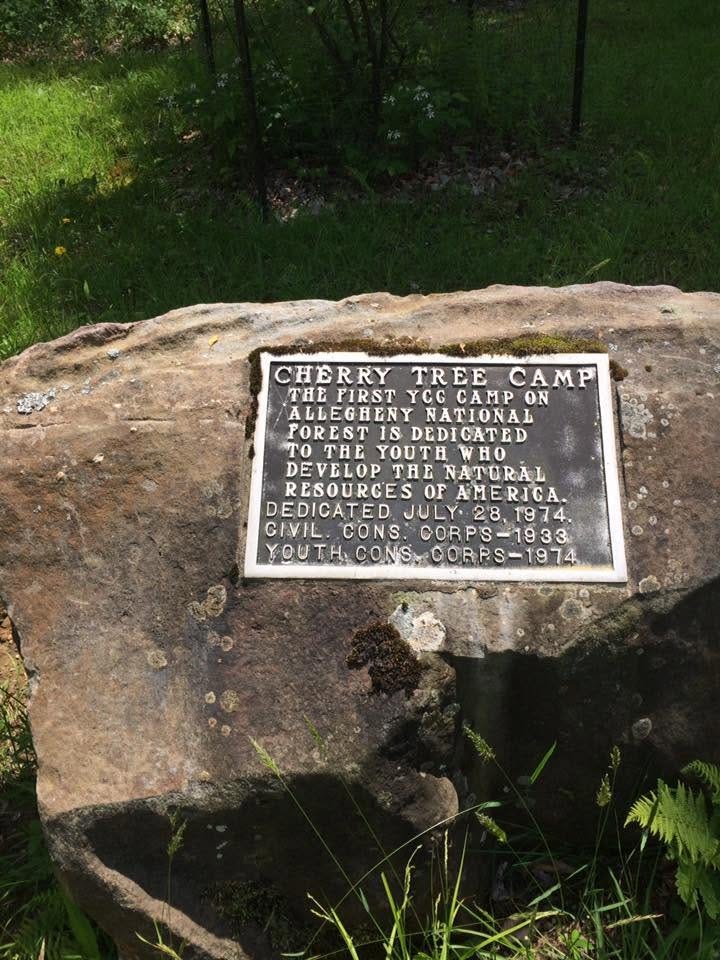
Though the CCC is no longer active, the YCC is an offshoot of the CCC Bill, which is still on the books, so to speak. As a result of my summer with the YCC, I am passionate about this part of our American history. I’m currently writing a middle grade historical fiction novel about a boy who lies about his age to join the CCC and help his family financially. It wasn’t uncommon in that desperate era. The story is set in a region I have loved my entire life – Swallow Falls State Park and Herrington Manor State Park in the panhandle of Maryland. The CCC built these two beloved parks, connected by a five-mile hiking trail. Coincidentally (or not?), my main character Joe lives in Pittsburgh and is age 15, the same age as me when I was in the YCC.
This is a real life photo of the project Joe works on the novel. He is depicted there in 1938 and helped put the finishing touches on the dam at Herrington Manor.
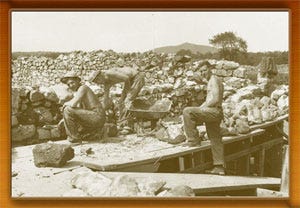
My fear is that the history and the memories of the men who worked in the CCC are being forgotten. Ask an average person if they’ve heard of the Civilian Conservation Corp and they’ll likely say no. It’s extremely unlikely that anyone who worked in the CCC is still alive today (they’d be over 100 years old at the youngest).
That’s why I’m writing a book.
Read more about the CCC in my manuscript’s Forward; Trees, Trails, and a Dollar a Day. Please consider subscribing to my page and follow my novel’s progress. My goal is to have the manuscript completed by early September. It’s coming along! Please hold me accountable.
Comments
Nothing yet. Say the first thing.
Sign in to join the conversation.