
Happy Sunday! I loved my extra hour of sleep this morning, although I dread the shorter days and the darkness that comes at 5 pm.
I was asked to return to a podcast to discuss why I became a polytheist. When I received the invitation, I agreed to participate in the episode. This invitation made me think: while it’s common for people to ask why others change religions, I questioned myself – why do I stay a polytheist?
I ask myself this more often now, since I am practicing alone. The Greek polytheist community here in New York has gone silent and, as far as I know, is inactive. I have nowhere to go for communal worship. This, along with the shady history of my initiatic tradition, has led me to reevaluate the last several years of my life.
Do I remain a polytheist? Yes, that’s the conclusion I reach every time. I continue to be a polytheist despite the issues I’ve outlined because being a polytheist is about more than just community or an initiatic tradition. I stay a polytheist because it’s how I see the world makes sense to me and reveals the most divine beauty. It is the grammar of divinity and philosophy I prefer to write in, the music I wish to hear, and the art I desire to see. It is the environment in which I feel I can cultivate myself best.
I suspect this is true for others as well – polytheism is a way of approaching life and spirituality that some people are naturally born for. Now that I am on a solo journey, I feel more connected to other solitary individuals who are doing their own thing, and I’m becoming more aware of individual needs versus those of a community. While it can be lonely, it’s also freeing – I am in a space and time that allows my polytheism to evolve independently, after being shaped by community and initiation. Now I can see how these lessons unfold naturally, without outside help or commentary.
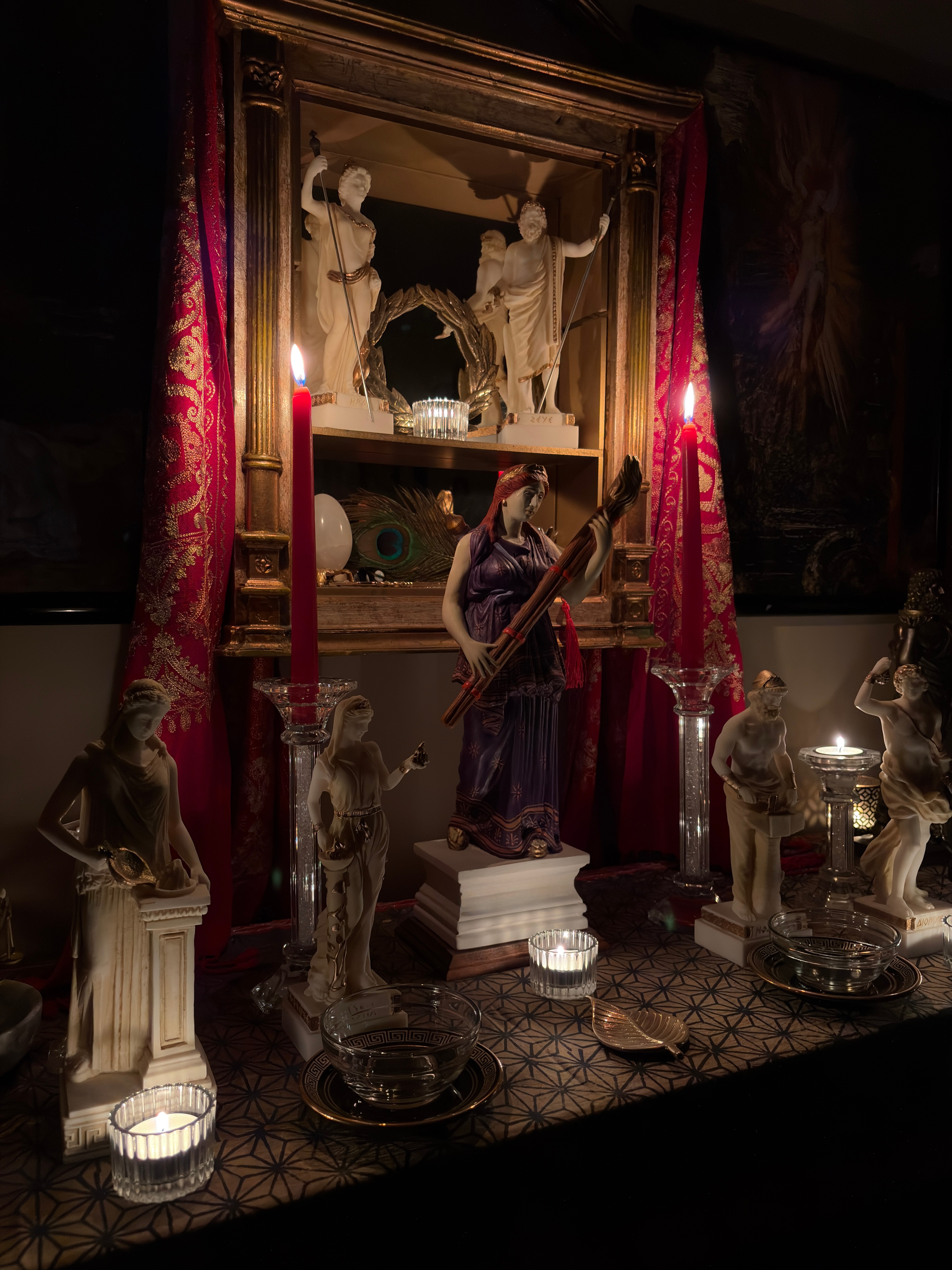
One particular issue I am currently reflecting on is evaluating and reconciling how to situate my polytheism within the history of Greek culture and the current context of Hellenism. To be a Greek-American polytheist does have its challenges when interacting with the Christian Orthodox majority. When I first began my journey, I found community quickly; practicing polytheism was easier. After a few years participating and taking everything in, I developed a gnawing feeling that something was missing. In short, I developed the sense that the re-Hellenization movement was missing the mundane folk rituals and practices that are commonplace in the broader Greek community. The orientation within the re-Hellenization movement was/are reminiscent of Enlightenment thought, in that Hellenism was positioned intellectually, with religious observance confined to its monthly scheduled performance. Religion seemed decentralized or secondary to some other goal.
The mundane folk practices are what I am currently more interested in. It is here that you find numerous threads of continuity from the past: I am deeply grateful for the work that Dr. Chaitow is doing on her Substack, Thyrathen, and how she demonstrates these continuities. One small example of this is continuity between Hekate and Saint Barbara. I aim to examine the aspects that still exist today and determine what can be redeployed in a polytheistic context, rather than focusing solely on ancient sources. This makes the most sense as a means to bridge the gap of history between me in 2025 and an ancient religious practice.
The folk practices observed today carry the ancient religion within them – to reject them is to deny a significant part of history. This is something I believe the re-Hellenization movement is doing wrong. They reject or overlook the readily available practices for their own use and mock Christian piety when they should, in my opinion, be engaging with those practices and reapplying polytheism to them. When Greek Christians are mocked, all I can think is that, in a way, you’re also mocking your polytheistic ancestors who had very similar practices. Piety should not be mocked, no matter the religion.
This brings me back to my main topic: why I remain a polytheist. Aside from it being the religious orientation that I think I am best suited for and is my natural disposition towards divinity – it is also a great arena to explore history and experiment with my culture and see what I can do with it, see what I can create and what I can contribute not just to the Greek community but to other polytheists who may find my journey inspiring.
Enjoy the rest of your weekend.
No posts
Comments
Nothing yet. Say the first thing.
Sign in to join the conversation.