
Today I came across Dr. Sasha Chaitow reposting and commenting on the word φρόνησις, which the Classical Wisdom Substack listed as one of the twelve Ancient Greek terms that “should totally make a comeback.” Sasha does what she does best, explains how we still exist, and this word still exists and is in use.
After that, for some reason today, I felt the urge to find my copy of Cavafy’s poems. After fifteen minutes of searching the shelves, I found it and flipped through the pages. I stopped upon a poem, «Ένας Γέρος» (An Old Man) - which reflects on, you guessed it - φρόνησις.
One of the quiet surprises in Cavafy’s poem is how he approaches the word Φρόνησις. It is a word, as already said, in use today, going back to Homer to Aristotle. It’s a word whose meaning has remained stable across millennia. Φρόνησις then and still today means prudence or practical wisdom. Whether spoken by an ancient Athenian or a yiayia today, the core semantic field has barely shifted. It is the same word carrying the same conceptual baggage.
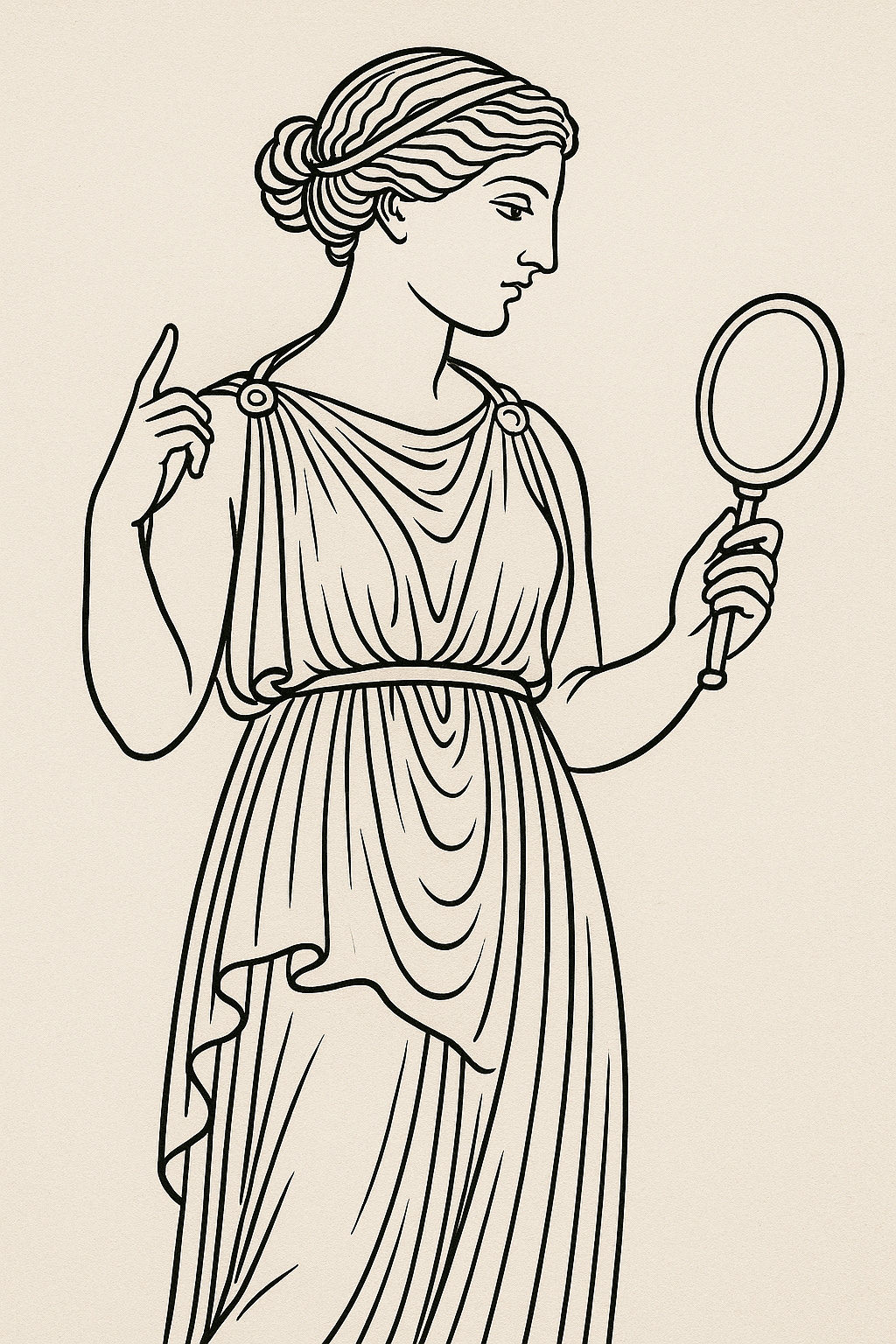
But Cavafy does what poets are allowed to do, what they must do, when they inherit a word with too much weight. He twists it, turns it, exposes it, and forces us to see what language does in lived experience rather than in philosophical treatises. In the classical world, Φρόνησις is the crown of practical wisdom. Aristotle describes it as the virtue that guides right action. Plato connects it to the rational soul. Φρόνησις is cultivated and admired, and it helps prevent mistakes.
But in Cavafy’s poem, Φρόνησις becomes the source of folly instead of its preventer. An inversion that can only happen within a lived culture that can play with its own language.
Καί συλλογίζεται ἡ Φρόνησις πῶς τόν ἐγέλα·
καί πῶς τήν ἐμπιστεύονταν πάντα — τί τρέλλα! —
τήν ψεύτρα πού ἔλεγε· «Αὔριο. Ἔχεις πολλύν καιρό.»
And he reflects on how Prudence deceived him;
and how he always trusted her—what folly!—
that liar who used to say: ‘Tomorrow. You still have plenty of time.’
Here, Φρόνησις is not the wise advisor of Greek ethics. She becomes a liar who whispers “tomorrow.” She is the soft voice of hesitation, the reasonable excuse for not daring, of not living fully. She is the rationalization that a cautious choice is always correct. At the same time, she represents the betrayal that only becomes clear later, when life has already passed by and one is left with regret.
Cavafy is not rejecting the dictionary meaning of Φρόνησις. If anything, the sting of the poem depends on the stability of its meaning; this is semantic irony. Cavafy knows exactly what the word signifies in both classical and modern Greek. The old man also knows what Φρόνησις was supposed to be. That is why the pain feels so sharp: he did not misunderstand prudence—he practiced it without moderation, following it too faithfully, allowing a virtue to become an excess in the absence of μεσότης – the middle between two extremes.
What Cavafy captures is the tragedy of lived prudence, prudence as it appears in a real human life rather than on the page of Aristotle’s Ethics. The voice of Φρόνησις can become the voice of timidity, avoidance, and safety at the cost of vitality. A “timeless” virtue, when encountered in the messy realm of desire and fear, can degrade into a kind of trap. And the old man realizes that the version of prudence he lived by was not virtue but inertia disguised as wisdom.
Cavafy’s Φρόνησις represents the same prudence Aristotle praised, but viewed from the other end of a life where it was misused, misunderstood, or over-trusted. It serves as a reminder that timeless ideas still require self-examination, and philosophy can be done in poetry.
Below is the whole poem translated by Evangelos Sachperoglou (Oxford World Classics)
Deep inside the noisy café,
huddled over the table sits an old man,
with a newspaper in front of him, all alone.
And in the indignity of his miserable old age
he ponders on how little he enjoyed the years
when he had vigour, eloquence, and looks.
He knows that he has aged a lot; he senses it, he sees it.
And yet the time when he was young seems like
yesterday. What a short span of time, what a short span.
And he reflects on how Prudence deceived him;
and how he always trusted her—what folly!—
that liar who used to say: ‘Tomorrow. You still have plenty of time.’
He recalls impulses that he restrained; and how much
joy he sacrificed. Every lost opportunity
now mocks his mindless wisdom.
… But from too much reflection and reminiscence
the old man becomes dizzy. And he falls asleep
leaning upon the table of the café.
No posts
Comments
Nothing yet. Say the first thing.
Sign in to join the conversation.