
There is a beautiful meadow high in the Alps where I used to take children at night, it is near one of the highest mountain path in Europe, le Col de la Bonette at 2802 meters (9192 feet). I was in my early twenties and a teacher in astronomy summer camps.
Children from under privileged families living in the Paris neighborhood towns, and me, would climb above the tree line in the last of the light to go see the Stars (and UFO because there was many there and kids still asked seriously about them without shame and I already had one close encounter by then).
So here I am climbing, with a straggling line of them behind me with their sleeping bags and their laughter and their pockets full of contraband sweets (so glad they did), and we would lie down in the cold grass and wait for the dark to come all the way down. Real dark. The kind you have to climb toward now. And almost every summer, some child would point up at the pale river spilling across the whole roof of the sky and ask me, very seriously, whether that was a cloud.
It was the Milky Way. They had simply never seen it. Nine years old, ten years old, and the oldest thing human eyes have ever rested on was brand new to them, mistaken for weather.
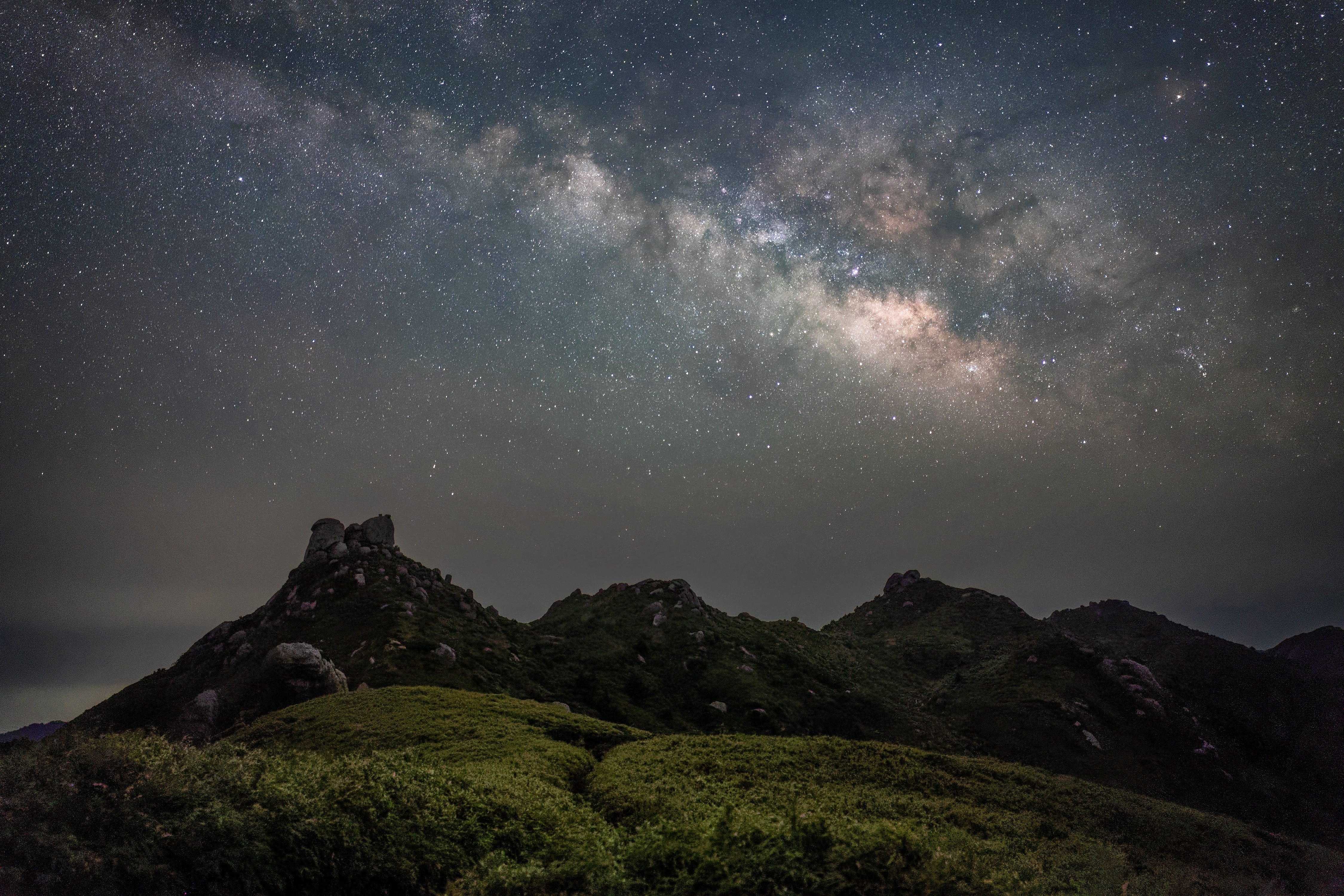
I never corrected them too fast. I liked the question. There is something almost holy in a child looking up at the whole spine of our galaxy and thinking it might rain (maybe they knew it is where water originally came from). I would just say “It is not a cloud, what do you think it is?”. I already understood somehow that teaching means not handing answers too quick, and preferably handing back better questions.
I had my first telescope at seven. A cheap little thing that wobbled, that I loved with the whole of me (almost teared up thinking of it right now, that’s strange and beautiful). A bigger one at twelve. And then at eighteen, a gift from my parents for my graduation, an instrument I still own, still use way too rarely, still carried out into the field on clear nights, thirty-odd years and one whole life later. Vétérinaire, corporate refugee, ceremony, fire, exile, farm. The telescope came with me through all of it, like the most faithful dog that refuses to be left behind.
So you could say I have been looking up for a long time. And what I want to tell you, on this particular night, is that the looking up was never really about the stars. It was about the dark. I just had no idea about it back then.
Tonight, as I write this, the sky over half the world is doing something it has not done in a very long time, and doing it all at once.
Today is a New Moon. Which means the Moon has stepped between us and the Sun, and along a narrow ribbon that crosses Greenland and Iceland and the north of Spain, She is swallowing the Sun whole. A total eclipse. The first one mainland Europe has seen since 1999. Here over the farm we only catch the edge of it, a bitten sun sinking low into the evening, but hundreds of thousands of people have packed cars and planes and boats to stand inside that shadow in Spain for two minutes of daytime night.
And then, because it is a New Moon, the sky goes fully black after dusk. No moonlight. Which happens to be the exact night the Perseids reach their peak, the great August meteor shower, up to a hundred falling stars an hour under a sky this dark, seemingly streaking out of the constellation Perseus.
One darkness. Three faces. The Sun devoured by day, the Moon gone dark, the stars falling all night.
It is, frankly, the kind of sky our ancestors would have dropped everything for. Would have lit fires for. Would have read like scripture. That I am sure of.
The old people in the Andes would tell you the great Serpent is stirring in the river of stars, Her head lifting into the August dark right about now. The Norse would tell you the wolves are running. And I am pretty sure every single people around the world, who are still connected to Land and Sky, have a story and a ceremony for such night.
But then there is “us”. The Western version of humans, running around disoriented in the Empire whirlpool, searching for ground and meaning in the wrong places, and still, somehow, being called by a solar Eclipse. And they are not wrong, I mean the ones packing the cars. They probably saw it on the news that this was going to happen. But, and maybe it’s the hopeful and naive part of me, I don’t believe that is really why they are going. I know something older than the news is tugging at their sleeve or pocking on their shoulders, something in the body that remembers, from before we can remember, that when the sky does this, you go. You look up.
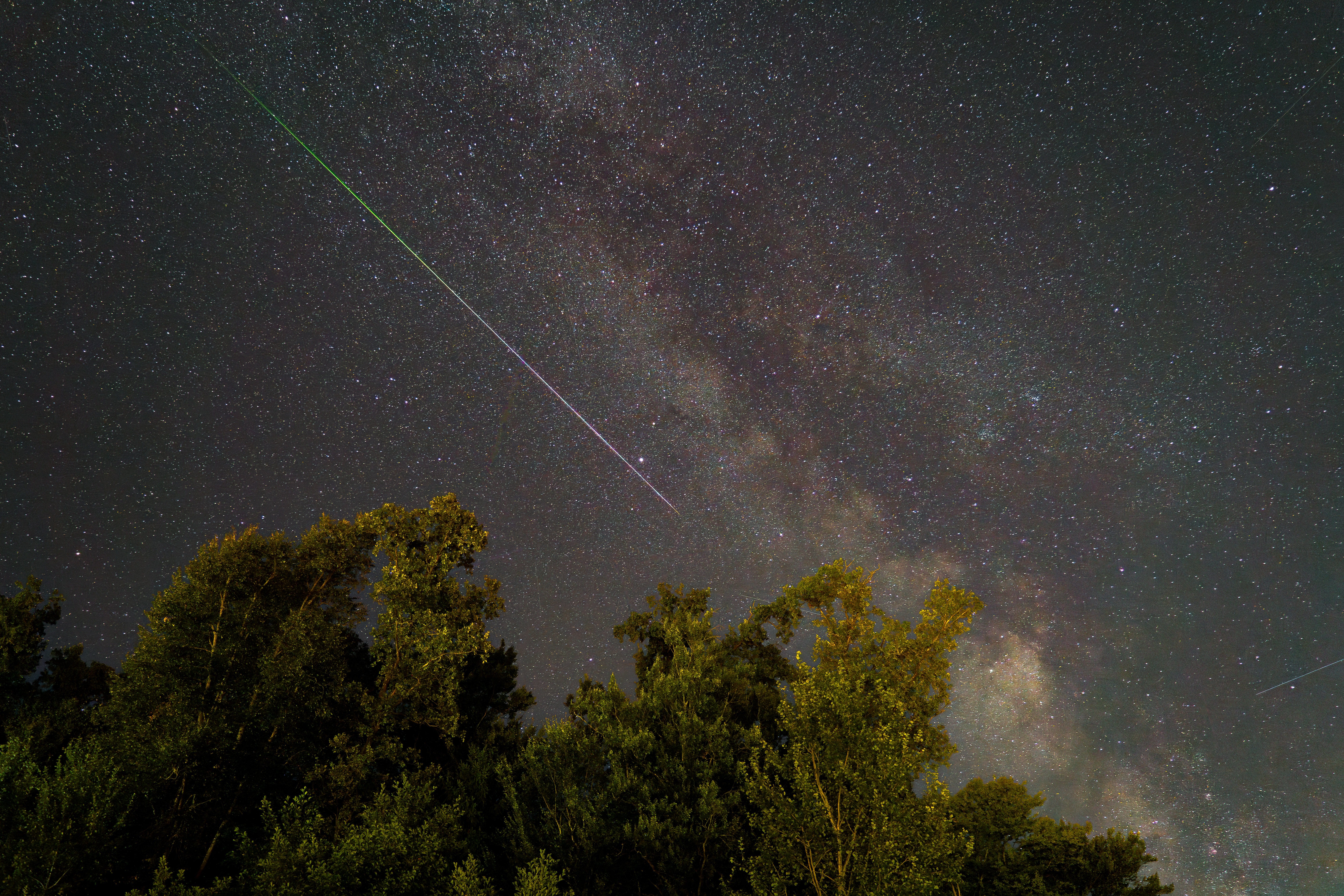
But the truth is that most of them will drive from cities where they cannot see the sky at all. We call it light pollution. As if the dark were the thing spilled, the thing contaminating. Empire is very good at naming things backwards. But make it make sense: we have flooded the night with so much artificial light that a third of all the humans alive can no longer see the Milky Way from where they live. Nearly eighty percent of the people in North America. Sixty percent in Europe. That pale river a child once mistook for a cloud is now, for most of our species, simply gone. Painted over. Erased in a single human lifetime, more or less since the factories lit their first lamps and decided the night was a “problem to be solved.”
And it is getting worse, fast. The night sky is brightening by close to ten percent a year now. Do the arithmetic on that and it is almost unbearable. A child born tonight into a place where two hundred and fifty stars are still visible will, by the time she turns eighteen, be able to see only about a hundred of them from the same backyard. Two out of every three of her stars, gone before she is old enough to vote. Gone before she gets a telescope of her own.
Eighteen. The same age I was when I got the instrument I still carry.
My daughter Juliette is going to inherit a smaller sky than I did and while writing and feeling into that, it hurts deeply.
This is not pollution. Pollution is an accident, a spill, a side effect. This is a war against the dark. And like every war Empire wages, it is sold to us as safety, as progress, as light, always more light, and it costs us something we did not know we really needed (more than lights on streets…).
So let me tell you what we are really losing, because it is so much more than a pretty sky. And below, past the line, I will hand you the rest of it:
The wolves, and the new Sun born after them.
The falling stars an old world called the tears of a burning saint.
The villages who answered the dark with forgiveness instead of fear.
Myth, Tales, Ancient Traditions, Ceremonies, all that we are losing and should reclaim.
And I will also hand you two small things you can do tonight, in the dark, with your own hands, even from the bright wounded sky of a city.
Because the dark was never empty. That was the lie. The war on the dark is trying to make us forget one thing above all else.
The dark is where the living things are.
So come down into it with me. Into the old magic our ancestors prayed to, and everything the eclipse, the new moon, and the falling stars have been trying to tell us all along.
Comments
Nothing yet. Say the first thing.
Sign in to join the conversation.