
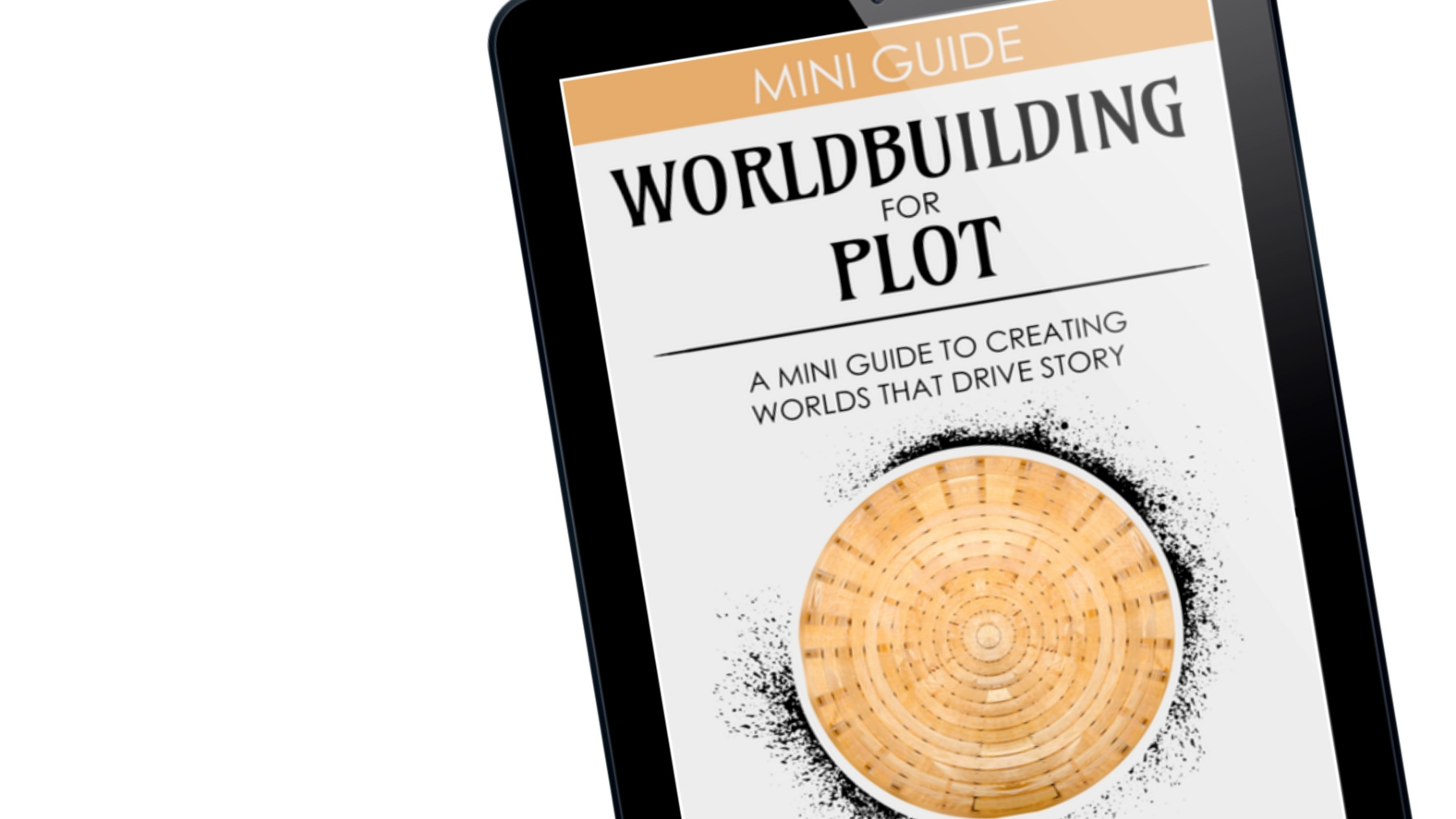
Well... this one snuck up on me! It turns out that once I started writing Worldbuilding for Plot, it came together far more quickly than I expected. So quickly, in fact, that I never got around to teasing it before it was finished!
If you’ve ever found yourself with pages of fascinating lore, detailed maps, and rich histories, but no clear idea how to turn any of it into a compelling story, this guide is for you.
And here’s a chapter to give you a taste of what it’s all about…
WORLDS THAT DEMAND A PRICE
FOR STORIES OF SACRIFICE, CONSEQUENCE, AND COST
Power moulds everything in a world, but the cost of that power defines what it’s really worth. A character might chase something they want, but find themselves forced to weigh up the sacrifice they’ll have to make to get it. These are the stories where nothing comes freely, where every gain is balanced by loss, and where success is never simple or clean.
Readers are drawn to these stories because they feel earned. Victory isn’t handed over, it’s paid for. Every decision carries weight, and every outcome leaves something behind. We don’t just want to see characters succeed, we want to see what it costs them, and whether they’re willing to pay it.
If you want to write that kind of story, your world can’t allow anything to come without consequence.
NOTHING COMES WITHOUT COST
In some worlds, cost is obvious. Magic drains life, power corrupts, knowledge is dangerous. In others, it’s quieter, but no less present. Every decision closes one door as it opens another, and every gain shifts something else out of balance.
A healer might be able to save a life, but only by shortening their own. A warrior might win every battle, but lose their sense of self in the process. A ruler might hold a kingdom together, but at the cost of their freedom, their relationships, or their peace.
These costs don’t need to be extreme every time, but they do need to be consistent. The world has to reinforce the idea that nothing is free, and that every action carries a heavy decision. When that’s true, even small choices begin to matter.
BUILDING COST INTO YOUR WORLD
Cost works best when it isn’t added as an obstacle, but built into the structure of the world itself, so you might choose to design systems where power always takes something in return.
Magic might demand physical or emotional sacrifice
Technology might bring progress, but damage the world around it
Social systems might reward success, but only through compromise or betrayal
Or you might build cost into the way people live and interact.
Resources might be limited, forcing difficult choices about who gets what
Traditions might require sacrifices to maintain
Agreements might ensure that one person’s gain is always another’s loss
In these worlds, cost isn’t something characters encounter occasionally. It’s something they live with every day.
CHOICE, CONSEQUENCE, AND WEIGHT
What makes these stories compelling isn’t just the presence of cost, but the way it informs decisions. If a character can have everything, there’s no tension. But when every path asks something of them, the choice becomes meaningful.
Do they save one person or many?
Do they take the power they need, knowing what it will do to them?
Do they hold onto what they value, or let it go in order to survive?
These choices don’t need to have clear answers. In fact, they’re often more interesting when they don’t. The world presents the cost, and the character has to decide whether it’s worth paying.
WHEN THE COST IS AVOIDED
Another way to use this kind of world is to explore what happens when people try to avoid the cost altogether. Someone might try to cheat the system, to gain power without paying for it, or to take without giving anything back. Sometimes it works, at least for a while. But in a world where cost is built into the structure, that imbalance rarely holds. Something shifts. Something breaks. Or the price is paid somewhere else, often in ways that are harder to predict or control.
This can create powerful story momentum. A shortcut taken early can become the source of conflict later, as the world corrects itself in ways the character didn’t expect.
BUILDING STORIES FROM COST
If you’re looking for ideas, start with the price rather than the goal. Instead of asking what your character wants, ask what it’ll cost them to get it.
If they want power, what part of themselves do they risk losing?
If they want safety, what freedom must they give up?
If they want to protect someone, what are they willing to sacrifice instead?
You can also think about how different characters respond to the same cost. One might refuse to pay it while another accepts it without hesitation. A third might try to find a way around it, creating a different kind of problem entirely.
A QUICK STORY TEST
If you want to build a world that supports stories of sacrifice and consequence, ask yourself:
What does this world demand in return for power, safety, or success?
What can’t be gained without losing something else?
Where do characters have to choose between two things they want?
What happens when someone refuses to pay the cost?
You can also work backwards from the story you want to tell.
If you want sacrifice, what makes that sacrifice necessary?
If you want consequence, what actions carry lasting impact?
If you want moral tension, what choices come with no easy outcome?
In a world like this, nothing comes easily. Every gain leaves a mark, every choice shifts the balance, and every character has to decide what it is that they’re willing to lose.
It’s available right now as an ebook exclusively from my webstore. Paperback and releases on other ebook retailers will be following soon.
Comments
Nothing yet. Say the first thing.
Sign in to join the conversation.