
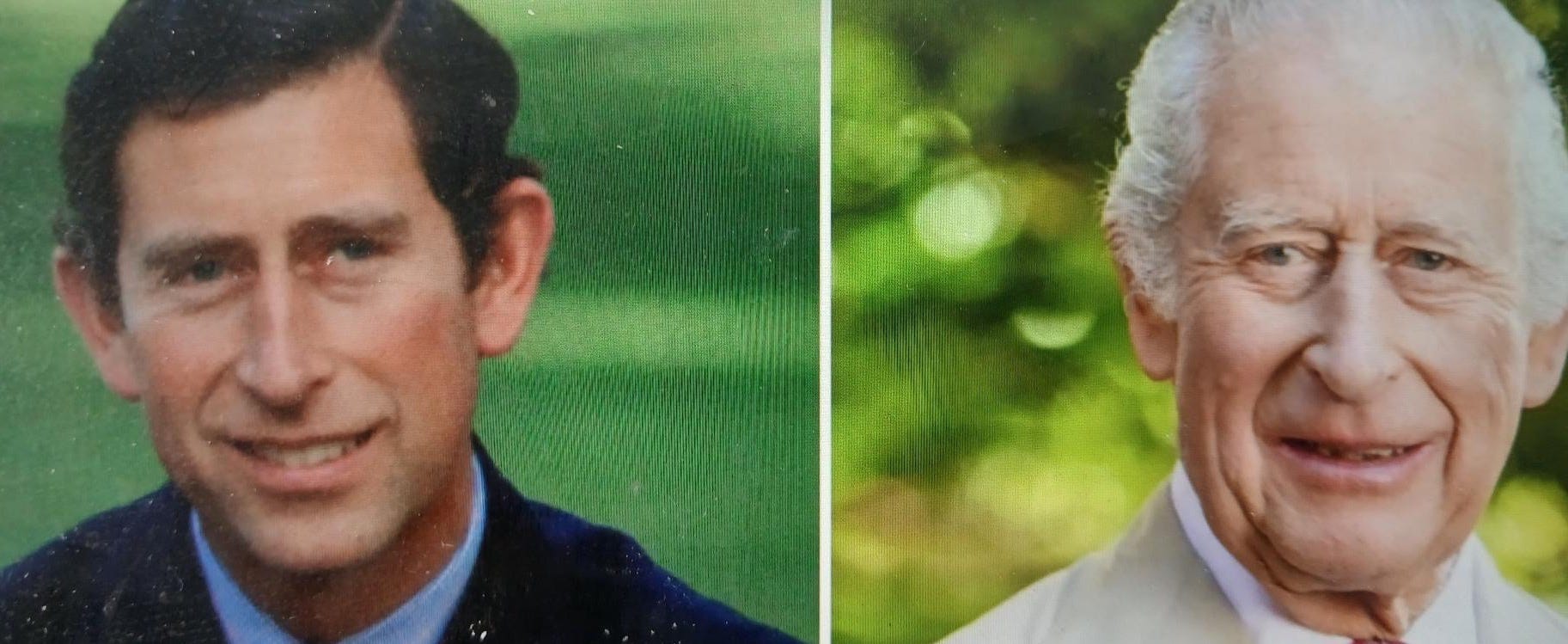
People love to criticise King Charles but more than a million people think the world of him. They are the beneficiaries of what may turn out to be his most successful and long-lasting legacy: the King’s Trust, formerly the Prince’s Trust, which has helped more than 1.3 million people up to the age of 30 to build confidence, get a job or launch a business since it was founded in 1976.
I recently met Festus Akinbusoye, a man whose life was totally transformed by a grant from the trust. His story is fascinating.
Now 48, he told me his story in a cool and impressive way, talking about his happy childhood and upbringing in Nigeria, and his feelings for the King, Prince Harry, Princess Catherine, London Mayor Sadiq Khan and London’s ups and downs.
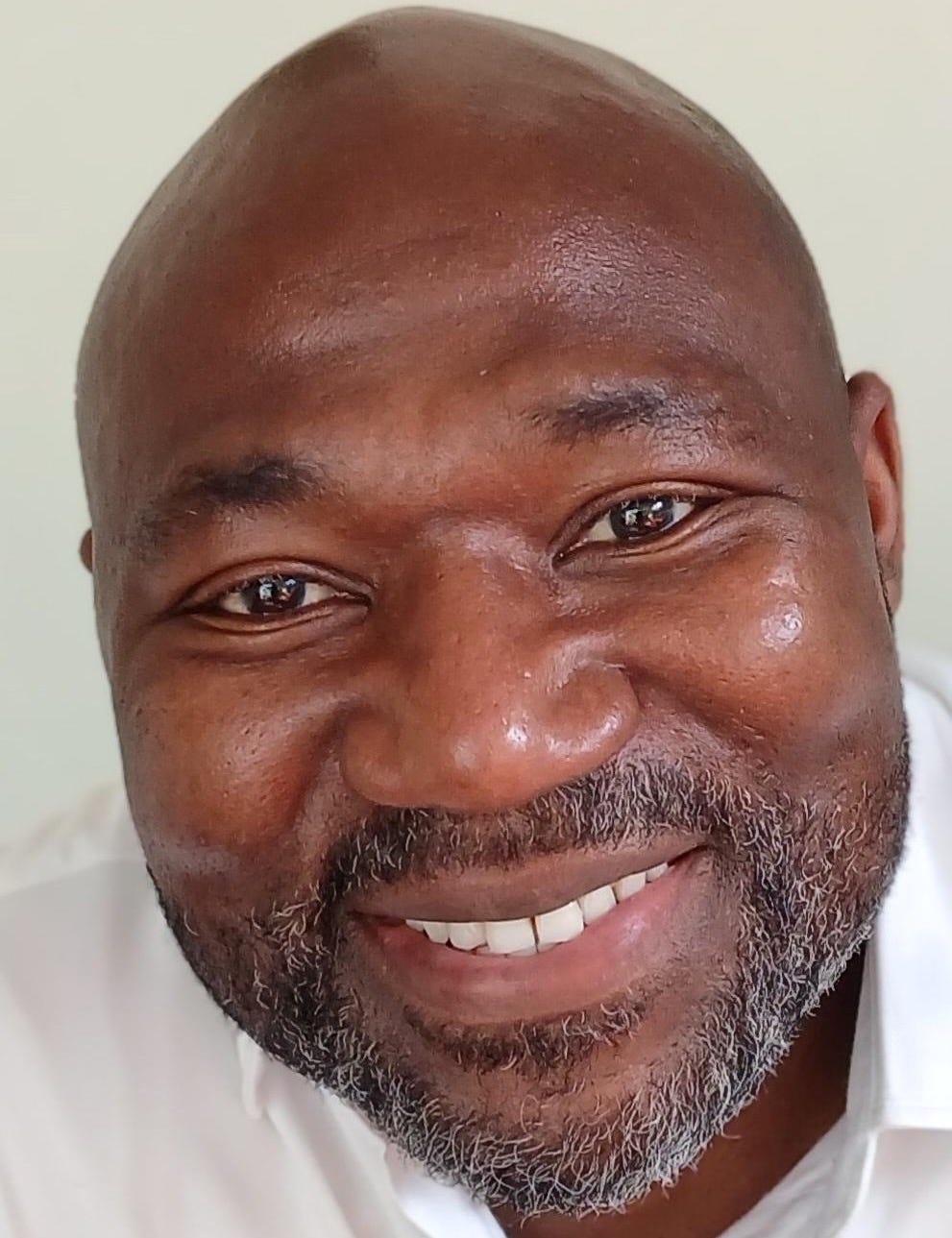
Having been given a start by a grant from the Prince’s Trust, as it then was, he now runs his own security business, is a local councillor in Westminster and was England’s first black Police and Crime Commissioner, overseeing the work of the police in Bedfordshire.
“I was 13 years old when I left Nigeria,” he said, “and if anyone had said to me at the airport, ‘When you get to England somewhere along the line you’re going to stand in front of the monarch of the Commonwealth,’ I wouldn’t have imagined it in a million years.
“My opportunity and the journey of my life is thanks to King Charles.”
The King continues to serve as President of the Trust actively supporting its mission to help disadvantaged young people.
Festus’s father, Akinola, was a politician in Lagos but had to leave Nigeria in 1991 because of military rule. He was worried about the safety of his young family, so he and his wife, Festus and his twin sister, who became a teacher, came to London. Older siblings stayed behind.
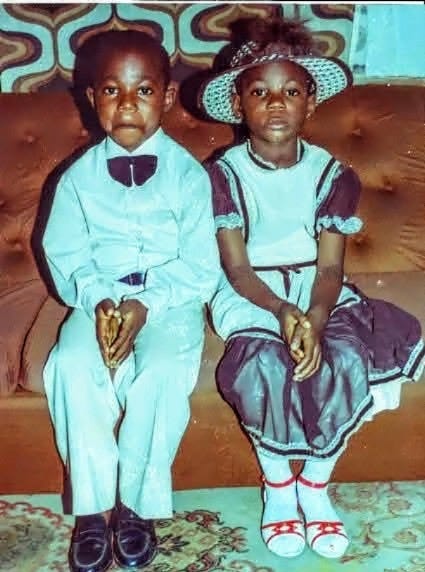
It meant the family left a large, comfortable home in Lagos to squeeze into a single bedroom above a textiles factory in Upton Park in east London. Festus’s father worked round the clock as a cleaner at McDonalds, at Tower Hamlets council and the Burton clothing chain.
“But for me my parents insisted on three things: go to church, do my education and play sport which they felt would keep me off the streets.”
Secondary school wasn’t easy and Festus was bullied because of his African accent. There is no trace of it today.
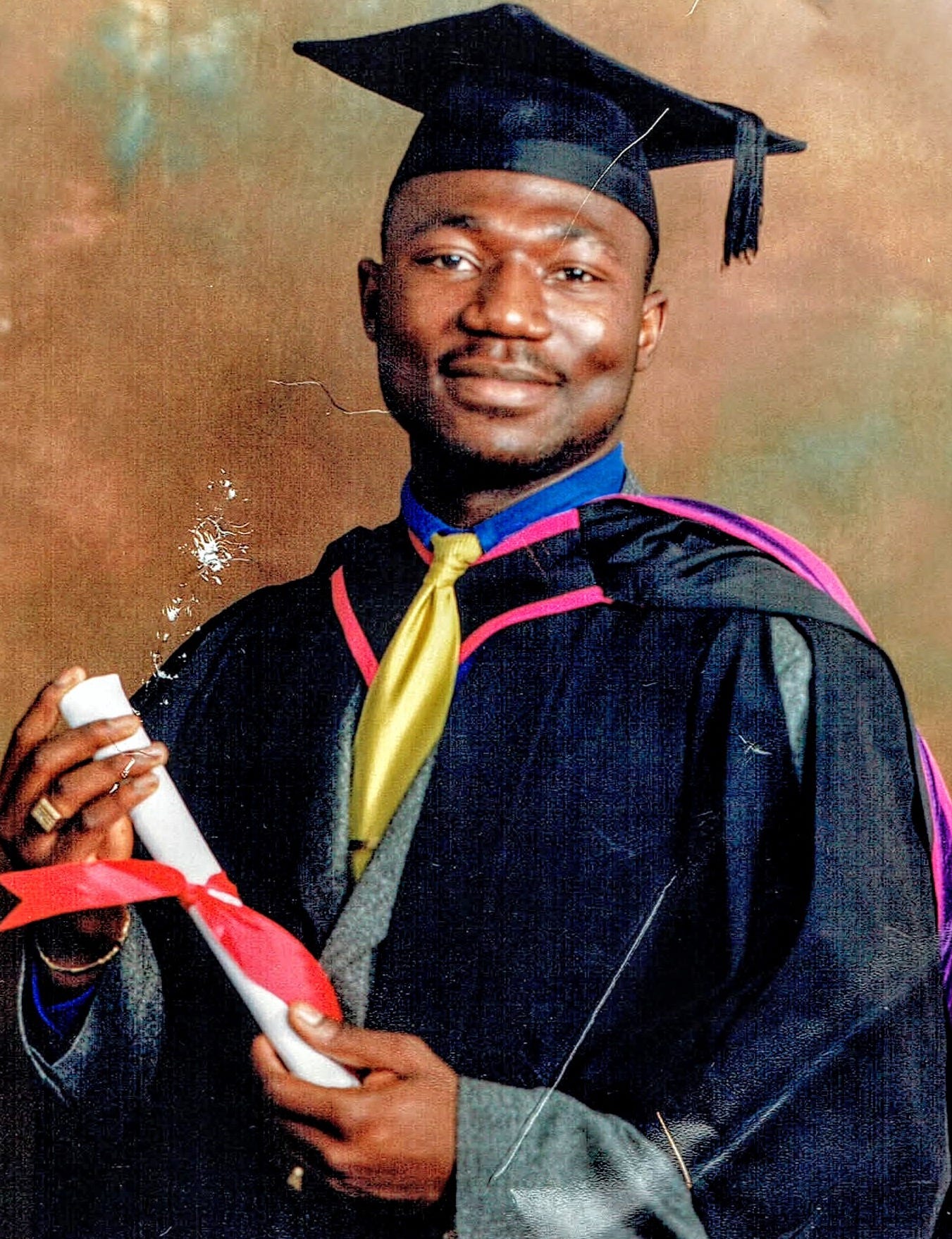
When he was 16 he worked as a waiter, a security guard, and on construction sites, then went on to the University of Arts, London, and the School of Oriental and African Studies at the University of London.
He also played professional basketball in the Budweiser British League.
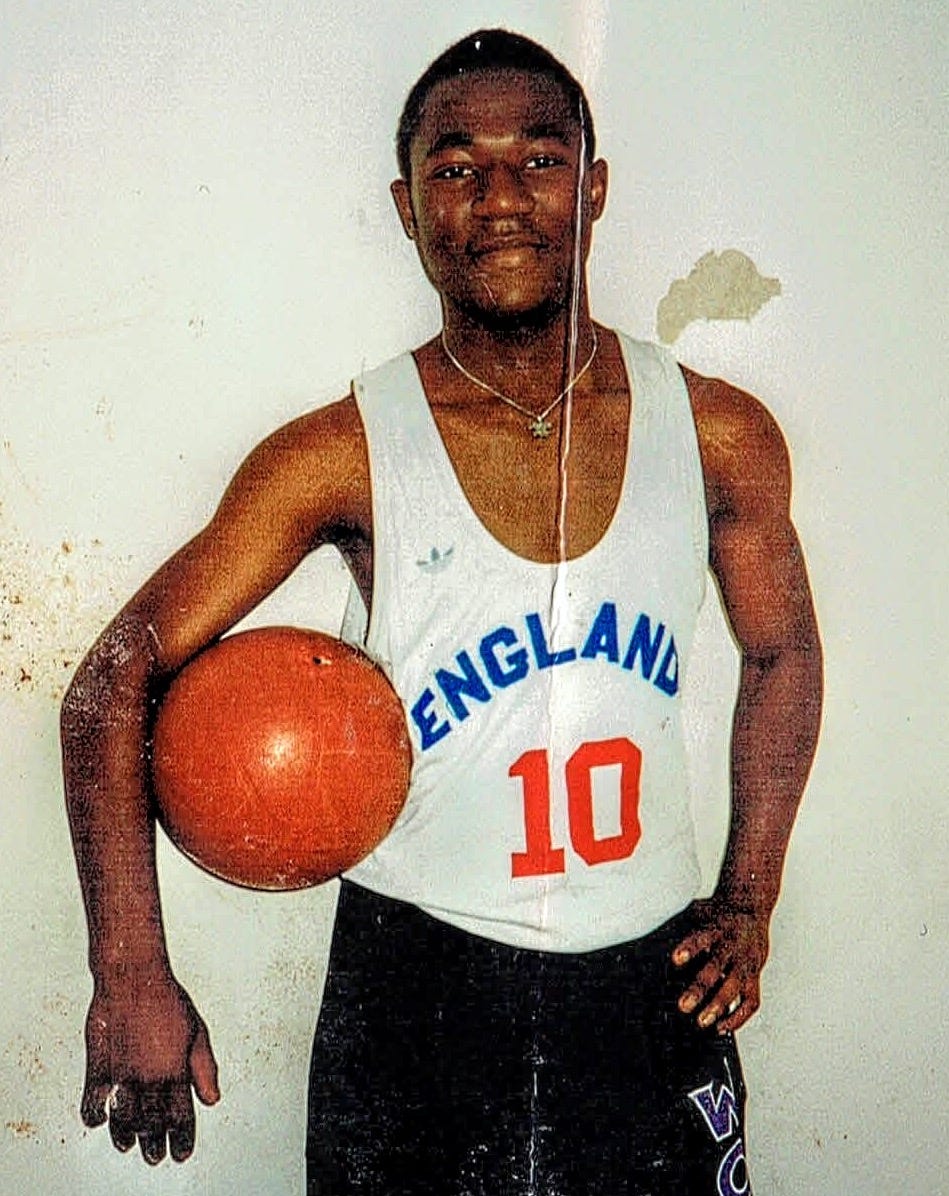
“I then left the family as there was not enough room for me and I tried to get a real job but nobody would employ me. I started a business when I was 23 and asked several banks for a loan of £2,500 to help me get going. None were interested. I remember one bank on Threadneedle Street in the City of London when I was living in E16 (a rough, neglected area of London at the time) telling me: ‘I’m sorry, we don’t do business with people from your postcode’.
“My dad told me to believe in myself, and not to give up. I became a Conservative despite everyone around me in Canning Town being Labour.
“My father who followed Labour asked me why and I explained they didn’t answer my calls, but when I rang the local Conservatives someone answered immediately.”
Determined to keep going but not knowing how, by chance Festus looked through Yellow Pages, a UK business directory that no longer exists.
“I opened the first page,” he says, “and almost by divine providence, there was an advert from the Prince’s Trust. I didn’t know a thing about it but it said if I had a business idea, needed support, and I was between 18 and 30 I should give them a call.
“I phoned the following day and they saw me a couple of weeks later.
“I was asked about my business, how much money I needed from them, which was £2,500, and how I would repay it, something I did within about eighteen months.
“I was soon told I had unanimous support from the Trust and I could have the funding.
“Even better than that I was introduced to James Tolbert, a business mentor, to help me. He transformed my life.
“Nearly twenty-five years later we’re still friends. Without the King’s Trust our paths would never have crossed. I can never thank His Majesty enough for having the vision, all those years ago, to start what was then the Prince’s Trust with money from his military pension.”
Now a single father of four, Festus runs his business in the security industry with forty staff across England, Scotland and Wales.
He then rather quietly surprised me. “I’m generally very confident but I can honestly say that the one and only time in my life I’ve ever been nervous about meeting somebody was when I met His Majesty.
“He came to Bedfordshire where I was Police and Crime Commissioner. I’d told my story there and gave an interview to the BBC about how the Prince’s Trust had helped me.
“Apparently, His Majesty heard that story and when he came to Bedfordshire, I was invited to meet him.
“The King said, ‘I hear you’re the Police and Crime Commissioner here.’
“I replied, ‘Yes, sir.’
“As soon as I’d said it, I realised I should have said, ‘Yes, Your Majesty.’ All the protocol just disappeared from my head and I didn’t know what to do.
“The King took no notice, shook my hand and said: ‘So, does this mean you’re one of my graduates? If I get a speeding ticket driving through Bedfordshire, will you let me off?’
“It completely broke the ice. The King had a wonderful sense of humour. He was warm, human and incredibly approachable. Completely different from what I’d imagined.
“But I also feel very upset for the King. He’s got cancer and his son Prince Harry is deliberately making life awful for him but I think he doesn’t want to give up completely. Being a parent, it doesn’t matter how bad they are. But you can’t let a child attack you the whole time.”
Festus also praised Catherine, Princess of Wales. “Human beings need stable families, strong communities and adults to take responsibility. It’s one reason why I so admire the Princess of Wales, who focuses on first principles, common sense and strong families.
I asked if he thought he would like a bigger political role, London’s mayor perhaps, instead of Sir Sadiq Khan who has just been given a life peerage by the outgoing prime minister, Sir Keir Starmer. “Yes,” he said. “I’d certainly like to contribute more. London is still one of the greatest cities in the world, but I think we’re wasting enormous potential by allowing ourselves to become distracted by division.
“Imagine a doctor saying: “I’m not going to treat you because you’re black, Jewish or Muslim. We need to remove that kind of activism.
“Public services should belong equally to everyone and people should be treated with dignity.
“But whatever good I’ve achieved in this country, past, present or future, began with the Trust, which genuinely transformed my life.
“From that small beginning my work grew into something extraordinary. Now I can stand in front of young people and show them that it doesn’t matter whether they’re rich or poor, black or white, religious or not, you can still build a successful life and do something worth doing.”
Comments
Nothing yet. Say the first thing.
Sign in to join the conversation.