This page did not load. You can still read it on the original site — the toolbar below keeps your place in the directory.
As the prince's lawsuit opens, he has an unlikely fellow plaintiff
Prince Harry has had what he calls a “mission” to reform the British media, despite not living in the UK. He also calls tabloid newspapers “toxic” and blames the papers for the breakdown of his relationship with ex-girlfriends Chelsy Davy and Cressida Bonas and damaging his and Meghan Markle’s mental health.
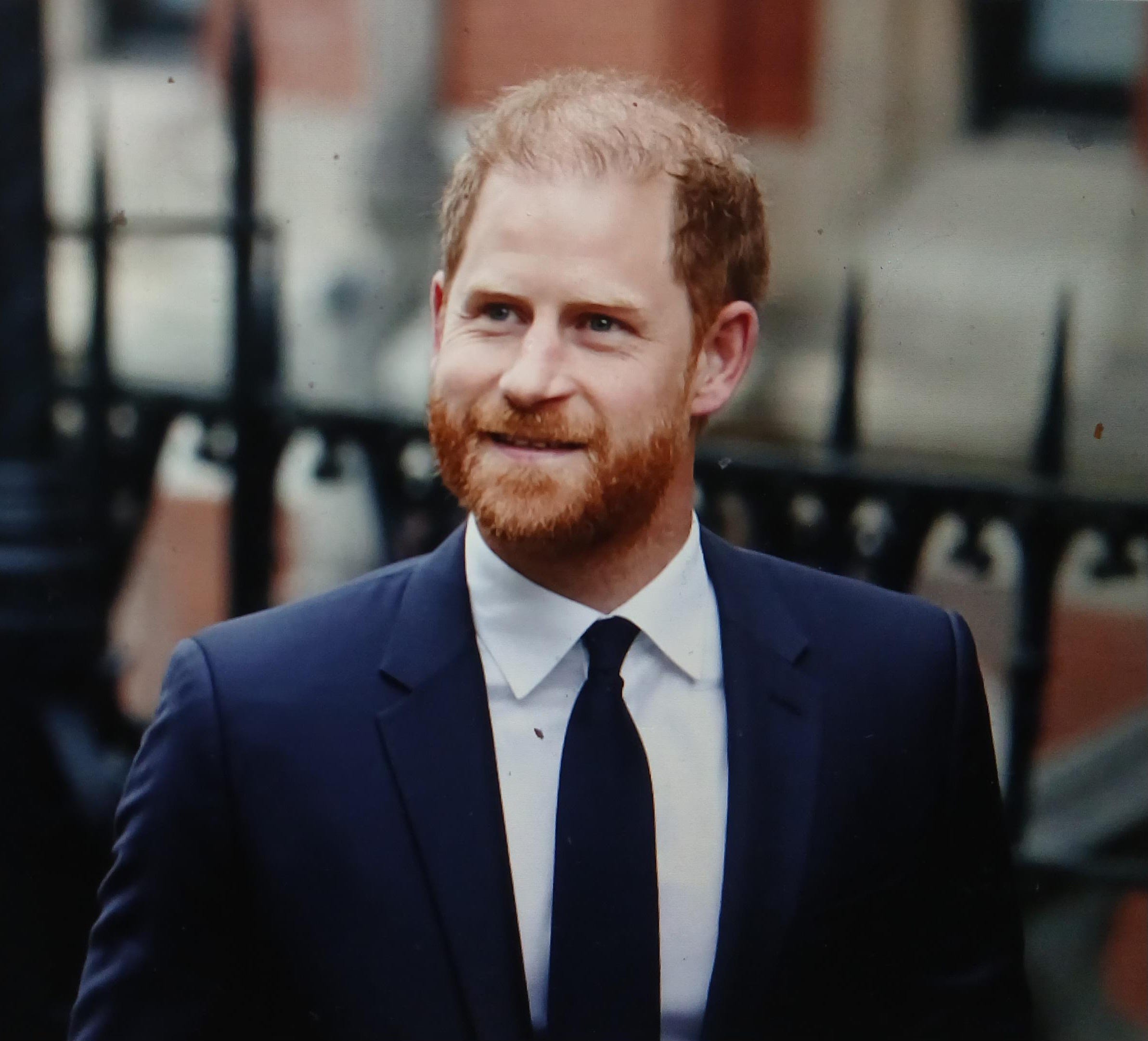
Confident: Prince Harry outside the High Court
In 2023 Harry became the first royal to give evidence in court in more than 130 years. As his legal battle against Associated Newspapers, publishers of the Daily Mail, Mail on Sunday and Mail Online, begins in London’s High Court before Mr Justice Nicklin, he says he is “confident and ready”. He will be called to testify on Thursday.
The case could go on for more than two months and cost as much as £38 million. Joining Harry are some well-known individuals who must make their case in court one by one. They include the pop star Sir Elton John and his husband, David Furnish, actresses Liz Hurley and Sadie Frost, and Baroness Doreen Lawrence, a Labour peer whose son Stephen was murdered in a racist attack.
Doreen Lawrence joined the group in 2022. It seems astonishing she is still with the group, which has made me feel it is about time to tell my story.
Stephen Lawrence, a black 18-year-old, was attacked in the street by a gang of young white men at 11pm on April 22, 1993, in south London. The unprovoked racial attack was devastating for his parents, Doreen and Neville. Their feelings were made even worse when the police did next to nothing to try to find the criminals. Nor were newspapers interested in Stephen’s death.
Paul Dacre, then the editor of the Daily Mail, felt differently and was determined to find the culprits, reveal what exactly happened and help Doreen and Neville. Dacre believed the public should be aware of what happened to a young black man who was well-behaved and hard-working, and also get the police to reopen their investigation. I was a feature writer on the Daily Mail at the time so in March, 1997 I was asked to interview both parents separately, which they agreed to do. Four years had already passed since Stephen’s murder.
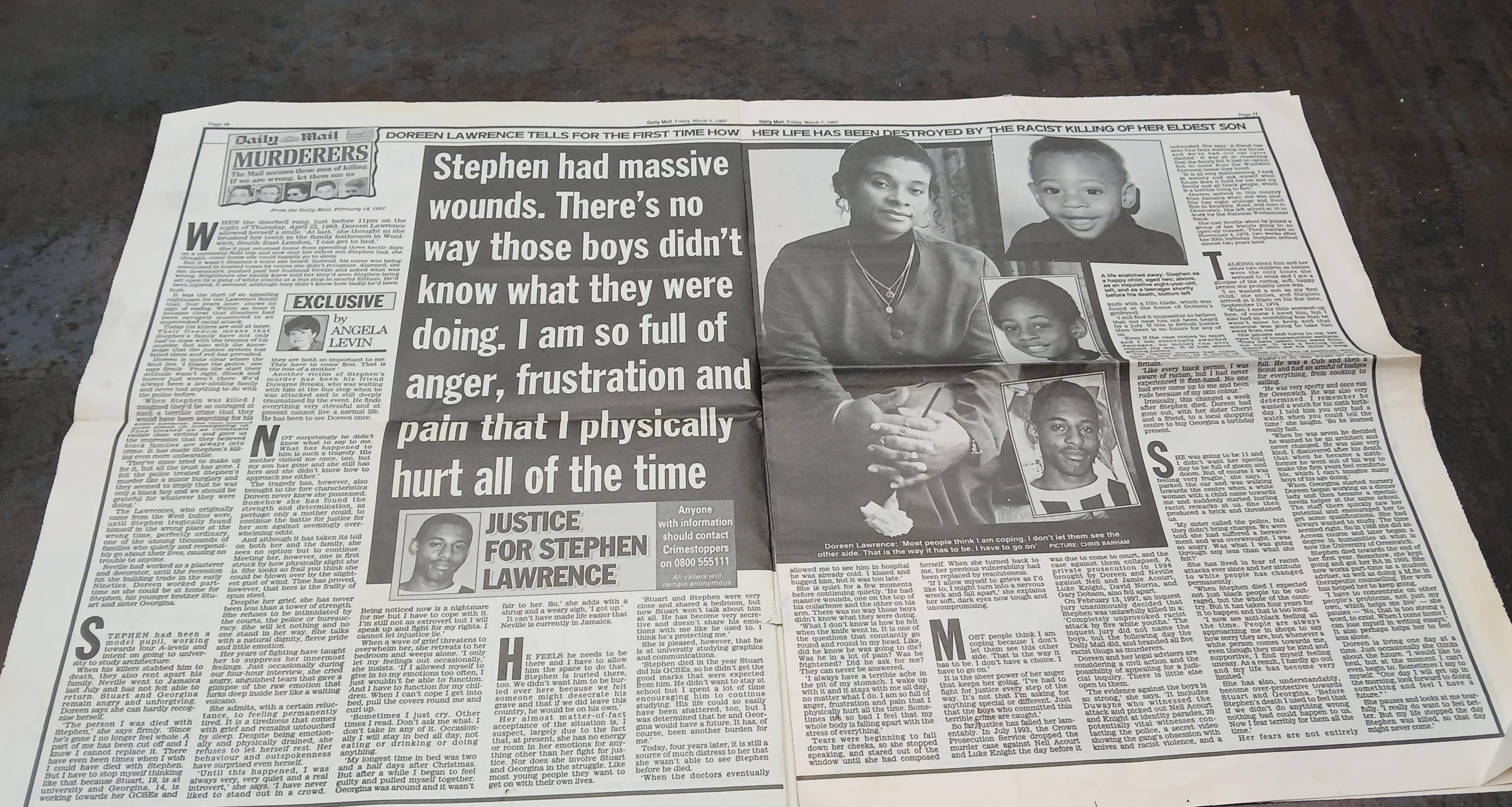
Searing grief: My Daily Mail interview with Doreen Lawrence
I met Doreen in a hotel room close to the Mail’s offices. Her searing grief made it difficult for her to talk about such a hideous event and the interview took four hours. I wrote: “She cried a lot and gave a glimpse of the raw emotion that lurks deep inside her like a waiting volcano.” She told me she “blamed the police” and how devastated she felt. “The person I was died with Stephen” she said.
She was obviously emotionally and physically torn to pieces and brave to pour out her feelings about what had happened.
Neville was affected in a different way. He is a quiet man who was so traumatised that for some time he blocked reality from his mind. A man with modest ambitions, he did various jobs until he went to night school for three years to train as a toolmaker.
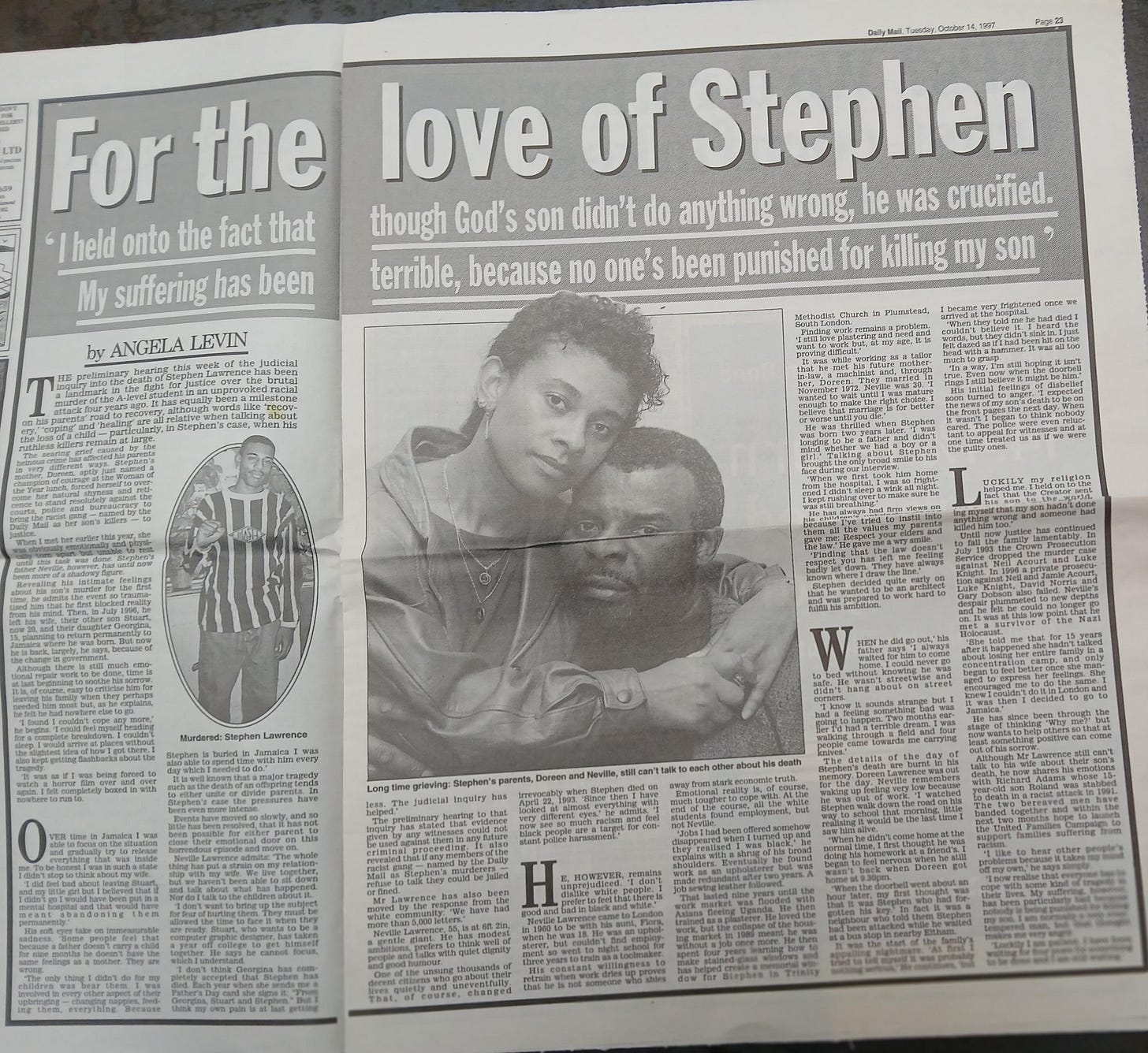
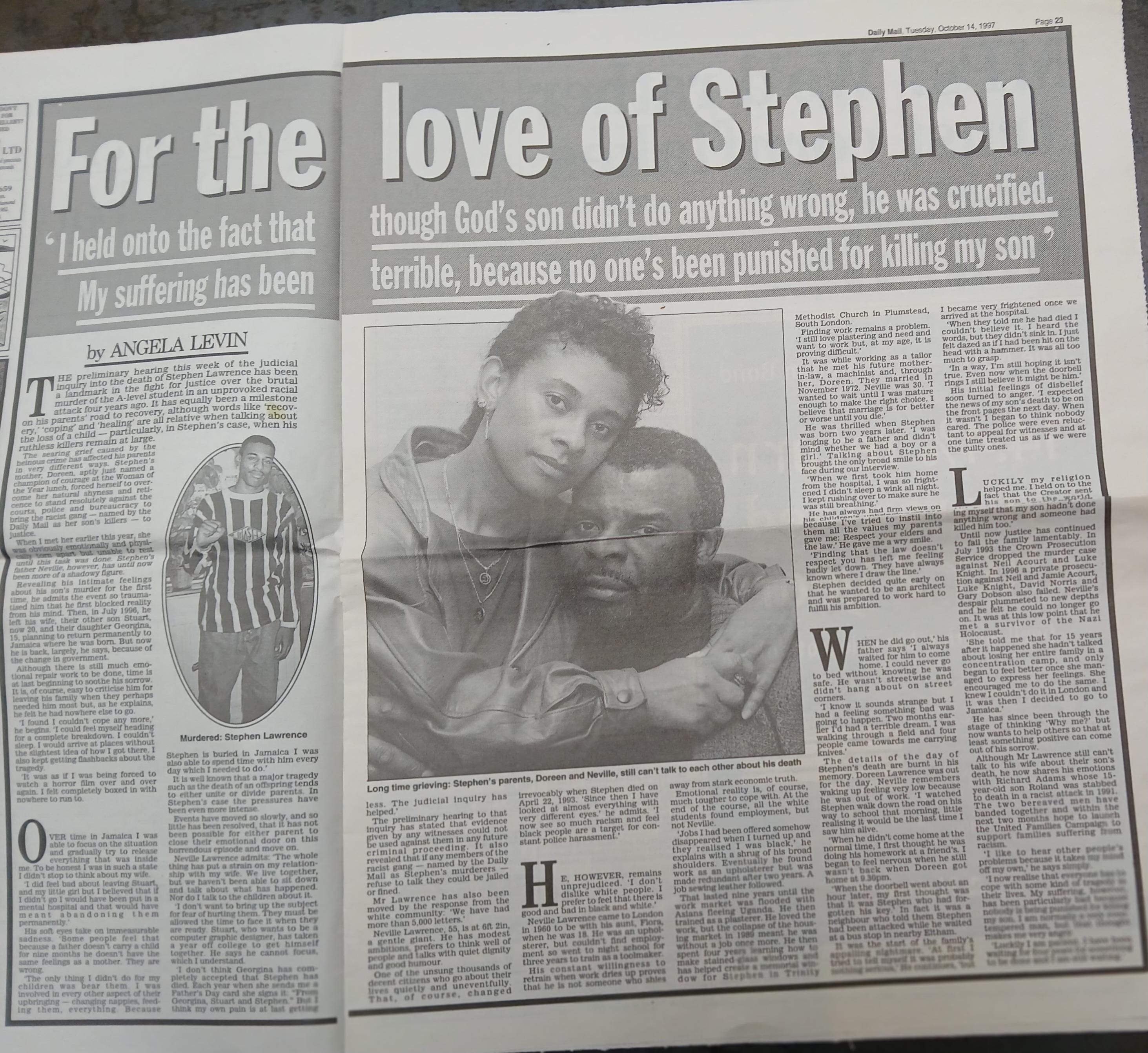
Traumatised: My Mail interview with Neville Lawrence
In July 1996 he left the family and went back to Jamaica, where he was born. There he could focus on the situation before returning home. He said to me: “Some people feel that because a father doesn’t carry a child for nine months he doesn’t have the same feelings as a mother. They are wrong.
“The whole thing has put a strain on my relationship with my wife. We live together but we haven’t been able to sit down and talk about what has happened.” They divorced in 1999.
In July 1993 the Crown Prosecution Service charged two young men with Stephen’s murder but then dropped the case. Doreen and Neville took out a private prosecution in 1996 but that too fell apart.
In 1997 the Daily Mail placed photographs of five suspects in Stephen’s murder on the front page under the headline “Murderers”. It was one of the riskiest and most daring acts in British journalistic history. I and other journalists were hugely worried in case there would be a massive libel lawsuit, but the Mail’s lawyers believed the case against the suspects was strong enough to proceed and none of the five men ever sued the newspaper for libel.
Doreen was very grateful at the time and wrote a thank you piece for the Daily Mail on 13 February 2017. She wrote: “It was a proud moment for me: a national daily newspaper had the courage to put on its front page what others were too frightened to do. That front page made a lasting impression on our struggle for justice. It made everyone in Britain listen to us and support our fight.
“I will be forever indebted to those that made the difficult decision to put the murderers of my son on the front page of their newspaper.”
The Mail’s bold action brought results. The Metropolitan Police reopened their investigation and eventually two men, Gary Dobson and David Norris, were convicted of Stephen’s murder and sentenced to life imprisonment.
Doreen’s attitude changed when Prince Harry texted her in January 2022 to tell her that he had found evidence suggesting she was a victim of illegal surveillance by the Mail. He wanted to tell her as he felt she “would want to know” that she had allegedly been spied on. As his legal team investigated for his case against the Mail her name “kept cropping up”, he said.
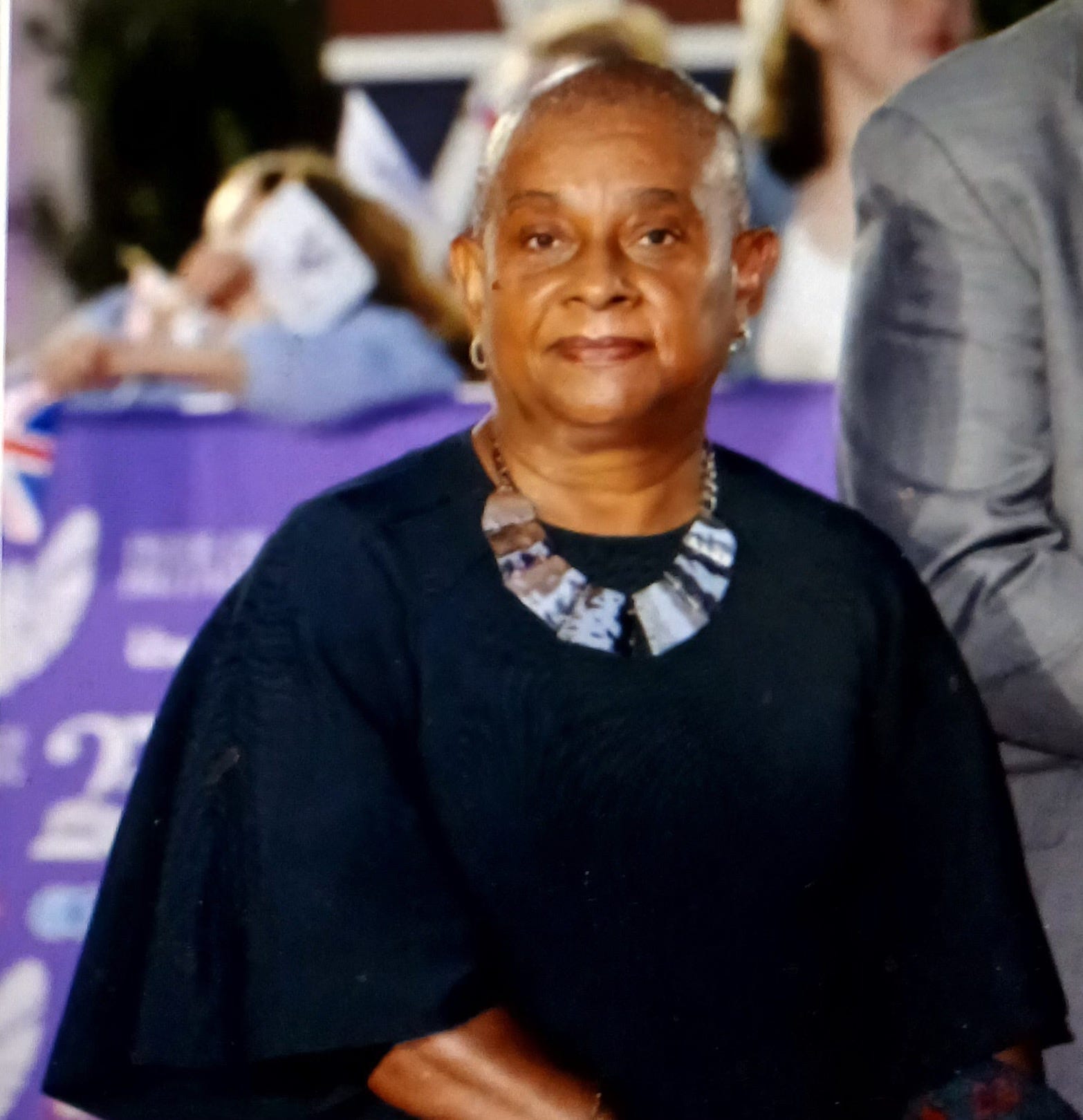
Changing sides: Doreen Lawrence
This information persuaded her to join the legal action against Associated, despite all the help the Mail had given her in the past. We will soon know if that was a wise decision.
Despite Harry’s apparent confidence in his case, cracks have started to appear in it. Gavin Burrows, one of the private investigators on Harry’s side, has since recanted his evidence and alleged that his signature on a key witness statement saying he bugged cars was forged. He believes there has been a blatant attempt to intimidate him on the eve of the trial.
According to the Telegraph, Mr Burrows has told the court that a witness statement dated August 2021, in which he appeared to admit targeting “a large number of private individuals” over a number of years, including Prince Harry and Sir Elton, by hacking phones and bugging cars, was “prepared by others without my knowledge.”
This court case may be Harry’s last in his campaign against British newspapers, but it won’t be his easiest.

Comments
Nothing yet. Say the first thing.
Sign in to join the conversation.