
If we’ve learned anything from our Craft Club events on Nantucket this past month, it’s that there’s some kind of magic to crafting there. The cultural roots run deep, and are mostly preserved by the women of the island who passed these traditions down through generations. Part of what we want to do with The Craft Club is tell these stories and spotlight these incredible artists. So below, hear from five expert members of The Club, who are helping keep historic crafts alive on Nantucket…
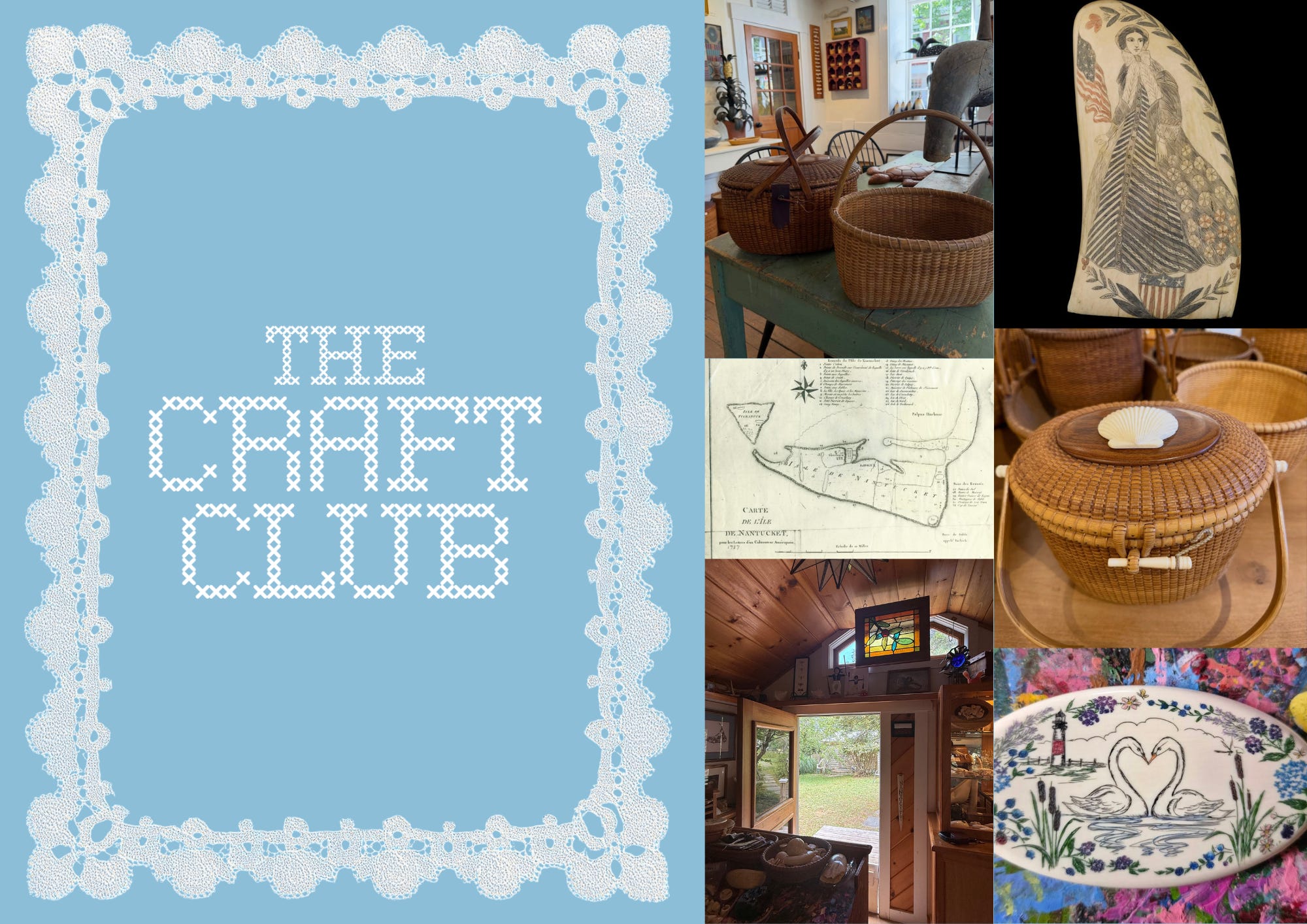
MARY LECOURSIER
Director of Heritage Craft at The Nantucket Historical Association
VB: As the heritage craft director at the NHA, there’s probably no one better to ask about the history of crafting on Nantucket. What can you tell us about it?
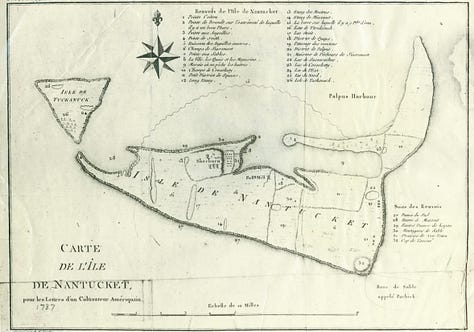
Artisan craft has been part of the culture and the commerce of the island forever. When you think about Nantucket and dig into the history of these practices, a lot of things happened here first, because they had to. Before we had a tourist trade, people had to make what they needed, especially women, because the men were off on ships. There’s some very popular, visible crafts like basketmaking and scrimshaw—carving materials like ivory—but another really important one is needlework. The culture of crafting here is always evolving, and it’s really nice to see it be reborn with a new generation of interest.
VB: Tell us about the work you do with the NHA.
We create an avenue for these practices to continue. The heritage craft program started in 2006 with just a handful of needlepoint and painting classes and it’s grown over the years. We keep adding things like silversmithing and bronzecasting, needle arts, paper marbling, and basketmaking. It’s a place where people can come to learn from others, take things back to their own practice, and just enjoy the process. People are realizing the importance of doing a practice of any kind—you don’t have to be an artist to benefit from any of these things. So we’re making a lot of this accessible as best we can.
VB: Why do you think crafting is having such a moment right now?
Crafting creates community. People come together in many of these situations, and they learn from each other. It’s also really good for people’s health. They’ve proven that over and over again—not just your mental health, but your physical being.
There’s something about the act of creating that’s not only satisfying, but has a healing property to it.
“When you train anyone to do this, the world is their choice, they can do whatever they want.” - Mary
VB: Why is it so important to preserve these crafts for future generations?
We need to preserve these techniques because a lot of them are going away. It’s like a secret handshake—a lot of the things that make a difference are never written down. Unless you’re working with someone who’s been doing it for a long time, you would never know. You have to surround yourself with those people. And it’s very important to train. We have a crop of kids from our high school that have been weaving with us for a number of years. They might not become basketweavers, but they are learning how to create. That unlocks the ability for you to do anything in your life because you’ve made something out of nothing. When you train anyone to do this, the world is their choice, they can do whatever they want.
JOHN SYLVIA
Third Generation Owner of Four Winds Craft Guild & Sylvia Antiques
VB: Can you tell us the story of your family business?
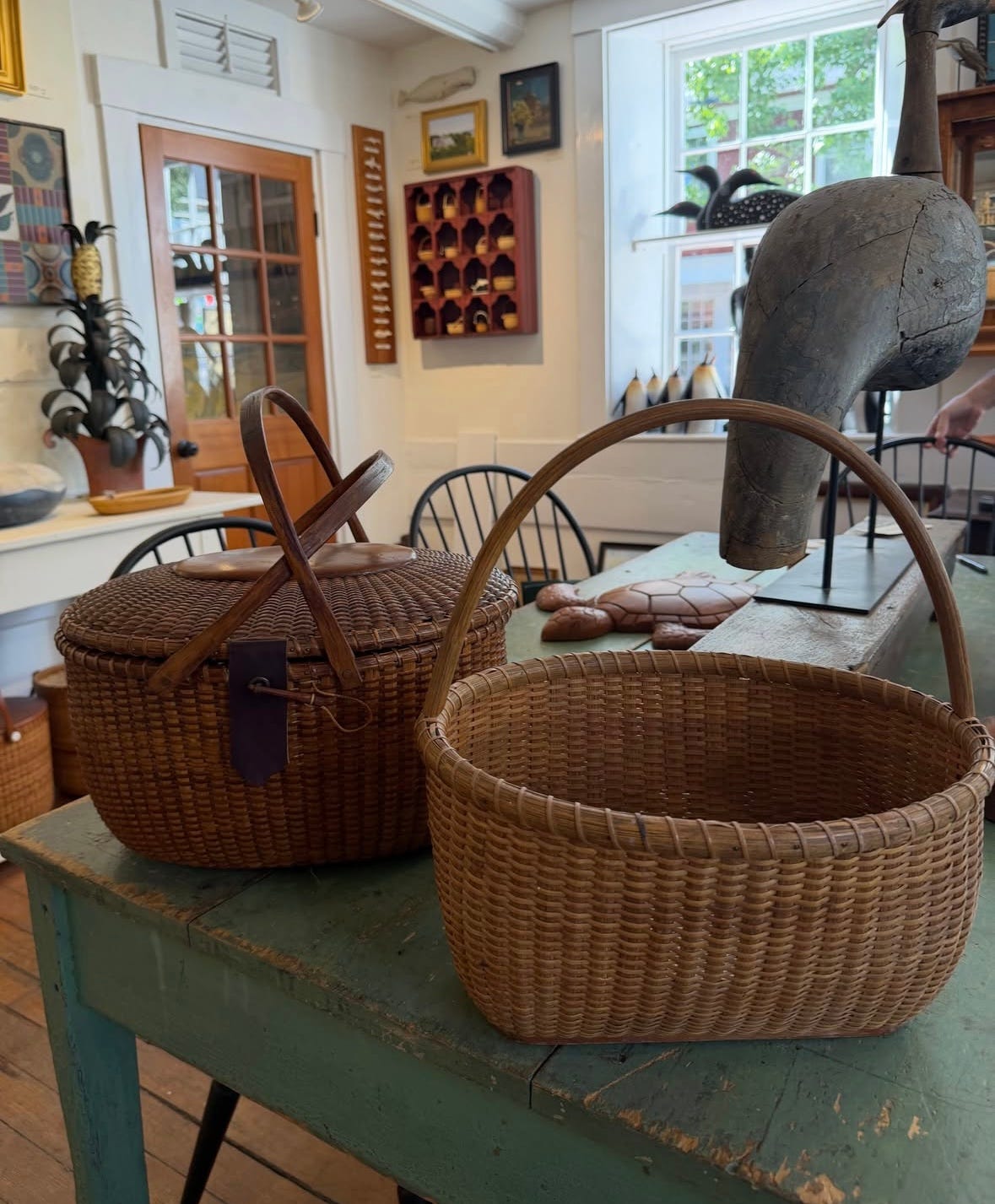
My grandfather started Sylvia Antiques in 1927. Then my dad got into the business, and he bought the Four Winds Craft Guild in the early ’80s from Morgan Levine, who opened it in 1948 as a place to sell the work of basketmakers, carvers, and scrimshanders. I merged the two 25 years ago. I represent about 40 artists, and I’m always looking for people who just do it right, who do it the old way. The whole point for me is telling the stories behind these crafts. Handmade items are hard to buy online. Seeing the piece, feeling the piece, learning about it, it’s just something different.
VB: What’s the story of baskets on Nantucket, and what makes them different from your typical basket?
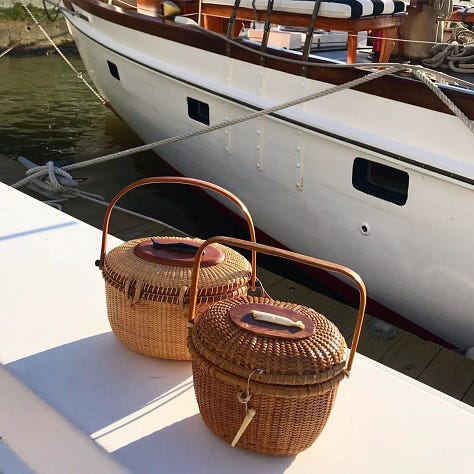
In the 1840s, when you went to the store, there weren’t any brown paper bags or plastic bags—you needed a market basket. So no matter where you lived in this country, there were basketmakers. The deal with the Nantucket basket is that, because of all the whaling, there were a lot of coopers here making barrels. If you look at the cask of a barrel and then you look at a basket, you see the similarities. They both have a wooden bar and a stave attached to a wooden bottom. Most typical baskets are made with woven bottoms and after a while, they’d break. When tourism started picking up here in the later part of the 19th century, people would look at these Nantucket baskets and say they hadn’t seen anything like them before. So they started being sold in stores, and the ones you wanted were made on the lightship.
“If you see a local piece of art—no matter what it is—support it. Even if you don’t buy it, talk to the person, tell them how great it is. It’s all about having conversations and engaging.” - John
VB: So that’s where the name Lightship Basket comes from?
The story is that they started making these baskets on the lightships, which were basically floating lighthouses, because they were so damn bored—and there’s truth to that. These baskets take 20 times longer to make than a typical split basket, and on the lightship they had all this time to do that.
VB: What do you think we could all be doing to help preserve these crafts?
They’re getting lost, and it’s not a good thing. We have to appreciate the history and dive into it. If you see a local piece of art—no matter what it is—support it. Even if you don’t buy it, talk to the person, tell them how great it is. It’s all about having conversations and engaging.
NAP PLANK
Nantucket Lightship Basketmaker for 40+ Years
VB: How did you get into basketmaking?
I’ve always liked to do things with my hands, one way or another. When I got down here on the island in 1982, my brother had been working at the Chicken Box with Alan Reed. I got to know him fairly well, and vaguely knew that he made lightship baskets. He was renovating his house, and he set up his basement with a few tools and just said, “All right, we’re done with the house. I think I’ll make a basket.”
I was like, “Oh, you might as well show me how to make one of those.” We thought it was fun, and decided to start a business making baskets, instructing people, selling materials, all that. It was a hobby, an art practice, that I could make a living at.
VB: What do you think makes these baskets such a meaningful craft?
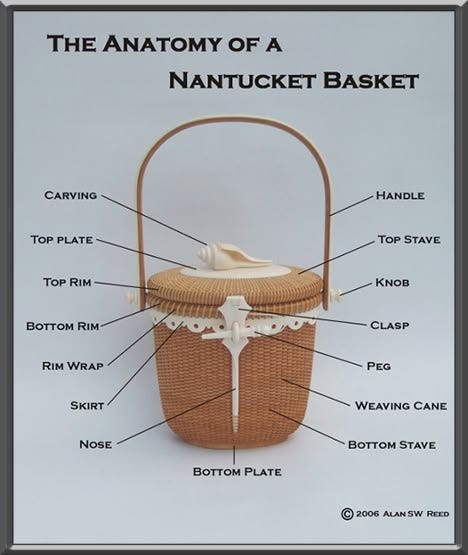
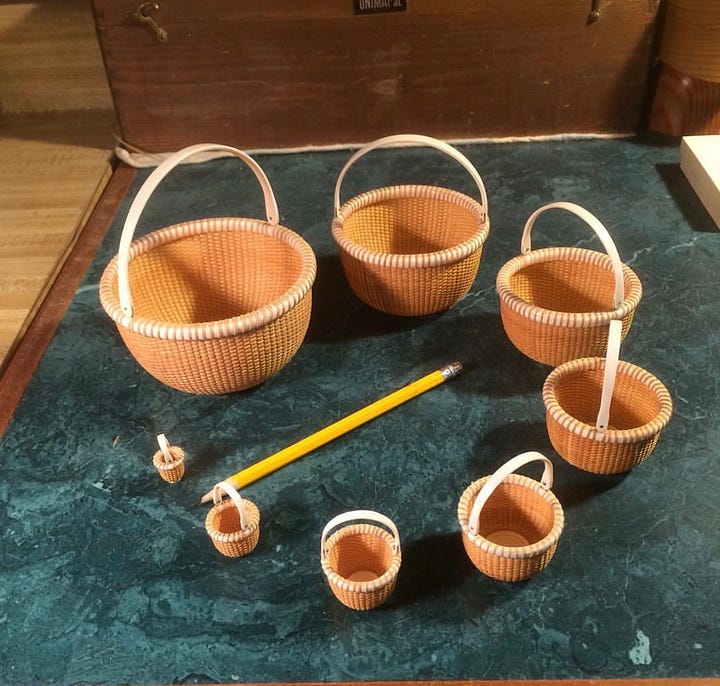
A lightship basket has a lot of somebody’s time put into it. I can weave the bottom in about four to six hours, but then bending oak rims, the top and all that, could easily take a week’s worth of eight-hour days. People call the baskets art. I think of them as more of a craft, but the care that goes into them is the expression. I believe care alone is an art, in and of itself.
VB: Why do you think there’s such a rich culture of crafting on Nantucket?
At least when I moved here, the winter was still an extra quiet time. I remember looking around and in almost everybody’s living room, you would see women hooking rugs. The time became available in the middle of the winter for people to work on their craft, from hooking rugs to basketmaking to painting on canvas to sculpture. The atmosphere was enough to draw people who knew what they were doing. The information was right here already.
“People call the baskets art. I think of them as more of a craft, but the care that goes into them is the expression. I believe care alone is an art, in and of itself.” - Nap
VB: What advice do you give to students who you’re teaching basketweaving to?
I just tell them, “Take a deep breath, and let’s do this. It’s not supposed to be fast.” Then it’s just about watching and making sure that you’re doing it right. But that can vary, there isn’t necessarily just one way.
LEE ANN PAPALE
The Last Native Nantucket “Scrimshantress”
VB: How did you come to do scrimshaw, and what makes the practice meaningful for you?
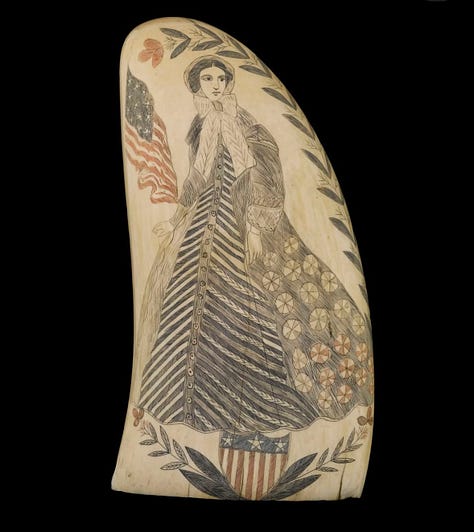
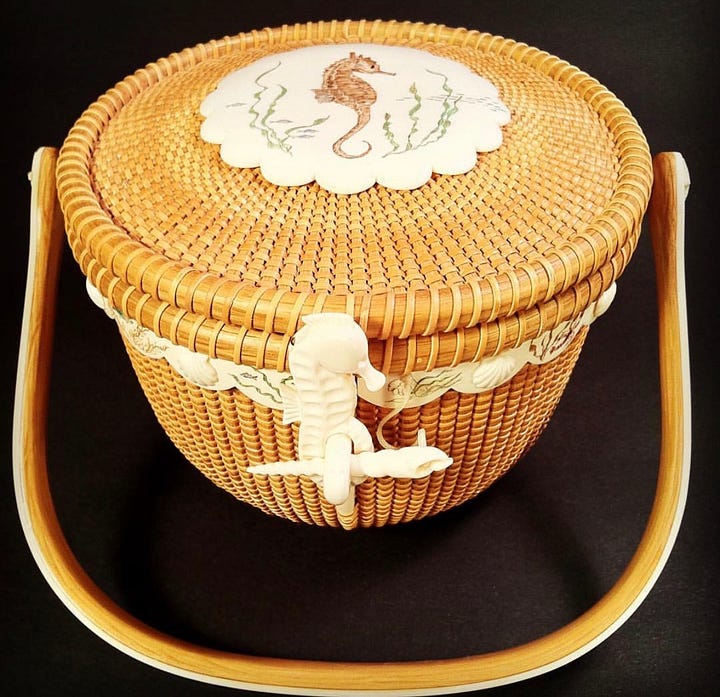
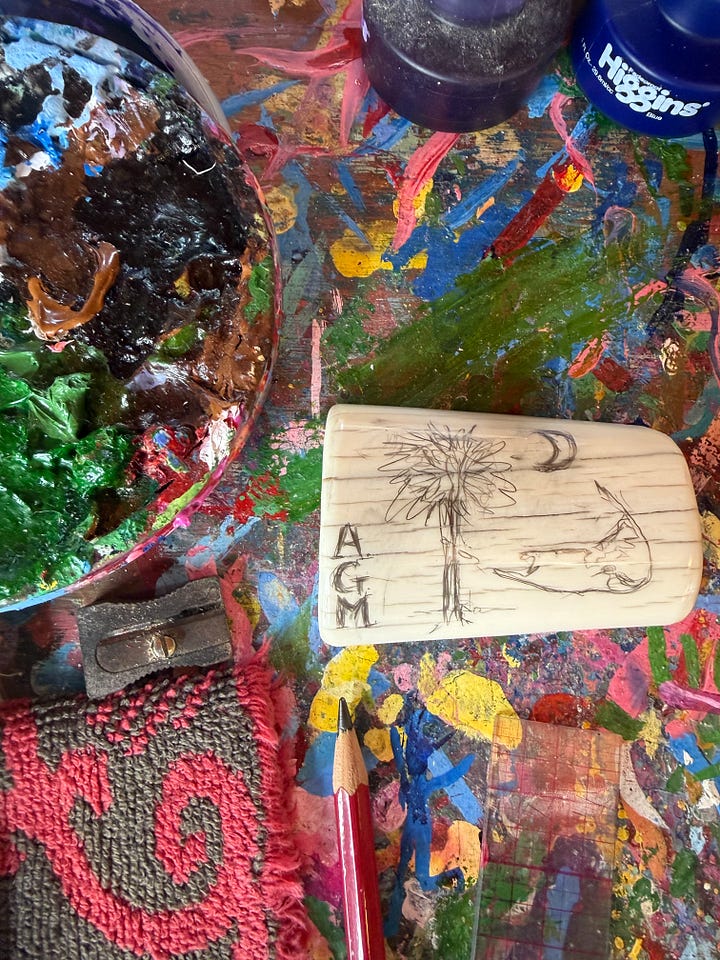
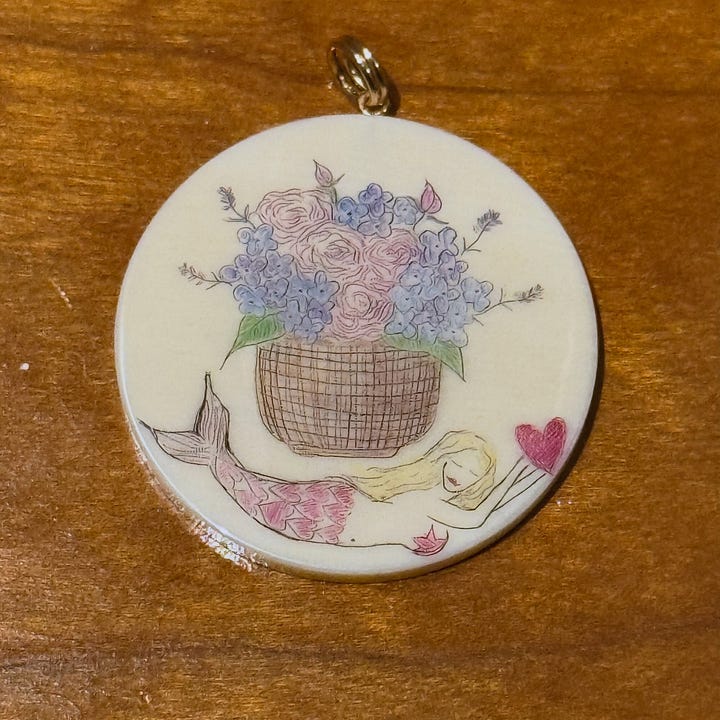
I was born on Nantucket and grew up in a family of crafting people. I’ve been doing scrimshaw for fifty years and I have a little studio out in Miacomet. Most of the work that I do is etching ivories on the top of lightship baskets. It’s a gift that you can keep forever, that you’ll pass on to your daughter, to your granddaughter. I am the last Nantucket native who does what I do. But I have an apprentice this summer, a young woman who just loves everything about scrimshaw and Nantucket. I’m more than willing to teach the youth of this town, and hopefully pass it forward before I stop.
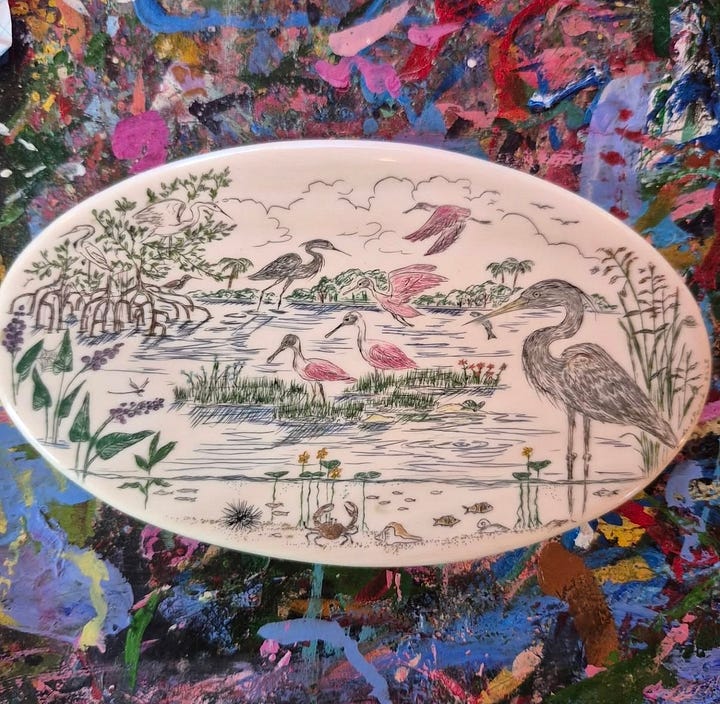
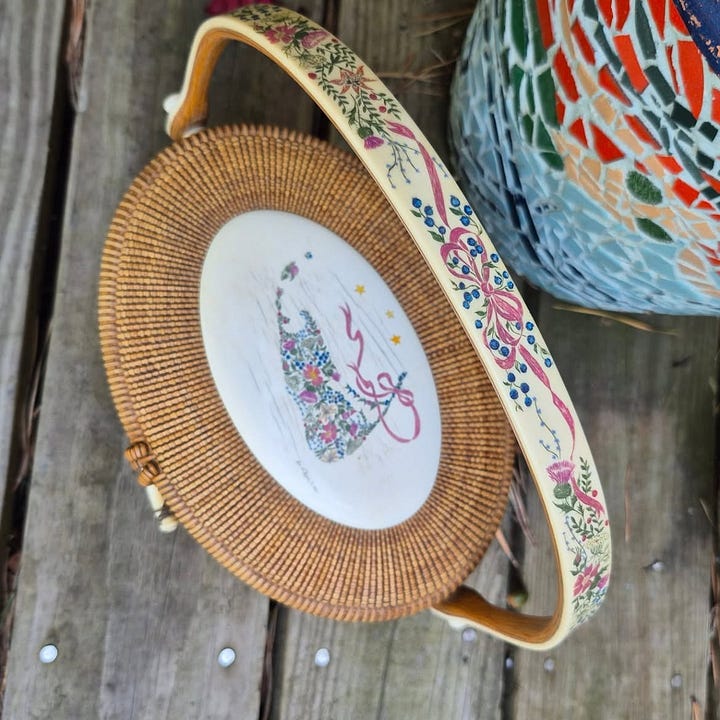
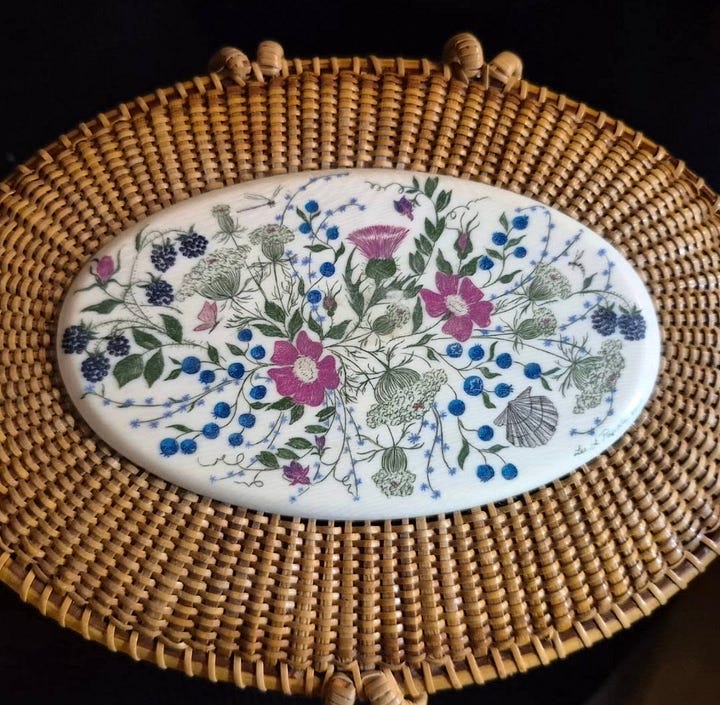
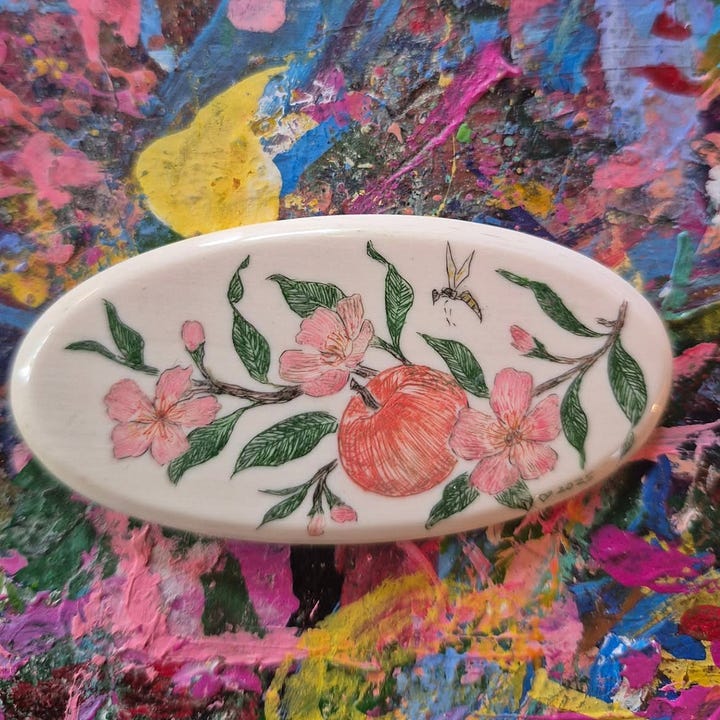
VB: What is the history of scrimshaw on Nantucket?
The history of scrimshaw on Nantucket, and really all over the world, starts with whaling. The whalers traveled all over the ocean, so wherever whalers went, there went scrimshaw. They were at sea for years at a time, and the only thing they had to work with was the bones and teeth from whales. They would etch into them with knives, net tools, anything with a sharp point. Then they would take the soot that was on the oil lamps—we call that lamp black—wipe it in the scratches, and then wipe it off. The soot would stay in those scratches, and that’s the birth of scrimshaw right there.
“In the old dictionaries, scrimshaw was called ‘time wasting.’ So if you were doing scrimshaw, you probably weren’t doing what you were supposed to do.” - Lee Ann
VB: Where do the terms “scrimshaw” and “scrimshander” come from?
In the old dictionaries, scrimshaw was called “time wasting.” So if you were doing scrimshaw, you probably weren’t doing what you were supposed to do. I don’t like “scrimshander”—it’s a modern term, and it sounds so male. I’m a scrimshaw artist. If you have to call me something, call me the “Scrimshantress.” I like that best of all, but I made that up.
VB: Why do you think there are such strong ties to crafting on Nantucket?
Everybody I knew was a crafter growing up. Everything was about what we did with our hands, and that really comes from the women on the island. They were left on Nantucket for years, and they ran everything and had to learn how to make things. Nantucket natives are outrageously independent. We didn’t have much of a choice. I’m part of Nantucket’s living history. I’m doing what my ancestors did, and I’m doing it exactly the same way. It’s a dying art, so we really want to keep what I’m doing in the forefront.
KATIE MICHELS
Scrimshaw Apprentice of Lee Ann Papale
VB: So, how did you come to be Lee Ann’s scrimshaw apprentice?
I have been coming to Nantucket in the summers my whole life. I remember being nine years old doing a class in the basement of the Whaling Museum where we learned the art of scrimshaw on PVC pipe. I’m 30 now, and being able to work with Lee Ann as her apprentice has been this really cool full circle moment for me. I bought a Nantucket basket last summer to have for my wedding, and my mom said we should go see if Lee Ann is still doing scrimshaw. When I met her, we just immediately hit it off. I’m a huge proponent of intergenerational friendships. I took private classes with her that summer, and then she invited me to be her apprentice this year. Now, I get the privilege of having access to her studio and her wealth of knowledge.
VB: What was it like growing up coming to Nantucket and discovering all of these crafts?
When you grow up coming to Nantucket, there’s all these little magical things that we would do. We would get ice cream at the Juice Bar and sit and eat it outside the Whaling Museum. Then, we would go inside and see all the examples of traditional scrimshaw. That’s where I was exposed to the historical context. My mom has always had this interest in the crafts and traditions here, and wanted to expose my brother and me to them. We participated in a lot of different craft camps and experiences through the NHA as kids. And we also just loved shopping around in town, finding cool stuff at Craftmasters.
“In the age of AI, where art can be made by typing a prompt, pulling from experts and being able to ask questions and get responses from a human being is so important.“ - Katie
VB: What’s it like working in Leanne’s studio in Miacomet?
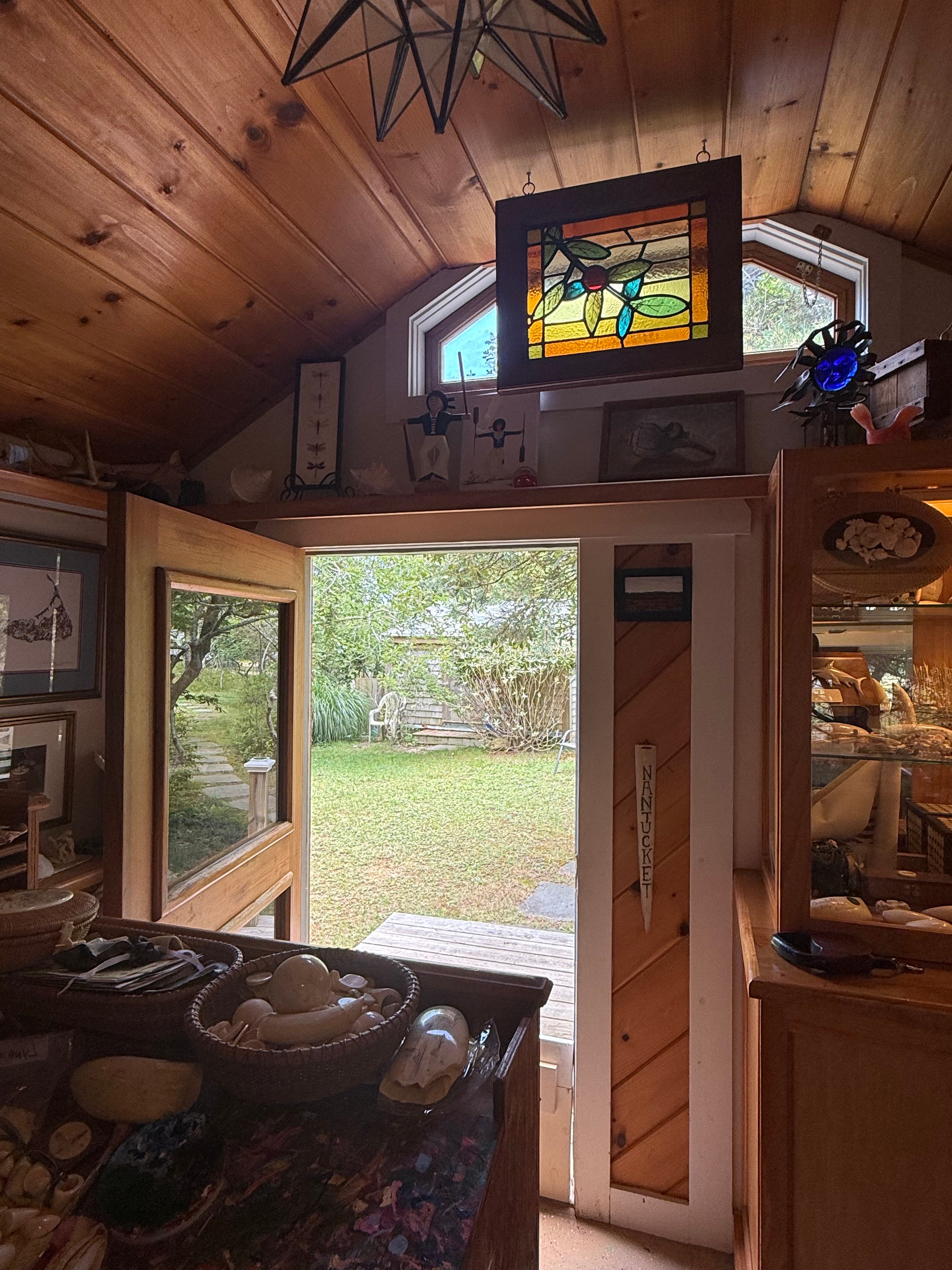
It feels like a dream. You walk through her garden to get to the studio, and there’s native species everywhere. I made a piece for my mom that has lavender in it, and I got to pick lavender out of the garden to color match. Different people stop in throughout the day, bringing old pieces—these pieces of history, basically—that need to be repaired or polished. There’s a little wall unit air conditioner, but we just keep the door open and let the breeze come through. We’ll take breaks throughout the day to feed the fish at her koi pond or look at the flowers. It’s very loosely structured. It just feels like you’re hanging out and getting to enjoy nature and the feeling of old Nantucket.
VB: What does it mean to you to be carrying on this tradition of scrimshaw?
In the age of AI, where art can be made by typing a prompt, pulling from experts and being able to ask questions and get responses from a human being is so important. Lee Ann can link her family back to Captain Chase on the old ships, and hearing about her family history from working together has been so incredible. And we actually have an event coming up on August 5th at Children’s Beach, where we are doing live scrimshaw demonstrations for kids. I’m really excited to have more people be aware of what we’re doing and how we’re continuing to educate others.
No posts
Comments
Nothing yet. Say the first thing.
Sign in to join the conversation.