
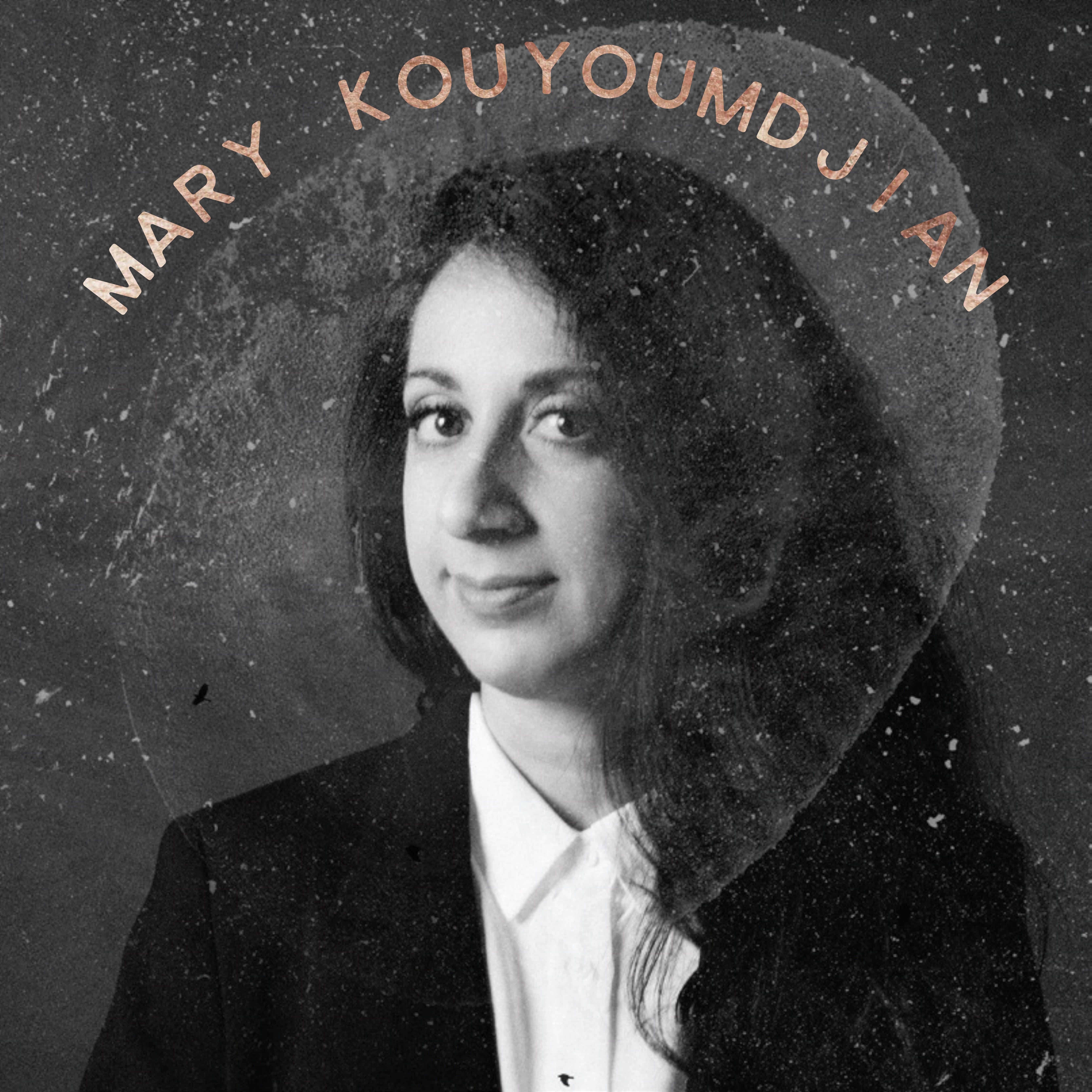
Last year, Mary Kouyoumdjian put out Witness, a “shattering, sonic documentary that takes on the Lebanese Civil War and the Armenian Genocide through words and music.” Collaborating with the Kronos Quartet, Kouyoumdjian combined music with narration from those who had actually experienced some of history’s horrors.
Now, with the release of Paper Pianos (Cantaloupe), in a live recording by Alarm Will Sound conducted by Alan Pierson, it’s ever more apparent what a master of this unusual form she is. This time, Kouyoumdjian’s subject is refugees, and through her extraordinary music she gives dignity and expressive impact to the interviews threaded throughout the evening-length work, which also featured staging by South African-American director and writer Nigel Maister. Produced by Kouyoumdjian with Gavin Chuck, the sound mix deserves special kudos for the way it allows the listener to move the voices from the foreground to the background in order to concentrate on the music.
The fact that I was thinking about the way Brian Eno and David Byrne used voices on My Life In The Bush Of Ghosts does nothing to diminish the very real stories Kouyoumdjian collected for Paper Pianos. But ever the consummate artist, she wanted to ensure that this would be a work people could listen to time and time again. Unlike an audiobook or spoken-word piece, the refugees’ stories gain power from the way they emerge and become clearer with each hearing.
The work really demands to be listened to as a whole, but if you want to dip in, start with the fifth movement, Flight, which weaves a wordless chorus, searching piano chords, mournful strings and reeds, and ghostly electronics around the voices of several refugees, including the remarkable Akil Aljaysh, who survived imprisonment and torture in Iraq to settle in Rochester, NY, where now greets other refugees with “Welcome Home. You been arrived.”
I’ve been told that long ago someone said “Love thy neighbor as thyself.” When a refugee flees their homeland, they effectively become a new neighbor and should be treated as such. After all, as Gordon Lightfoot sang, “The house you live in will never fall down/If you pity the stranger who stands at your gate.” While I don’t love the word “pity,” I think we can understand what Lightfoot was getting at. Artists like Kouyoumdjian and her collaborators are not only putting great art into the world, but also ensuring that the house we live in, though it may creak, sway, and show signs of crumbling, will never fall down.
Listen to most of the Songs For Friday here or below.
Rowena Wise - Bad Things Feel Good* (Beloved) There’s a distinctive physicality and clarity to the sounds Wise and her producer, Rob Muinos, have reproduced on this gorgeous album of dynamic yet introspective indie-folk-rock. When she strums an acoustic guitar, for example, it feels like every string is present and observable in the musical landscape. With Richard Bradbeer on bass and Jess Ellwood on drums providing a steady pulse, and occasional decorations from Matt Dixon’s pedal steel, the focus of all this sonic curation is Wise’s versatile voice and wide-ranging songs, which more than live up to all the attention. Wise’s melodies sometimes call to mind her fellow Aussie Julia Jacklin (who’s also worked with Muinos), but also Alex Chilton in the dying days of Big Star, or even Kurt Cobain. Add to that lyrics that display a fearless vulnerability (“I don’t feel at home in this world anymore,” she sings in the very first track) and Wise’s second album feels more and more like the arrival of a major talent.
Slow Fiction - dollhouse (tight knit) The road from their first single in 2022 to their debut album has obviously been paved with hard work for this NYC band. The guitars of Joseph Skimmons and Paul Knepple have gained a polish, weight, power, and variety that few bands achieve, and Julia Vassallo’s vocals have grown dynamic and confident. Bassist Ryan Duffin and drummer Akiva Henig hold things down with flair but not flash, pushing each song inexorably forward. Based on that description, you may have guessed that Slow Fiction is connected to the current crop of shoegaze bands, and you would not be wrong—they’re even opening for Swervedriver—but they are more than one thing. The song called Heavy Metal, for example, is a haunting slice of folk-rock, and the album ends with Turning Down Flowers, which draws on the motorik tradition of Krautrock. Not only has Slow Fiction put in the work, but they’re also reaping the benefits of staying together all these years. Now it’s the listeners who are rewarded with this excellent album.
Hana Stretton - tiarn (Self-Released) Not that intent counts for everything when responding to art, but the goals of this sophomore release from an Australian multi-hyphenate seem twofold. One aim is to reproduce the visceral response of wonder caused by natural beauty, such as the ocean. Stretton accomplishes this by creating a sound world that feels as instinctual as it does well-crafted: field recordings, voices that seem to blow in on the wind, and guitars, pianos, and other instruments that are weather-beaten and close-miked, giving them a physical presence. The other aim is to document her reconnection with people after a period of isolation, hence the warm chorus of voices that joins her on Stay Involved and other songs. Then there are the operatic vocals that come in from left field, like they’re spinning off Fitzcarraldo’s gramophone in the jungle, but still fit in perfectly. The music on tiarn is as emotionally resonant as it is unique. Get involved, and you will stay involved.
Various Artists - Tofu: Original Soundtrack (Pleasant Place) As anybody who’s tried it knows, there are an endless number of ways to prepare tofu. One of my favorites is to condense it under a weight for a while, cube it, dust it in cornstarch, and fry until crisp. And then there are about a million things you can do with those golden brown cubes! But there’s probably a lot I don’t know about tofu’s history and cultural significance, which is why I’m eager to see the documentary connected to this kaleidoscopic collection of electronic music. Fittingly, the sonic ground covered here is vast. From the sleek immersion of aus’s Silk and the squelchy sound-art of Tonio Ko’s Curdle Song to twenty eyes’s shimmering Fox Parade and Calum Brown’s playful Harvest Hop, there’s no end to the variety and creativity the ten artists bring to the project. Dig in—there’s sure to be more than one flavor that appeals to you.
Nicola Miller’s Living Things - Spit! (The Watch That Ends The Night) By the time you get to Drummers Are Bad, the final track on this sophomore album by Miller, a Canadian saxophonist and composer, you will be solidly in on the joke. That’s because drummer Nick Fraser’s creativity on the kit, from the way he tunes his drums to never missing an opportunity to hit a witty offbeat, is one of the most distinctive elements of this rangy, loose-limbed album. That’s not to say that the other players—Doug Tielli, trombone; Nicholas D’Amato, bass; and Frank Gratkowski, bass clarinet and saxophone—don’t pull their own weight, because they absolutely do. Tielli’s tone is fat, and his solos can be witty or poetic, while D’Amato is equally adept at running through the changes or delivering a throbbing drone. Gratkowski, who also served as Miller’s mentor, wisely doesn’t take over the show. After all, while Fraser’s brilliant drumming is the heartbeat of the album, it’s Miller’s sharp compositional vision being brought to life.
Sayyod Mirzomurodov and Mariya Akhadjanova - Contemporary Uzbek Music For Clarinet And Piano (Samek)The pieces here are “contemporary” in that they were composed recently. But they are also in a mode that Bartók or even Brahms would likely recognize. That’s not a knock, just an observation. The music is so lovely and, though Uzbekistan is in Central Asia, feels in tune with Eastern European folk-classical traditions in a way that will never go out of date. According to the email from clarinetist Mirzomurov, this is “the first commercial recording devoted entirely to contemporary Uzbek music for clarinet and piano,” which means that it’s long overdue. Who knows what other wonders are hiding away in Uzbekistan?
Note: the graphic above was based on a photograph by Desmond White/Osheen Harruthoonyan.
Comments
Nothing yet. Say the first thing.
Sign in to join the conversation.