
There is a difference between darkness and obscurity.
Darkness is what happens when the lights go out. Obscurity is what happens when the lights are on and you still cannot see what matters.
A camera begins in obscurity. Not metaphorically, literally: a dark chamber, a sealed box, a small opening that lets the world in on strict terms. The outside is too large, too loud, too continuous. So the camera narrows it. It asks the world to enter through one clean wound of light. It makes an image by refusing most of what is available.
Obscura: dim, shadowy, concealed. Also: the room where an image can occur.
The story is supposed to be settled. Assimilated. Historical. Something that already happened. But it isn’t. It keeps moving underground. It keeps asking to be looked at.
So Mark Leong goes back. Not as a sentimental pilgrim. Not as a tourist. As a photographer trained in precision, returning to an ancestral homeland with all the impossible expectations that phrase carries. He returns not to claim anything, but to see what can be seen when you stop insisting on a single version of origin. What is family when it lives on the other side of your language. What is homeland when it is both yours and not yours. What is inheritance when it arrives as fragments, glancingly, in half-light.
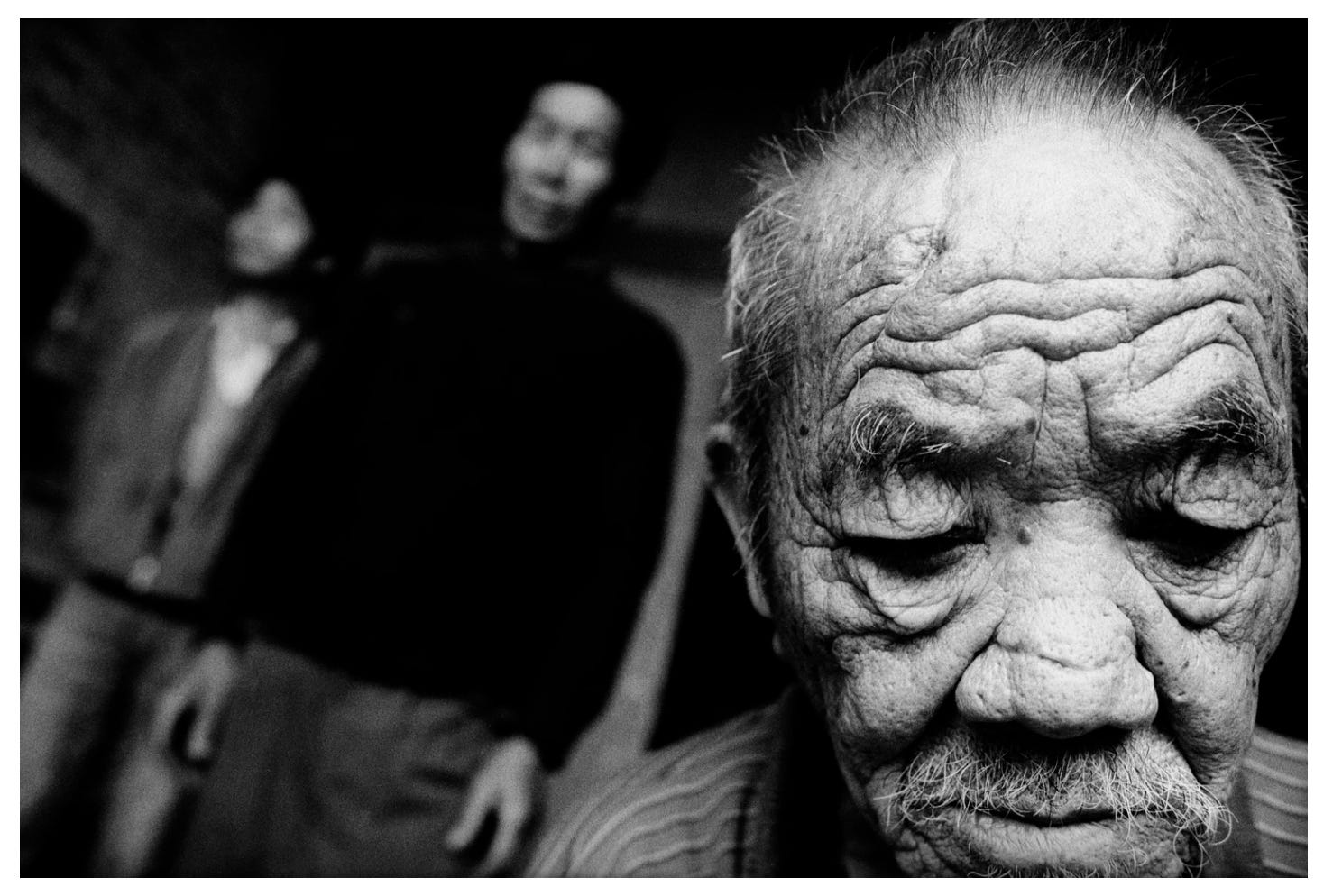
©2026 Mark Leong, from his book China Obscura
It is tempting to make a neat story out of return. Tempting to call it reconciliation, completion, healing. But the better word is contact. The camera does not solve the problem. It gives the problem a surface.
And then there is the other obscurity: the parts of a society that do not announce themselves. The youth underground. The unapproved energies. The lives that happen in basements, back rooms, late hours, coded gestures. The country inside the country. The official story runs above ground, smooth and well lit. The lived story moves differently. It collects in shadow. It survives by not calling attention to itself.
The photographs do not treat those worlds as exotic. They do not flatten them into a headline. They hold them at the distance required for accuracy, which is never the same distance as safety. They refuse to resolve people into a single explanatory sentence. They don’t say, Here is the place. They say, Here is a life negotiating what can be shown and what must be kept.
It matters, too, how the work moves between rooms. There are the bright rooms where images get validated, circulated, stamped as important. But the center of gravity is elsewhere — in the practice itself, in the choices made before an image ever reaches a wall. It is in that first, more private room, where a person chooses what to let in. What to keep out. What to hold long enough that it becomes legible.
Because obscura is not an aesthetic. It is a condition.
The questions that bring a person back to a place like this are not answered by clarity. They are answered, if at all, by attention. By returning. By staying with what is dim and concealed.
It’s like the music underground in those tiny venues. Low ceiling. Bad light. Bodies pressed together. You don’t go for clarity. You go because contact is still possible there.
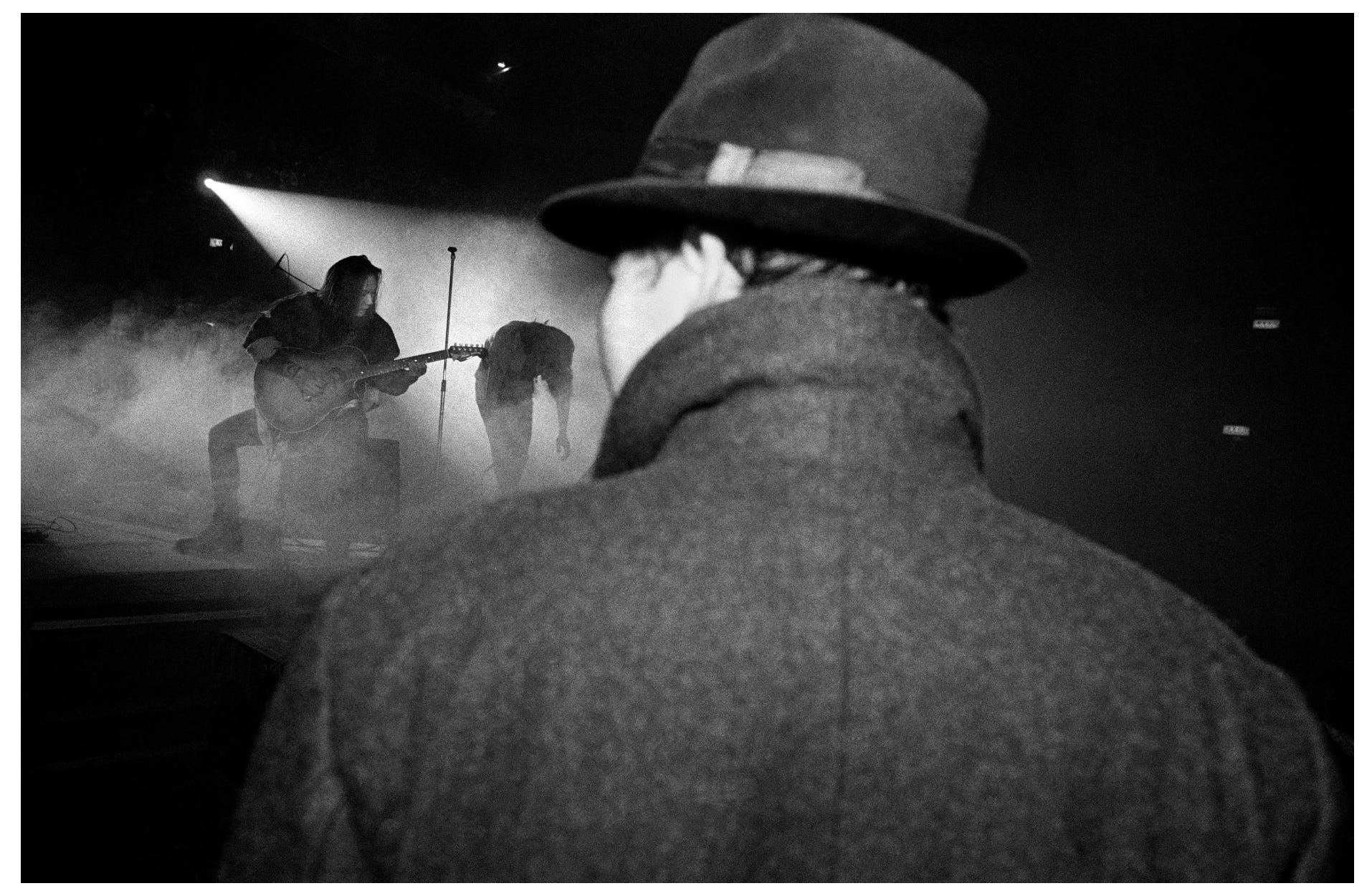
©2026 Mark Leong, from his book China Obscura
A camera obscura does not illuminate the world. It makes a pact with it. I will not take everything. I will take this. I will take it carefully. I will accept the inversion, the strangeness, the fact that what appears on the wall is not the world itself but the world translated into a new kind of truth.
That translation, over and over, is the work.
Not a solution. A way of seeing that stays honest about the darkened room it comes from.
No posts
Comments
Nothing yet. Say the first thing.
Sign in to join the conversation.