
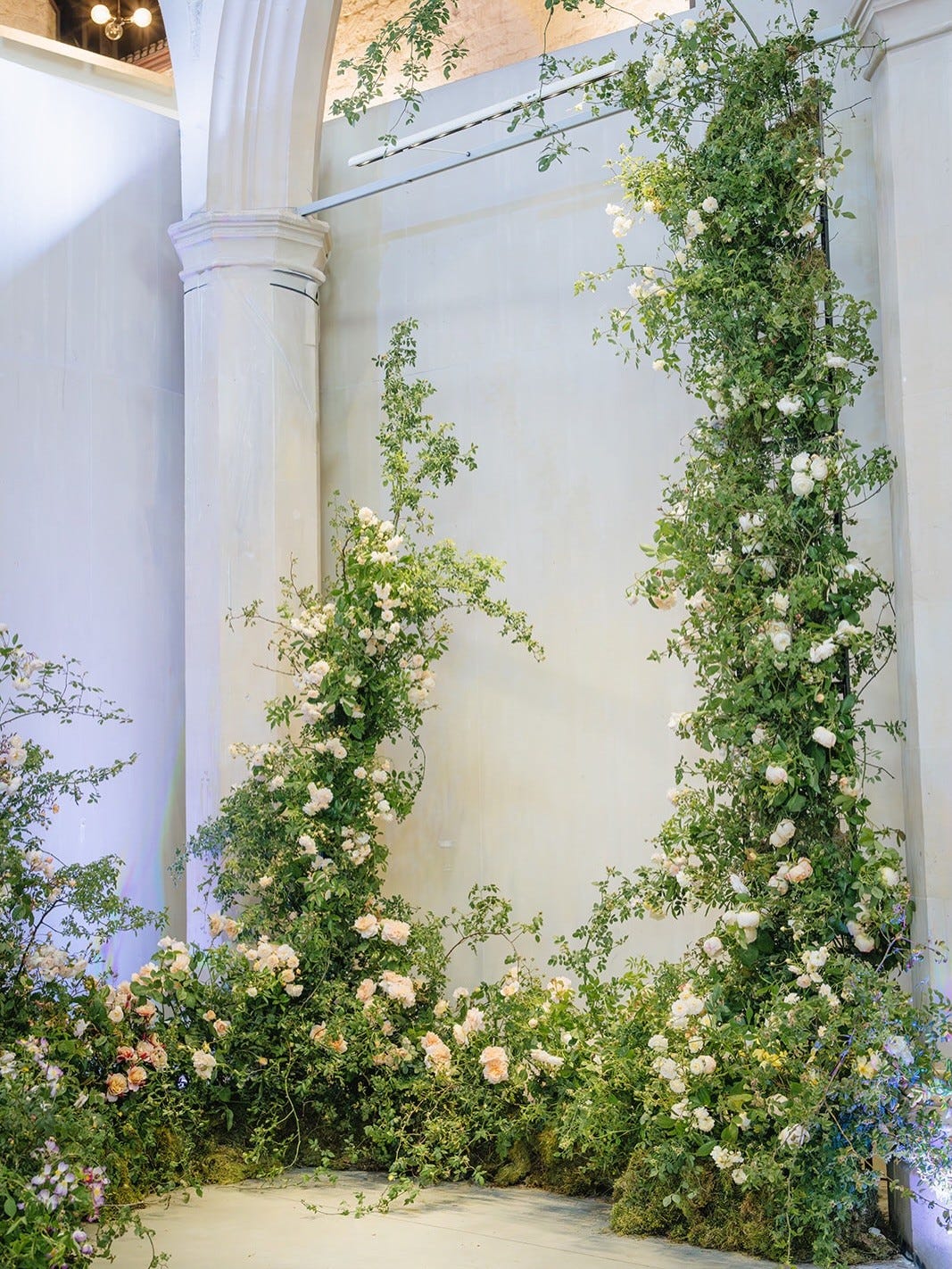
Every June, the Garden Museum in London asks 5 designers to create an installation for British Flowers Week, with the criteria being all the materials need to be grown in the UK, and it has to be made using sustainable mechanics (i.e. no floral foam).
Many a designer I’ve admired has participated in this event, and it feels a little like a rite of passage, knowing that you need to create something that will survive for 5 days, and will be seen not only by the public but by your peers, as a statement as who you are as a designer…no pressure there then! Thrilled to be asked but slightly daunted by the reality of what I’d signed up for, any nerves were quelled when I found out who my fellow designers were - Vervain Studio, Elder and Iris, Cynthia Fan and Nate Moss - all incredibly talented, but most importantly, really lovely and supportive people.
Inspiration
Our brief was Benton End: A Paradise of Paint and Pollen, coinciding with the reopening of Benton End in Suffolk. As I started to explore this wonderful brief and began to research the world of Cedric Morris, I found I was really drawn to his friendship with Vita Sackville-West. During the 1950’s, Sackville-West was a frequent visitor to Benton End (although apparently never staying the night as it was too filthy!), and they traded Morris’ irises for her roses from Sissinghurst, and I loved this plant sharing from two visionaries who prioritised a naturalistic and wild aesthetic, whilst still heavily curating their plant selection. Now, I grow around 65 varieties of roses in my field, and with this installation running in mid June when they would be reaching their zenith, I realised this would be my connection to the brief.
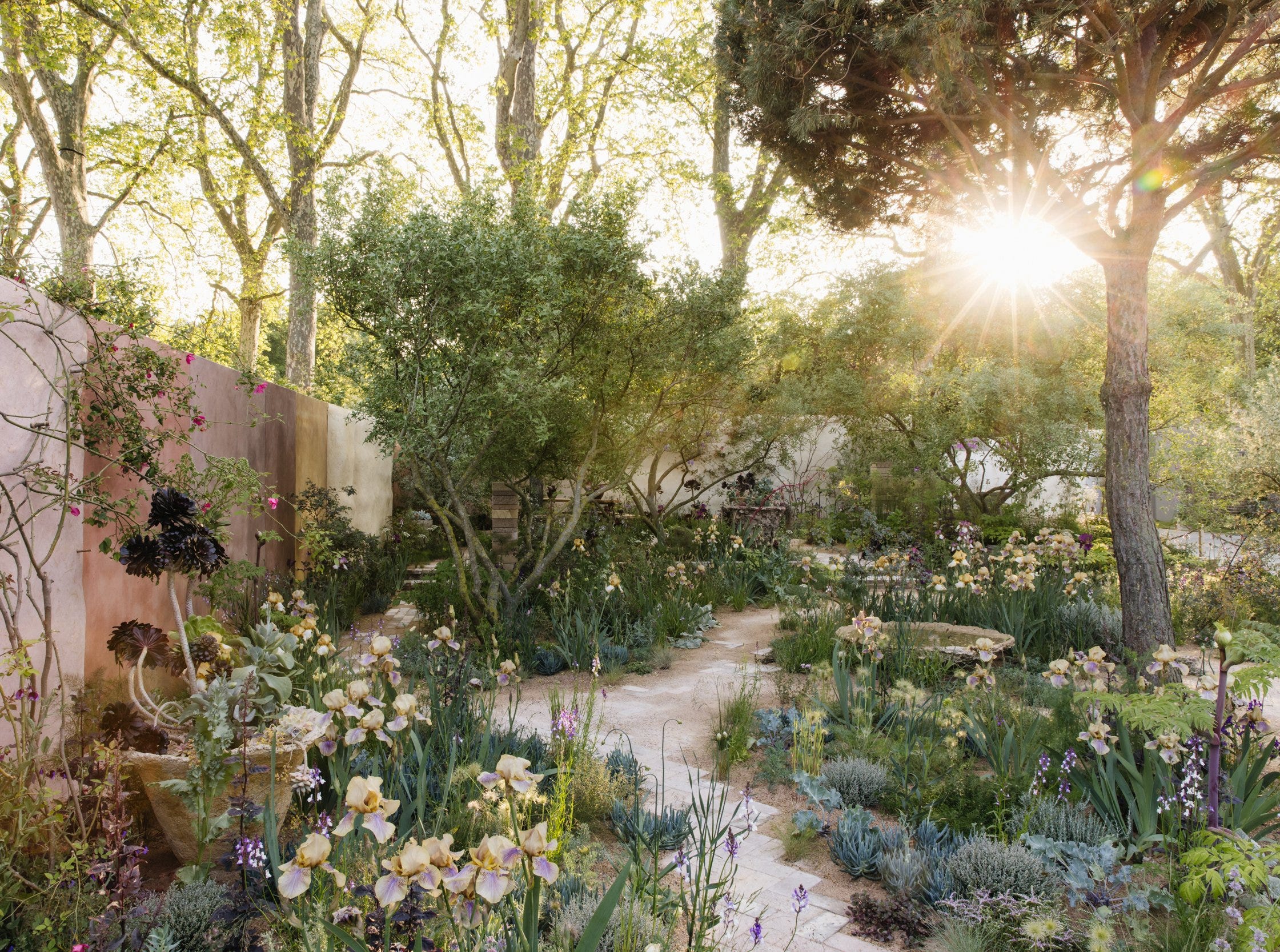
Gardener designer Sarah Price was also someone who’s work I was keen to look at again after being captivated by her gold medal winning garden for Chelsea in 2023, which incidentally was created for a permanent home at Benton End. She describes the joy of using Morris as an inspiration, particularly his use of colour:
‘…taking inspiration from the plants that Cedric Morris bred – the moody grey poppies and irises with colours that are really hard to describe, such as copper, strange off-yellows and grey-purples. It’s really exciting to have that palette to compose with.’
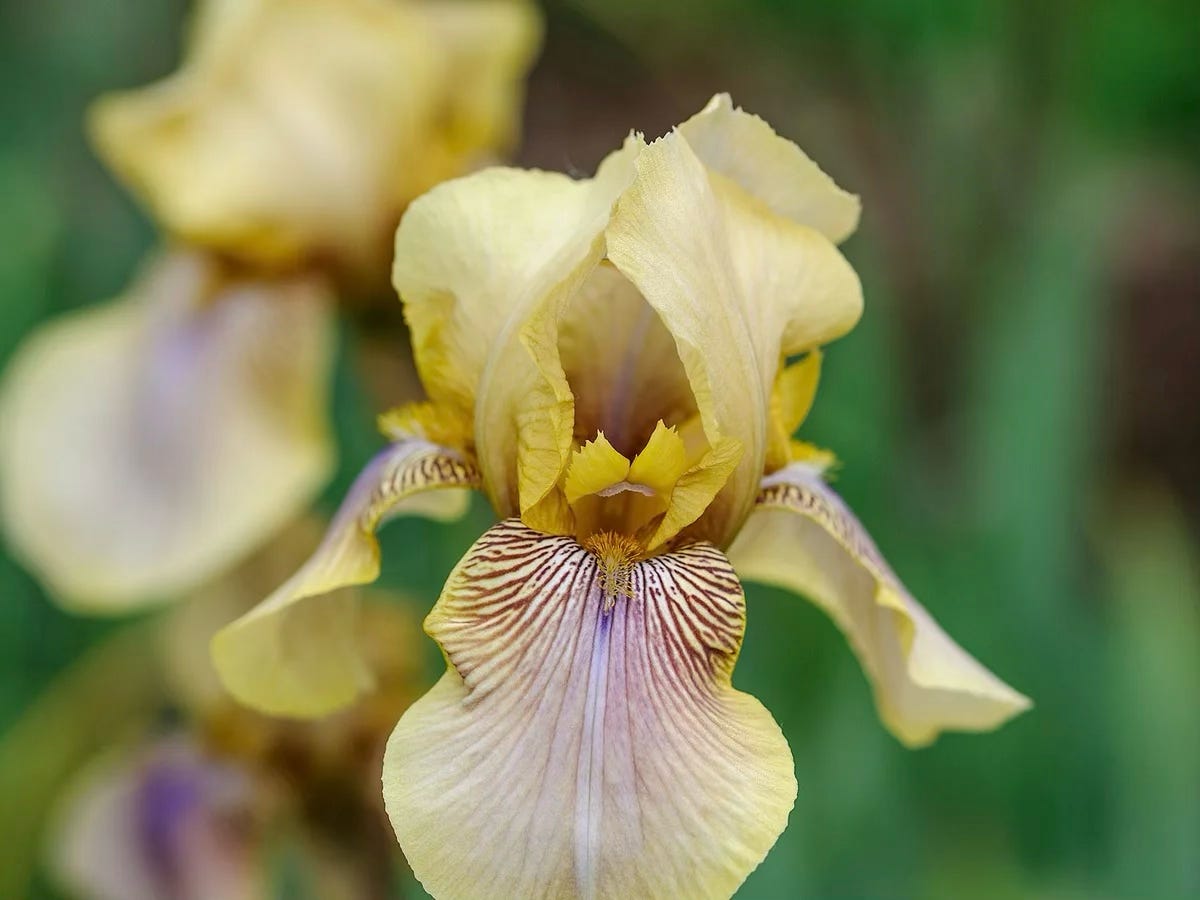
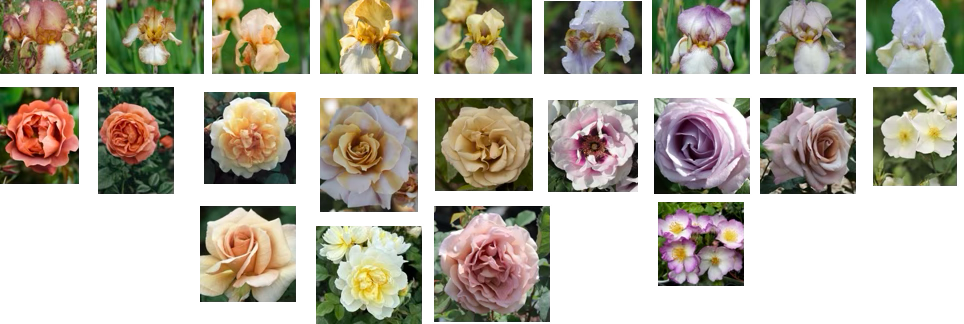
My idea was to take the colours from the Benton irises he’d bred, and match them with their rose counterparts, with some needing at least 3 roses to try and get close to what he’d managed to achieve in his irises. To try and recreate the stunning colours found in the iris Benton Olive (pictured above), you might need to use Colonel Mustard, Honey Dijon and Mokarosa to achieve the same golden, greyed yellow, purple tinged coffee hues.
The final aspect of research I wanted to include was the work of gardener Jenny Barnes, as the patterns she makes when pruning and shaping roses are, for me, complete works of art. Her work felt like a natural inspiration to include in this installation, bringing in her twists, coils and patterns as the framework for the base of my design.
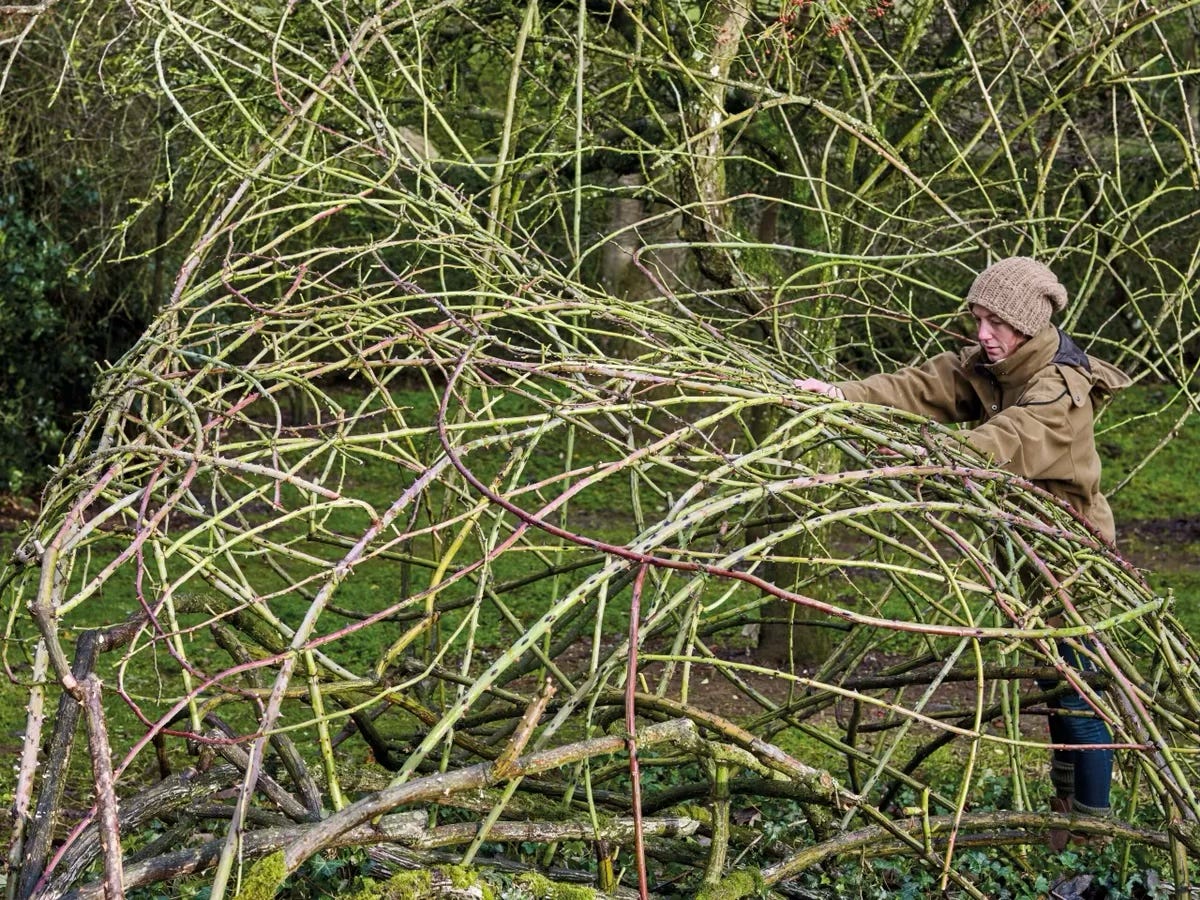
Bringing all this together, my aim was to use my knowledge of shape, sculpture and form whilst lean in to my romantic tendencies, and align it with Cedric’s use of colour and paint found in the roses from the field, and also to feature single and wild roses, both in flower and as foliage to include a nod to pollinators, therefore hitting the brief in a way that felt genuine and connected to me as a designer.
From sketch to reality
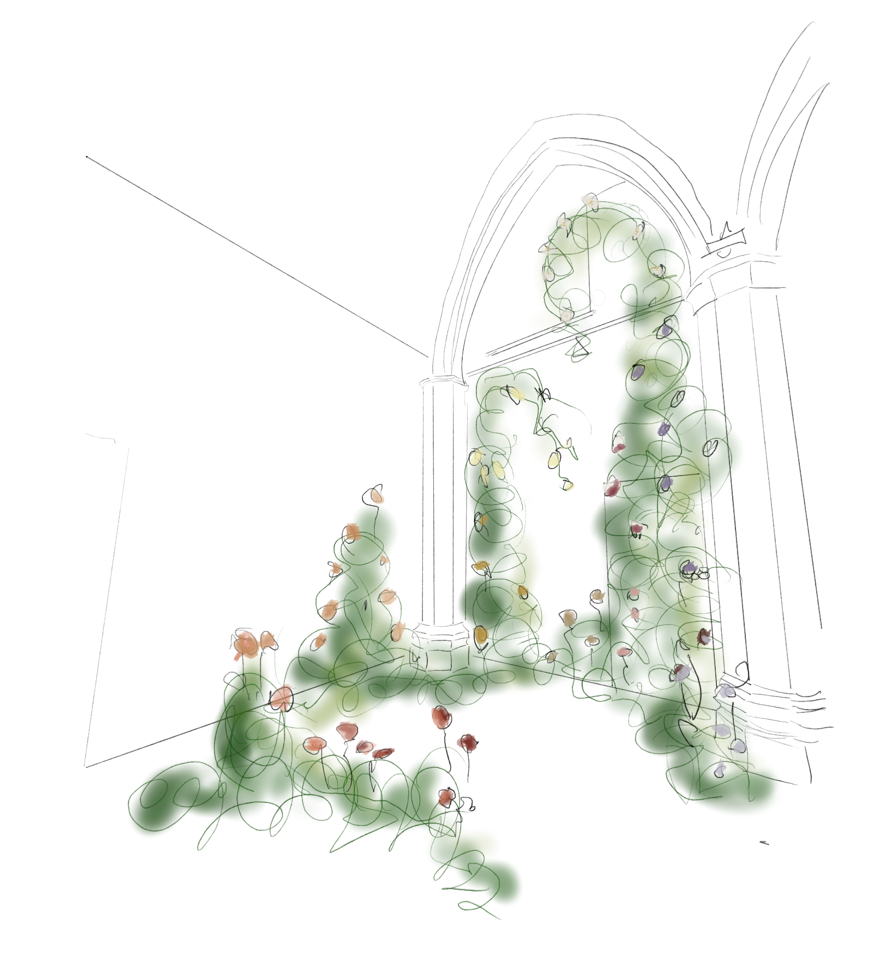
When designing, I like to sketch without any limitations, feeling what I think I might like to create and then stepping back to figure out how to make it after. By just using one material, I knew I’d have the creative capacity to focus on playing with how it sat in the space, and make a sculptural installation with twisted foliage, celebrating colour, shape, form and scent.
Comments
Nothing yet. Say the first thing.
Sign in to join the conversation.