
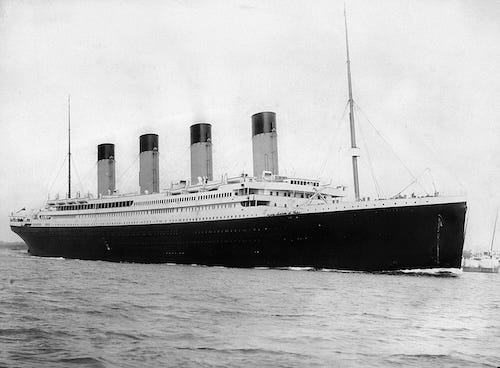
Thirty years ago I rebuilt the Titanic. As co-founder of CyberFlix, an innovative CD-ROM gaming company, I spent one full year of my life with the ship in digital drydock, writing the gameplay for a computer adventure about the sinking, inventing characters, writing dialogue and doing exhaustive research. The Titanic as computer game. Nobody had done anything like it. But we did in 1996. And in a stroke of dumb luck the game shipped right around the time the movie took off.
James Cameron, Jack and Rose, thank you very much.
Recently in Northern Ireland, I wanted to see Titanic Belfast, the museum devoted to the legendary, if ill-fated, liner. It sits smack on the spot where RMS Titanic and her sister ship the RMS Olympic were originally designed, constructed, and launched in the Harland & Wolff shipyard. There’s nothing left of those mighty slipways. Outmoded by innovation and pulverized by neglect they vanished. In their place rises the eight-story museum clad in silver anodized aluminum looking like an assemblage of thrusting ship prows straining in every direction.
But what makes Titanic Belfast remarkable isn’t its architecture, it’s this: The museum’s not about a sinking. It’s a museum about beginnings. And the story unfolds at the site where an enormous explosion of vision, technology and ingenuity came together. Titanic was part of a bright future. Even its name sounded monumental. White Star favored names ending in "-ic," Oceanic. Titanic. Britannic—words seemingly carved in marble rather than painted on steel. They sounded less like ships than declarations of supreme assurance.
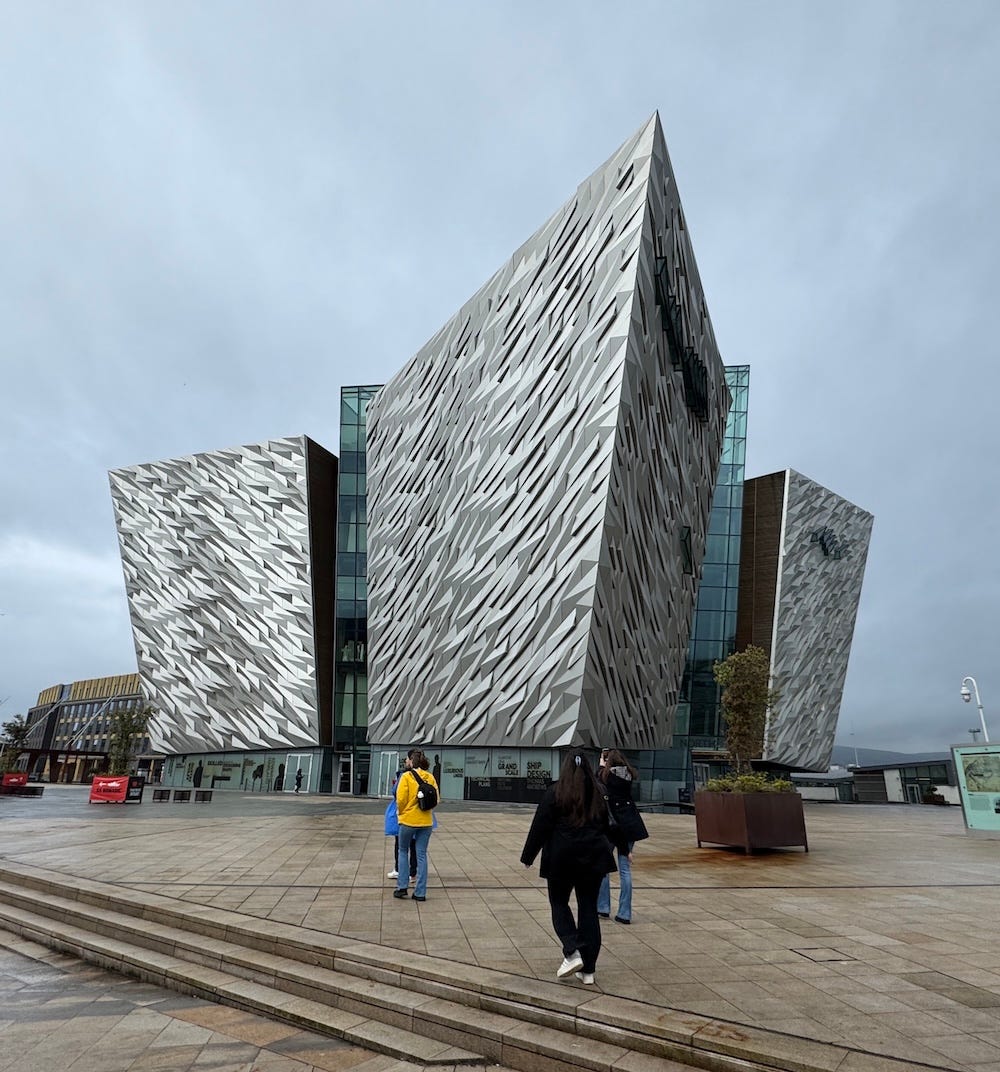
So the museum begins not with the ship but with the confident city that dreamed it into existence. Before there is a Titanic, there is Belfast. And the displays return visitors to a smoky, clanging city intoxicated by its own industrial prowess. One of the first surprises is the prominence of the linen industry. At the turn of the 20th century Belfast was known as "Linenopolis," producing vast quantities of linen for global markets. Displays explain how the textile and the fortunes it made helped fuel the city’s industrial rise. Nearby, giant maps and photo montages reveal a metropolis humming with shipyards, rope works, engineering firms and factories. You can’t help marveling at both the ingenuity and audacity that summoned Titanic into being. Call it the “Belfast Moment” when the future appeared limitless and tomorrow’s triumphs seem inevitable. No iceberg appeared on the horizon to alter that. As they say in Belfast: “She was alright when she left here.”
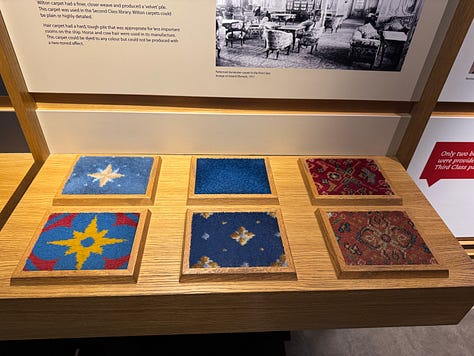
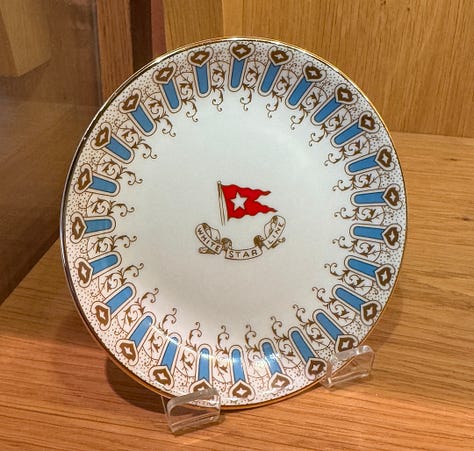
Ensuing galleries detailed the ship’s construction and the extraordinary care and creativity that went into recreating an entire society at sea. Displays showed samples of the carpeting, wallpaper, upholstery fabrics and carved woodwork selected for the various public rooms and cabins. Another compared accommodations across social classes, reflecting how everything from the dining room chairs to bathrooms reflected the social hierarchy of the Edwardians. What surprised me were the colors: the vibrant reds, golds, greens and blues that made the past startlingly alive. History often reaches us in black-and-white photography but here, Titanic was color. The shipbuilders had built a reflection of their world and their values as software companies and high tech do decades later.
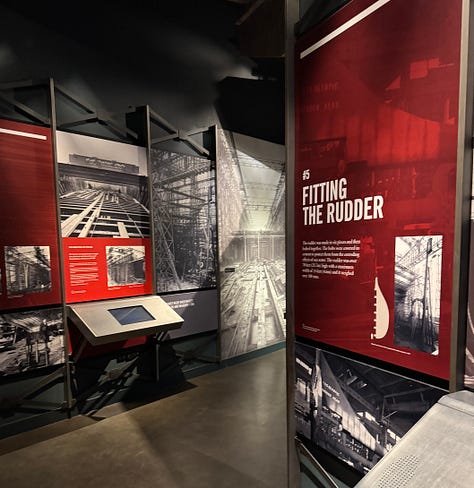
The museum’s most riveting experience places you inside a computerized projection with moving images surrounding you on every side. One sequence takes you up through the staircases and first-class public rooms. Another drifts through the ship’s bowels where enormous boilers, pistons and machinery thrum. Standing amidst these graphic recreations I experienced a jolt of recognition. CyberFlix’s Titanic: Adventure Out of Time aimed for the same drama – giving people the sensation of inhabiting the ship rather than just reading about it. In 1996 that required rows of Apple workstations rendering scenes through the night with all the computing power we could muster. Titanic Belfast accomplishes this using processing power unavailable to us. Yet the goal remains unchanged. Each generation invents new tools to tell the old story. Titanic once embodied the future. Now it serves as a mirror into which every age gazes and reevaluates itself.
Thirty years ago, I owned a full head of hair and an unbridled confidence. The future would be a golden one, I thought, as “Adventure Out of Time” stacked up in stores like Tower Records and Electronics Boutique. The game industry was inventing itself. CyberFlix was on its cutting edge. Those I loved had not yet died. I felt immortal.
In Belfast the sky outside was pewter. Gulls pivoted against the wind. Cranes hovered, building something new on the Harland & Wolff dockyards—now an artifact from an age of steam and empires. CyberFlix had built a digital Titanic during another era of technological optimism. Well, my CD-ROM game was now an artifact. Tower Records is gone. Electronic Boutique extinct. Everything once considered fresh and new eventually becomes old, then becomes history. The World Wide Web felt revolutionary in 1996—the internet will unite us! In today’s divided present that idea feels as antique as the wireless set broadcasting increasingly desperate messages into the North Atlantic void.
This is Titanic. We are sinking.
Exiting the museum, past the gift shop and cafes, I was walking out into the city’s transformed waterfront, where the future once again seemed under construction. New building planned where cranes once dominated the skyline. Technology, you old charmer, is once again promising to remake the world. It’s another Belfast moment.
In 1912 it was an unsinkable ship. In 1996 it was the internet. In 2026 it’s Anthropic and ChatGPT, SpaceX and Waymo.
The Titanic and its story is immortal because humanity’s hubris is as well. The White Star liner reminds us that maybe innovation and humility should travel together. They never do. We keep building larger ships, faster networks, smarter machines, convinced that this time we have finally mastered uncertainty.
From Belfast the ghost of the Titanic asks the question: Are you sure?
More from the Emerald Isle:
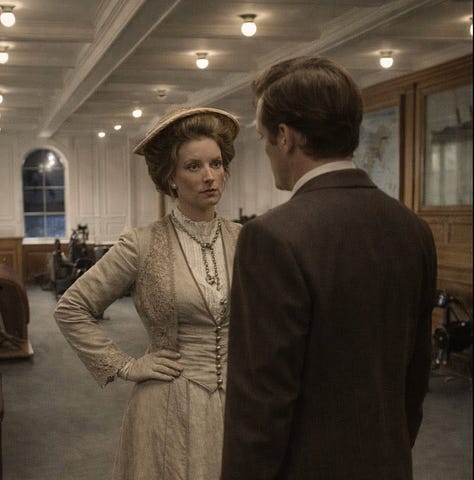
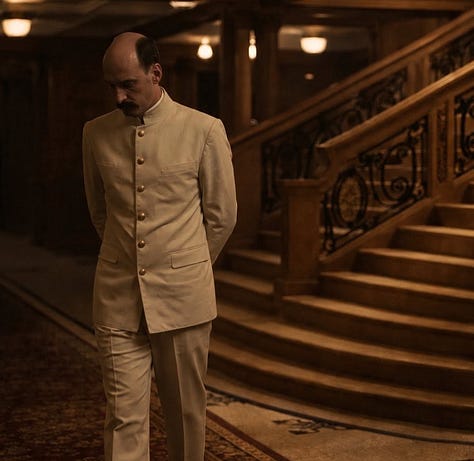
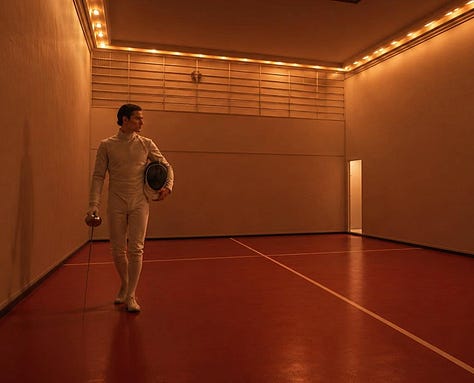
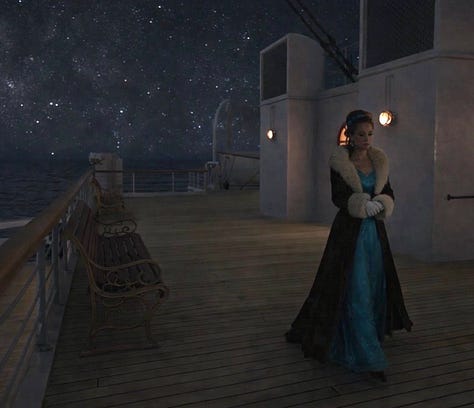
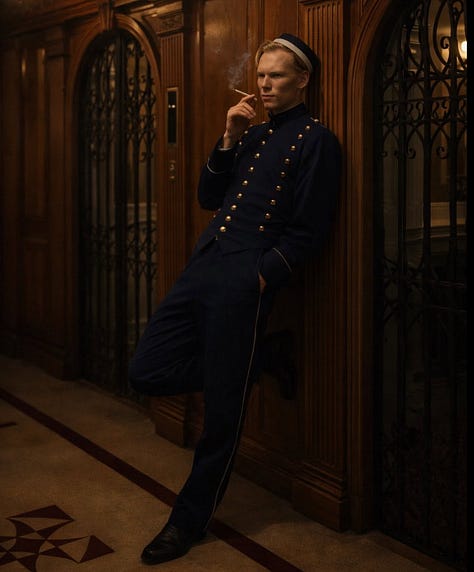
NOTE: Since its creation Titanic: Adventure Out of Time sails onward with a Facebook fan page of 4000+ people and dedicated enthusiasts across the world who develop alternate plot lines, discuss the characters, print Tshirts and now using AI, fan Lachlan McKay has brought my characters to life. Astounding.

Field Notes:
Titanic Belfast. Most Titanic exhibits focus on the disaster. This one focuses on the ambition. The exhibits treat Belfast as importantly as they do the ship. It’s a three-hour immersive journey into the world that produced the ship. Hours: Open daily from about 9 a.m. to 6 p.m., with extended summer hours (check times)
Admission: Online tickets from £24.95 adult; (£26.95 walk-up). Children (5–15) £11 online. Note: Admission includes entry to the SS Nomadic, a 1911 passenger tender that serviced Titanic. It’s the last surviving White Star Line ship.
Hidden Ulster Tours. If you want to really understand Belfast, the importance of Titanic to the city and navigate any part of Ireland, I advise doing so with Lolly Spence, an experienced and professional tour guide. Lolly holds the Blue Badge, the UK’s highest guiding qualification. This former BBC reporter has a deep knowledge of her native land. Tele: +44 7900 988886 Email: lspence@hiddenulstertours.com
###
No posts
Comments
Nothing yet. Say the first thing.
Sign in to join the conversation.