
NOTE: Remains of the Day is a new occasional series on forgotten antiquities, abandoned places and archaeological sites with stories still left to tell the traveler.
You’ve probably heard of Petra, the renowned ancient city made from red sandstone and sheer derring-do that’s carved into the cliffs of southwestern Jordan. It’s bewitched everyone from its own Nabataean rulers to Victorian adventurers to Steven Spielberg, who filmed the Indiana Jones sequel there, The Last Crusade.
But there’s another classical crossroads in Jordan, 180 miles north of Petra. It, too, was lost to time and sand. Yet at its zenith, it was a bustling, multicultural city where competing nations traded whispers, goods and secrets.
And only a handful of American travelers know about it.
This is Jerash, called Gerasa in ancient times, located a short drive north of Amman, the Jordanian capital. The city was part of the Decapolis, a regional group of Greco-Roman cities studded across Jordan, Israel and Syria that shared cultural and commercial ties.
Jerash was a place where a rising Mediterranean Rome could rub up against the Arab East, and eventually, the Persian Empire, its superpower rival. The friction produced strange bedfellows, profits and a lot of horse trading. Imagine Roman versions of Steve Witkoff and Jared Kushner in togas and sandals negotiating with Persians in a market stall smelling of cinnamon and frankincense.
That’s not altogether fanciful.
Rome conquered Jerash in 63 BC. And, surprisingly, it thrived. Everyone wanted in: Greeks, Romans, Arabs. The town was hopping and kept changing hands until a major earthquake decimated it in 749 CE.
Never the same after that, Jerash declined, buried by debris and historical amnesia. It remained mostly forgotten by the outside world until organized excavations began in 1925, when Jordan was governed as a British mandate.
What was uncovered excited archaeologists everywhere.
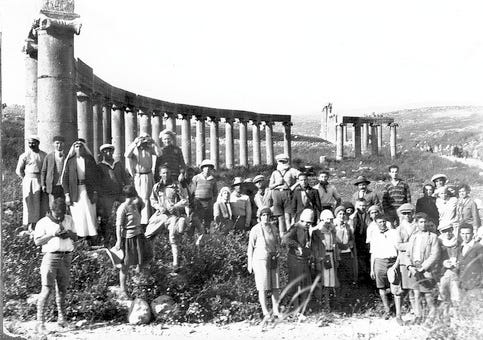
Jerash is often called the “Pompeii of the East” thanks to the scope and scale of its ruins, but that’s not exactly right—the Italian town was frozen in time by one convulsive catastrophe while Jerash declined gradually—but come here and you understand why they make it.
The spread of stones, pillars and plazas are phenomenal: a forum, a hippodrome, the Oval Plaza and Hadrian’s Arch all speak to its former glory. Best of all is the chance to wander through them with far fewer tourists than you’ll find in Petra.
Start at Hadrian’s Arch, built to commemorate the peripatetic emperor’s visit in 129-130 CE , and proceed into a place that feels less like an archaeological dig and more like an abandoned city.
The Cardo Maximus, Jerash’s colonnaded main street runs for about a half mile. Its original paving stones are still there, some sporting grooves from ancient wagon wheels.
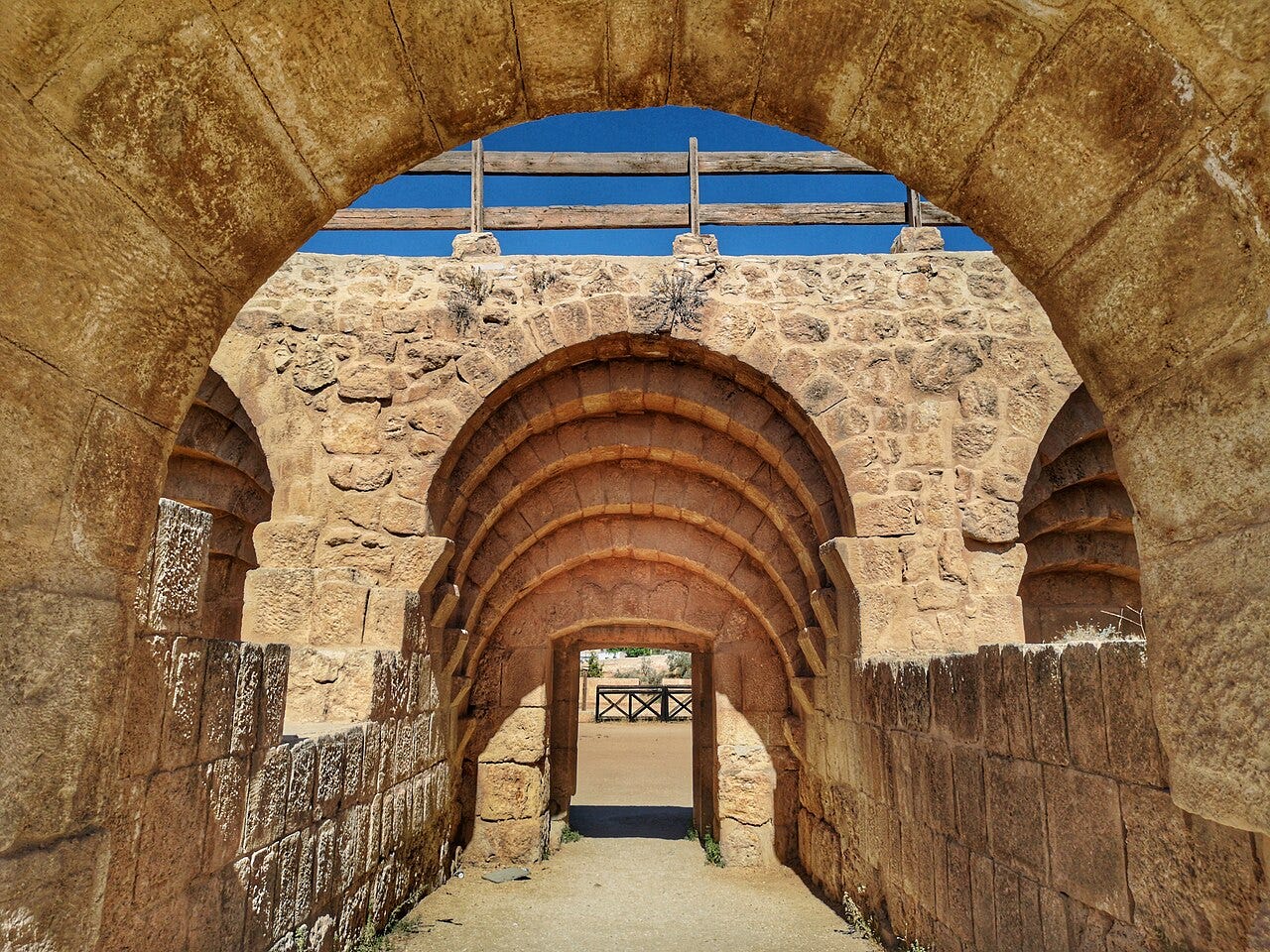
You’ll pass temples and theaters, stores and civic buildings. The 800-foot-long hippodrome could seat 15,000 horse-racing fans. Part of it later became a spot for gladiatorial contests.
In 1993, it gave up a grim secret.
That year, archaeologists uncovered a mass grave beside the racetrack holding the remains of 230 people buried in a hurry and within a short period. How did they die? In 2025, DNA recovered from the bones solved the mystery: It revealed the bacterium that causes bubonic plague. The discovery made Jerash the site of the first mass grave in the Eastern Mediterranean genetically linked to the infamous Plague of Justinian. Research is still continuing.
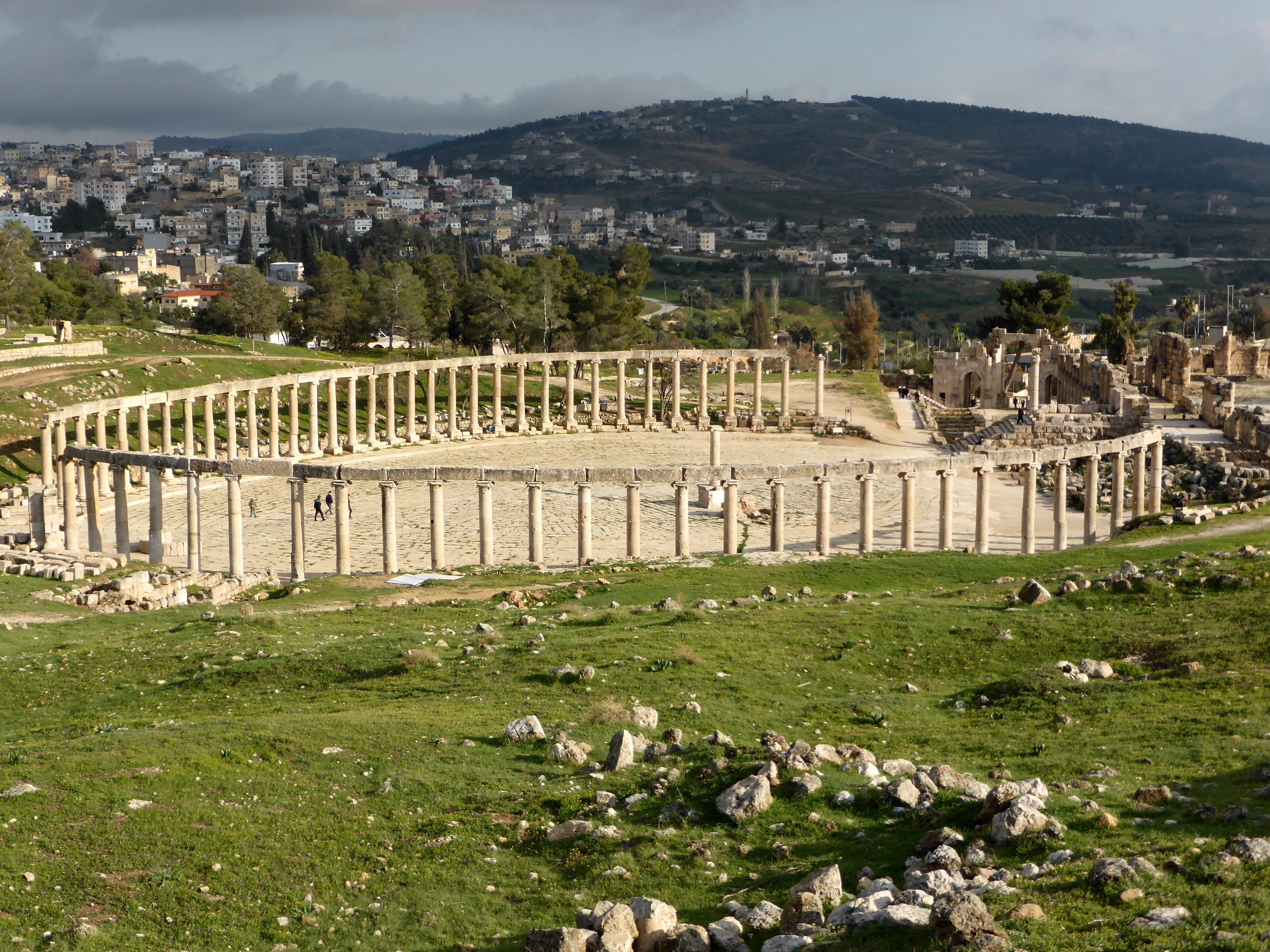
Perhaps the most spectacular sight is the great Oval Plaza, set amidst a forest of Ionic columns. Its unusual shape connected the Cardo to the Sanctuary of Zeus. Today, you may encounter local dudes cosplaying in Roman gladiatorial dress and legionnaires’ gear for selfie-mad tourists. Rome still sells 2,000 years later.
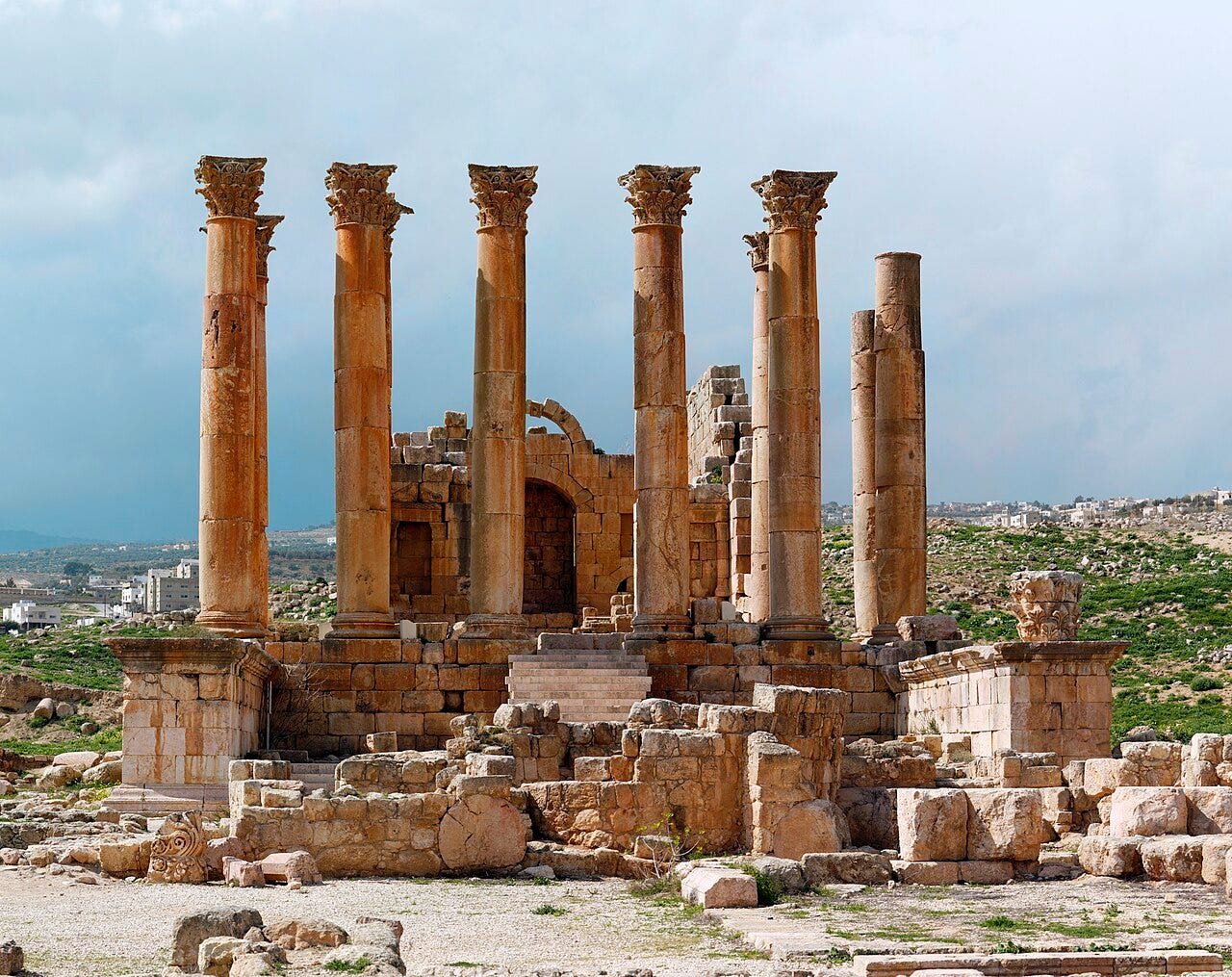
Climb up to the Temple of Artemis, goddess of the hunt and the city’s patron. Its massive columns do something a bit spooky: They move.
Guides will sometimes demonstrate this by inserting a coin or spoon between a column’s stone drums, making the almost imperceptible movement visible. The flexibility of their construction may explain why 11 of them still stand, despite the earthquakes that have shaken Jerash over the centuries. The belief that Roman engineers deliberately designed them this way is hard to prove, but it makes for a good story.
Want more? The Jerash Archaeological Museum contains a trove of artifacts from the city’s classical, Byzantine and Islamic eras. Discoveries keep coming. Excavations at the Great Eastern Baths between 2016 and 2018 unearthed Roman-era sculptures, including Aphrodite, Zeus and the Muses. Some of these can be seen at the Jerash Visitor Center.
Meanwhile, Jerash continues to be an active dig. Archaeologists are still uncovering houses, baths, workshops and evidence of daily life lived thousands of years ago.
Petra may get Indiana Jones. Jerash gives you a city.
Other surprising historic sites:
Field Notes:
Jerash is 30 miles north of Amman, about a 40-to-50 minute drive by taxi. Admission is 10 Jordanian dinars (about $14) for foreign visitors and includes admission to the archaeological museum. You can hire guides at the Jerash Visitor Center. Allow at least three hours there. Bring water, sunscreen, a hat and comfortable shoes. Jerash sprawls and the paving stones are often uneven. Summer in Jordan is hot and there’s little shade.
NOTE: I use AI like I might use a good research assistant and copy editor—if I could afford them—to chase down references and links, flag things worth checking, and find errors, grammatical mistakes and clumsy prose. I verify the facts and print corrections when wrong. The ideas, words, observations and opinions are my own.
No posts
Comments
Nothing yet. Say the first thing.
Sign in to join the conversation.