
On the list of damned stupid things you could do in your garden, quite close to the top you’ll find planting an exceedingly vigorous climber with nothing significant for it to clamber over.
Reader... yeah.
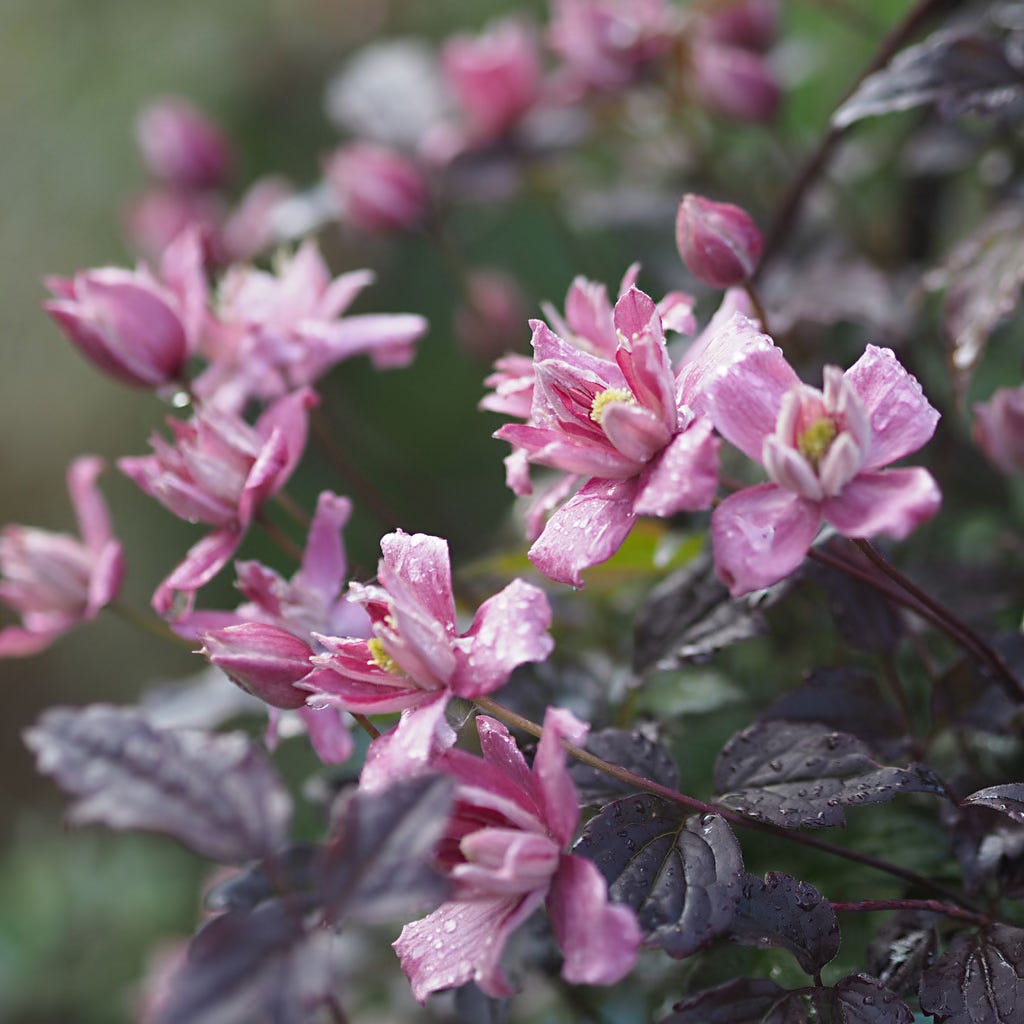
So far, I’ve gotten away with it, though I’m not sure quite what I was thinking either, if you’re going to push me on why Clematis montana ‘Broughton Star’ is presently perched on a steel temporary fencing post in the bed at the end of the garden path. It’s just possible I had in my head an arch, since it’s in the perfect spot to grow up one side while the Generous Gardener rose a few feet away could clamber up the other. They could meet in the middle, and have a chat, or a punch up, or a tempestuous but mutually fulfilling long-term relationship. But just now, the rose is on an ash wigwam (it will need a larger one next year), and the clematis is doing a weird kind of pole dance which, much to everyone’s surprise, actually doesn’t look at all bad.
Bramble & Briar is a reader-supported publication. To receive new posts and support my work, consider becoming a free or paid subscriber.
Calm before the storm, though, I’m fully aware of this. A happy Clematis montana is a vigorous thing, and the mature sprawl of this plant is upwards of six metres by three. So once it’s got its feet down, that post is not going to cut it. Cuttings will need to be taken, and new locations sought. I’ll have fun running one of them up into the ash tree. For now, though, let’s just enjoy aspects of this plant other than its vigour.
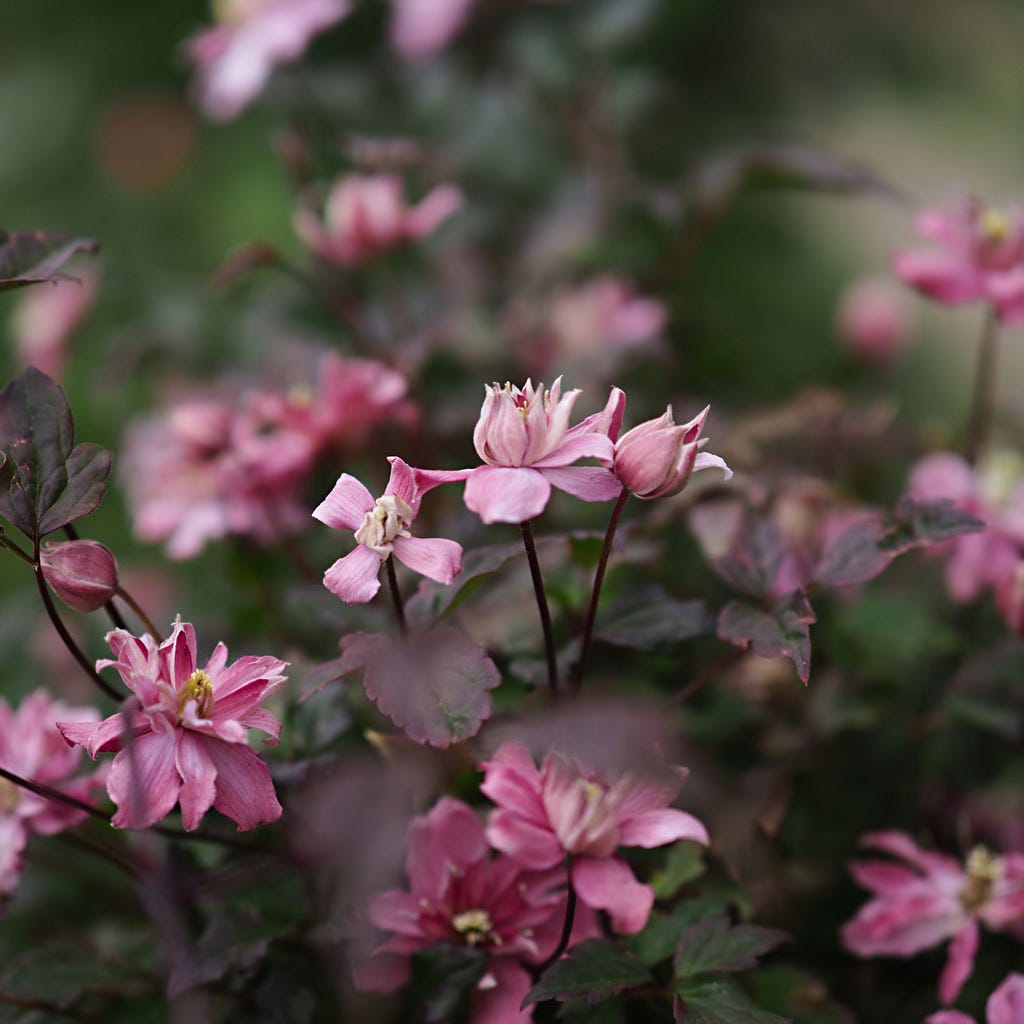
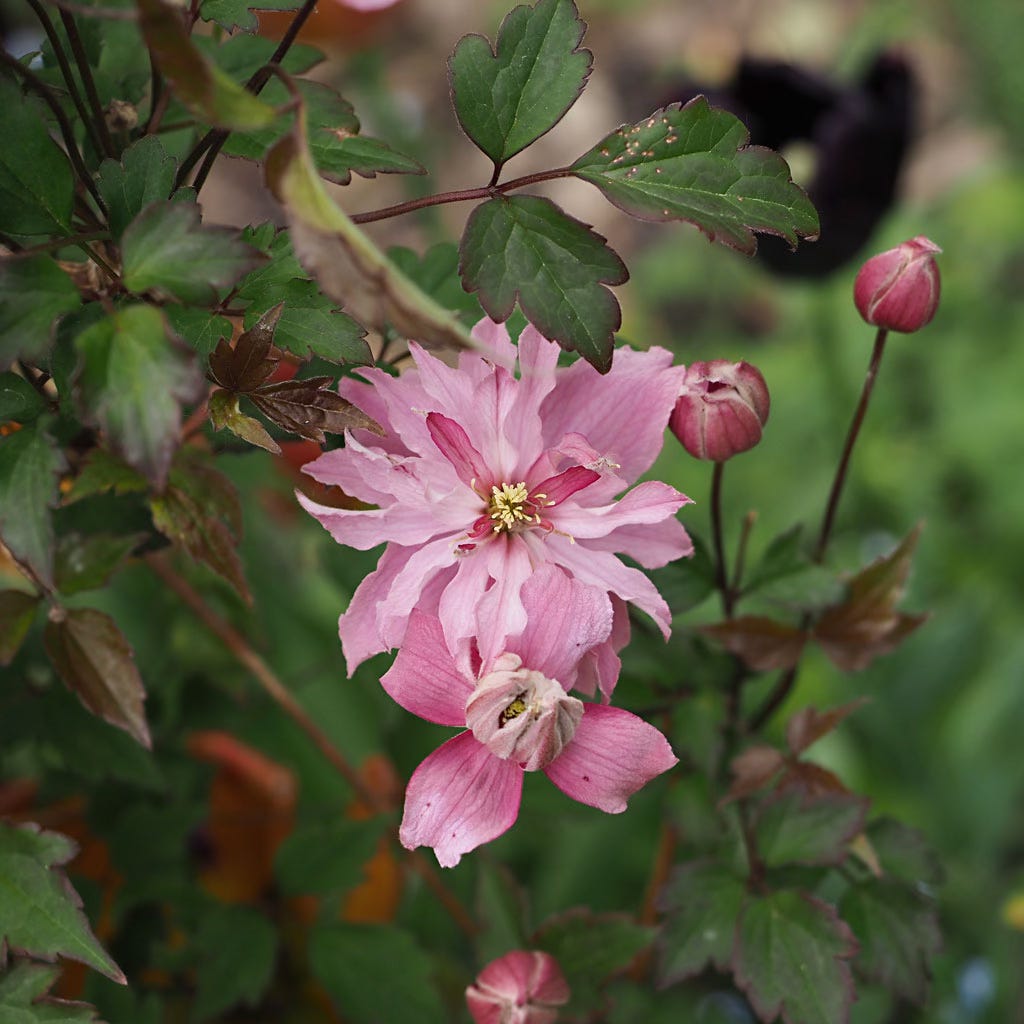
First, there’s the foliage, lobed leaves coming in bronze, transforming as they mature to a dark shade of forest green, still with the bronze highlights at the edges and on the stems. But initially, a perfect partner to the many fat, pink flower buds, opening to reveal ostentatiously double and semi-double flowers. A far cry from the restrained pink and white four-petalled blooms of what I immediately think of as a typical montana blossom but, not withstanding the extra petals, of a similar size. Not the big, floppy petals of their later-flowering relatives, but still showy.
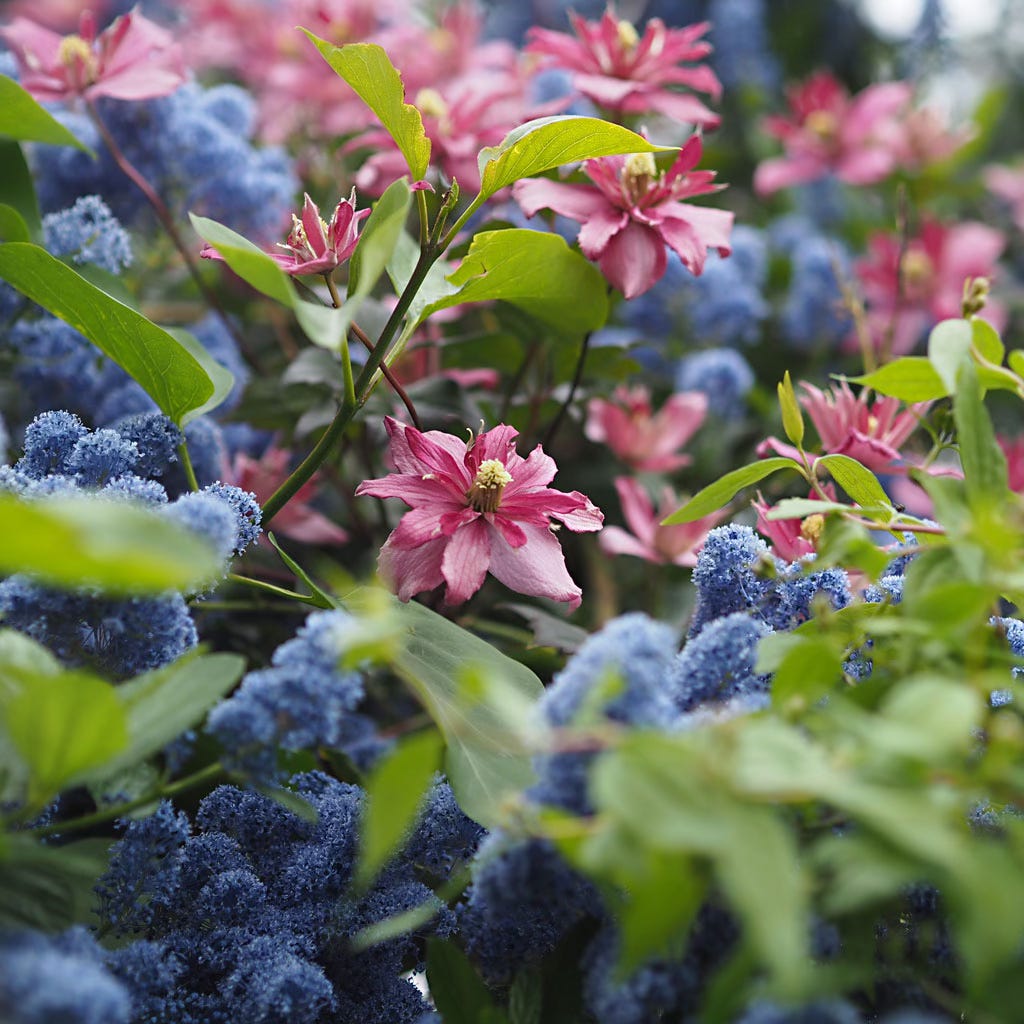
Head in the sun, feet in the shade, as it generally goes with these climbing buttercups (ridiculously huge, floriferous family, Ranunculacae, and all of them toxic). This one is so perfectly positioned in spite of its inappropriate support, and presently well behaved, sitting peacefully in a slightly unruly mound around a metre in height. I know I’m courting chaos here, but I’m happy to push it to the brink to have this generous and long-flowered character right here, at the heart of the garden, for as long as it can be prevailed upon to hold its peace. Of course, there’s pruning once the flowers have faded (they’ll easily go on into June) – though I’ve not had to resort to that yet. You can hack away pretty indiscriminatly at spring flowering clematis – even cutting into old wood – as long as you do so as soon as the flowers have faded. Any later, and you risk losing the next year’s display.
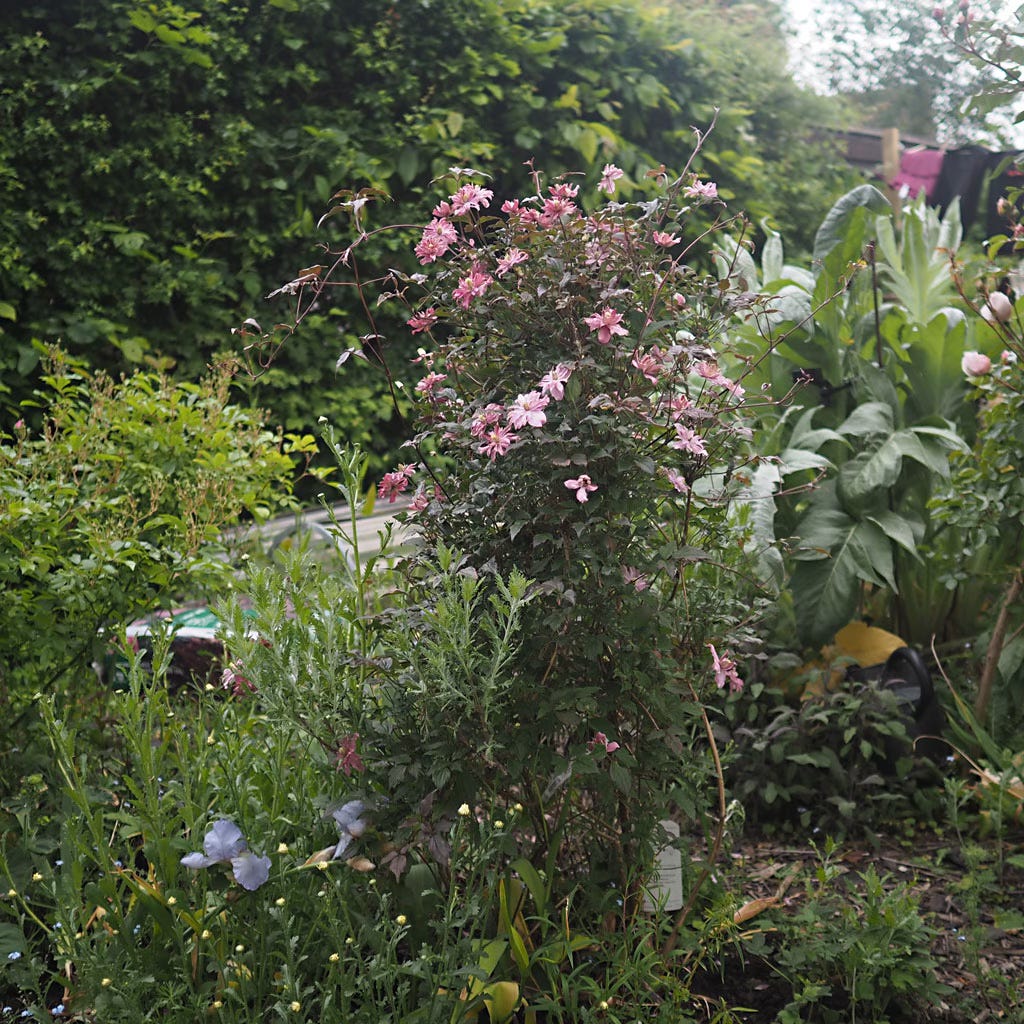
I can rein it in for a while more, but sooner or later, I’m going to have to give this plant its head. For now, I’m enjoying the relative peace, and the soft, pink-green cloud keeping company with the roses.
in case you missed it…
Comments
Nothing yet. Say the first thing.
Sign in to join the conversation.