

Yo-Yo Ma is a master cellist. Few know more about making an instrument sing.
But we know how it’d go if I tried to learn his instrument by reading a cello instruction manual he’d written. It’s an absurd approach, and I’d make little headway without a bow in one hand and the instrument in the other. This is obvious.
But we often attempt something just as absurd by reading nonfiction of all types. We’ve mixed up what we can gain from experts and what can only be transmitted by other means.
I love books and my life has been enriched by reading them, so I feel weird denigrating them categorically. But it’s worth knowing what they can do, what they can’t, and why experts so often fall flat.
Why are 80% of books about war, business, leadership, and relationships disappointing? Why, more broadly, is so much advice ineffectual or destructive?
First, the obvious reasons:
Survivorship Bias: How-to books are written by those who succeed. Advice is sought from winners. Maybe 80% of the people who did what the expert did failed, but they aren’t writing business books about what not to do (this guy did, and it’s great!). They aren’t being hounded for advice. It’s hard to know about the 80% of failures lurking behind big-name successes.
Calling Card Experts: Many people don’t have a book in them. They don’t have the ideas to fill it, the ability to write it, and often lack even a desire for the end product. But it’s a prestigious means to an end, so they hire a writer or hack it out themselves. People who make their living through public speaking are the biggest contributors here. Their books are their calling cards and best credentials, inane as they may be.
Idiot Advisors: Reddit’s relationship forums are cesspools of bad advice. Anyone with any success in this sphere realizes it, and the anonymity of advice givers is probably what keeps the farce going. Teenagers without meaningful life experience are behind many replies, and traumatized, socially inept, chronically disappointed adults account for another chunk. High-functioning people in healthy long-term relationships aren’t rage posting “LEAVE HIM!” or frequenting those forums at all. Beyond Reddit, idiot advisors are everywhere online and in life.
Category Bloat: A businessperson might be the world’s best carpet seller, waste management official, or life coach. They might have excellent advice for those narrow fields. But the market for carpet entrepreneur books is small and doesn’t warrant a book deal. So they blow up the ideas to make them seem universally applicable when they’re clearly industry-specific.
Ulterior Motives: Advice-dispensing writers and influencers may have a goal with their advice beyond “help people.”
But even accounting for this, there are plenty of successful, well-meaning experts offering advice. Roll the dice 10 times and they’ll come up with two sixes on nine of them. They clearly have something going for them. Advice from these winners seems like it should help people, so why does it often fail to get the job done?
Part of my business is ghost writing, and I was initially surprised by how many intelligent clients with a great deal of expertise and success had little to say about how they do what they do. Many can endlessly word-spin about what they do, but it amounts to “it feels right to do it this way,” rather than “this is how you feel out the right way.” Some of them are so used to being pressed for advice that they create fuzzy concepts with little relation to their practice. When you try to backtest these concepts against their pivotal actions, they don’t quite fit.
Most of the time, there’s no intentional deception going on. They’re not holding back or attempting misdirection. It’s just that their abilities are so tacit that they have little technique to teach. They somehow sense how far they can bend rules without breaking them. When data falls short, they call on their gut for an accurate read. But it’s hard to teach any of this in a book. So their book advice amounts to post hoc codification of what’s 80% instinctual. They cram their books with buzzwords, charts, and anecdotes of little worth, and it sounds so convincing. We might read them and be entertained, but we don’t learn much.
This is a very old idea. Consider the old wheelwright’s story in the 2nd Century B.C. Book of Chuang Tzu.
“Duke Huan was reading a book in the hall. Wheelwright Pian, who had been chiseling a wheel in the courtyard below, set down his tools and climbed the stairs to ask Duke Huan, “may I ask you, my Lord, what is this you are reading?”
“The words of sages,” the Duke responded. The wheelwright continued, “Are these sages alive?” “They are already dead,” came the reply. Wheelwright Pian persisted, “That means you are reading the dregs of long gone men, aren’t you?” An exasperated Duke Huan retorted, “How does a wheelwright get to have opinions on the books I read? If you can explain yourself I’ll let it pass, otherwise, it’s death for you.”
Wheelwright Pian said, “In my case I see things in terms of my own work. When I chisel at a wheel, if I go slow the chisel slides and does not stay put; if I hurry, it jams and doesn’t move properly. When it is neither too slow nor too fast I can feel it in my hand and respond to it from my heart, and the wheels come out right. My mouth cannot describe it in words. You just have to know how it is. It is something that I cannot teach to my son and my son cannot learn it from me. So I have gone on for 70 years, growing old chiseling wheels. The men of old died in possession of what they knew and took their knowledge with them to the grave. And so, my Lord, what you are reading is only their dregs that they left behind.”
This lines up with the Taoist idea that wisdom is experiential and can’t be transmitted through language or writing. I don’t totally buy this — I’ve learned too much from the “men of old,” to find it credible. But it is directionally correct.
I prefer to think about it like lossy transmission rather than intransferibility, with fidelity mediated by knowledge type. Broadly, there are two types of knowledge.
Declarative Knowledge: Facts, frameworks, stats, theory. Transfer fidelity is high.
Procedural Knowledge: Skills like reading a room, building a skiff, mastering a martial art, managing employees, or charming someone. Transfer fidelity is low to medium.
Lossy transfer is why Asian societies take the preservation of procedural knowledge seriously. They know it vanishes if they don’t. Japanese artisans spent the last 1,300 years demolishing and rebuilding the Ise Jingu shrine every twenty years. The wood lasts a century or more, but the tacit knowledge of the artisans won’t. A twenty-year cycle means each generation gets three chances to contribute. First as apprentices learning the ropes, then as masters deploying years of hard-won skill, and finally as elder advisors and teachers. Maybe some lucky few get a fourth turn.
When the Roman Empire fell, whole categories of procedural knowledge vanished in construction and craft fields. Medieval Europeans had the first-century Roman architect Vitruvius’s De Architectura. It theoretically contained everything needed to build like the Romans. In practice, though, there was a huge procedural chasm that couldn’t be spanned.
Vitruvius delineates the key steps for surveying, but not how to execute them. He gives the recipe for Roman concrete, but not the procedural knowledge of “hot-mixing” the ingredients with quicklime. The book praises concrete domes, but doesn’t say how to build the required frameworks.
Renaissance architects had to study Roman ruins and experiment till they’d reforged the missing links from scratch. The crowning achievement of this effort was probably Fellipo Brunelleschi’s dome atop Florence’s Duomo cathedral.

Brunelleschi kept his rediscovered techniques close to his chest and burned his notes after completing the dome, severing the chain once again. Modern people understand how his workers built the cathedral theoretically, but we’d have a lot of experimentation to do if it were destroyed and we wanted to rebuild.
So much of life is like this. We have theory in spades, but lack something to make it come to life.
When I teach partner acrobatics, I’m always asking myself how I can transfer the tacit understanding — the feel — of skills rather than just the knowledge. I demo (visual), and explain (verbal), but the most important part is stacking the kinesthetic and visceral atop this foundation. I go around adjusting hand positions, giving funny cues to bypass mental blocks, and making people play seemingly unrelated games so they feel the feel.
But even at my best, I’m sometimes at a loss. A former student recently hurt someone’s rotator cuff by cranking on it too hard during a move, something I warn against in workshops.
The declarative knowledge for avoiding this injury is simple. The shoulder is a ball-and-socket joint. The joint capsule and ligaments provide firm elastic resistance as you approach their safe end range. Feel the resistance and go no further. But feel is easier said than done. I’ve had several students who can’t feel the resistance through their partner’s hand when rotating the shoulder. They’re “basing blind,” because their hands can’t see, and I can’t make their hands see, no matter what I say or do.
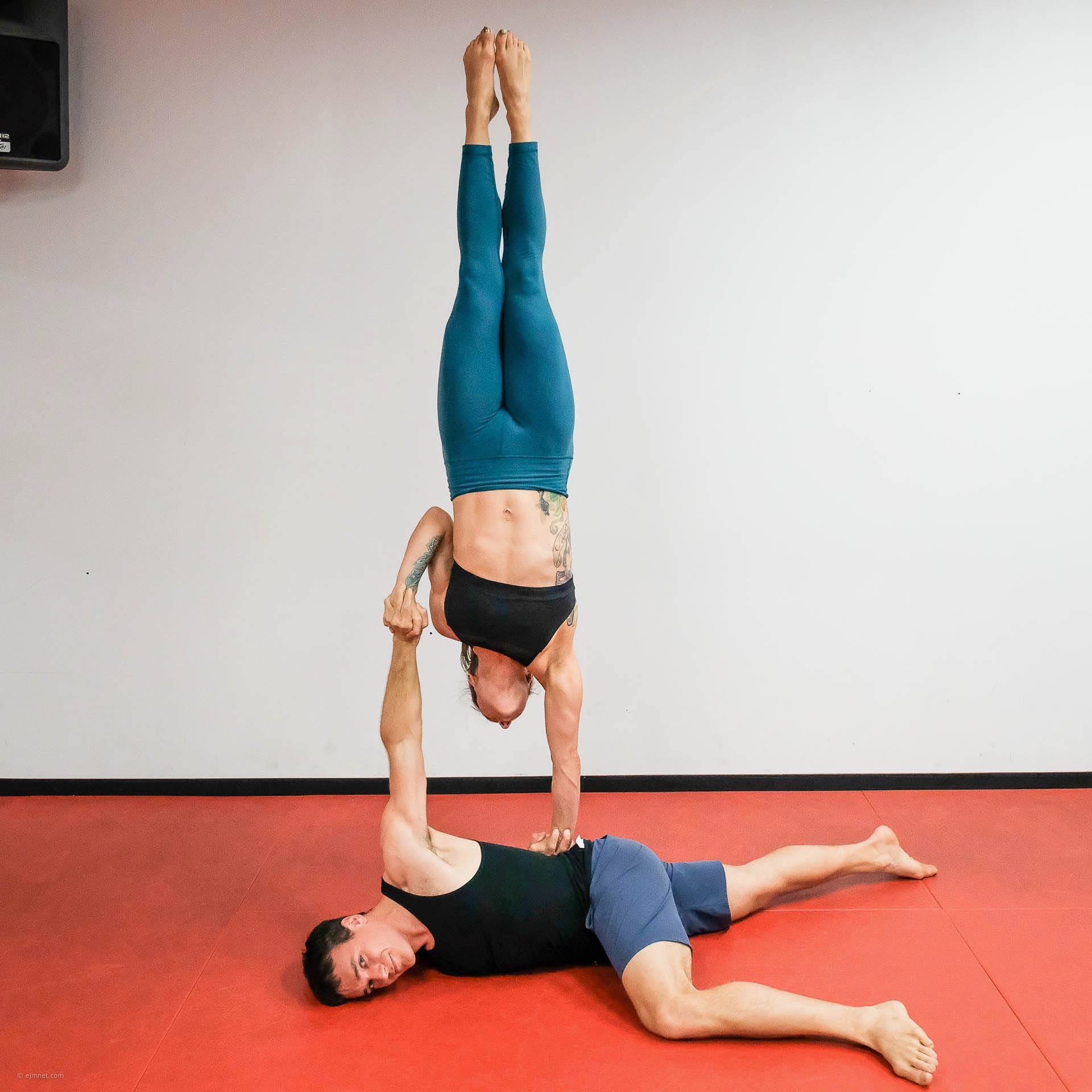
Many who struggle to hand-see eventually do, but it’s probably not because I explained it for the 30th time. The feel somehow got into them. The theory became the practice, and I didn’t make the transmutation for them. Imagine if I had to teach them through a book. It wouldn’t go well.
This procedural/declarative divide is messy. There’s overlap between the types. But the worst nonfiction books usually attempt procedural transfer and make a hash of the lesson.
We can all think of exceptions, and some authors transfer the procedural with decent fidelity. Becoming a Supple Leopard maxes out what you can do with great pictures and clear writing. Business classics like How to Win Friends and Influence People teach the basics pretty well.
But beyond this limited procedural transfer, what else do books do really well?
They provide frameworks for noticing things we’d otherwise overlook.
They help us label/grasp experiences we’ve had. “Oh, that’s what was happening there!”
They expand our imaginative range.
Though the map is not the territory, book-provided maps are still useful and can help us avoid costly mistakes and dead ends.
So we could broadly say that good nonfiction books help sensitize us to reality. This mind-sharpening allows us to learn from life more quickly and with less pain.
Four types of nonfiction books stand out for bypassing procedural limitations.
History gives us vast repertoires of human situations, actions, and consequences to stock our pattern-matching libraries. They won’t bestow procedural knowledge or tell us what to do, but they can help us notice when reality is rhyming.
See why revolutionary France or Russia got different results from revolutionary (more like evolutionary) America.
Understand why Carnegie struggled to balance his sometimes-brutal business instincts with genuine philosophical commitments to the common good. The tension, the wrestling, and the failures are themselves potent lessons.
Read how populist Athenian orators talked the Assembly into the disastrous Sicilian Expedition, and notice the echo among today’s politicians.
This vicarious living and feeling through past lives is superior to a CEO’s “Five Leadership Principles.” I’ve mused that our abandonment of history keeps us marooned in the present, and books are a great way to become reacquainted.
Some books are all theory but their implementation is so simple that they have huge impact when adopted by the right people. Unfortunately, most of us are not these people. Still, they’re interesting to read, and maybe some of us will be those people someday.
For instance, if US presidents understood and implemented Clausewitz’s dictum that “War is merely the continuation of policy by other means,” and only started wars with limited and realistic political goals we could fully resource — and maintain against political pressure — America would be a lot better off. Presidents don’t need the procedural knowledge of conducting wars; there’s a talented officer corps for that. Just get presidents to live by this theory and watch our blood and treasure leakage stabilize. It starts with a book.
Aphorisms can hit hard centuries or millennia after they’re written. They’re almost anti-book, radically compressing insights and stripping out the application entirely. I don’t think aphorisms teach us directly. Rather, they crystallize what we’ve half noticed but couldn’t quite grasp. I love Publius Syrus and La Rochefoucauld’s work for this quality. Here’s a realization I wrote about after mulling over a La Rochefoucauld aphorism. That’s happened many times.
And that’s what you do with aphorisms — You mull them over and wonder about the application, or how to not make the same mistake next time. The results you get are better than if someone told you what to do.
Philosophical dialogues were the default in the ancient world for a reason. We see the different parts of ourselves arguing on the page. We offer our own rejoinders and feel annoyed that the characters are missing something that’s so clear to us. Dialogues help us understand our values and what we’re willing to change for. Gorgias is my favorite Platonic dialogue (see my read-along series).
Another fascinating philosophical text is Marcus Aurelius’s Meditations. Marcus didn’t need more declarative knowledge. He’d been mainlining it since he was a kid. But we see that even a great philosopher is constantly working on turning the declarative into the procedural, and sometimes struggles to do it. He’s not teaching. Rather, each page is another rep. In writing this notebook for his own benefit, he wrote a book for all eternity.
This suggests something profound — even for the expert, the gap between knowing-that and knowing-how is lifelong. Books can help us bridge the gap, but at the end of the day, success comes from putting in the reps.
Thanks for reading Socratic State of Mind.
If you’d like to keep articles like this coming, please consider becoming a paid subscriber and sharing this one with others.
Comments
Nothing yet. Say the first thing.
Sign in to join the conversation.