
Many people don’t “get” Shakespeare because they look at the wrong side of the play. They wonder why the stories bore them and miss the real show bubbling beneath the surface. So I’d like to suggest two quick ways Shakespeare yawners can double their enjoyment of England’s famous bard.
Shakespeare was the Renaissance’s master psychologist. He knew what made people tick and so could plot narrative screws he cranked to make characters sweat.
But plotwise? He did almost nothing wholly original1.
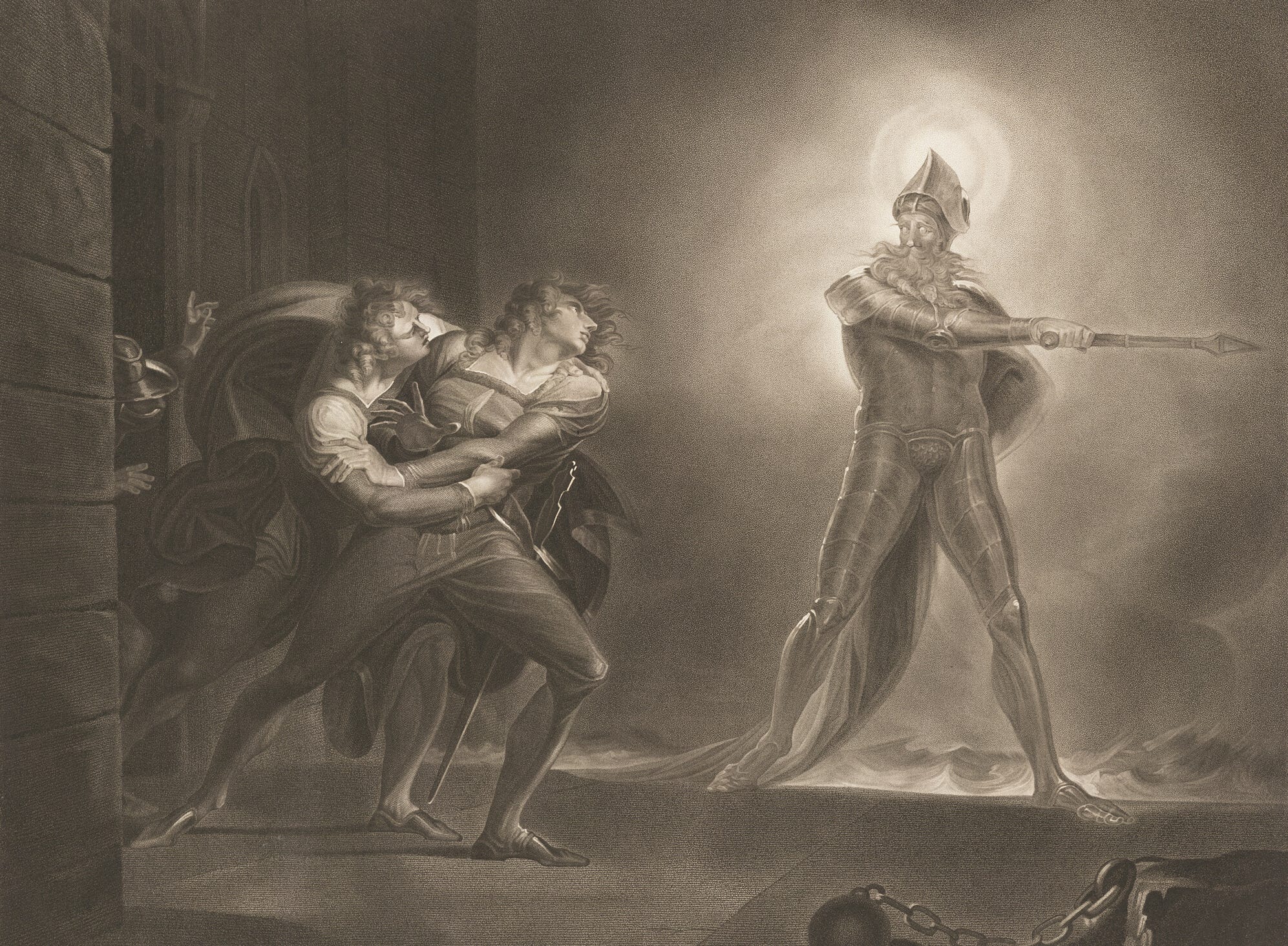
Hamlet is Saxo Grammaticus’s Vita Amlethi spiced up with Seneca’s Agamemnon.
The bloody Titus Andronicus used Ovid’s myth of Philomela from The Metamorphoses, Seneca’s Thyestes, and Livy’s rape of Lucretia
The Comedy of Errors is a repackaging of Plautus’s Menaechmi.
And yet for all this looting, Shakespeare’s versions stood the rest of time while the source material was forgotten. The Lion King is clearly Hamlet with lions, not Vita Amlethi on the Serengeti. The reason for this unlikely longevity is Shakespeare’s two unfakeable additions — the characters’ psychology and the beauty of his writing. The plots are a means to an end for maximizing both.
Commoners gladly paid their pennies and gave cheering ovations at the Globe Theater because they actually knew Shakespeare’s characters. No, not literally Hamlet and Caesar and Prospero. But the respectable baker down the street becoming a fool for a woman half his age? They all knew that guy, and recognized his echo in the straight-laced steward in Twelfth Night who begins grinning like a fool, wearing gaudy yellow stockings and “crossgartering” in the latest fashion when he suspects Olivia loves him. These commoners saw parliamentarians abandon their ideals for a bit of prestige, and watched Queen Elizabeth’s parade of favorites cast aside one by one as her favor waxed and waned. Shakespeare gave voice to the internal lives of all these people and made life more explicable.
And 400 years later, we still know the characters. They’re our beloved friends and blind bosses and glory-mad politicians. And our stupid cousin, too. So much of the world’s madness makes sense when we pay attention to the interior lives of people, and Shakespeare lays it out like no one else.
And so my first piece of advice is to stop expecting the plots to blow you away or keep you entertained. You need to transfer your attention to the characters and what the plots do to them.
Yes, you’ll need to get the gist of what’s happening. But the convoluted disguises, mistaken identities, and obscure political intrigues are of secondary importance and often not that interesting. What makes the plays timeless is Shakespeare’s use of character voice, motivations, contradictions, and the sheer power of language to show us timeless human nature.
Focus on that, and the plays come alive.
Shakespeare is a fantastic writer, but modern people have abandoned poetry, and so his lines often seem overly florid and complex.
A quick fix for this is reading the play out loud until you feel the rhythm. Shakespeare often uses an iambic pentameter — da-DUM-da-DUM repeated five times per line. So you’ll have five stressed beats out of ten syllables.
Shakespeare’s verse is part of his characters’ psychology. Their metaphors, rhythm, imagery, and wordplay tell us how they process the world. When characters become overly flowery, they’re usually deluding themselves, like when Macbeth tries to justify murder. Short, blunt statements tell us a lot about the state of mind or personalities of other characters.
Let’s take a line from Hamlet from the character Polonius.
"Neither a borrower nor a lender be;
For loan oft loses both itself and friend,
And borrowing dulls the edge of husbandry."
First, notice how “Neither a borrower nor a lender be,” hits harder than “Don’t borrow or lend.” It’s pleasant to hear and worms its way into memory.
But if we zoom out and read the surrounding dialogue from this character (Plonius), we realize his advice is just bullshit from a hypocritical windbag. He’s a pedantic, conniving court politician who does the opposite of what he says.
One of Shakespeare’s greatest ironies is how much he made people love Polonius’s line “This above all, to thy own self be true.” People treat it like a beautiful existentialist mantra and call for authenticity, but it’s voiced by a platitude-spouting fool who twists himself into knots being what others want him to be.
The modern equivalent is the trite and meaningless “Live, Love, Laugh!” which became become the motto of an entire generation, infinitely commoditized in-housewares and tattooed into flesh, signifying nothing.

I’m not sure if to thy own self be true is popular because people never read Hamlet, or because they did but didn’t pay enough attention to the characters to see that Shakespeare is mocking people like Polonius — and we all know people just like him. But you see how easy it is to go astray (and be bored) if you’re just taking the plot at face value. If Plotonius is a straight-laced advice giver, his dialogue seems interminable and pointless.
You don’t need to recognize every archaic word. It’s fine to look up some in the notes, but don’t get bogged down. Feel the rhythm and get into the characters’ heads.
If you’re feeling lost, these questions can usually recenter you and get you on a more interesting path:
What does this character want right now? (Power, love, revenge, security?) What are they afraid of?
How are they rationalizing what they’re up to, and is this largely BS?
Where do they contradict themselves? (Shakespeare loves self-deception).
Do this, and Shakespeare gets a lot more interesting.
I love The Merchant of Venice, Troilus and Cressida (for the darker take on Odysseus/Ulysses), and The Tempest, but Hamlet is the renowned classic, and A Midsummer Night’s Dream is always fun if you want something lighthearted.
Thanks for reading Socratic State of Mind. Please like and share this post if you enjoyed it.
The Tempest and Love’s Labour’s Lost appear to be entirely original creations.
Comments
Nothing yet. Say the first thing.
Sign in to join the conversation.