
The other day I hiked the Ganier Ridge at Radnor Lake. After I post this I’m going out to do it again.
At this point I have probably done this hike at least a hundred times, maybe more. It’s just a couple miles from my house, it’s beautiful and not terribly strenuous. Ganier Ridge has an elevation rise of about 700 feet and the trail I take loops about 3 1/2 miles, over the top and back around along the lake to the parking lot.
Often I’m walking with friends so I’m not looking around a ton, just casually taking it in as we’re making conversation. The other day, though, I looked up at the top of the ridge and really noticed how high it was.
“Oh my,” I thought. “I’m not really gonna climb all that so early in the morning?” It was 5:45 am. “Why was I even out of bed?”
(I have been inspired by a very in-shape friend to start hiking in a weight vest and at that point I didn’t know if I still liked this friend anymore.)
Looking back up at the top of the ridge, I started thinking about all those crazy mountain climbing documentaries I get so sucked into. Free Solo, 14 Peaks, The Alpinist, The Dawn Wall (the best one, by far).
I like to go up big hills, so do they. We both have some Patagonia jackets. That’s about where the similarities stop. One of the biggest differences between those psychopaths and people like me and other average hikers?
They go straight up. We take switchbacks.
What are switchbacks?
That’s when you go a little while in one direction, then a little more in another. Back-and-forth, back-and-forth, slowly working your way up the mountain.
Sometimes switchbacks will even take you downhill for a little while on your way up. Sometimes they have to go so far out of the way to get around some obstacle that you feel like you’ve completely lost the path. You haven’t. That’s actually the safest way for YOU to go. Someone else may do well on another path, but that’s their journey.
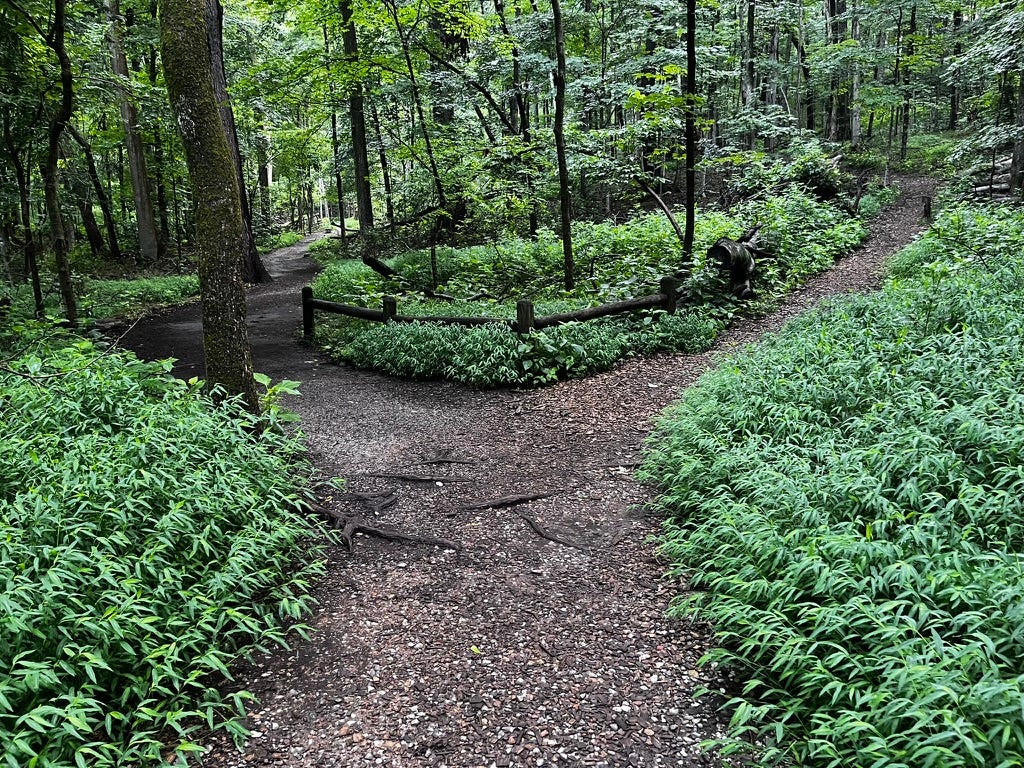
That’s the other thing. Sometimes there is one path, for everyone to follow. Often you come to forks where you have to choose.
A map or a sign might tell you that people with certain limitations or abilities should or shouldn’t go on this trail. That’s OK. There’s always a trail for you.
One of the things I love about hiking is if there isn’t a trail for you, there are often people who are.
I was at Frontier Ranch, a Young Life camp in Colorado, many years ago. My daughter and I went with all the high school kids to the top of a 14er — that’s a 14,000-foot mountain. There are 58 of them in Colorado. That’s a legit mountain. Way higher than the little ridge down the street.
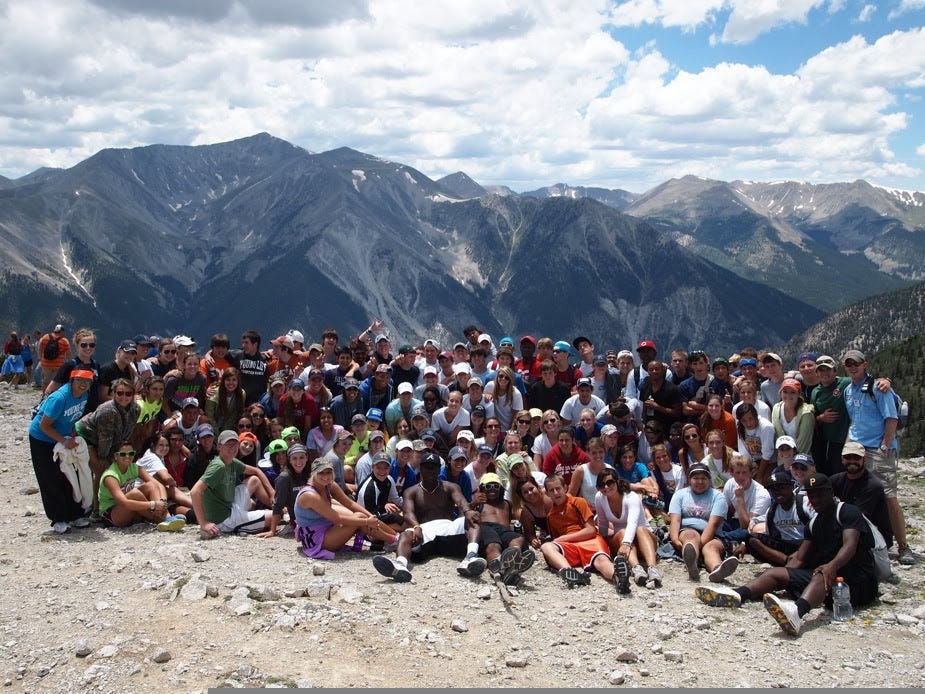
If you’ve never climbed an actual mountain it’s hard to describe it. Looking around on the summit actually feels like you’re standing on the top of the world.
There was a kid at the camp that week who was paralyzed from the waist down. Some of the camp staff drove him part of the way up the mountain in a four-wheeler, and he loved it, but eventually they reached the point where vehicles were not allowed. He had to sit and watch as other kids were streaming by, up the trail around him. Heartbreaking.
But then a cabin of high school boys showed up out of nowhere. They were mostly football players from somewhere in Texas, I believe. They had taken apart one of their beds, which would have normally gotten them in a ton of trouble, but they had built it into a sort of cot with a seat on it. None of us knew.
They strapped him in and took turns carrying him up the last 3,000 feet of the side of that mountain.
When they crested the final hill, we were cheering like our own kids had just beaten Messi in the World Cup.
I know there are stories of mountain climbers doing similar things with their friends, and that is astounding. Truly mind-blowing. But what I love about switchbacks is how accessible they make standing on the top of the world for everybody.
Climbing the ridge that day I passed so many old people. A lot of young parents carrying babies on their back. Teenagers in love. Even another dad in his 40s trying to lose a few pounds with a weight vest. We smiled at each other and laughed.
Working on the Quiet Hours liturgy book series this year, I’ve been reading hundreds of old prayer books and devotional writings from Christian thinkers over the past millennia, and I can’t help but have it rattling around my brain all hours of the day right now. When I was young, I thought the Christian life, at least my Christian life, would be like one of those mountain climbers. I’d go straight up the face of the cliff. No fear. No ropes. Documentary crew. Endorsements.
It didn’t help that I signed a Christian record deal the day I turned 19. For a minute there, it looked like that was actually happening.
But I wasn’t as great of a climber as I thought I was. I looked down — which has got to be breaking the first rule of Climb Club. I was so busy looking at everybody around me that my fingers started to sweat. I started getting jealous. Then I started getting angry. I slipped. I tripped. Climbed a little further. Slipped again. Eventually I had to come off the wall.
I licked my wounds. Got a job at a shop in town helping the rookie climbers get ready for their big attempts. (I’m still in the analogy here.) It turned out some of my failure could occasionally reappear as good advice.
Now I hike like all the old people. I’ve got my water bottle, my off-brand quick-dry shorts, and I need to get back home before I wake my daughter up for theatre camp.

I’ll go this way for a while, then I’ll go that way for a while.
But you know what?
I’m climbing the mountain. I’m seeing beautiful things. I’m meeting wonderful people. I’m breathing fresh, clean air. I will think straighter today because I’ll be out there. I hope I’ll be a little kinder, too.
Here’s something I didn’t know when I was young:
In this life, there’s no top of the ridge. There’s only the climb.
We know we’re going to reach the top.
That’s a promise. This means that every switchback is an adventure. It’s someplace God wants to show us or he wants to take us because there’s something we need to do or learn or someone we can serve.
What’s the worst part of climbing a tree?
Coming back down.
Can you imagine anything worse than reaching the top of some spiritual mountain in this life? Then what?
Thank God that in his infinite kindness, we walk side-by-side with him up the path that is for us alone — with all of its switchbacks. Whether we feel we’ve lost the path or we’re going back downhill, or we run into a friend, or come across a stranger in need, or turn a corner and suddenly lose our breath at the beauty of the vista that stretches out before and beneath us.
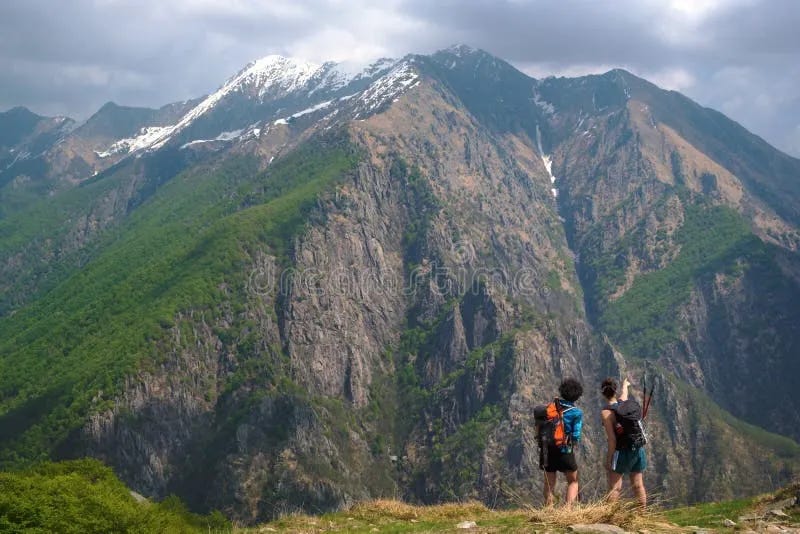
Can you see how far we’ve come? Can you see all God has made and all he’s done?
Our feet may be sore, but what more is there to discover?
Let’s keep climbing.
If you enjoy this Substack or The Pivot Podcast, please consider supporting my work by becoming a paid subscriber.
This week on The Pivot I got to talk to one of my favorite writers on the internet, a man I don’t always agree with but I deeply admire and respect: David French, now a columnist for the New York Times. It was a fun and enlightening conversation.
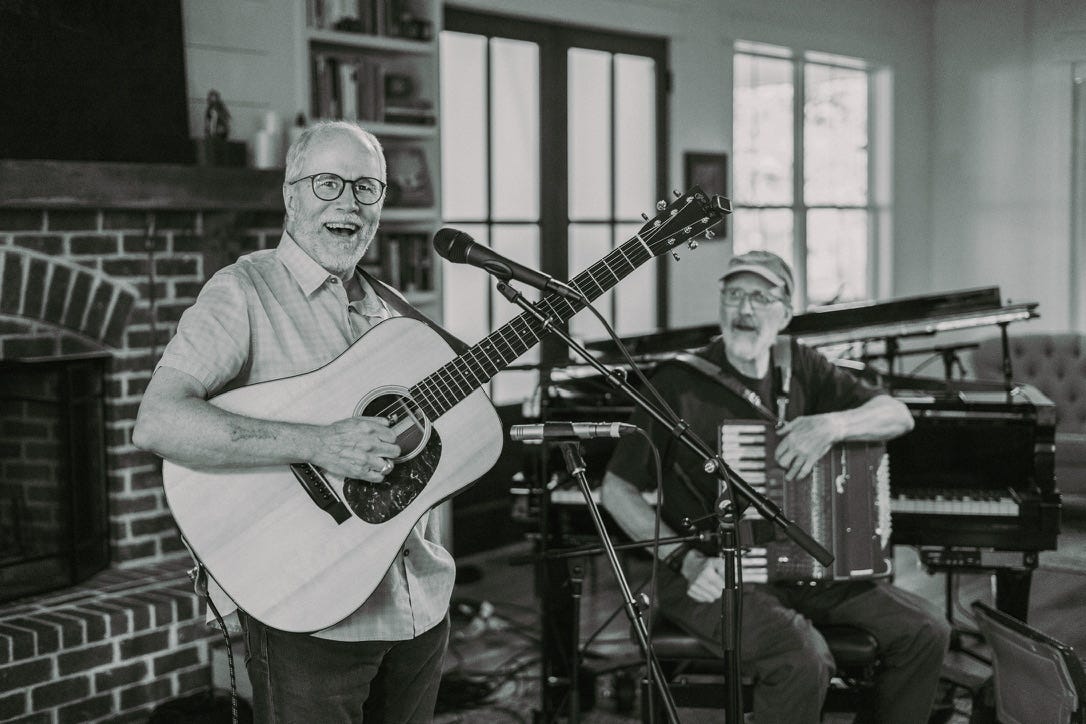
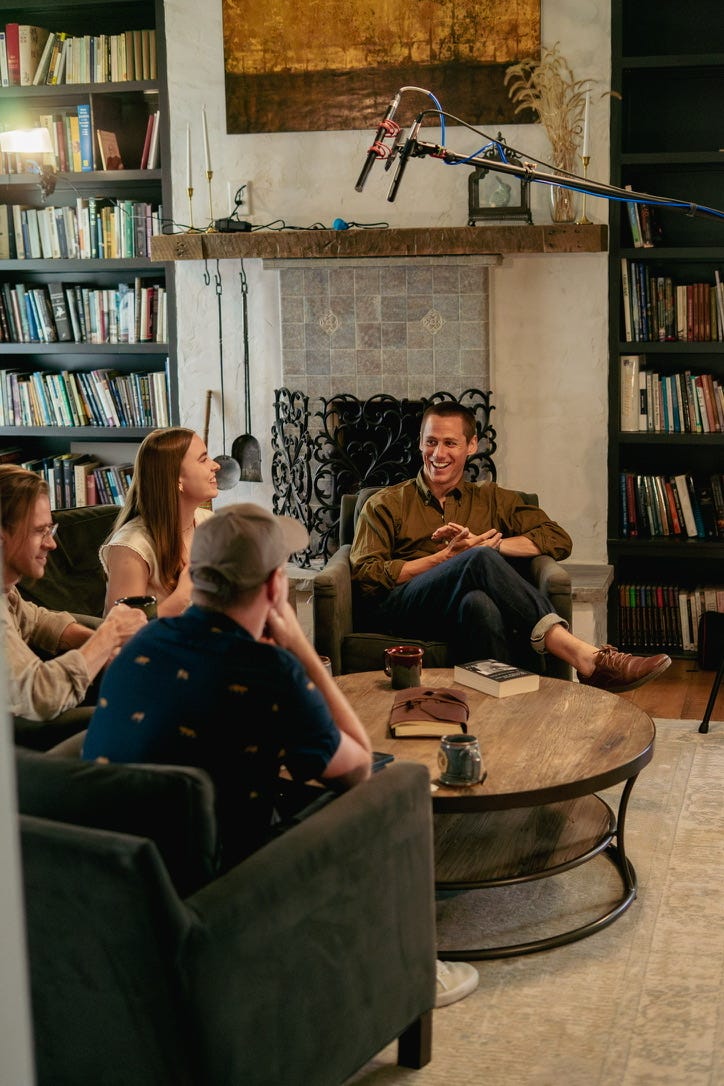
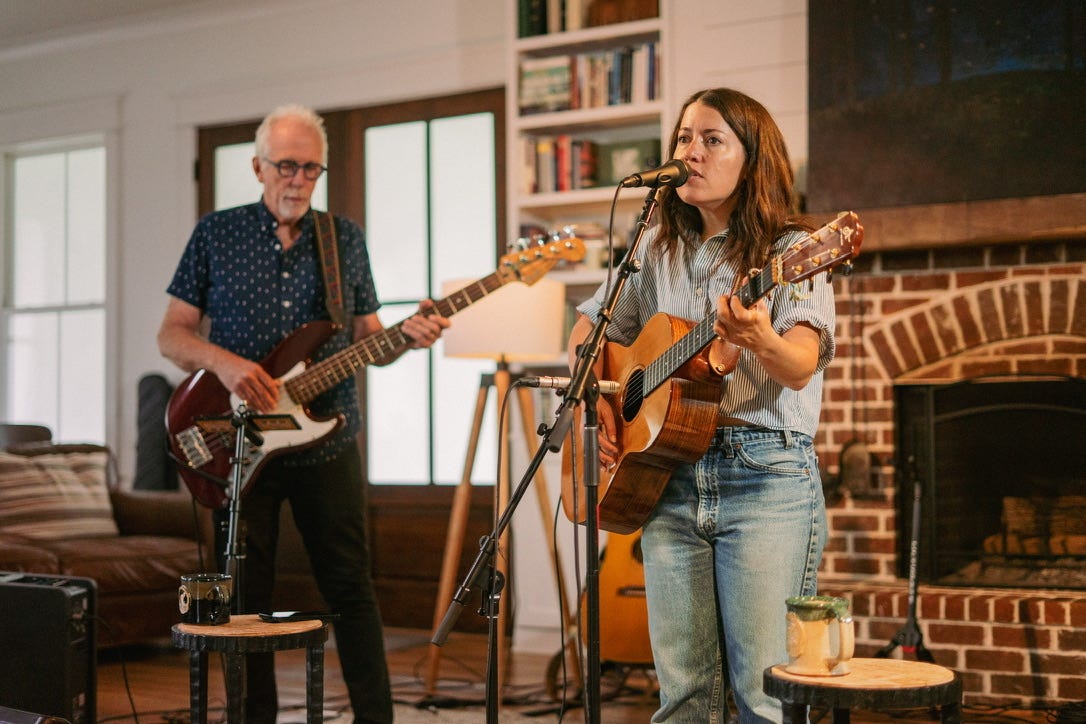
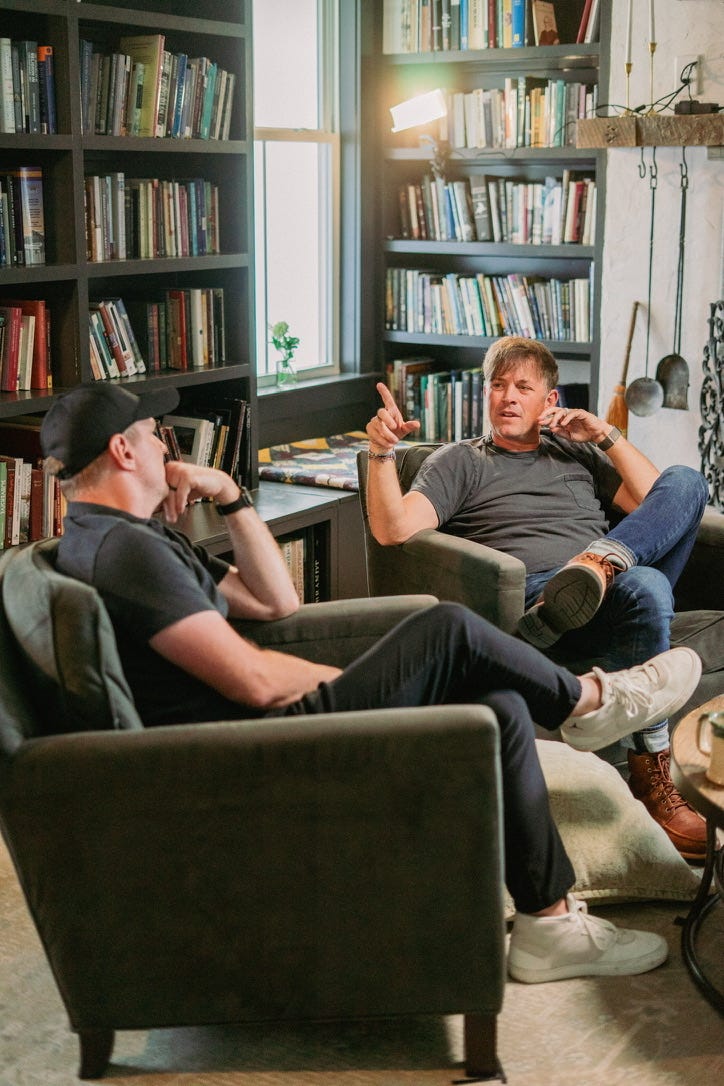
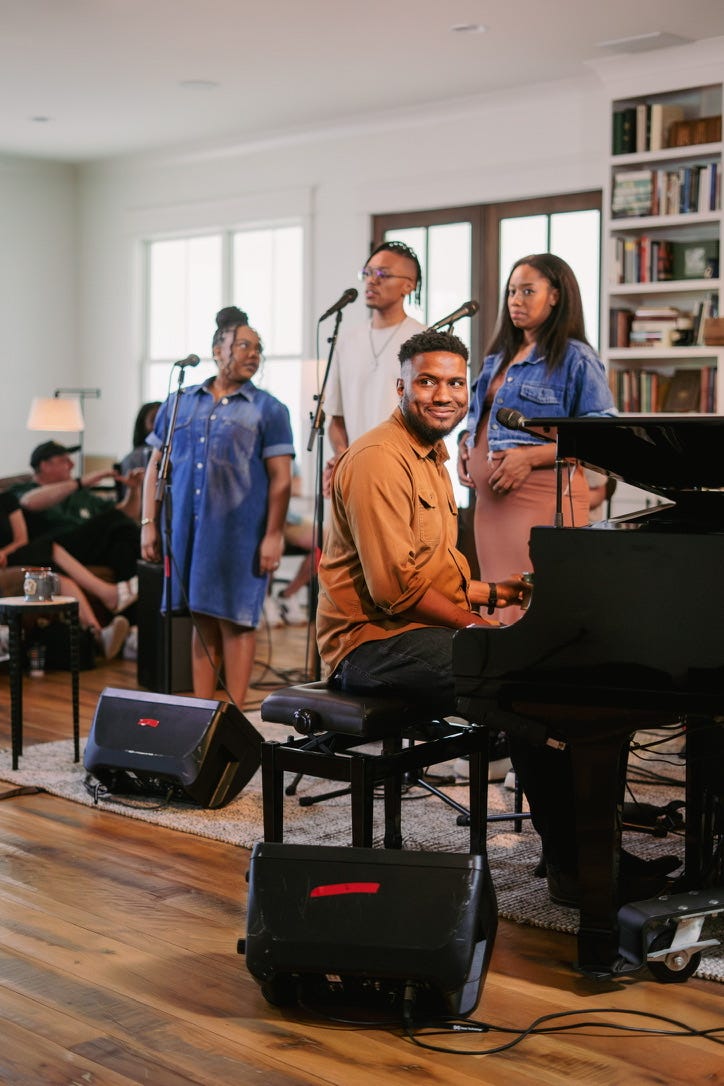
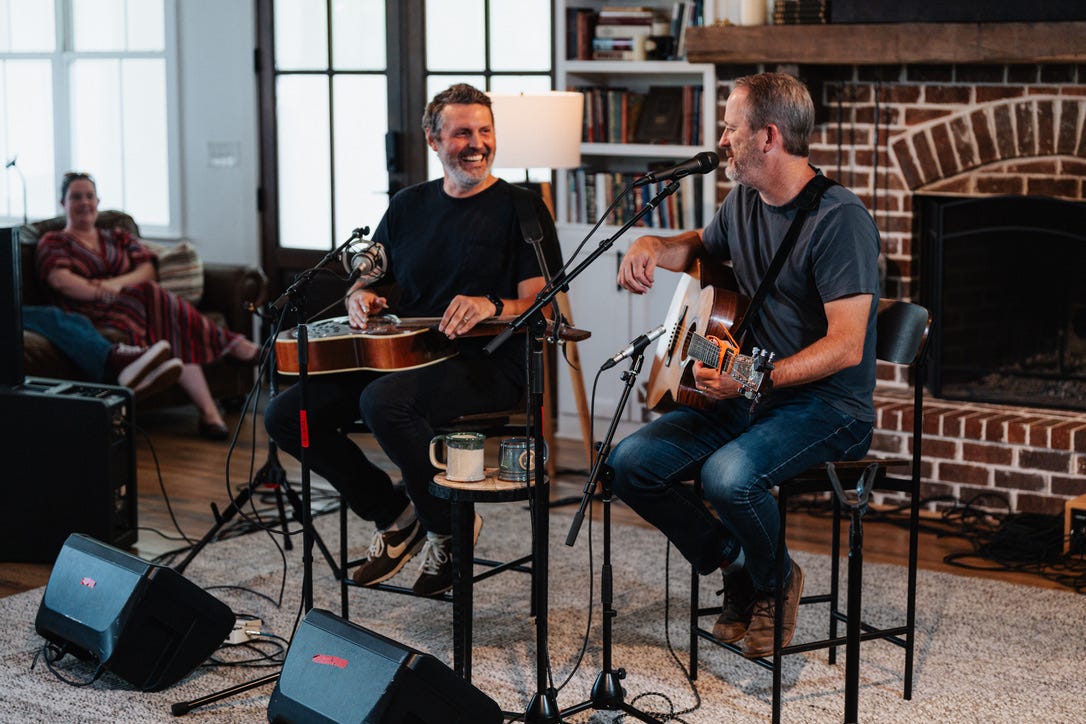
Thanks for reading. And thanks for those of you who reached about our secret Rabbit Room events this week. We had an amazing time and I can’t wait to share it with you all!
I’ll drop a few photos to show you…
Comments
Nothing yet. Say the first thing.
Sign in to join the conversation.