
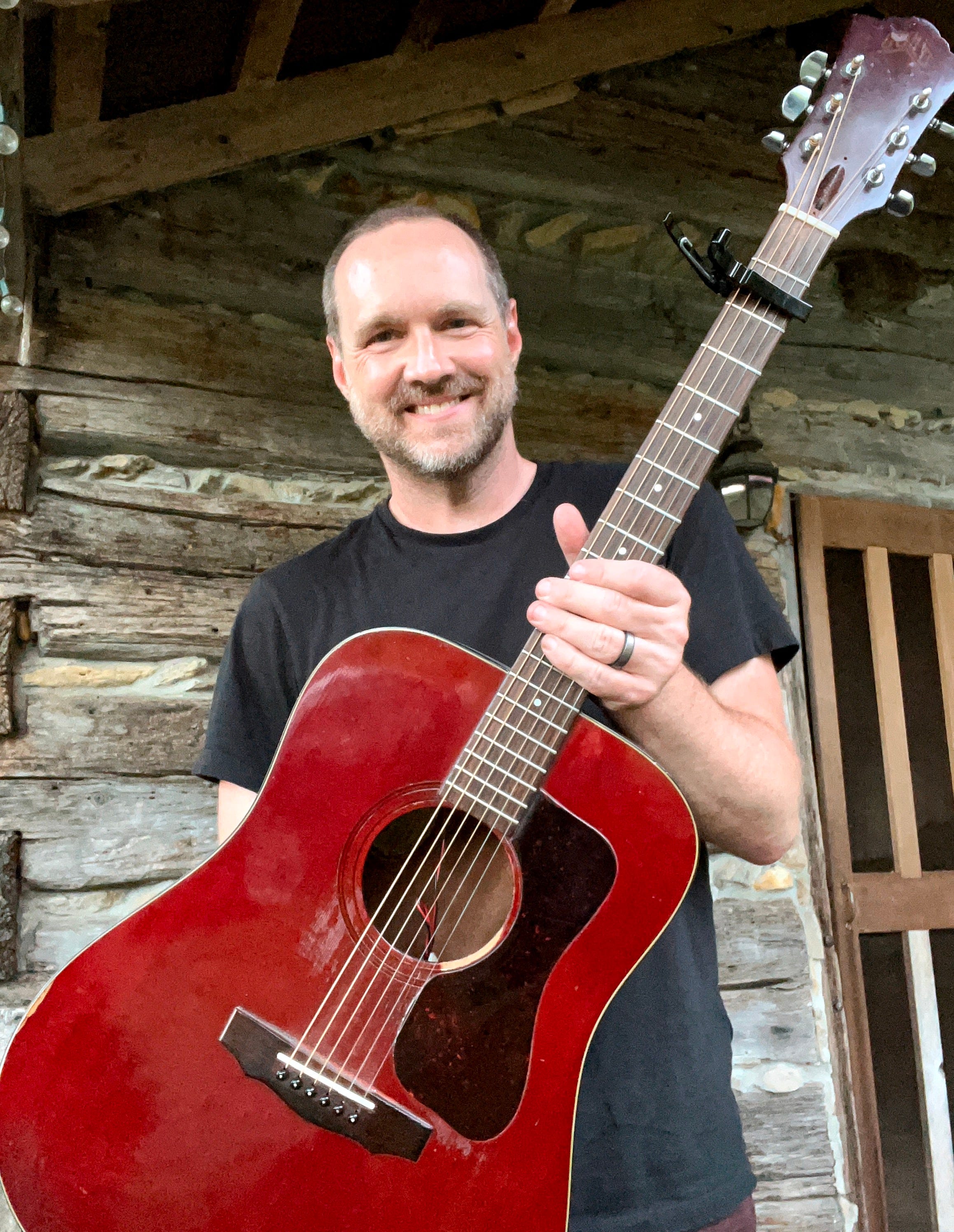
I want to tell you the story of my old red guitar, Charley.
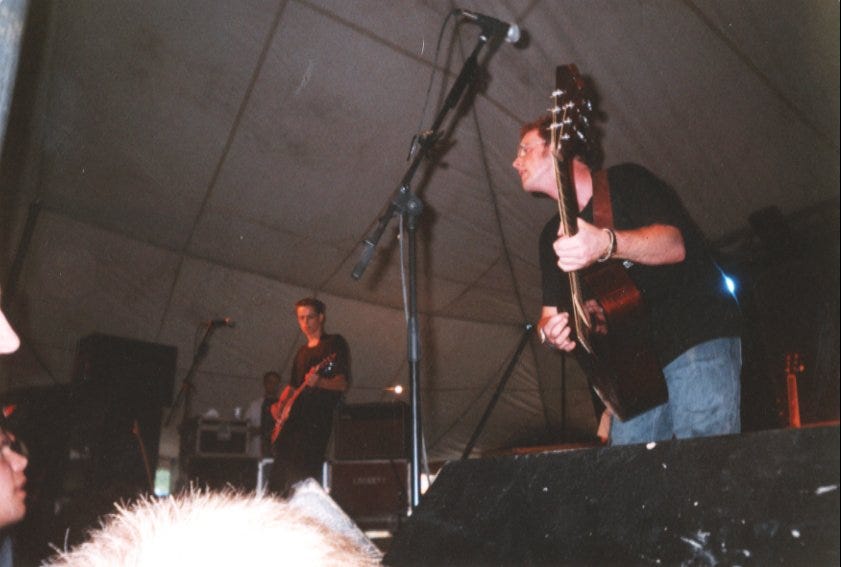
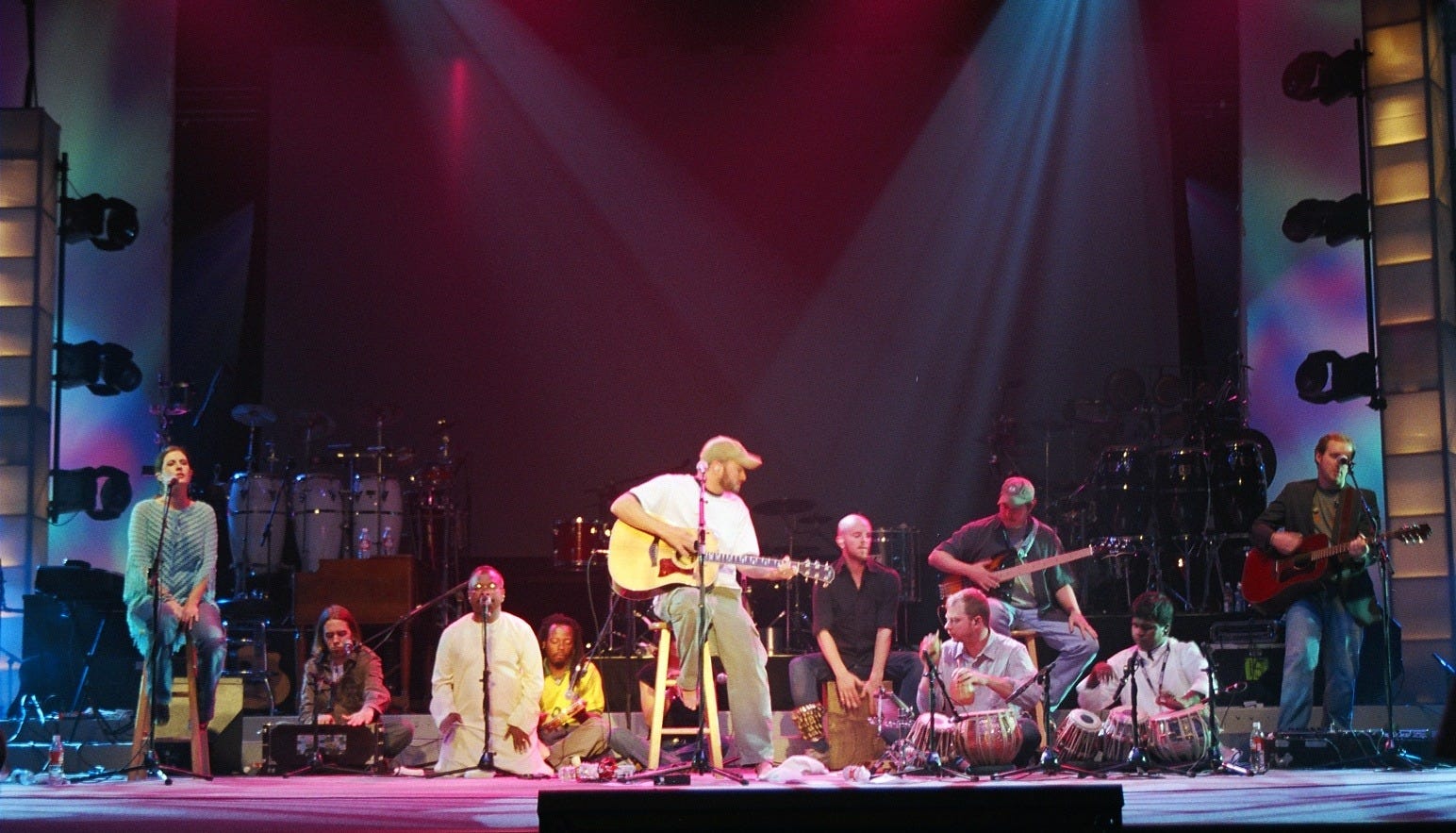
My first professional guitar, the one I used on the early Normals tours, was a Taylor 814. It’s a really well-made guitar, and it does what it does need to just fine. The woman who owns it now is a great songwriter in Durham, NC. She actually opened for me a few years ago. It seems to suit her perfectly, which is wonderful.
In the late ‘90s, everybody was playing Taylors. They cut through a mix, especially those models with the cutaway. They have a kind of shiny and bright sound. They’re easy to play, with a great neck and, honestly, it made me feel like a pro. I was really happy with it.
AND THEN…. We started listening to different music. Stuff that was muddy and swampy not shiny and bright. Bob Dylan and EmmyLou Harris, particularly her Wrecking Ball album. We got obsessed with it. Daniel Lanois had produced it, who had also produced U2’s Achtung, Baby and The Joshua Tree, and Peter Gabriel’s Us and So.
We knew we could never afford Daniel Lanois, but another name kept popping up on all those records: Malcolm Burn. He was Daniel’s right-hand man and engineer, and it looked like he also did some producing of his own. Mark, our A&R guy, suggested we try to track him down and somehow he pulled off getting a meeting - but we had to drive down to New Orleans to do so.
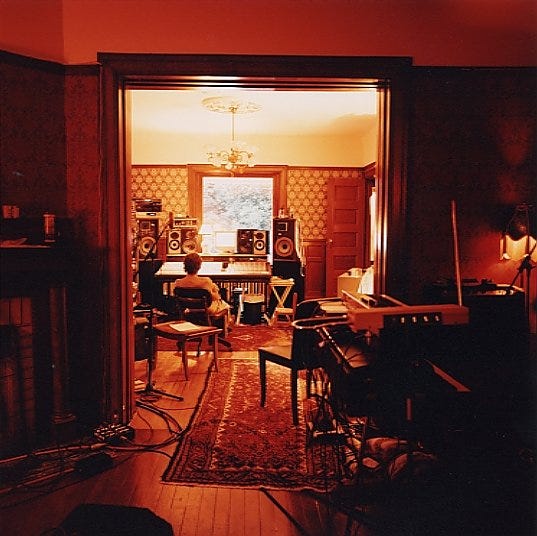
We were young and gung ho enough to do that, so drive down we did. It was a fascinating and completely un-Nashville time and we hit it off. Malcolm really helped us define who we were as a band over the two records he produced for us during our short career: Coming to Life and A Place Where You Belong.
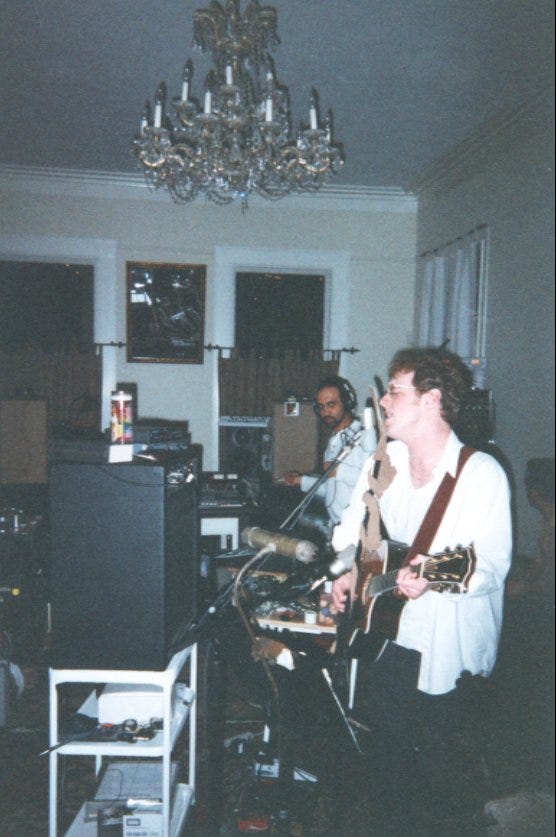
We did both of these in Malcolm’s home studios — which were not home studios like people have home studios now, where they have a home and then a bonus room with some gear in it. Malcolm instead had a big house that was an entire studio, and then he lived in the attic.
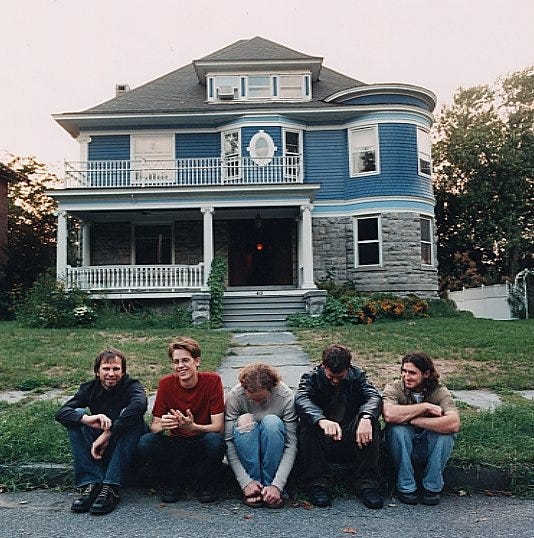
Coming to Life was recorded in a shotgun mansion in the French Quarter of New Orleans. A Place Where You Belong was done in a big colonial house in upstate New York.
Everywhere you looked in these houses was a musical museum: art, instruments, and curiosities. Malcolm was an eccentric and a madman and a genius. He taught us more about music in those few months than a master’s degree in studio production ever could have. He lived and breathed music in a way I’ve never seen before or since. It was utterly inspiring.
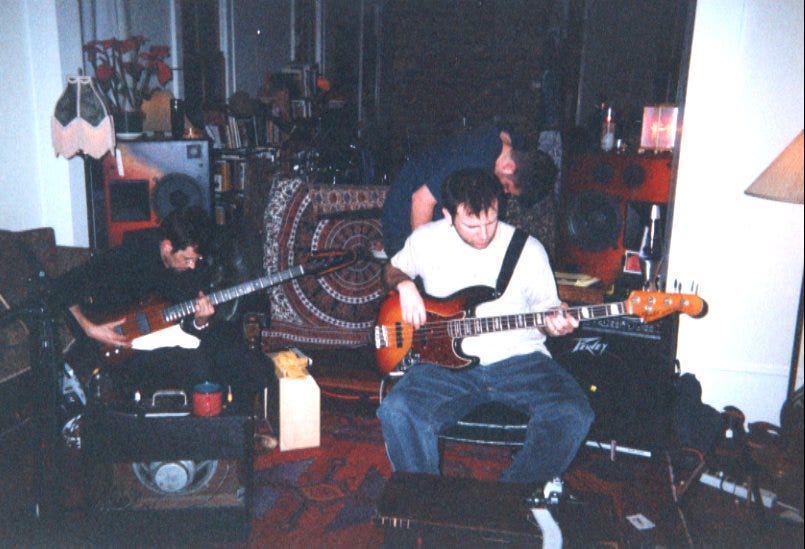
We typically worked without headphones, just the band playing in the room with monitors on the floor and the windows open into the New Orleans street.
What an experience. We were so young. I had my birthday during that record. Yep, the most sheltered kid in America turned 21 in the French Quarter in February during Mardi Gras. It was an eye-opening experience, I will tell you that.
Anyway, I was playing my Taylor on all the songs that had acoustic guitar, but Malcolm had a bunch of other guitars around and would keep suggesting I try them. We wanted to make something that sounded more earthy and warm and inviting, and that Taylor was just kind of brash and thin, fighting what we were doing. I kept gravitating toward this Guild acoustic that was lying around. It was huge and had this really natural, warm sound. Very woody. It wasn’t the easiest thing to play, but it just sounded so cool.
I was not a very good guitar player back then. Mark was our lead player, and still to this day I don’t understand any of the magic he does, but I knew enough to know that this Guild had something special.
Malcolm was aware that I kept going to that guitar and finally said something. “You like that one, huh? You know why? It’s got songs in it.”
I’d never heard anybody talk about an instrument like that before, but as soon as he said it, I knew exactly what he meant.
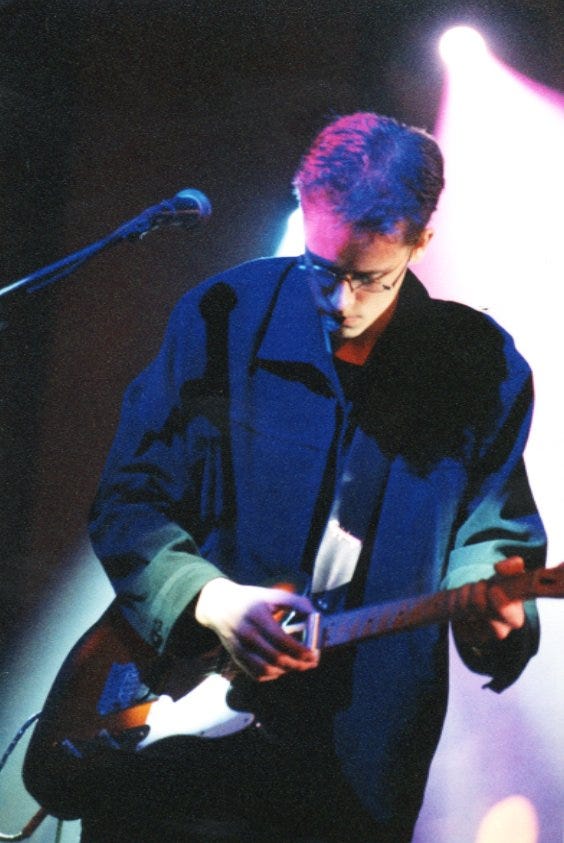
I had gotten the Taylor because I wanted people to think I was a professional. The songs I was writing on the Taylor I was writing to try and prove myself.
This Guild just made you write songs.
After we had finished the record and were about to leave New Orleans to head back to Nashville, Malcolm started telling stories again. He did this every day, multiple times a day. “Story time with Malcolm.”
This time it was about the day Sheryl Crow came to sing a harmony on an Emmylou Harris record there at Malcolm’s studio. It was a long, drawn-out story that ended with: “She had to leave in a hurry — and she forgot her guitar!” He looked at me and said, “She never came back to get it, either. It’s been here ever since. You played it on this whole record.”
That Guild I had been playing all month was Sheryl Crow’s guitar.
It’s all over Coming To Life.
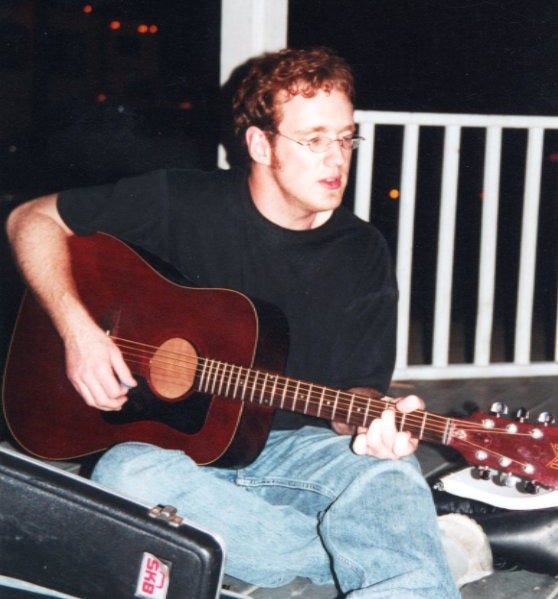
Malcolm never even told me. I love that. I think he knew I would have freaked out. I would have made it a thing. I was so young, and it would have felt like I had to play it on everything because it was a rock star’s, but no. I was playing it because I had started to learn to listen for the instruments that “have songs in them.”
An important lesson to learn.
Another lesson: Malcom also stopped a session one day when he realized I’d never heard the Beach Boys Pet Sounds album. I had to listen to it two times on vinyl on headphones before we could get back to work. I was 20. He was my music college.
So the record was finished. We went home. The album came out. I started playing these songs on my Taylor. It was fine. And then one morning Cason called me. It was probably 9 or 10 am. I remember I was still in bed. These were the days before texting. I picked up the phone. Groggy.
“Dude,” he said, “I’m at Broadway Music. They’ve got an old Guild acoustic! Get down here!"”
“They do?”
“Yeah,” he paused, but I could hear the grin on his face “and it’s red!”
I couldn’t have gotten down there faster.
Broadway Music was this amazing, legendary old used music shop in Nashville. Everybody just bought and sold gear all the time. It was like a real-life Reverb. That’s where I bought a bunch of my first guitars and pedals. All the guitar players would just go there to hang. Barry Graul from MercyMe used to work there. He sold me my first pedaltrain. Local blues legend Kenny Meeks was around one day and he taught me about spring reverb. My goodness, I miss that place.
I got down to Broadway and played the guitar. It was a 1975 D-25, the exact same model as Cheryl’s. But red.
It was $800 plus tax. I had $875 in my checking account.
Never in my life have I enjoyed a stupid financial decision more.
I had dropped out of college after my freshman year to do music. I didn’t feel uneducated, but I knew I technically was. We were traveling around the country in a 15-passenger van, and I had a lot of time to kill. I would go to used bookstores and buy all the books I assumed my friends were reading in college and devour them in the back of the van during our travels.
At the time, I was on a big Steinbeck kick. The greatest American writer of all time.
The day I bought that red guitar, I was reading a book called Travels with Charley, one of Steinbeck’s few works of nonfiction. He wrote it after feeling he had gotten disconnected from the country he was writing about. He put a camper on the back of his pickup truck and took his trusty dog Charley with him for a road trip around America, writing about the things he would see along the way.
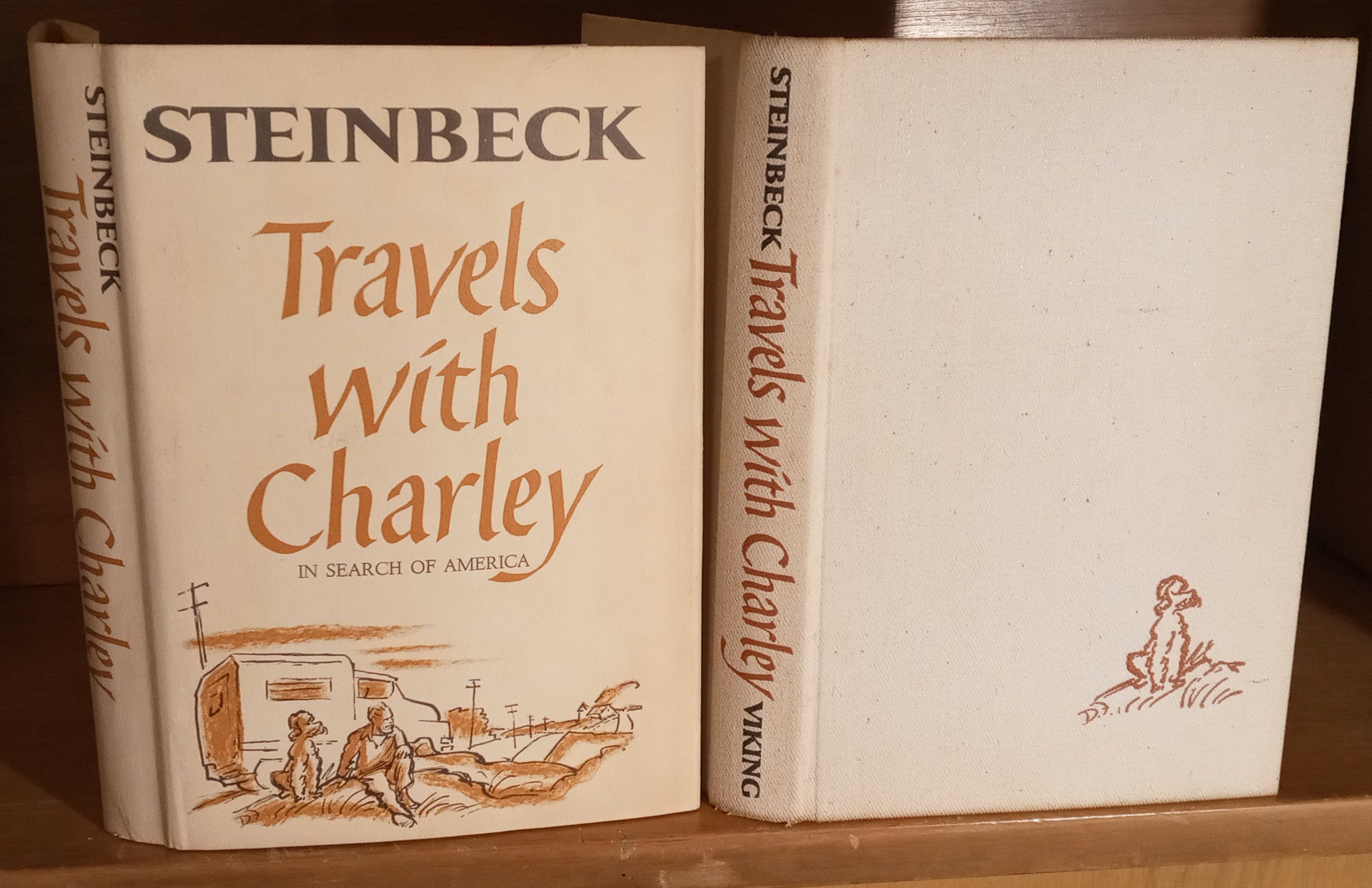
It’s an incredible book. One highlight is when he happens to be in Little Rock the day public schools are forced to desegregate. It’s one of the most incredible pieces of writing you will ever read.
Like Steinbeck’s dog, I felt like this red guitar was going to be my companion around the country as I wrote the things I saw, so I named him Charley, too.
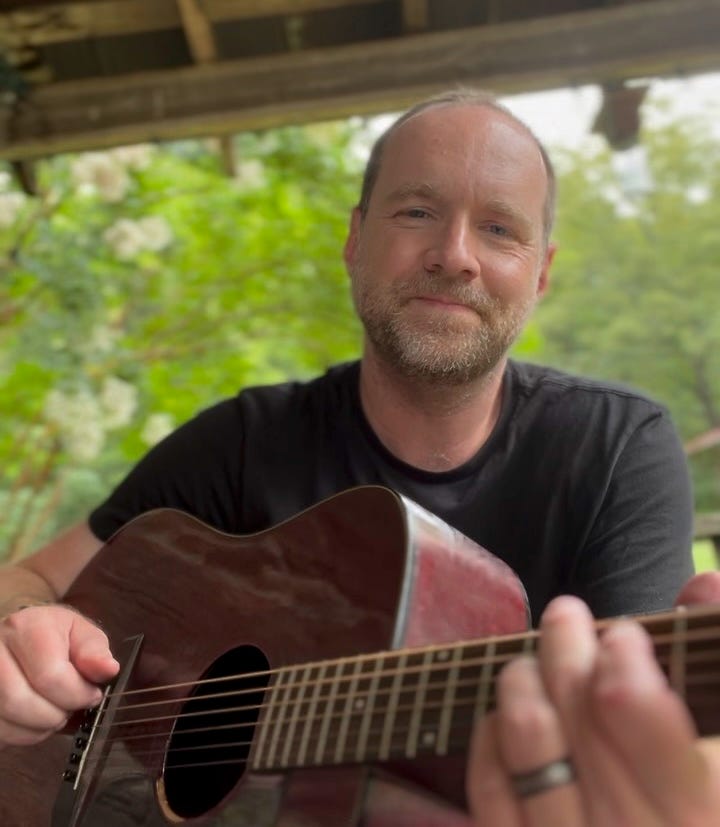
That was 25 years ago. If you’ve listened to much of my music you’ve heard him on just about every record. He’s the guitar I played on the song I put out this past Friday.
He’s getting old now. His neck is pretty warped, so I can’t tune him all the way up to standard. I have to keep him down a step so the neck doesn’t snap. It’s kind of like when an old man’s voice gets low and gravelly. I love it.
I don’t travel with Charley as much as I used to. He can’t keep up with a full set like my newer Martin can. My wrist gets pretty tired after playing him for a while. It takes a lot of work.
But when it’s time to get some writing done, you better believe Charley’s right there.
He’s still got a lot of songs in him.
If you enjoy this Substack, please consider supporting my work by becoming a free or paid subscriber.
I also got to talk about guitars and books - and the difference between American and British Evangelicalism - with one of my absolute heroes N. T. Wright on this week’s podcast. Check it out!!
Comments
Nothing yet. Say the first thing.
Sign in to join the conversation.