
It has been a while since I’ve had any news about my own crime writing, but I can reveal that I have signed a contract with Penguin Random House for two historical noir novels set in Melbourne. The first, which takes place in the late 1960s, is due to be out in September 2027.
If I’m completely honest, I thought that my days writing crime fiction might be drawing to a close. This is especially since the 2025 closure of my last publisher, Down and Out Books, which meant that my two Gary Chance books, Gunshine State and Orphan Road, are no longer available.
But never say never, I guess. There are too many people to thank here, but right now major props to my agent Dan Pilkington for the hustle. I’m looking forward to working with Bev Cousins and the team at Penguin Random House. I can’t really say too much more now but you can bet you’ll be hearing a lot more about it when I can.
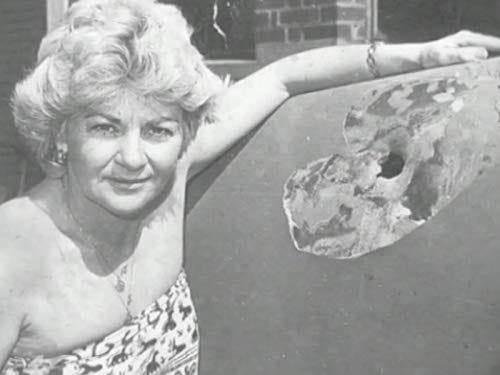
Word filtered out a couple of weeks ago that Melbourne criminal identity Kath Pettingill had died at the age of 91. She’d been a brothel owner and gangster, who was well known for having a glass eye to replace the one she had lost after being shot in 1978. She was also the mother of a murderous brood of sons that regularly made the headlines in my home city of Melbourne in the 1970s and 1980s.
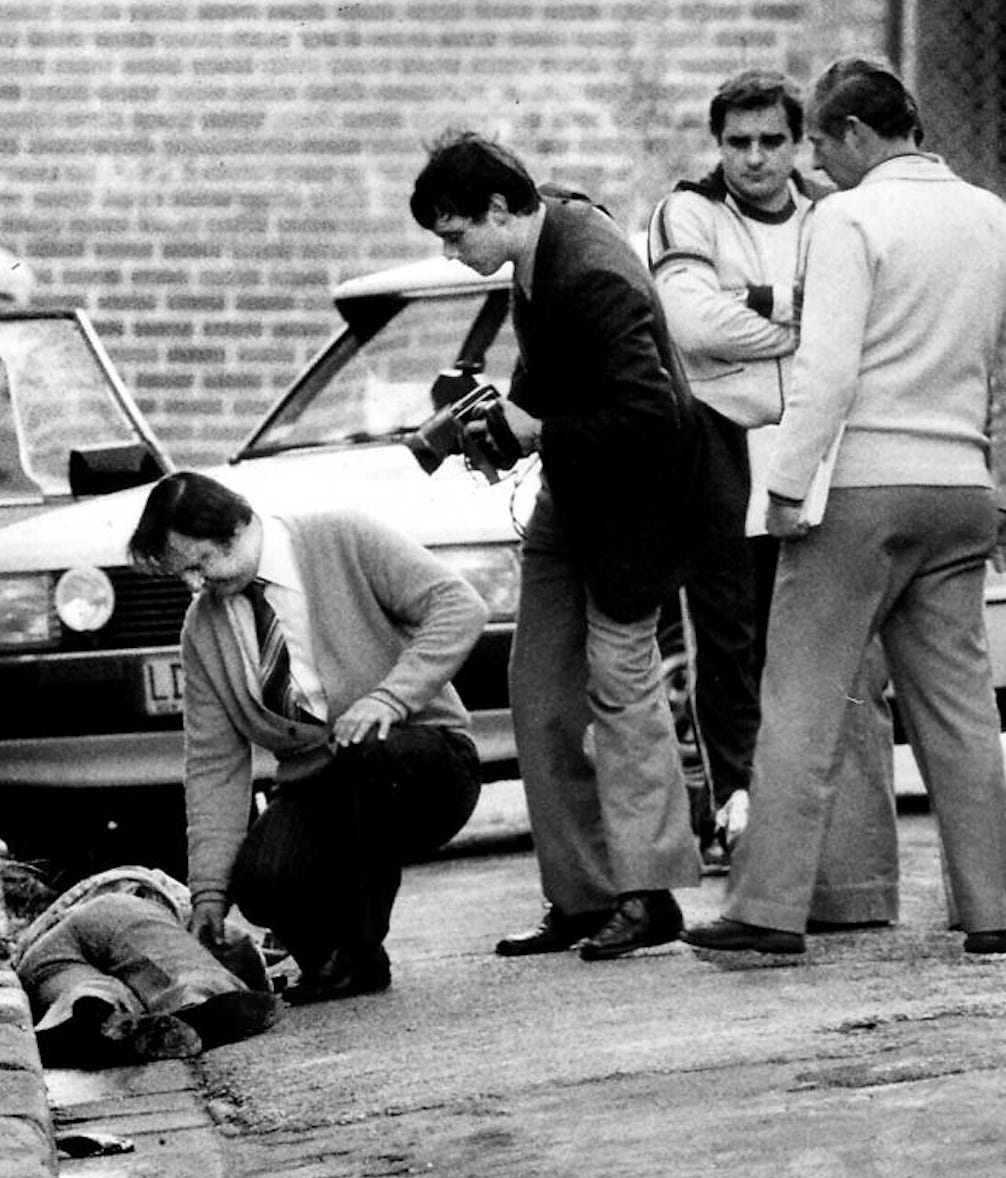
Two of the boys were charged - and subsequently acquitted - of the murder of two police officers in 1990 in an ambush in Walsh Street, South Yarra in 1988. The killing was so-called revenge for the death of another man at the hands of the Armed Robbery Squad, who had their own well known penchant for using excessive force. Two other sons were major drug dealers, one of whom was often referred to as ‘Mr Death’.
Anyway, I am not going to regurgitate the sordid details of Pettingill’s life. You can easily find more about her in various podcasts and news reports. Pettingill herself had a bit to say about it all, too, in a 2002 book, The Matriarch: The Kathy Pettingill Story, written by former Truth journalist, Adrian Tame. As the tongue in cheek heading above indicates, I am more interested in how Pettingill and her family intersected with the Australian film and television industry.
It is fairly well known that Pettingill was the inspiration for the character of Janine ‘Smurf’ Cody, played by Jackie Weaver, in David Michod’s stunning 2010 film, Animal Kingdom. An American version of the show subsequently appeared, set in California - which I have never seen - with the character of Janine played by Ellen Barkin.
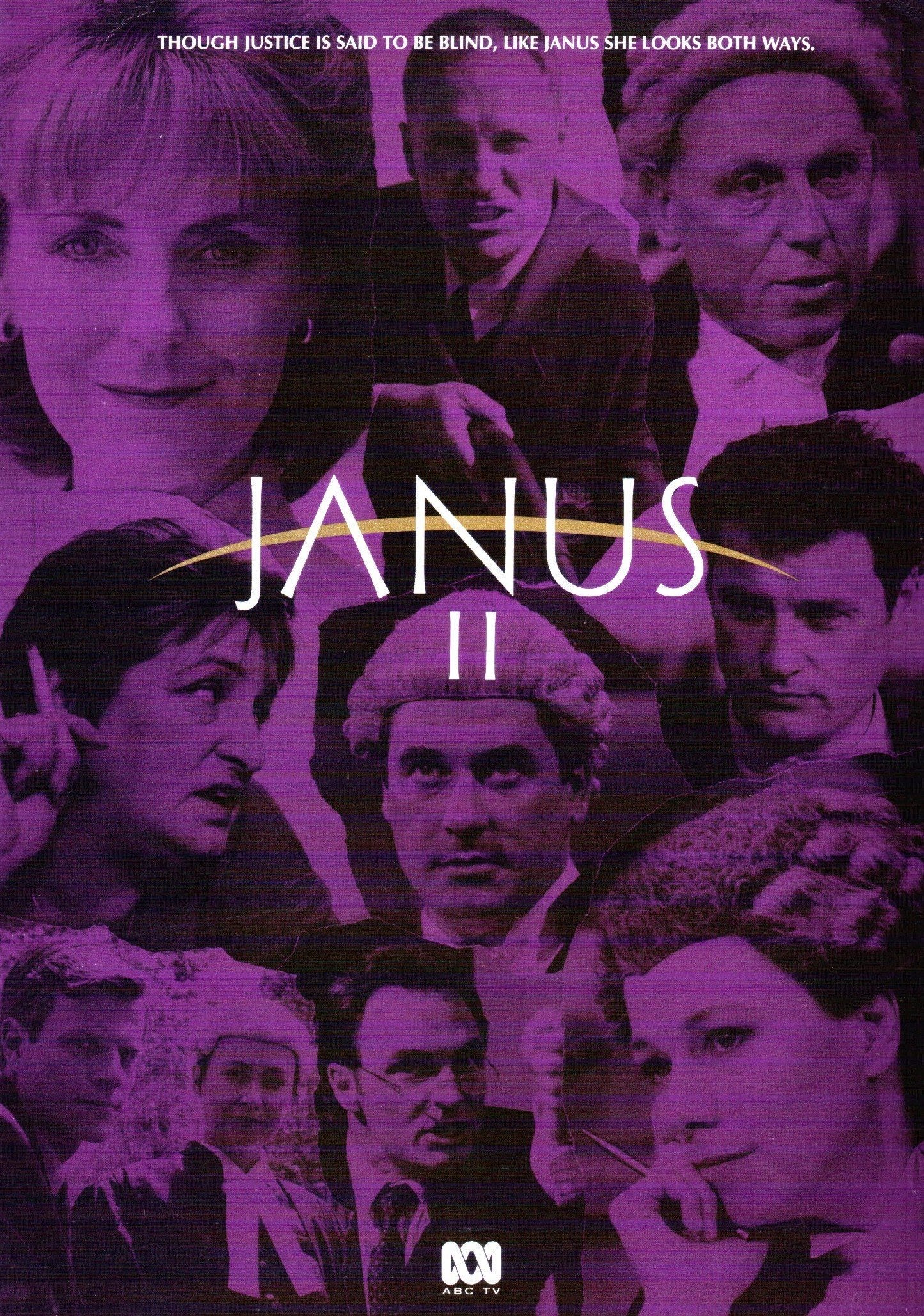
Lesser known is that Kath Pettingill was also the basis of character called Shirl Hennessey in the underseen Australian television crime drama, Janus. Produced by the Australian Broadcasting, it ran from 1994 to 1995, and was loosely based on the Pettingill family and the aftermath of the Walsh Street shooting. You can be forgiven if haven’t seen it or even heard of it, because to my knowledge the ABC have never shown it since and there has never been a DVD, let along Bluray release.
That’s a bloody crime in itself, given how good it was.
I was living with my partner in Hanoi, Vietnam, at the time that Janus played on Australian TV, but her mother sent us VHS recordings of the show so we could catch it (whatever happened to those tapes?). It starts with members of the Hennessy clan walking free from a high profile murder trial involving the shooting of two police officers during a failed bank robbery. The narrative then splits into two strands: the family’s subsequent criminal activities; and the efforts of an elite police squad, heading up by Sergeant Peter Faithful (Simon Westaway) to catch them. That latter plot might have also involved police corruption, but I can’t be sure.
From memory the series had was some great logistics porn involving the various police surveillance and tactical operations targeting the Hennessey’s, as well as lot of courtroom drama. Chris Haywood as the family’s lawyer, Michael Kidd, was particularly good (“I don’t play games, I invent them,” was one of his many memorable lines). Hennessey was brilliantly depicted by a little known Australian actor called Pauline Terry-Beitz, as a terrifyingly calculating figure overseeing a group of even more criminally nightmarish sons.
Janus was a very loose sequel of sorts to another equally good Australian TV ABC series Phoenix, which screened over 1992-1992. The ABC did release a DVD of this, which I have, so my recollection of the show is much better. You can also watch Phoenix here on the ABC’s screening platform. Why Phoenix is there but Janus is not is a mystery to me.
Phoenix focuses on the Major Crimes squad, an elite group of Victorian cops. Series one, the best of the two, sees them investigating a car bomb that explodes outside a Christmas in July celebration held by the police, which kills two of their number. This plot is loosely based on another well-known real-life Australian crime, the car bombing of the Russell Street police headquarters in 1986. As an aside, I remember hearing the explosion and seeing the plume of smoke rising from it from the window of my the student house I was then living in, just up the road from the police headquarters. Melbourne really was a different place back then.
Major Crimes is depicted as a group of hard drinking, smoking, tough, exclusively male police, headed up by veteran cop, Jock Brennan (Paul Sonkkila), with Westway as his second in command. Brennan’s dedication to the job is total, a trait that has led to the disintegration of his marriage. Brennan and his squad have an almost siege mentality to those around them: the public, their superiors, and other elements of the police force, particularly internal investigations, who they refer to as ‘the toe cutters’, but also the individuals who work in what was then the still relatively new area of forensic science. This attitude to forensics slowly changes as the story progresses, to the point where they realise that forensic proof is what is ultimately going to crack open the case.
The other major cultural shift in the show occurs when a female police analyst, Megan Edwards (Susie Edmonds), joins Major Crimes to help them make sense of the on the surface disparate intelligence they are gathering. She must deal with everything from disparaging sexist remarks, pornographic pictures left on the wall of her new office, to suspicions that she is not a real cop because her job mainly involves sitting at a compute. But, like the forensic team, her ability to take a more analytical and scientific approach to information very quickly becomes key to progressing the case.
It is a depiction of old school policing but also a dissection of it, at times almost anthropologically so. One episode sees the most macho member of the squad bungle a raid and nearly get shot. He pisses his pants in fear, and the rest of the episode shows in incredible detail the derision he suffers from his fellow officers and his own shame, which threatens to completely unravel his masculinity and ability to function on the job. Another episode deals with the investigation of a series of rapes which may be linked to the bombers. This includes an unsparing depiction of Megan’s attempts coax a rape victim, who is understandably terrified after her ordeal, to tell the police what she knows.
The story telling style is incredibly non-linear and, associated with this, is not afraid to take its time. Major Crimes are led down all sorts of investigative avenues, the significance of which is often not explained or, at times, even really sign posted. Armed robberies, a series of brutal rapes, drug trafficking.
But most interestingly, Phoenix, very much like Janus, is a rare evocation of Melbourne, my hometown, as a noir city. The only parallel I know is the Crawford crime drama Division 4, which screened from 1969 to 1974. Filmed in the dead of winter, Phoenix has a bleak, washed out feel. The city was in the grip of an economic recession in the early 1990s, one of the reasons I left to work in Asia, and you can feel how utterly depressed the place was on the screen. Phoenix also depicts Melbourne prior to the widespread gentrification that started to happen from the mid 1990s onwards, a world wood panelled pubs and dingy boarding houses, populated by the criminal class that existed before drugs and protecting those who sold them became the city’s dominant illegal activity.
Postscript: A informed reader brought to my attention the fact that Janus actually did have a two-box DVD release, the same time as Phoenix. This is news to me, but good to hear. A quick scan of Ebay confirms this, although the asking prices for copies are far more than I am prepared to pay.
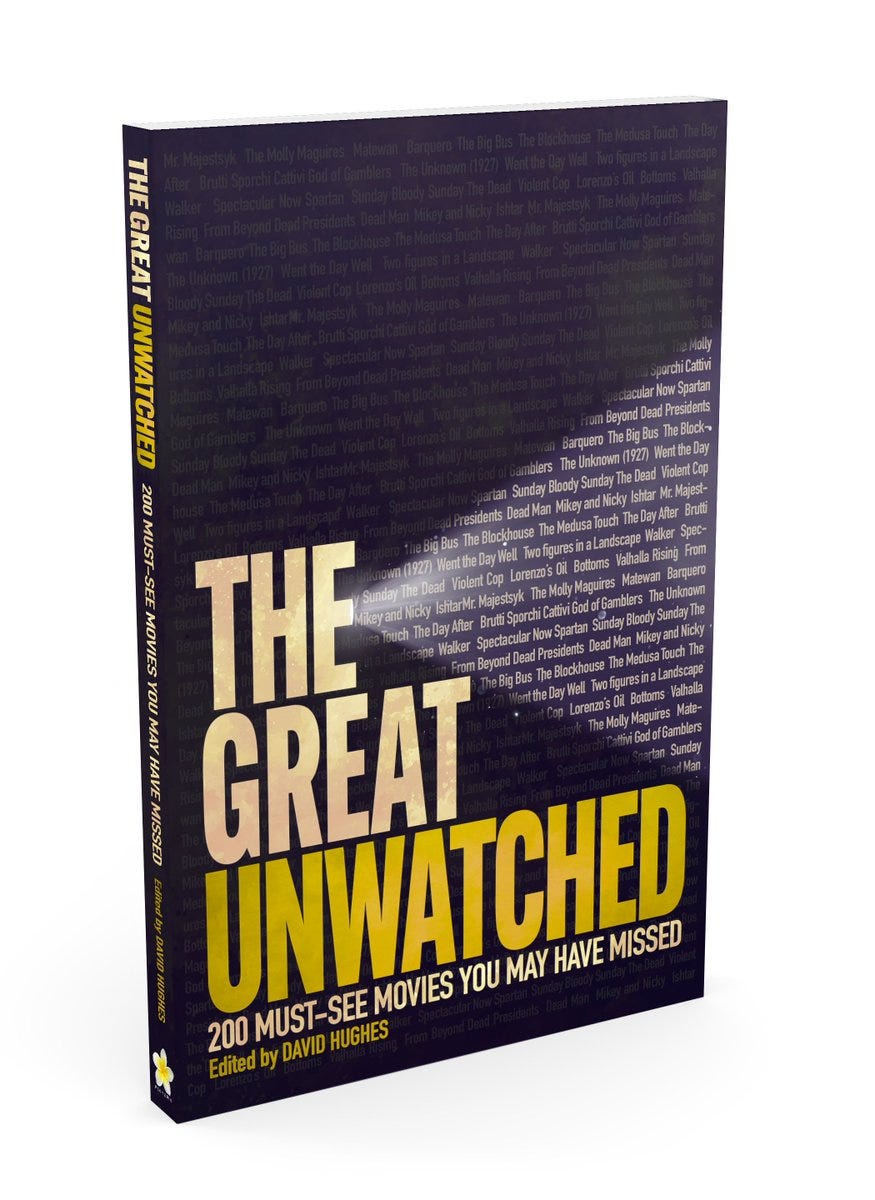
Amidst everything, I have found the time to contribute to a new book, The Great Unwatched: 200 Must-See Movies You Might Have Missed. The title of the book is self explanatory, and you can pre-order it from the Plumeria Pictures site here. It is very cool to be in this book with a bunch of very talented film writers. I am contributing four reviews. A couple of the films you have seen me bang on about on my various online haunts. The other two are surprise picks. More information when I have it.
Until next time.
No posts
Comments
Nothing yet. Say the first thing.
Sign in to join the conversation.