
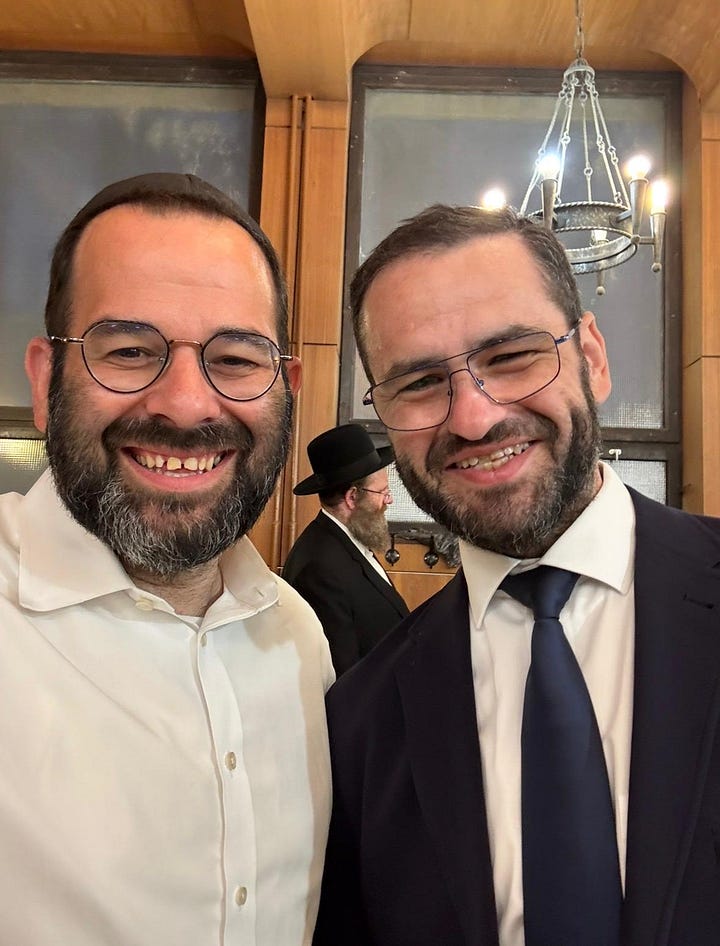
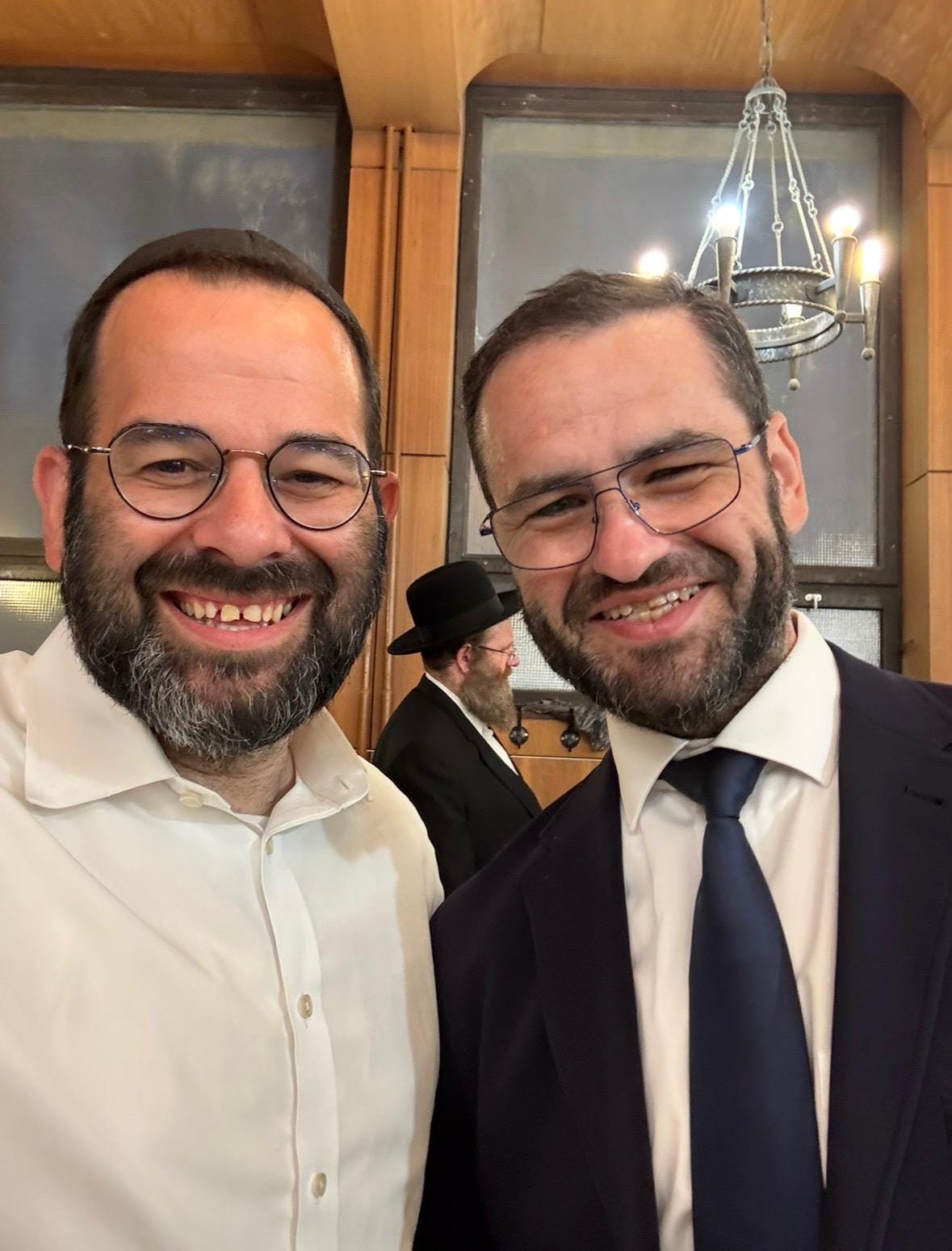
As I sat down, Rabbi Zsolt Balla leaned over and told me the shiur was going to be in Hungarian.
I said okay, and I sat down next to him.
I do not speak Hungarian. I cannot recall ever hearing it spoken. But he is an old friend I had not seen in years, and you do not walk out on a shiur, even one in a language you do not know. It was fifteen minutes and I had nowhere else to be. It was a weekday evening between Mincha and Maariv, in a shul in Budapest, where neither of us lives. He is the rabbi of Leipzig, in Germany. I had come from a week in Poland with our community and was spending two days in Budapest to catch my breath.
He was teaching the halachos of the Nine Days. Why we do not eat meat and why we do not drink wine.
And then, at some point, I was following him.
Not every word. But enough to know where he was going and to know when he had gotten there. At one point I even added something, in English.
It was only afterward, when I stopped to think about what had just happened, that I understood it was something bigger than just following a shiur in Hungarian.
Beyond the few Hebrew words I could catch, we were speaking the same language. We had been speaking it the whole time. The language of Torah was already ours, his and mine, before either of us walked into that room.
Then other people joined in, and now there was English in the room. The Mishnah Berurah was in Hebrew. The shiur was still in Hungarian. In the middle we opened a Gemara for some clarity, and now there was Aramaic too.
Four languages in one small room, and no one was confused about what we were doing there.
Torah is the language we share.
We davened Maariv. Afterward I went over to the shelf, and one sefer caught my eye. The Ksav Sofer, who led the yeshiva in Pressburg and was one of the leaders of Hungarian Jewry.
Sefer Devarim opens by telling us exactly where we are standing.
Eileh hadevarim asher diber Moshe el kol Yisrael b’ever haYarden.
The far side of the Jordan. The last weeks of Moshe’s life. A generation that never saw Egypt, about to cross into the land without him. And there, at the end, ho’il Moshe be’er es haTorah hazos. Moshe undertook to explain this Torah.
The Midrash says he explained it in seventy languages.
The Ksav Sofer asks the obvious question. Why then? They were about to cross into Eretz Yisrael. They were about to stop wandering, to live in one land and speak one language. Seventy languages was the last thing they needed.
He answers that this is exactly why it had to happen then. Otherwise a Jew might conclude that the Torah was given for the midbar and for Eretz Yisrael, that it belongs to those places, and that a Jew living somewhere else, scattered among the nations, is not really counted and not really bound.
So before they crossed, Moshe put the Torah into every language on earth. In every nation and in every tongue, in all the places we would ever be made to live, we are obligated in this Torah and it does not change.
I had just heard it in Hungarian, in Budapest, from a rabbi who lives in Leipzig. Then I read the reason why, in Hebrew, ten minutes later.
Maybe it struck me the way it did because of where I had come from.
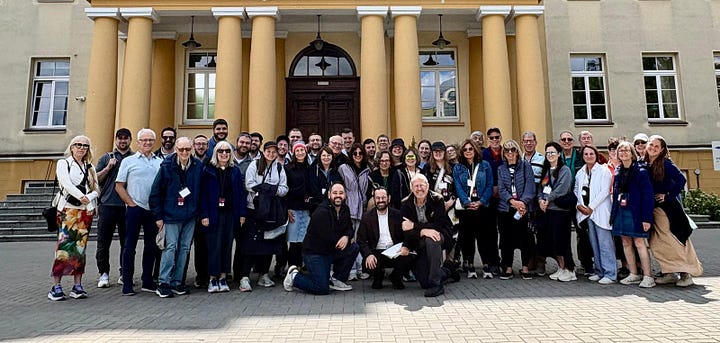
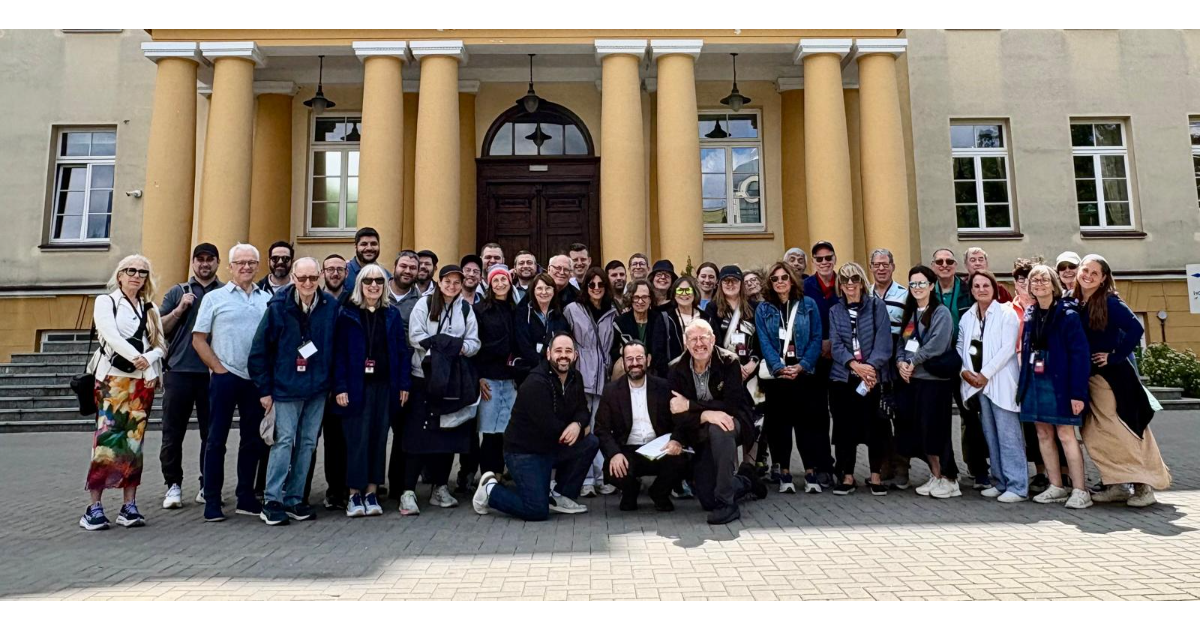
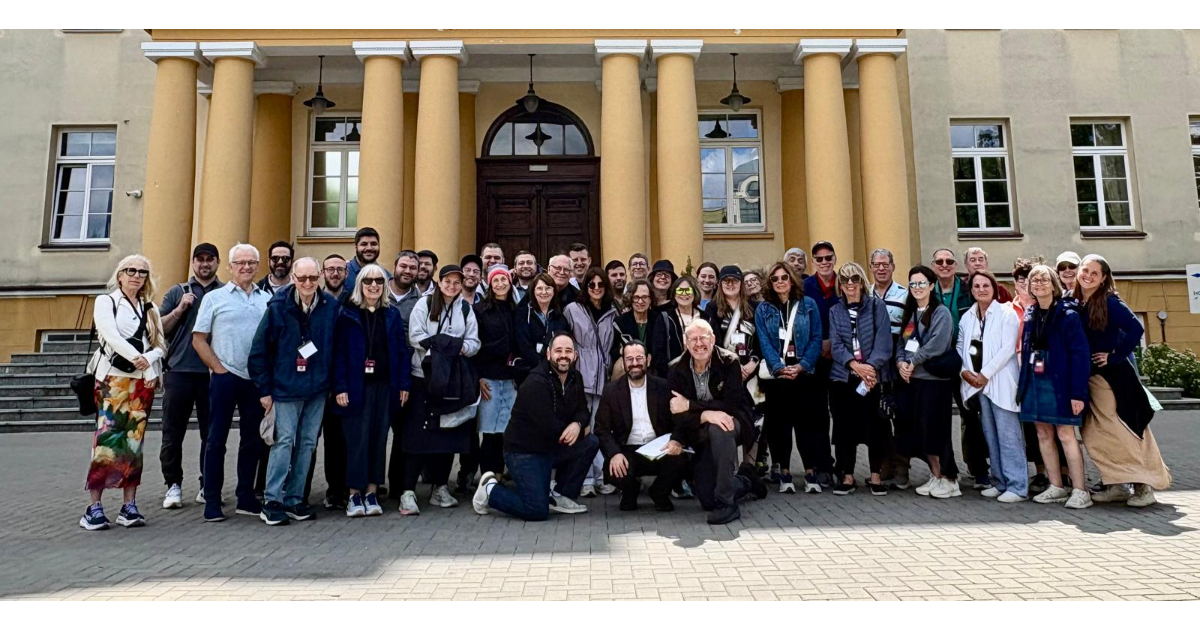
I spent the previous week moving through towns and shuls and fields and camps, learning what Jewish life had been like before the war and trying to take in what our people were made to suffer. It was one of the heaviest weeks of my life, and we carried it together, forty-four of us.
Again and again we saw that when the Nazis entered a Jewish town, they came for the sifrei Torah and the shuls as well. Not instead of the people. They would get to the people. Sifrei Torah desecrated, degraded, burned, dragged into the street, Jews forced to watch and sometimes forced to take part.
On Shabbos we were in a shul in Kraków that is now a museum that teaches the world about the Jewish life that used to be there. Our guide, Rabbi Tzvi Sperber, founder of JROOTS, said this is Hitler’s dream. That there should be museums of Jews.
They understood that the Torah is not an object inside Jewish life. It is what carries us from one generation to the next.
Being there made me realize something I had never thought about. The Jews deported across Europe often could not speak to one another. They came from Poland and Hungary, Greece and Holland, France and Germany. A man could be screamed at in a language he had never heard, and not understanding was its own kind of terror.
And yet they could still speak to each other. They knew Shema. They knew Kaddish. They knew Shabbos.
That does not make what happened to them less terrible. But it tells you what they still had.
And that story is part of my own family.
Sara’s great-grandfather, Rav Avraham Chaim Moskowitz, the Hasidic Rebbe in Czernowitz, was murdered because he refused to trample on a Torah.
His refusal told me something about what the Torah was to him. It was not outside of him. It was not something he could step on and remain who he was.
And generations later, I, the husband of his great-granddaughter, sat in a shul he had never seen and followed a shiur I had no business following.
The Torah runs through generations. From a Rebbe in Czernowitz, to children and grandchildren he would never meet, to a room filled with languages he never heard.
Back in the shiur, Rabbi Balla had taught one more thing, and I want to pass it on to you.
On the night of Tisha B’Av, at Maariv, we leave out a pasuk we say every other day of the year.
Va’ani zos brisi osam, amar Hashem. Ruchi asher alecha u’devarai asher samti beficha, lo yamushu mipicha umipi zaracha umipi zera zaracha, mei’atah v’ad olam.
My words that I have placed in your mouth will not depart from your mouth, nor from the mouth of your children, nor from the mouth of your children’s children, from now and forever.
It is the promise that the Torah will not be lost. Not from your mouth, not from your children’s, not from theirs. And on the night of Tisha B’Av we do not say it. Not because it stopped being true, but because it is too much comfort for a night that has to first be endured.
That promise was not made just to me. It was made to you, and to your children, and to whoever comes after them, in whatever language they end up speaking.
They could burn a sefer Torah.
They could murder the people who carried it.
They could put one on the ground and order a Jew to walk across it.
He would not put his foot on it, and they killed him for it.
They never got it out of his mouth.
They have not gotten it out of ours.
Lo yamushu mipicha umipi zaracha umipi zera zaracha.
No posts
Comments
Nothing yet. Say the first thing.
Sign in to join the conversation.