
So, Andrew, you’ve been delving into the nation’s secrets for over 40 years now. We recently spoke about your book on Burgess, Stalin’s Englishman, which you started researching way back in the 1980s. That came out of helping your mentor, John Costello, who was writing a book about Blunt. Can you give us an idea of how it felt then, and how things have—or haven’t—changed over the last almost half-century in terms of trying to uncover these stories? And what did John Costello teach you about the grit needed to do it?
Well, John Costello was very, very instrumental, really, and I think he taught me two main things. One is not to believe what you read, but that the job of the historian is to dig deep and try to tell the truth. If necessary, you’ve got to cast your net very wide. You need to jump on a plane and go off and do research in America. You need to go and do that interview with someone because they might die. You need to build relationships with people who might be useful contacts, and you need to really work those obscure private archives that no one can be bothered to look at, and read everything—even the adjacent files—because in the adjacent files you’ll often find material that hasn’t been weeded from the other files.
I mean, we were frustrated in the 1980s. Very little was released. We didn’t actually have a Freedom of Information Act then, so we were reliant on what little was released. I think the great development is that there is now a lot of material. MI5, particularly, has been very good about releasing files, and that has triggered a whole series of books, new information and reassessments. That’s the way it should be.
But I think one of the sad side effects was that government became much more secretive. Instead of having civil servants taking minutes, there were discussions and the whole lot was stuck on Post-it notes, et cetera. And so we’ve lost a lot. In the past, we thought: well, we may not see it for a while, but it’s there. Now, I suspect it’s never even been recorded.
And we have, of course, this extraordinary new development with the reclosing of files that were previously opened, often copied, often quoted, but are now not available to researchers. That’s shutting the stable door after the horse has bolted.
But, yes, it has changed a lot. I think people are more open to speaking in some respects. There was that generation I was interviewing in the 1980s who were very much old school. That’s still there, but I think it is easier now to get people to come forward. They’re less deferential. It’s much easier, for example, to do books on the Royal Family now because there are people who will break rank. But there were NDAs signed then in the same way as now. So it’s slightly mixed.
I think the great thing then was that there were many people alive who had seen these events. When I was interviewing people on Burgess and Blunt in 1985, for example, these people were only about 74, so they were contemporaries. I found a lot who could tell me stories about Burgess. Clearly, now they’re all dead, and unless they’ve left some sort of record, we’ve lost those memories.
So it is a mixed picture. But I think it is sad because we have a very distorted view of our history: a very sanitised view. That’s particularly true of the Royal Family. It’s sugar-coated. No one feels they can criticise the Royal Family, even when there has been bad behaviour. I always make the distinction between criticising bad behaviour by, let’s say, Andrew and Fergie—which is specific to them—and knocking the Royal Family in general.
I’m a monarchist. I’m a believer in monarchy, but I don’t believe in a corrupt monarchy. That’s the danger. That’s what we’re getting, and that’s what will continue to happen unless we have proper transparency and accountability.
And it’s interesting, too, isn’t it, how everything happens in slow motion? It’s a bit like the old days, when you’d do an interview with somebody in America and there’d be a two-minute delay. It seems to be the same with royal reputations.
While the Queen was alive, it was blatantly obvious what she was doing for Andrew—that she was protecting him at every turn. As you say, she was giving him awards straight after the Epstein revelations, in the car on the way to church, among countless other examples. It was only after she died—and really quite a few years after she died—that the deference started to fall from people’s eyes.
I suppose we’re seeing the same with King Charles now. Apart from those brave hecklers who go out and do the job that the press should be doing—hecklers are doing a much better job than our national press, frankly—there isn’t any real criticism of Charles.
It might be that we have to wait until after he dies, and suddenly, in ten years’ time, everyone will say, ‘Oh, Charles really should have done this. It was blindingly obvious.’ But there’s this strange slow-motion effect where no one really seems to realise or care until long after the fact.
Yes. Well, I had an interesting experience yesterday. I filmed a documentary where they get lip-readers to look at footage and say what the royals are saying to each other on public occasions. The fact is that they don’t often meet in private, so these occasions are often where they swap notes.
The obvious example is the Duchess of Kent’s funeral last autumn. What they said to me was that Fergie, Andrew, Harry and Meghan are all absolutely fine. But they did a programme on Charles and were able to lip read what he was saying in the coach at the coronation. He came across as petulant and grumpy. Very interesting on the dynamics with Camilla and how she was dealing with that.
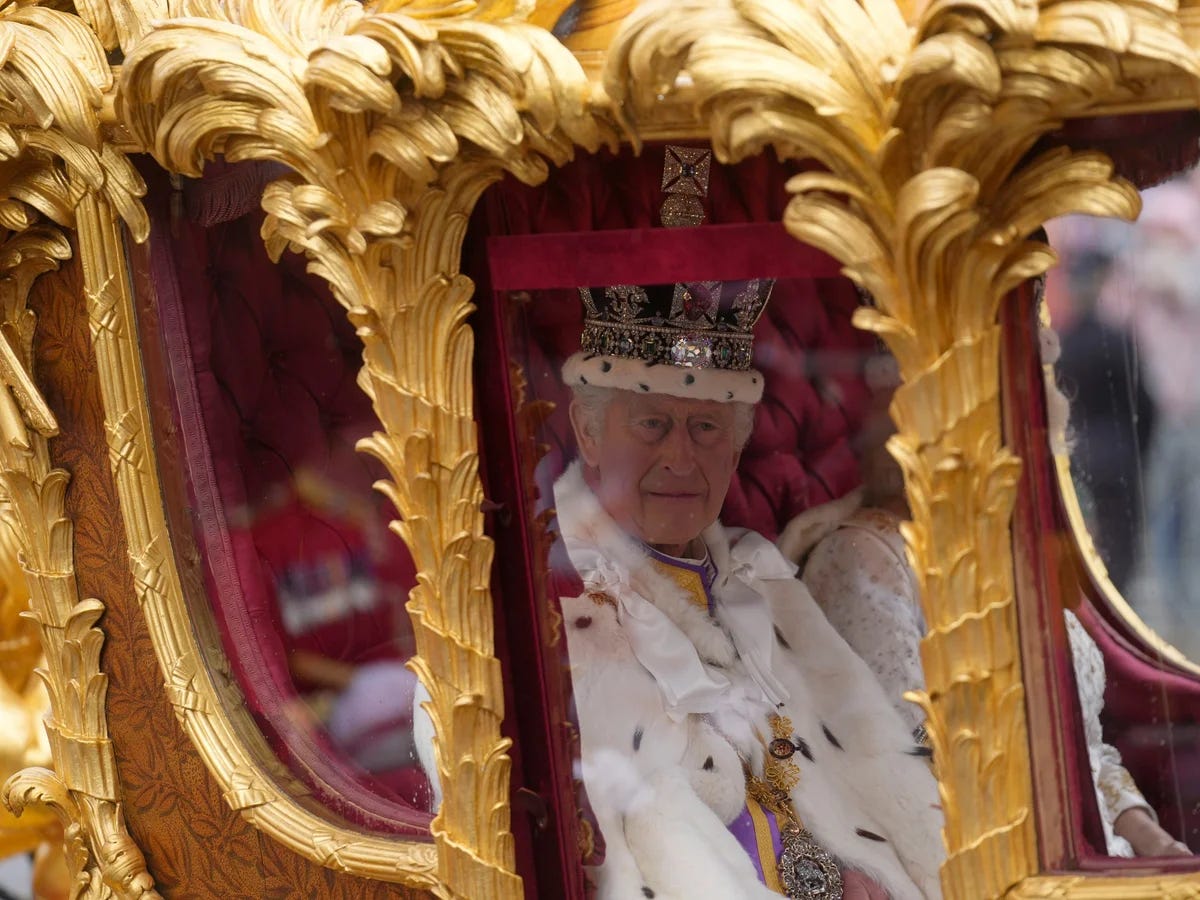
But Channel 5, who wanted to make this programme, vetoed the material because they said, ‘That’s a step too far. You can’t criticise the monarch, or indeed the heir to the throne.’
So you’re absolutely right. Even when my book came out in the autumn, I was criticised for saying some of these things about the Queen, when all I was doing was recording what was happening. It wasn’t my own view. And that view has changed in the last nine months.
Funnily enough, I was talking to a royal historian at dinner two nights ago about Prince Philip. He said, ‘Well, actually, I think you’re okay with Prince Philip. I think you know enough. By the time the book comes out, enough water will have passed under the bridge. People will talk to you. You’ll be able to say some of the things that no one has felt able to say so far.’
So there is this time lag, as you say. It may be getting shorter, but it will happen.
It will be very interesting. Anna Keay is doing the official life of the Queen. It’s probably about ten years off, but whether we will really get the full story in an official life, I’m rather doubtful. You don’t get awarded all the prizes for saying things critical of royals.
Philip Ziegler—who is, I think, the only person to have written two official lives, Edward VIII and Mountbatten—was a very established, respected historian: Eton, Oxford, the Foreign Office. He just hinted in the Mountbatten book about bisexuality, and I’m told that was enough for him to be denied the customary knighthood given to those who write official histories.
Comments
Nothing yet. Say the first thing.
Sign in to join the conversation.