
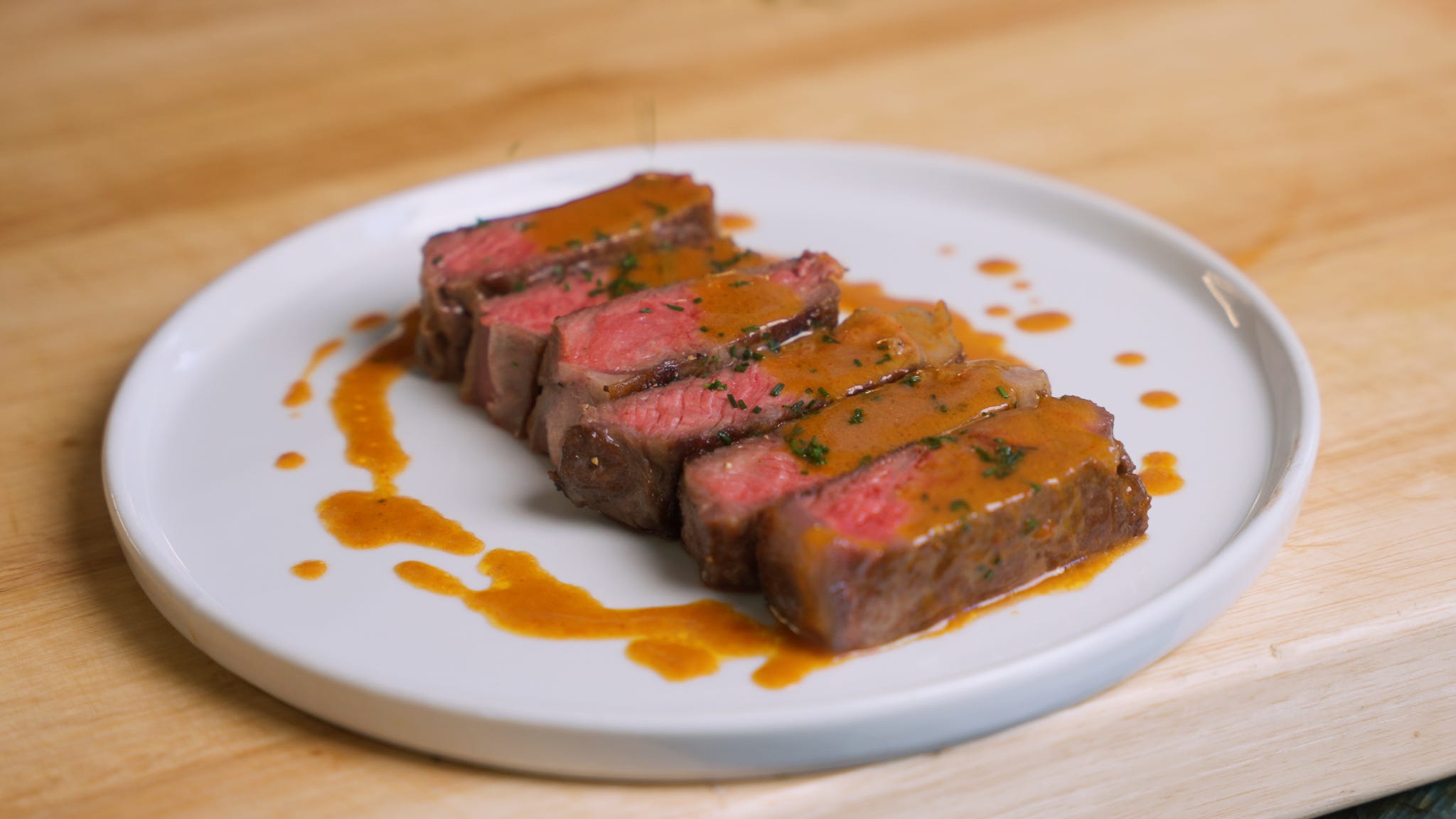
There are steak recipes built around the cut, and there are steak recipes built around the sauce. This one gives you both.
I start with a New York strip and give it a quick reverse sear in the oven before finishing it in a ripping hot pan. When the steak first comes out of the oven, it is not particularly attractive. It looks gray and honestly a little ugly.Don’t let this confuse you, this is what you want.
Once you remove from the oven make sure to pat the steaks dry. That dry exterior is exactly what allows the steak to develop a deep golden crust without overcooking the center.
Then we use everything left behind in the pan to make the sauce. Water pulls up the browned bits - gochujang adds fermented sweetness, heat, and umami and cold butter makes it rich and creamy. Apple cider vinegar cuts through everything and brings the entire sauce back into balance. It tastes like something you would order at a steakhouse, but the method is simple enough to make at home.
Surface moisture is the enemy of browning.
When a wet steak hits a hot pan, the heat must evaporate that moisture before the meat can begin to brown. That creates steam and slows down the formation of a crust.
The oven gives us a head start. It begins cooking the inside of the steak while drying the exterior. When that steak finally reaches the hot pan, it browns quickly and evenly.
The browned material left in the pan is called fond. It is concentrated beef flavor and the foundation of our sauce.
The basic pan sauce method is simple. Add liquid to release the fond. Add your primary flavor. Finish with cold butter.
Once you understand that process, you can build dozens of different sauces using the same pan.
FOR THE STEAK
2 New York strip steaks, about 1 to 2 inches thick
2 tablespoons extra virgin olive oil, divided
Kosher salt
FOR THE GOCHUJANG BUTTER SAUCE
¼ cup water, beef stock, or chicken stock
1 tablespoon gochujang, plus more to taste
3 tablespoons cold unsalted butter, cut into pieces
1 teaspoon apple cider vinegar, plus more to taste
Any juices released by the resting steaks
TO FINISH
1 tablespoon thinly sliced fresh chives
Freshly cracked black pepper
Fresh thyme, oregano, or marjoram, optional
Season the Steaks
Preheat the oven to 325 degrees.
Rub the steaks with 1 tablespoon of the olive oil, then season both sides generously with kosher salt.
Start the Reverse Sear
Place the steaks on an oven safe tray and cook until the exterior looks dry and gray and the internal temperature reaches approximately 105 to 110 degrees.
The steaks shown in the video took about 6 to 8 minutes. A thicker or colder steak will take longer. Use the internal temperature and appearance of the steak instead of relying entirely on the clock.
Heat the Pan
Heat a carbon steel or cast iron pan over high heat. Add the remaining olive oil in a thin layer.
The pan is ready when the oil loosens up and moves across the surface almost like water.
Build the Crust
Pat the steaks dry before placing them in the pan.
Sear the first side for 45 to 60 seconds. Flip the steaks, then continue flipping every 30 seconds until both sides develop a deep golden crust.
Press lightly when necessary to keep the surface of the steak in contact with the pan. The exterior fat and connective tissue can tighten as they cook and cause sections of the steak to lift away from the heat.
For medium rare, remove the steaks at approximately 125 to 130 degrees. The temperature will continue rising slightly as they rest.
Rest the Steaks
Transfer the steaks to a cutting board and let them rest for 5 to 10 minutes while you make the sauce.
Save every drop of juice that collects on the board.
Deglaze the Pan
Lower the heat and carefully add the water or stock.
Scrape the bottom of the pan to release the fond. The liquid should immediately take on a deep brown color from the concentrated beef flavor.
Add the Gochujang
Stir in the gochujang until it dissolves into the liquid.
Start with 1 tablespoon. Different brands vary in sweetness and heat, so taste the sauce before adding more.
Finish With Cold Butter
Keep the heat low and add the cold butter one piece at a time. Whisk or swirl the pan continuously until the butter melts into the sauce.
Do not let the sauce boil aggressively. Gentle heat helps the butter emulsify instead of separating.
Balance the Sauce
Add the apple cider vinegar and any juices released by the resting steaks.
Taste the sauce. If it feels too rich, add another small splash of vinegar. If it is too thick, loosen it with a little water or stock.
Slice and Finish
Slice the steaks against the grain and spoon the warm gochujang butter sauce over the top.
Finish with fresh chives and plenty of freshly cracked black pepper. Add the pepper at the end so it stays fruity and aromatic instead of burning in the hot pan.
New York strip brings deep beef flavor and enough exterior fat to create a beautiful crust. The reverse sear dries the surface and gives you more control over the center. Frequent flipping builds color without leaving either side over the heat for too long.
The sauce brings everything together. Gochujang adds sweetness, spice, and fermented depth. Butter rounds out the sharper flavors and gives the sauce its glossy texture. Apple cider vinegar keeps all that richness from becoming heavy.
Simple technique. Big steak flavor. And absolutely no fond left behind.
New York Strip With Gochujang Butter Sauce- Full YouTube Video
Comments
Nothing yet. Say the first thing.
Sign in to join the conversation.