

One of the most overlooked details in great pimento cheese is texture. Most people think about the ingredients — cheddar, mayo, pimentos — but what really separates a mediocre batch from a great one is how the cheese is grated.
If you shred everything the same way, you end up with a uniform paste. But when you use two different grates, something better happens.
The fine-grate melts into the binder — the mayo and cream cheese — creating a creamy base that holds everything together. The coarser grate stays intact, giving the spread structure and bite. You get little strands of cheddar that catch the light, hold onto the dressing, and give every scoop texture. That balance is what makes good pimento cheese feel rich but not heavy, creamy but not mushy.
It’s a small technique, but it’s the difference between something that tastes like it came from a plastic tub and something that tastes like it came out of a good deli.
Pimento cheese itself is humble pantry cooking at its best — cheese, mayo, pimentos, and a little seasoning stirred together into something that tastes far greater than the sum of its parts.
But once you understand the small chef tricks — the grating technique, a little acidity from pickle brine, and the stabilizing power of cream cheese — you start to see why this spread has been a Southern staple for more than a century.
It’s not just a dip for me, it’s a utility spread. It belongs on burgers, grilled cheese, crackers, fried green tomatoes, celery, and sandwiches. It melts beautifully, spreads easily, and keeps well in the fridge. I just made a pimento cheese and salami melt before writing this.
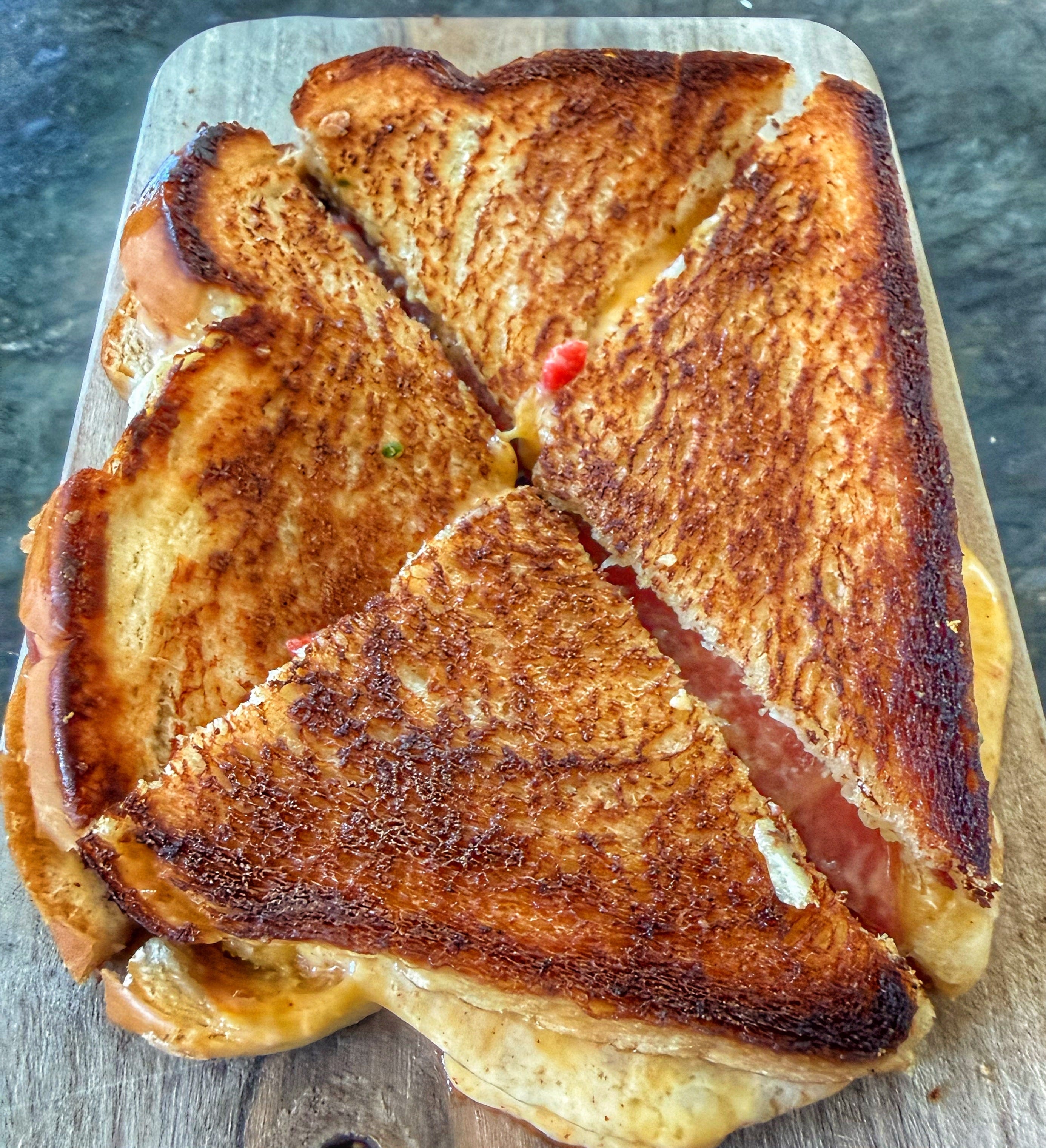
Below is the version I made recently — with a few upgrades and the techniques that make all the difference.
Chef Gruel Style Pimento Cheese
Ingredients
8 oz sharp white cheddar, finely grated
8 oz medium cheddar, coarse-grated
4 oz diced pimentos, drained
3 tbsp cream cheese, softened
3–4 tbsp mayonnaise
1 tsp ancho chili powder
1–2 tsp pickle brine
Black pepper to taste
Optional but recommended
½ tsp smoked paprika
½ tsp Dijon mustard
Method
Grate the cheeses by hand.
Use the fine holes for the sharp cheddar and the wider holes for the medium cheddar.In a bowl combine mayonnaise, cream cheese, ancho chili powder, pickle brine, and black pepper.
Fold in the grated cheeses and pimentos.
Mix until evenly combined but still textured.
Refrigerate for at least one hour before serving so the flavors meld and the cheese hydrates.
The Chef Tricks That Make It Better
1. Two Grates of Cheese
Using two textures of cheddar is one of the biggest upgrades.
The fine grate melts into the binder, making the spread creamy, while the larger shreds keep structure so it doesn’t turn into cheese paste.
This is the same technique many delis and burger joints use.
2. Don’t Use Pre-Shredded Cheese
Bagged shredded cheese is coated in anti-caking starches that prevent it from melting properly and make spreads gritty.
Fresh grated cheese gives you cleaner flavor and better texture.
3. Acid Is the Secret Ingredient
Pimento cheese is mostly fat and dairy, so it needs brightness.
That’s where pickle brine comes in.
It adds:
• acidity
• salt
• fermented tang
All three wake up the cheddar and keep the spread from tasting heavy.
4. Cream Cheese Stabilizes the Spread
Traditional pimento cheese sometimes separates when it warms up.
A small amount of cream cheese creates a stable emulsion so it spreads smoothly and melts beautifully on burgers and sandwiches.
5. Let It Rest
Just like chili or meat sauce, pimento cheese improves after sitting in the refrigerator.
The cheese absorbs moisture from the mayo and cream cheese, the spices bloom, and the flavors round out.
Give it at least one hour.
Alternate Flavor Variations
Once you understand the base formula, you can take pimento cheese in a lot of directions.
Smoky BBQ
Add:
• smoked cheddar
• minced pickled jalapeños
• dash Worcestershire
• pinch smoked paprika
Perfect for burgers.
Bacon and Black Pepper
Fold in:
• crispy bacon bits
• extra cracked black pepper
Great for sandwiches or baked potatoes.
Jalapeño Popper Style
Add:
• diced fresh jalapeño
• extra cream cheese
• touch garlic powder
This version melts incredibly well.
Southern Deli Classic
Add:
• ½ teaspoon grated onion
• small dash hot sauce
This is the flavor profile you often find in old church cookbooks and gas station delis.
Cost Breakdown (Approximate)
Homemade pimento cheese is incredibly inexpensive compared to store-bought versions.
IngredientCostCheddar cheese (1 lb total)$5.00Jar pimentos$1.50Cream cheese portion$0.75Mayonnaise portion$0.50Spices & pickle brine$0.25
Total: about $8.00
Yield: roughly 1½ pounds of pimento cheese
That works out to about $0.50 per serving, far cheaper and better than the grocery store tubs.
Best Ways to Use It
Once you have a batch in the fridge, it becomes incredibly versatile.
Spread it on:
• burgers
• grilled cheese
• crackers
• fried green tomatoes
• celery sticks
• toasted sourdough
One of my favorites:
Toast sourdough in butter, spread with pimento cheese, top with a fried egg and a little hot sauce.
It’s simple, rich, and exactly the kind of dish that proves good food doesn’t need to be complicated — just balanced.
And sometimes all that balance takes is a handful of cheddar, a jar of pimentos, and a splash of pickle brine.
Comments
Nothing yet. Say the first thing.
Sign in to join the conversation.