
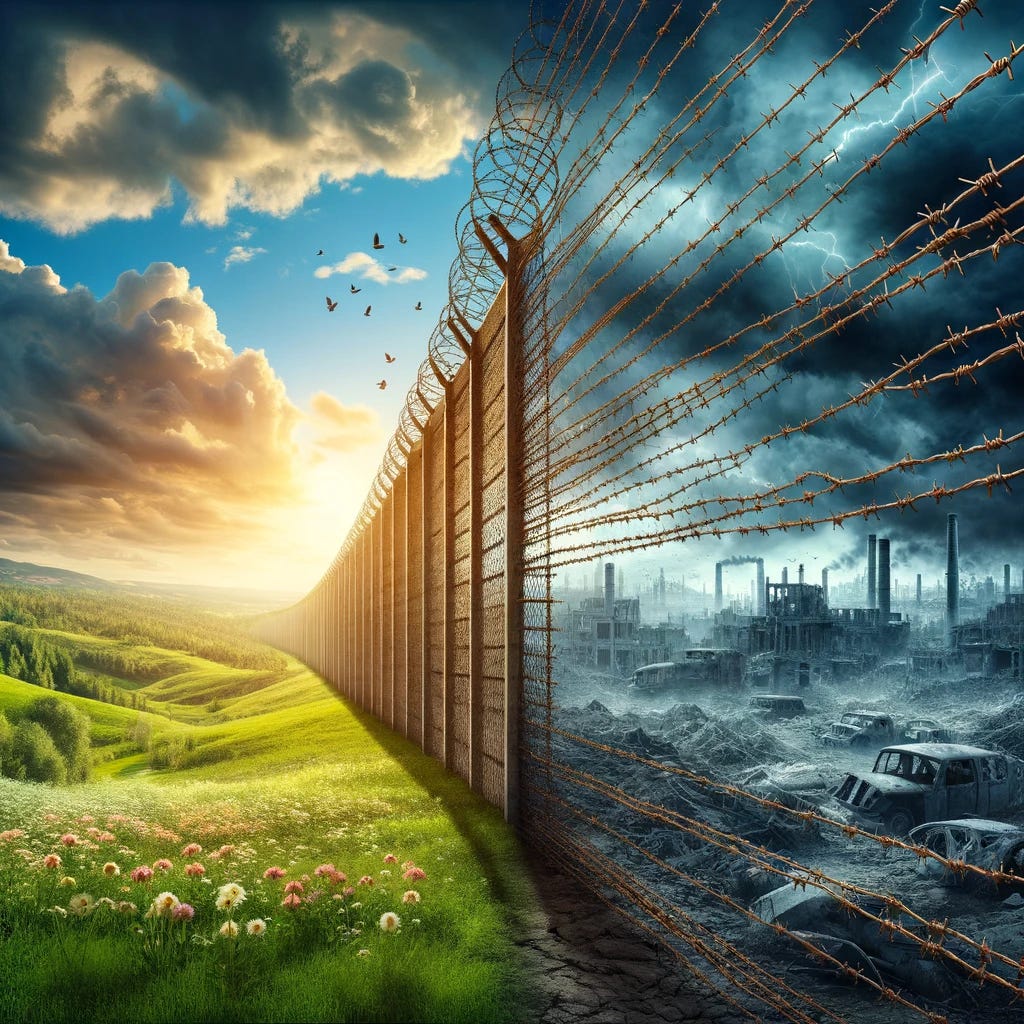
The barbed wires were installed overnight.
This was August 13th, commonly referred to as Barbed Wire Sunday.
The next morning, the border with West Berlin was effectively closed.
East German troops were tearing up streets alongside the border, making them impassable for vehicles. Next came concrete barriers, which stretched 96 miles (155 kilometers) and divided the city and surrounding countryside.
All said and done, the Berlin Wall was erected in less than 2 months.
This was considered unthinkable at the time, and caught the population off guard.
Just a few weeks prior to the ambush, DDR leader Walter Ulbricht proclaimed the following at an international press conference:
Niemand hat die Absicht, eine Mauer zu errichten! (No one has the intention of erecting a wall!)
These famous last words make Ulbricht one of history’s most cruel and notorious liars, amongst an admittedly long and distasteful list of candidates.
How is this relevant to today?
The Berlin Wall was a desperate act of self preservation.
20% of the East German population had already defected to West Germany - an enormous brain drain that posed an existential risk to the regime. Authoritarian rule can’t survive free market choices, which includes people voting with their feet, and so coercion is its only tool.
It’s tempting to think that only soulless dictatorships could muster the brute force required to erect these types of structures. But can the unthinkable happen in our so-called enlightened Western democracies?
You’d better believe it.
If you had asked anyone as recently as February, 2020: “Is it possible to lock up the free people of this world in their own homes for years - to ban movement after 6pm on weekends, and to treat them as caged animals?” the idea would have seemed absurd.
Well, guess again.
This is me visiting Hong Kong on January 28th, taking a selfie for my friends back home who couldn’t believe mask mandates were a thing (myself included).
It seemed novel at the time - something that could only happen in far away places.
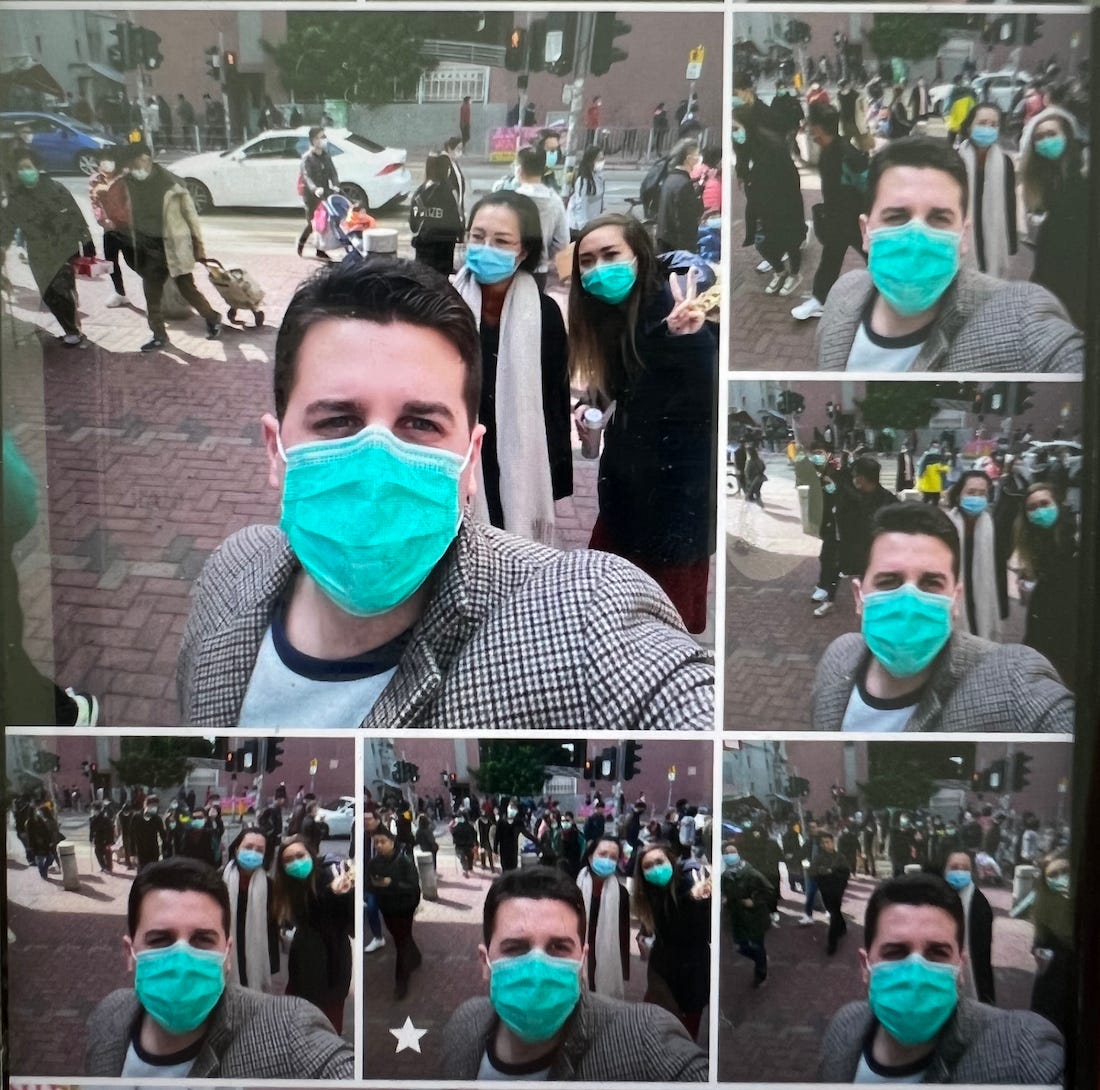
It took exactly 6 weeks for these same measures to catch up with the rest of us.
All of this to say, under the right set of circumstances, under enough public pressure, in a perceived time of crisis, the unthinkable becomes possible.
But don’t expect the next lock-down to look anything like the last.
What shape could this next crisis take?
For anyone following this newsletter, the obvious answer will be a financial crisis.
Once the ongoing deterioration in the legacy financial system reaches breaking point, there will be enough political will to erect financial walls, under pretext of self-preservation - a digital Iron Curtain. These restrictions can be instantiated overnight.
In this scenario, you do not want to get caught on the wrong side of the barbed wire.
Which is the wrong side?
Hint: With the Berlin Wall you could easily tell by observing in which direction people were fleeing. Everybody was escaping to the West, nobody was heading East. That was the entire point of the Wall in the first place.
In which direction is capital fleeing today?
Similarly, Coinbase has grown to 100 million users and a market cap of $59B, which would place it among the top 10 largest US banks, if it were a licensed TradFi bank.
Both companies function as connecting bridges between the legacy system and the new digital economy. As Walter Wriston famously remarked, capital “will go where it is wanted and stay where it is well treated.” Looking at the numbers, it is clear in which direction capital is flowing.
If you’ve enjoyed this Sunday edition of the Bitcoin Macro Newsletter, please help spread the word by sharing this post with friends and colleagues. We rely on your good word of mouth. Any pledges are greatly appreciated.
Thank you for reading Bitcoin Macro. This post is public so feel free to share it.
No posts
Comments
Nothing yet. Say the first thing.
Sign in to join the conversation.