
For the first time since 1990, the Japanese yen weakened to 160 against the $.
This prompted the authorities to rush in and heavily support the national currency. Money market data suggests the finance ministry spent around $35 billion on April 29th, to prop up the sliding yen.
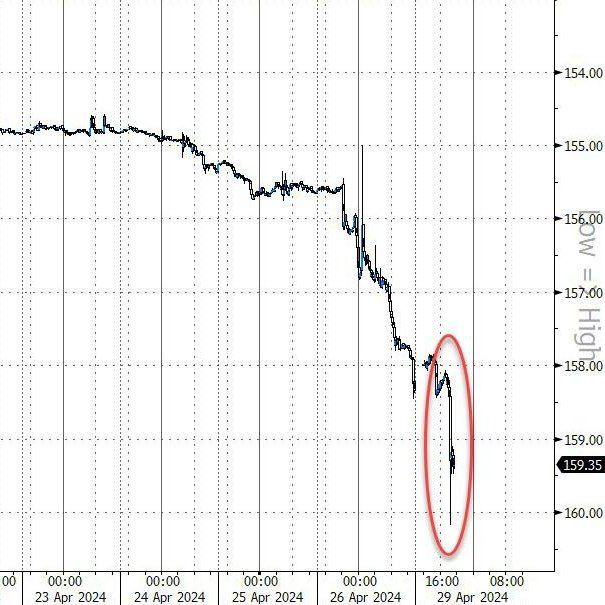
The yen has now lost ~20% over just the last year.
What's the problem?
The yen-carry trade is the problem.
Some argue the yen-carry trade has been the lynchpin for global liquidity.
Here's how it works:
Japan's national debt to GDP ratio is over 260%.
Paying interest on that is expensive, which is why the government's kept interest rates near zero or even negative (!) for decades. In fact, the central bank policy rate has only been raised once in the last 17 years, now at 0.05%.
What's the obvious trade here?
Borrow free yen, swap it into dollars, then go out and buy assets abroad.
Hedge funds have been doing it for decades.
In other words, the incentive is to export Japanese inflation and prop up global asset prices, as we've seen massive outflows through the capital markets.
This used to be one of the greatest puzzles in economics of the 1980s.
There were these enormous capital flows out of Japan, that academics couldn't properly explain. Similarly, they couldn't explain how property prices in a single Tokyo neighborhood were higher than the entire market value of California: The 3.4 square kilometres (1.31 square miles) occupied by the Imperial Palace was worth more than the entire real estate value of California.
The answer was obvious to market participants.
It's the yen-carry trade!
The Japanese property market was being used as collateral for free loans, which could then be used to finance purchases abroad. As a side effect, this bid up the Japanese housing market to an absurd degree.
After 40 years, this trade still lives on.
See the published work of Richard Werner for more detail.
This now puts the BOJ in an awkward position.
The currency collapsing 25% against $ over just the last 24 months isn't a good thing. It's actually quite destabilizing.
At the same time, raising rates would threaten to kill the yen-carry trade, unwinding asset prices and everyone's pensions along with it, while also making the government's debt load untenable.
What's next?
If you’ve enjoyed this edition of the Bitcoin Macro Newsletter, please help spread the word by sharing this post with friends and colleagues. We rely on your good word of mouth. Any pledges are greatly appreciated.
Thank you for reading Bitcoin Macro. This post is public so feel free to share it.
No posts
Comments
Nothing yet. Say the first thing.
Sign in to join the conversation.