
With the prospect of Prince Charles’ investiture as Prince of Wales looming in July 1969, thoughts turned on how best to showcase the monarchy to take advantage of the arcane spectacle. Fortuitously, there had been a changing of the old guard at Buckingham Palace, with the affable Australian William Heseltine taking over from the dead hand of Commander Colville in 1968. The new press secretary argued that there was nothing between the dull prose of the Court Circular and the gleeful exaggerations of the tabloid press to explain and illustrate the work of the monarchy and its relevance in the modern world.
Even with Princess Margaret and her photographer husband adding glamour and contemporary lustre to the Crown, the Queen recognized that the crowds were dwindling and interest was waning. Just as television had turbo-charged the monarchy during the Coronation, Heseltine suggested it was time to approach that magic box in the corner of the sitting room once again, to give the monarchy a much-needed jolt. He was supported by Lord Mountbatten’s son-in-law, the noted film-maker John Brabourne, and by Mountbatten himself. Prince Philip had long been an exponent of the virtues of television. Not only did he make the argument – against his wife’s wishes – to employ the medium at the Coronation, in the intervening years he had also made or featured in several documentaries himself.
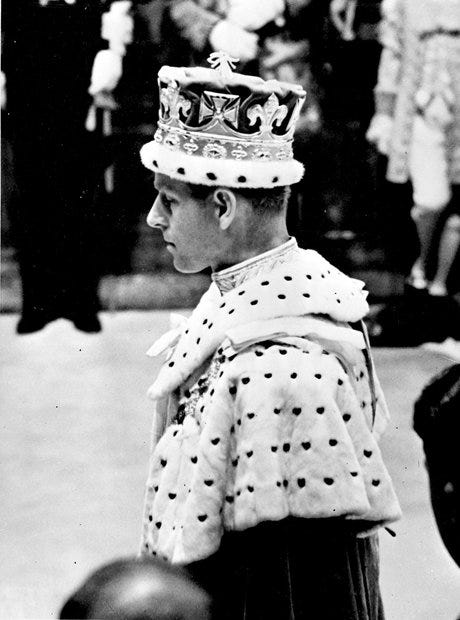
Philip, the eternal modernizer, argued that a carefully controlled, fly-on-the-wall television documentary would open the world’s eyes to the normal way that the royals lived. It would document their social life and the remorseless call of duty, while also pulling back the curtain to give viewers an edited glimpse into their private world. Princess Anne thought it was a ‘rotten idea’. Initially, the Queen too was not keen. Not only did she feel self-conscious in front of the cameras, which is why she delayed televising her Christmas broadcast until 1957, but, mindful of the words of Walter Bagehot, she was reluctant to let too much daylight in on the magic of monarchy. Eventually, though, she agreed, on the proviso that an advisory committee chaired by Philip would give her ultimate editorial control.
Whatever her reservations, she felt that something must be done to arrest the slow drip, drip, drip of waning popularity. This then was the genesis of the show that arguably changed the monarchy forever. Filmed over twelve months between June 1968 and May 1969, Brabourne’s central problem was to encourage the Queen to be more natural when the cameras were whirring. Ultimately, he succeeded, the Sovereign steadily relaxing and becoming more herself over time.
As the film was titled Royal Family, part of the idea was to show the Queen as wife and mother, as well as Monarch and Head of State. During a stay at Balmoral, she was filmed taking Edward for an ice cream, joining in with a barbecue picnic and chatting over the breakfast table. More formally, she was shown entertaining the British Olympic team at a drinks reception, receiving Prime Minister Harold Wilson at his weekly audience and welcoming US President Richard Nixon to lunch.
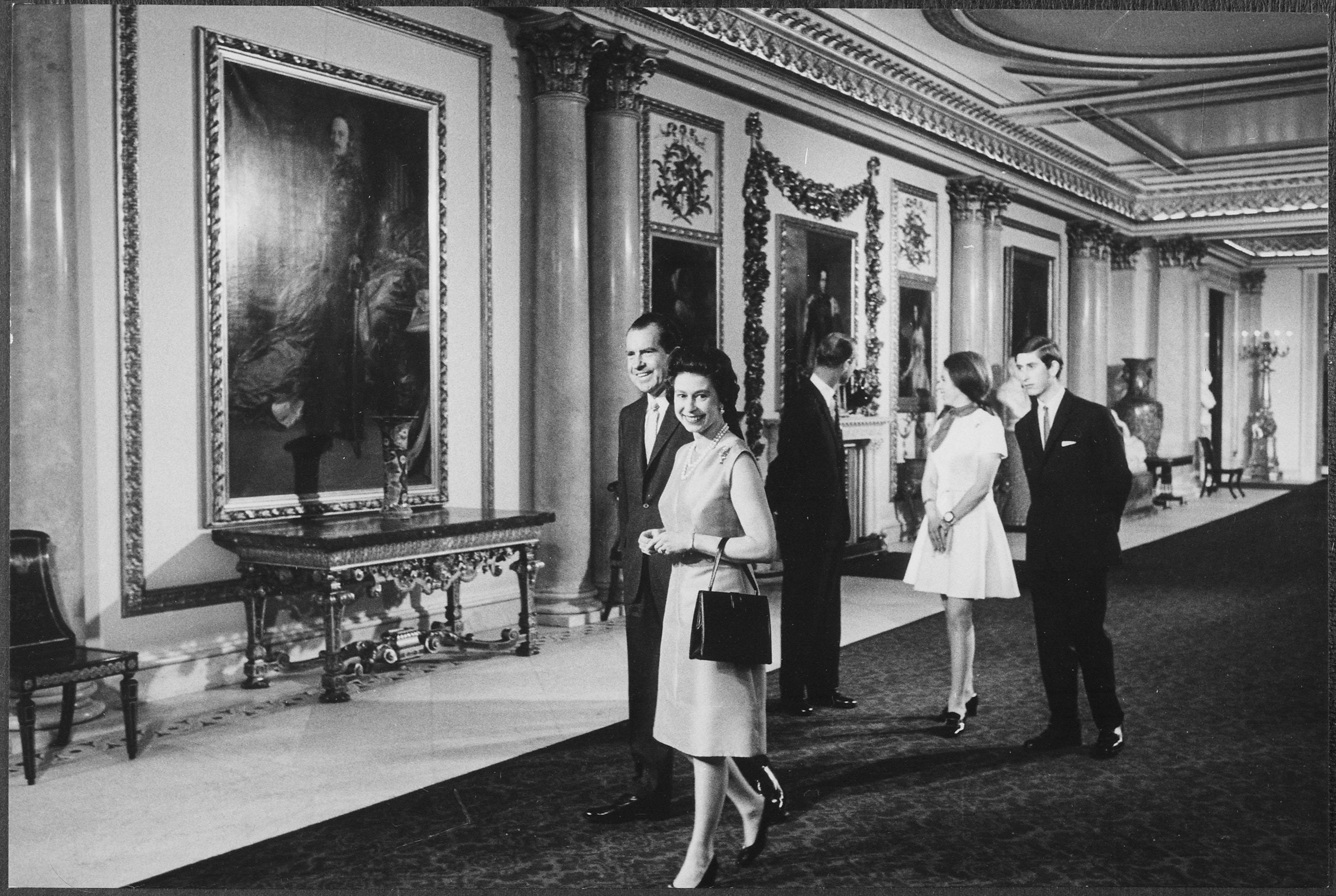
She came across as even-tempered and quite serious, but always ready to see the funny, wry side of a situation, such as American Ambassador Walter Annenberg’s agonizing circumlocution when describing building work at the embassy in London. Moments such as the Queen and Prince Charles exchanging affectionate smiles while preparing a barbecue salad truly gave a sense that the 110-minute film was unrehearsed and authentic.
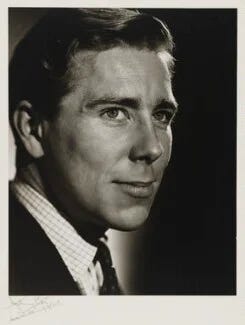
Scriptwriter Antony Jay, who was later made a Commander of the Royal Victorian Order for personal services to the Royal Family, gave the film an intellectual underpinning with his crisp summary of the value of the monarchy and its relevance to modern times. The Queen’s very existence, he argued, was a bulwark against over-ambitious generals and politicians. ‘The strength of the monarchy does not lie in the power it gives to the Sovereign, but in the power it denies to anyone else,’ he wrote.
Worldwide response to the TV show was extraordinary and unprecedented. It was watched by over 350 million people, including 23 million in Britain, more than half the adult population. But while it brought the Royal Family closer to their public and showed them as three-dimensional human beings, critics felt that the exercise had been a huge mistake by making them seem too ordinary and accessible. The broadcaster and naturalist David Attenborough, since knighted, told director Richard Cawston at the time: ‘You’re killing the monarchy, you know, with this film you’re making. The whole institution depends on mystique and the tribal chief in his hut. If any member of the tribe ever sees inside the hut, then the whole system of tribal chiefdom is damaged and the tribe eventually disintegrates.’
On the other hand, the audience was delighted to be invited into the headman’s hut to take a guided tour. They eagerly anticipated a sequel, though the Queen, who was happy with the documentary, was in no mood to turn her family – or herself – into cast members of a television soap opera. She felt the film, which was broadcast ten days before the investiture, had fulfilled its principal function, namely to whet the public’s appetite for the colourful ceremony, scheduled for 1 July 1969.
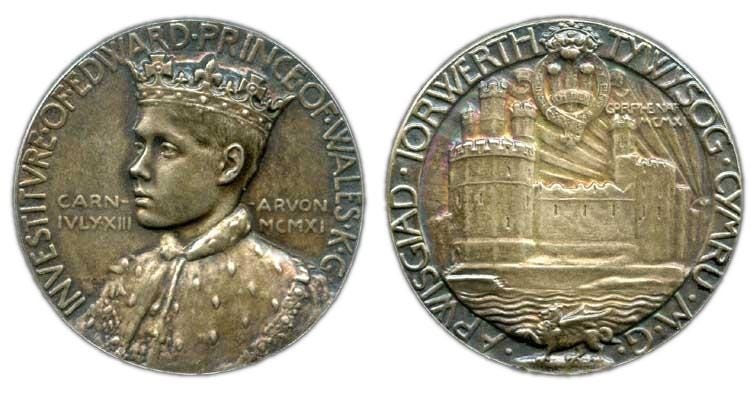
If the TV programme showed a family at work and play, the investiture described a dynasty with roots dating back centuries. Everyone at the palace strained to ensure that the much-anticipated event went off without a hitch. With bomb threats having been issued from radical Welsh nationalists, nerves were on edge. Though the investiture was designed as a kind of Coronation, it had no place in the constitution and little precedent in history. Only two of the previous twenty-one Princes of Wales had had a similar celebration, including a teenage Edward VIII. It was a ritual with modern antecedents masquerading as ancient ceremonial. Given that it had been sixteen years since the Coronation, courtiers were anxious to bring a little razzle-dazzle back to the venerable institution of the monarchy.
The Queen asked Lord Snowdon to take on the task of recreating the spirit of the previous investiture, which was held in 1911 when the current Duke of Windsor was crowned Prince of Wales. Though he had a tiny budget of £50,000 – the equivalent of around £875,000 today – Snowdon, whose family were Welsh, was thrilled at the challenge he had been given of interpreting the ancient and the modern, and moulding it into dramatic harmony with Caernarfon Castle, a massive medieval fortress that was to be used as a backdrop to dramatize Prince Charles’s coming-of-age. He was careful to show the Queen and Prince Philip his designs, including sketches for the thrones and the Perspex canopy to shield the modern dais made from Welsh slate for the crowning ceremony.
The race to provide a spectacle fit for the Queen was played out against escalating violence by Welsh nationalists, who made death threats to officials and attacked public buildings with petrol bombs. Uncharacteristically, the Queen, who was normally phlegmatic in the face of danger, told Prime Minister Wilson that she feared for her son’s safety and asked whether the ceremony should be cancelled. Wilson assured her that he would do everything in his power to ensure the occasion took place without incident. All police were issued with firearms although, fearing the worst, the BBC pre-recorded a full-length TV obituary of Prince Charles. On the royal train, the Queen Mother jokingly told her grandson that the event was going ahead but he was going to be replaced by a stunt double. Her jovial remark did little to dissipate the tension.
‘Charles’, Lord Snowdon told writer Gyles Brandreth, ‘was shit scared.’ With justification. On the eve of the big day, two activists were killed by the bomb they were intending to plant on the railway track over which Charles would travel on the journey to Caernarfon Castle. They were immediately dubbed the Abergele Martyrs. Half an hour before the event was due to start, there was another loud bang near the castle. The bejewelled and uniformed audience, already settled in their seats, tried to pretend they hadn’t heard it.
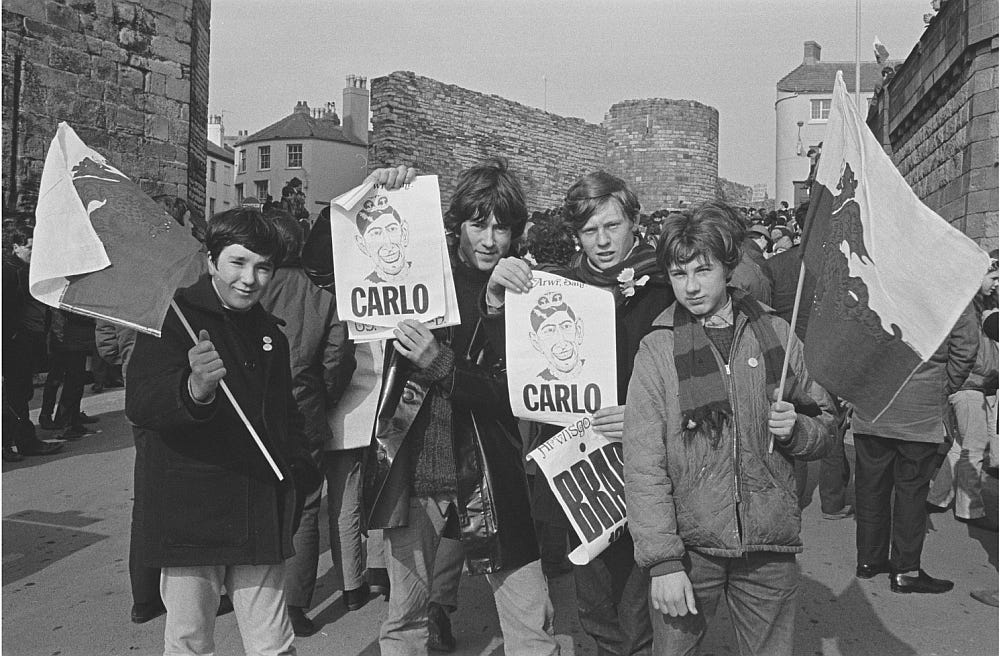
As the clock ticked towards the start of the ceremony, the guests fell silent. Among the crowd of 4,000 dignitaries were foreign royalty, ambassadors, politicians and local Welsh gentry – as well as a handful of modern-day druids clad in nylon capes, who were dressed in the style of ancient Celtic priests.
Then it was showtime. Hearts in mouths, the royal party made its way into the castle and all was well. The investiture played out precisely as planned. There was no repetition of the clownish antics of the dress rehearsal, during which Prince Charles’s oversized crown had slipped down over his forehead obscuring half his face, causing the Queen and her son to try to stifle their giggles.
The actual ceremony, though, was both moving and believable, the most affecting moment when the Prince of Wales knelt before the Queen and, after placing his hands between hers, swore: ‘I, Charles, Prince of Wales, do become your liege man of life and limb and of earthly worship, and faith and truth I will bear unto thee to live and die against all manner of folks.’ It was an echo of Prince Philip’s own oath of allegiance during the Coronation.
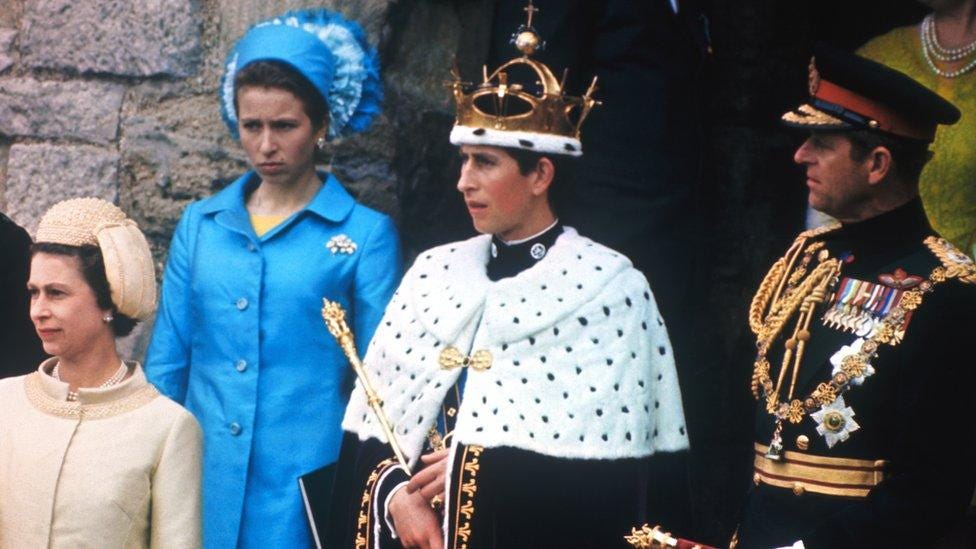
More than 500 million people worldwide watched the event, a magnetic combination of the feudal and the modern, the symbolic and the familial. The Queen was thrilled with Snowdon’s creative vision and awarded him the Knight Grand Cross of the Royal Victorian Order in the 1969 Investiture Honours. In a long, handwritten letter, she admitted that she was initially sceptical that his dramatic vision would work, but was admiring of his ‘spectacular and breathtaking’ achievement.
The success of the Royal Family documentary and the investiture had a real impact. The Queen personally noted the increased size and enthusiasm of the crowds, anecdotal evidence matched by favourable opinion-poll findings. And so, with a positive wind at her back, the dawn of the 1970s marked another way point in the measured modernising of the monarchy.
Over the past 40 years, I’ve written bestselling books about Princess Diana, The Queen, Wallis Simpson, Meghan Markle and many others. You can find all of them to buy here.
No posts
Comments
Nothing yet. Say the first thing.
Sign in to join the conversation.